
The Ford Bronco owes more of its personality to one racer and fabricator than to any single Ford executive. Bill Stroppe spent decades building trucks that could survive Mexico's peninsula at speed, and the machines he built for Ford turned a compact utility rig into a name people still chase at auction. Understanding the Bronco's desert reputation means understanding Stroppe first, because he is the reason the truck ever left the showroom mentality behind.
Car Features
7 min read
Bill Stroppe's Lasting Mark on Bronco Culture
Bill Stroppe turned the Ford Bronco from a ranch truck into a desert racer, and his fingerprints are still what collectors look for on a real Baja Bronco.
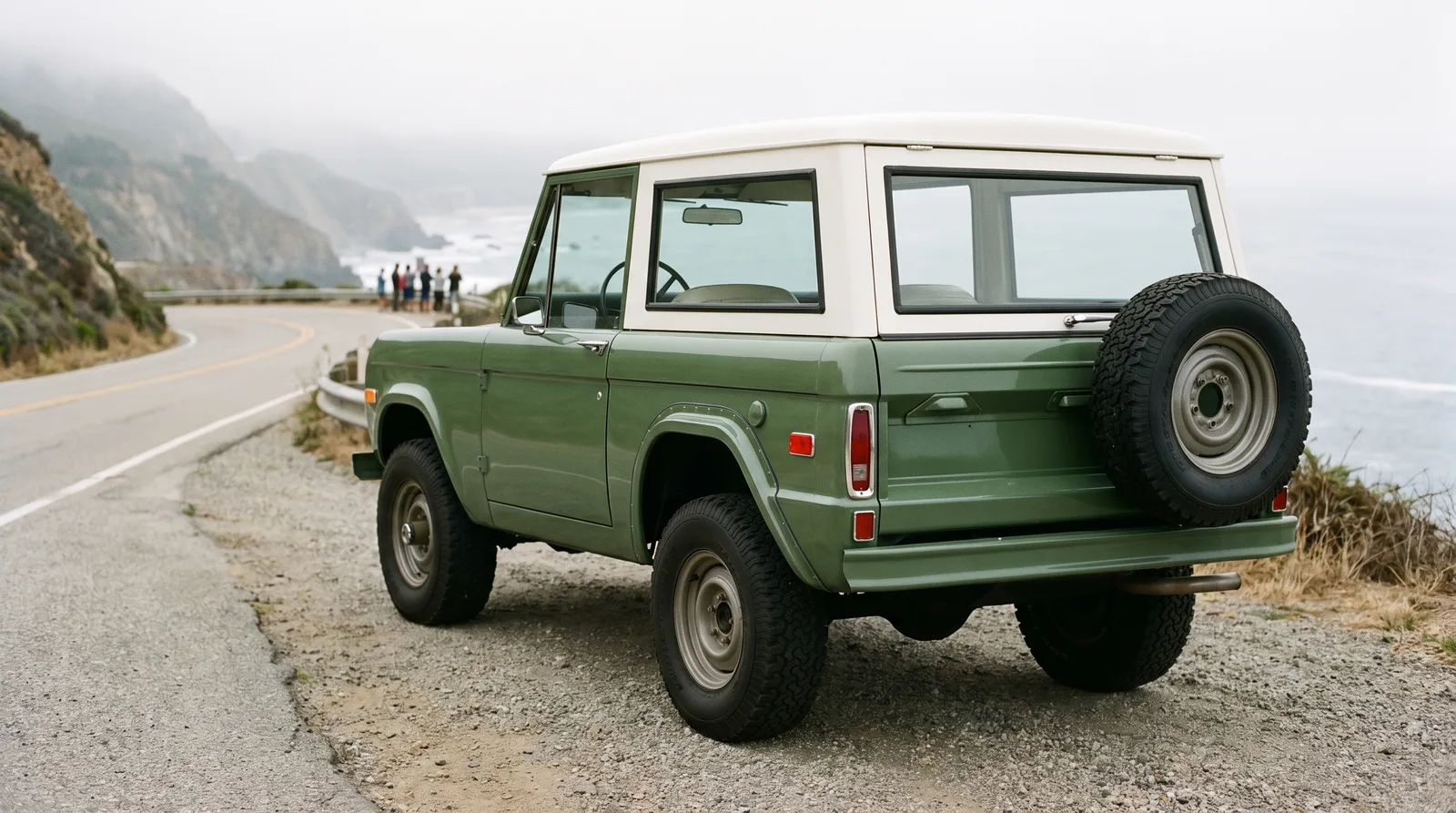
A racer Ford trusted before the Bronco existed
Stroppe's relationship with Ford predates the Bronco by more than a decade. He had already built a name preparing Lincolns for the Carrera Panamericana road race in Mexico in the early 1950s and running Mercury's factory NASCAR effort later that decade. By the time Ford introduced the Bronco for the 1966 model year, Stroppe was one of the few outside contractors the company trusted to take a new product and prove it could take punishment nobody in Dearborn had designed for.
That trust mattered because the Bronco arrived as an answer to the Jeep CJ and the International Scout, a compact 4x4 built for hunters, ranchers, and weekend explorers. It was not conceived as a race truck. Stroppe is the one who decided it should become one, and Ford let him try.
Building the truck that beat the desert
Stroppe and Associates began preparing Broncos for off-road competition in the late 1960s, entering them in the Mexican 1000, the race that would later become known as the Baja 1000. His shop reinforced suspension mounts, fabricated skid plates, and figured out how to keep a factory-based drivetrain alive across hundreds of miles of washboard and rock that the Bronco's engineers had never tested against. Drivers under his direction, including Rod Hall and later Parnelli Jones, took those modified trucks to class wins that Ford's marketing department was more than happy to publicize.
The truck that cemented the legend was Big Oly, the Bronco that Stroppe helped build and that Jones drove to back-to-back Baja 1000 overall wins in 1971 and 1972. Big Oly was not a concept or a show truck. It was a purpose-built race Bronco with a fiberglass body, a fuel-injected V8, and suspension travel that had nothing to do with what a customer could order at a dealership. It became the template for everything Stroppe would do next.
From race truck to showroom option
Ford did what car companies have always done with a winning race program: it sold a version of it. The Baja Bronco special edition, built in cooperation with Stroppe's shop starting in 1971, brought the race truck's visual language to buyers who would never see the peninsula. Wide fender flares, a roll bar, front brush guard, and a red, white, and blue paint scheme echoed the race trucks directly, and Stroppe's name was part of the sales pitch. For anyone who wants the full arc of that program, from race truck to street option, ford bronco baja history covers it in more depth than a single legacy piece can.
What made the Baja Bronco different from a typical dealer trim package is that it was not invented by a stylist trying to guess what customers wanted. It was a direct translation of a truck that had already proven itself over hundreds of miles of the roughest terrain in North America. That is a rare thing in the industry, and it is a large part of why the Baja Bronco still commands attention from collectors who care about provenance rather than badges.
The rivalry that gave the story its edge
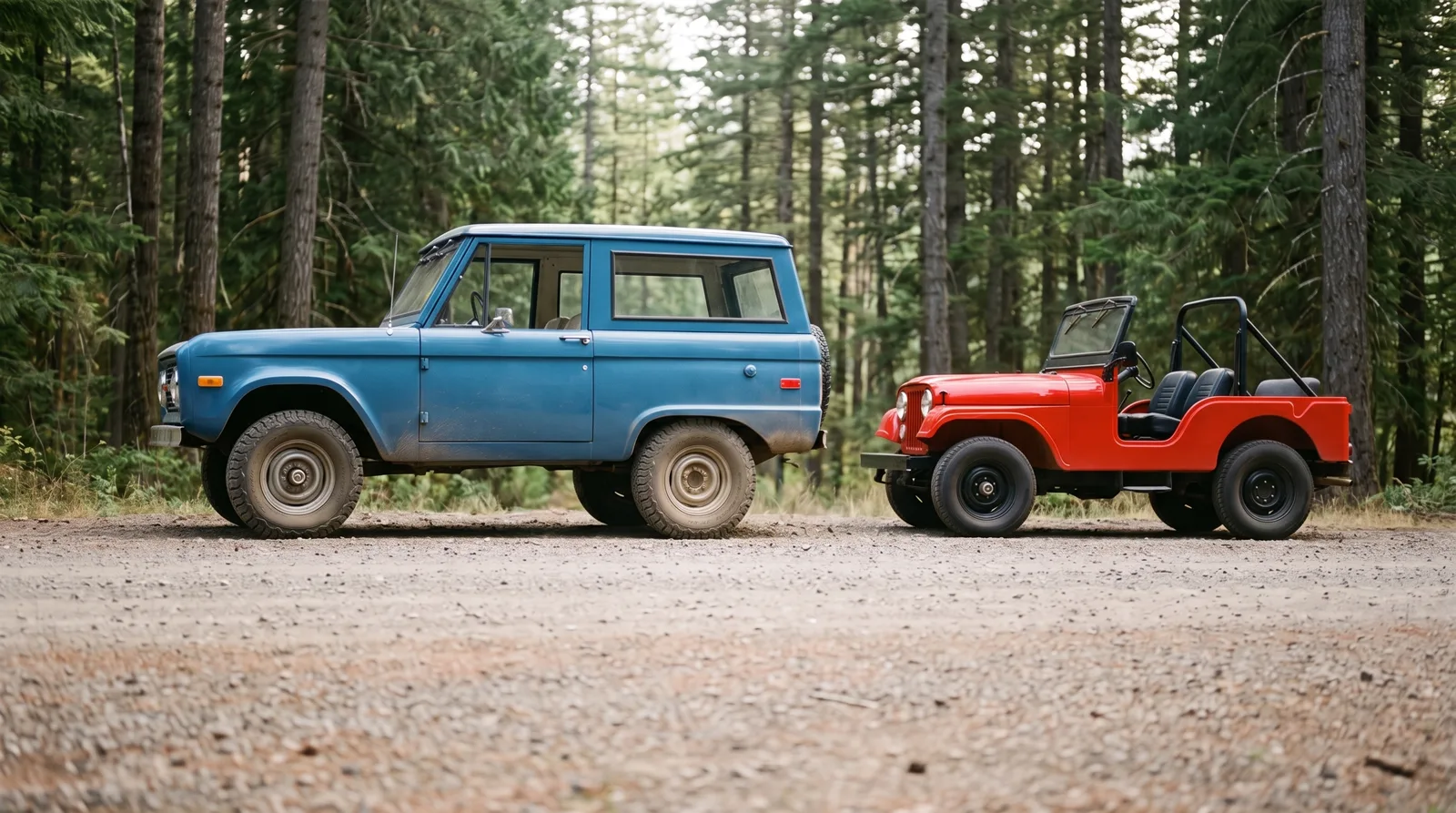
None of this happened in a vacuum. Jeep had its own factory-backed and privateer efforts in the same races, and the back-and-forth between Bronco and Jeep entries through the early 1970s gave the desert racing scene a rivalry that fans still argue about. If you want the blow-by-blow of how those two camps stacked up against each other in period competition, a related story walks through it.
Stroppe himself was not interested in badge loyalty for its own sake. He built trucks to finish races and, ideally, win them. That the Bronco happened to be the platform Ford handed him is almost incidental to his career, but it is the reason the Bronco has a competition pedigree that the Scout and early Jeep CJ never quite matched in the public imagination.
"Stroppe treated the Bronco the way a sculptor treats a rough block of stone. The shape was already there. He just had to cut away everything that would fail in Mexico."
- Nora Beckett
Why the name still carries weight
Stroppe died in 1995, but his shop and his reputation outlived him by decades. Collectors researching a Baja Bronco today still ask about documentation tying a specific truck back to his operation, because that link changes both the story and the value of the vehicle. A plain early Bronco is a good truck. A Bronco with a real connection to Stroppe's race program is a piece of a specific chapter in American motorsport, and buyers treat it that way.
That distinction is worth remembering anytime someone frames the classic Bronco as simply a rugged little utility vehicle from the 1960s. It was that, but it also became something tougher and more storied because one contractor from Long Beach decided to take it racing and never let Ford forget how well it did. Anyone shopping the current market for an early truck with that kind of history behind it can start with Broncos for sale now and work backward through the paperwork from there.
The legacy is not really about a single truck or a single race win. It is about the fact that a compact 4x4 built for ranchers and duck hunters ended up with a competition record serious enough that people still name their restoration projects after Stroppe's cars fifty years later. Few nameplates in this segment can claim that kind of staying power, and fewer still can point to one person as clearly responsible for it.
What Stroppe's approach still teaches restorers
Ask a serious Bronco restorer today what they look for in an original Baja truck and the answer usually comes back to fabrication quality, not paint. Stroppe's shop was known for practical, repeatable solutions rather than flashy one-off engineering, and that mindset carried into the production Baja Bronco package. The skid plating, the brush guard mounting points, the way the roll bar tied into the frame, all of it reflected a builder who expected his trucks to get hit, not displayed. Restorers chasing period correctness on a real Baja truck spend as much time under the vehicle checking mounting points and reinforcement gussets as they do matching paint codes, because that is where the Stroppe fingerprint actually lives.
That standard has quietly shaped how the whole early Bronco hobby thinks about authenticity. A truck can look right from ten feet away and still be missing the structural details that made Stroppe's builds trustworthy at 80 miles an hour across open desert. Collectors who understand that distinction tend to pay a premium for documented originality, and sellers who cannot answer basic questions about a truck's history tend to see offers drop accordingly. It is a small, technical legacy, but it is one more way Stroppe's name keeps showing up in conversations about a truck he stopped personally building work on half a century ago.
Sources and notes
Related Reading
Have a
Ford Bronco
for Sale?
Reach thousands of serious classic car collectors across the US.
Sell It Here →
Selling a classic? Here's how: the best sites to sell a classic car
Are You a Classic Car Dealer?
List your full inventory and connect with targeted classic car buyers.
Join as a Dealer →

About the author
Nora Beckett
Automotive features writer and photographer who tells the human stories behind the cars, from show fields to cross-country road trips.
Related Listings - Ford Bronco
Comments
Be the first to comment on this article.