
Dick Harrell won the 1962 NHRA Super Stock championship five model years before Chevrolet sold a single Camaro. By the time the car arrived, he was already the man people called "Mr. Chevrolet," and he spent the rest of his short career putting more engine into it than the factory was willing to. Any honest account of the dick harrell camaro starts there: a proven drag racer, a car GM had deliberately held back, and a shop that closed the gap with a 427 and a set of wrenches.
Car Features
6 min read
Dick Harrell: Mr. Chevrolet and His Camaros
Super Stock champion, dealer 427 builder, Funny Car star: Dick Harrell's Camaros by the numbers, and which of those numbers actually hold up.
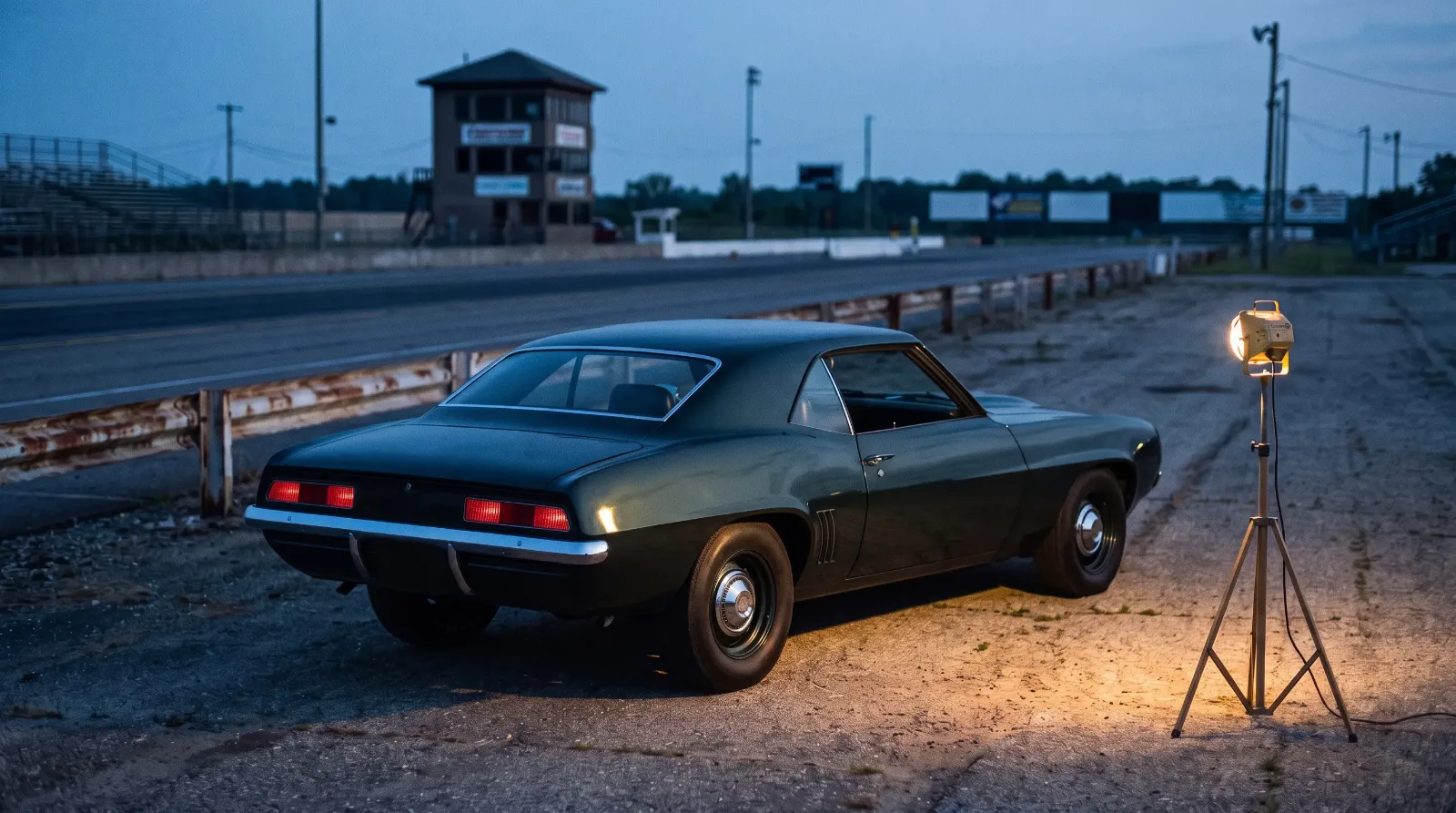
The story belongs to the strip, not the road course, and it runs parallel to the Trans-Am program covered in the Camaro on track. Here are the results, the numbers behind them, and where those numbers stop being reliable.
Mr. Chevrolet before the Camaro
Harrell was born in Phoenix, Arizona, and raced out of Carlsbad, New Mexico. His birth date is not something we could pin down. His record is easier. He took the 1962 NHRA Super Stock title, then won Super Stock Eliminator at the 1963 AHRA Winter Nationals.
Those wins came in full-size Chevrolets, a 409 car in 1962 and a Z-11 car at the 1963 Winter Nationals, not in a Camaro. That matters, because at least one modern retelling describes his early cars as "427 Z-11 Camaros." It is wrong on its face. The Camaro did not exist until the 1967 model year.
The dealer years: Nickey, Yenko and Gibb
The reason Harrell mattered to the Camaro is a GM rule. Corporate policy barred factory installation of any engine larger than 400 cubic inches in a passenger car smaller than full-size, other than the Corvette. The Camaro could have a 396. It could not have a 427 from the factory. So performance dealers did the swap themselves, and Harrell was one of the people who did the work.
He built cars for three of the best-known names in the trade, in order. First came Nickey Chevrolet in Chicago, starting in 1966, which partnered with Bill Thomas in California on 427 conversions. Then, after the Camaro arrived in 1967, Yenko Chevrolet in Canonsburg, Pennsylvania, with Harrell working out of East St. Louis, Illinois. Then Fred Gibb Chevrolet in La Harpe, Illinois. Exactly when he split from Yenko is not on the record we have.
The Nickey cars got the Corvette L72 427, a cast-iron engine with a single four-barrel, rated at 425 hp gross. That is a factory figure, and it is the honest baseline for everything that follows. One drag-racing magazine says Harrell installed what many believe was the first 427 in a Camaro, in 1967, sold as a dealer-installed new car. Note the hedge in "many believe." It is a claim from a single source, and it should be read as one.
At Gibb, Harrell helped prepare the first ZL-1 Camaro for the AHRA meet in Phoenix in January 1969. Old Cars Weekly also credits him with a hand in co-developing the ZL-1 camshaft with GM, though it is the only source we found for that, and it is vague on what the work actually was.
The Kansas City Dick Harrell Camaro conversions
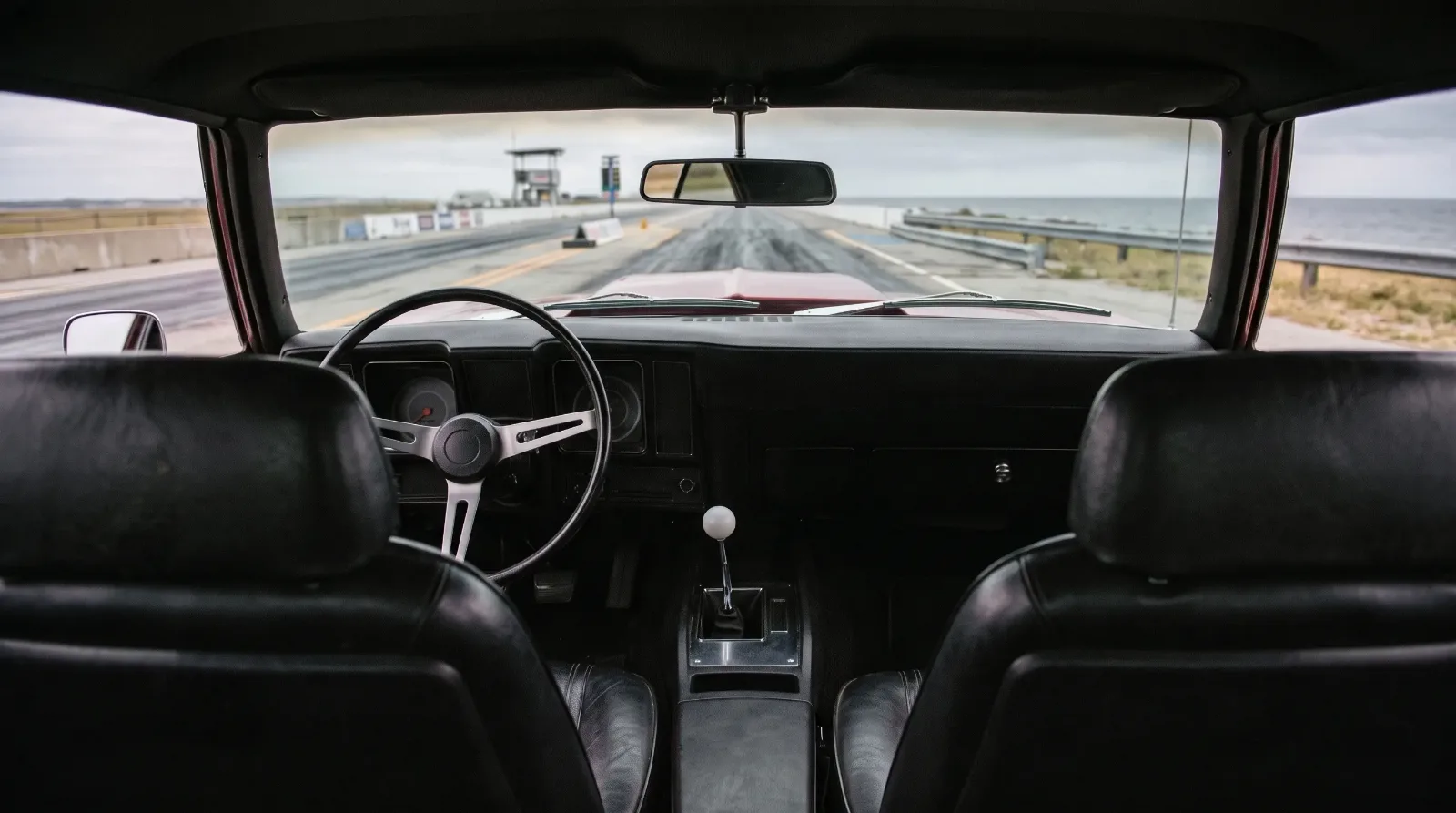
In 1968 Harrell moved to Kansas City, Missouri, and opened the Dick Harrell Performance Center. The model was simple. Take new Camaros, Chevelles and Novas, pull the factory engine, fit a 427, and sell the result through Chevrolet dealers. The shop rated its conversions at 500 hp.
Be careful with that number. The 500 hp figure comes from one magazine and reflects the shop's own rating, not a GM test or an SAE procedure. Compare it with the factory's own 427 Camaro of the same year, the COPO 9561 car, rated at 425 hp gross. Either Harrell found 75 hp the factory could not, or the rating was partly sales copy. Without dyno sheets from the period, nobody can say which, and anyone who quotes the 500 as fact is guessing.
| 1969 427 Camaro | Engine rating | Built | Option or sale figure |
|---|---|---|---|
| Harrell Kansas City conversion | 500 hp (shop rating) | About 10, from SS396 cars | One sold for $253,000, Barrett-Jackson 2013 |
| COPO 9561 (L72) | 425 hp gross | About 997 (estimate) | $489.75 option |
| COPO 9560 (ZL-1) | Not rated here | 69 | $4,160.50 option, sticker over $7,300 |
The count is the other number to watch. About 10 new 1969 Camaros got the Harrell 427 treatment, and they started life as SS396 cars, not COPO orders. That "one of 10" figure also traces to a single source. One known example is a LeMans Blue SS396 built at Norwood in January 1969 and sold new through Bill Allen Chevrolet in Kansas City. It brought $253,000 at Barrett-Jackson in 2013. That is one car on one night, not a market index, and the buyer was paying for the paperwork tying it to Harrell as much as for the engine.
"The 500 hp sticker is the least interesting number on a Harrell car. The factory said 425 for its own 427, and nobody has produced a period dyno sheet that beats it. What you are really buying is the documentation that the conversion happened in Kansas City in 1969, and that is worth more than any rating."
Dan Reeves
The Funny Car and the end
Harrell did not stop at building customer cars. In 1969 he campaigned a Camaro Funny Car, and the results were strong. He won two major AHRA events and took the Grand American points title, though that last detail comes from a museum source alone. The AHRA named him Driver of the Year for 1969, and in 1970 he was named "Driver of the Decade."
It ended fast. On 12 September 1971, Harrell was killed in a Funny Car crash in Toronto after a front tire failed. The NHRA and other records agree on the date. The name of the track is not on anything we could confirm.
What the numbers say about Harrell
Strip away the nickname and the record still stands up. Two national-level Super Stock wins before the Camaro existed. A hand in the cars of three major performance dealers. A Kansas City shop that put 427s into new Camaros while GM's own policy said no. A Driver of the Year title in a Camaro Funny Car. Those are documented results.
The softer claims need flags. The first 427 Camaro, the ZL-1 cam work and the 500 hp rating each rest on one source. They may all be true. They are not proven, and a Harrell car's value depends on separating the two.
The factory caught up with men like Harrell soon enough. COPO orders in 1969 put a 427 in the Camaro straight from the plant, and the dealer conversion business faded with it. A year later Chevrolet's attention on the circuits went to Jim Hall and the Chaparral Camaro, a very different kind of factory program. Harrell's cars belong to the window just before that, when the fastest Camaro you could buy was one a drag racer had built by hand.
Sources and notes
- Dragzine: Flashback Friday, "Mr. Chevrolet" Dick Harrell
- Carlsbad Museum and Art Center: Dick Harrell
- Old Cars Weekly: Car of the Week, 1969 Chevrolet "Dick Harrell" Camaro
- NHRA: Missouri's finest fuelers
- Camaro Research Group: COPO Camaros
- Chevy Hardcore: The greats of Chevrolet before they were famous, Dick Harrell
Related Reading
Have a
Chevrolet Camaro
for Sale?
Reach thousands of serious classic car collectors across the US.
Sell It Here →
Are You a Classic Car Dealer?
List your full inventory and connect with targeted classic car buyers.
Join as a Dealer →

About the author
Dan Reeves
Performance engine builder from North Carolina's motorsports corridor, focused on swaps, forced induction and making real, repeatable power.
Related Listings - Chevrolet Camaro
Comments
Be the first to comment on this article.