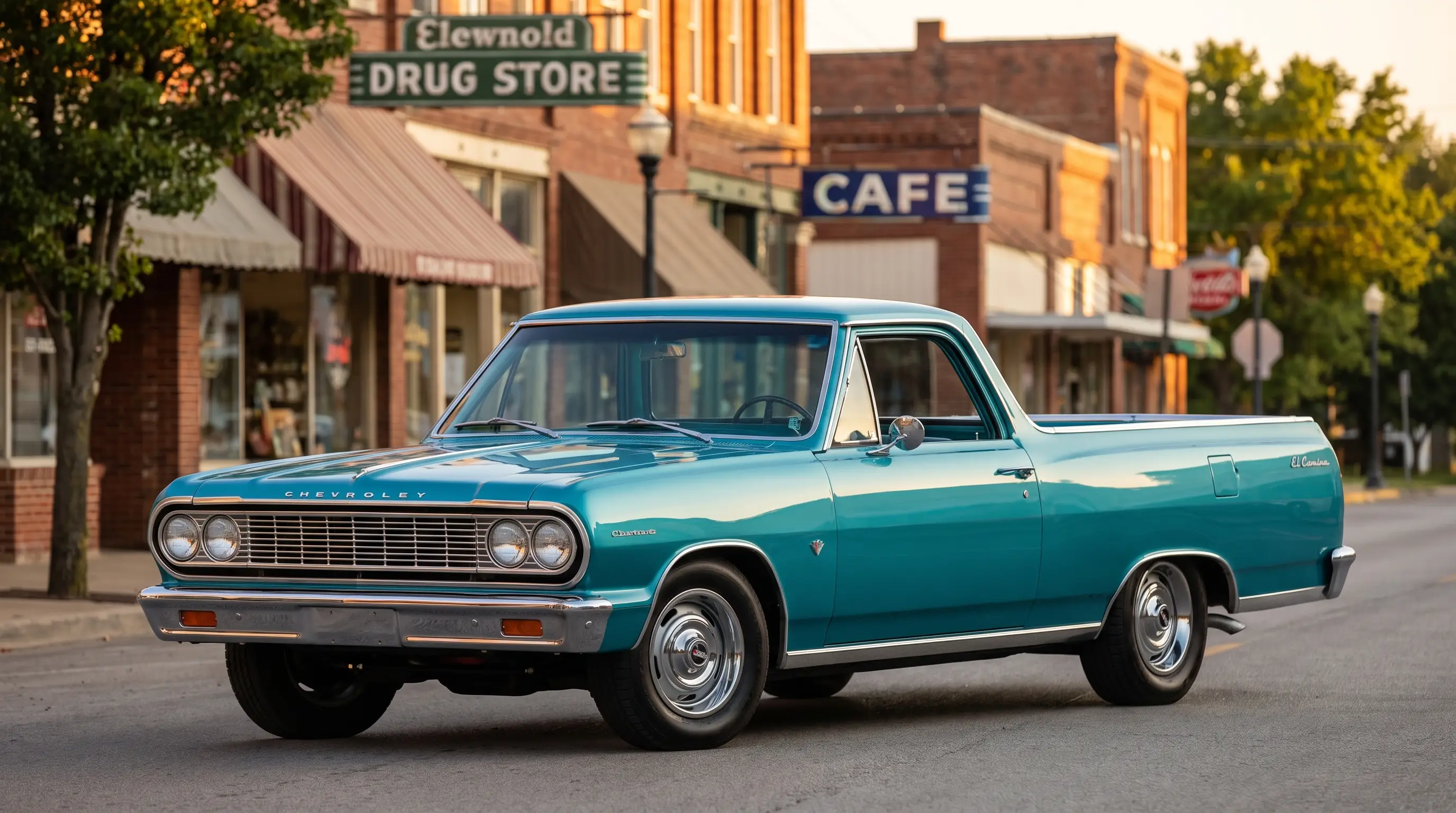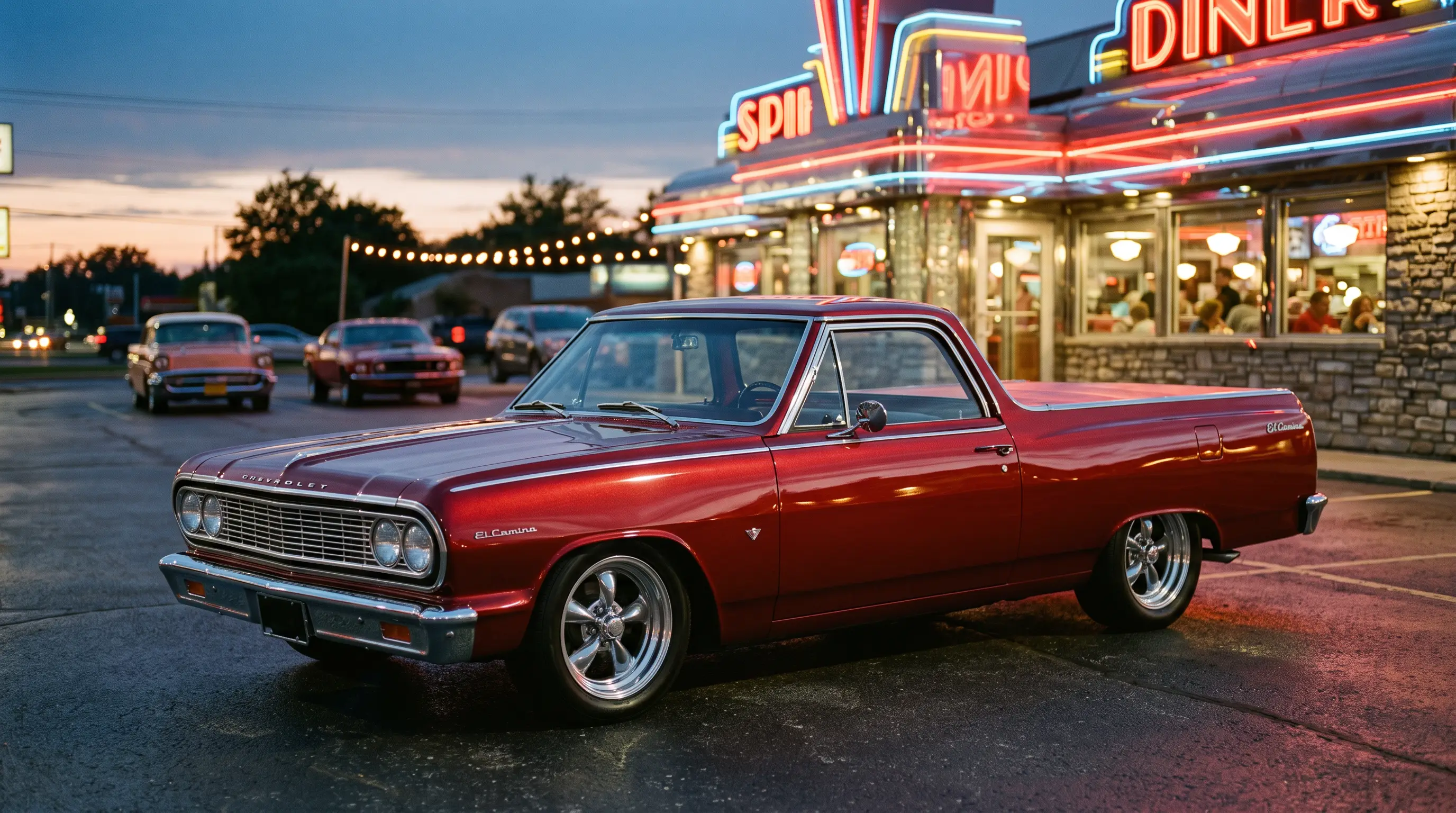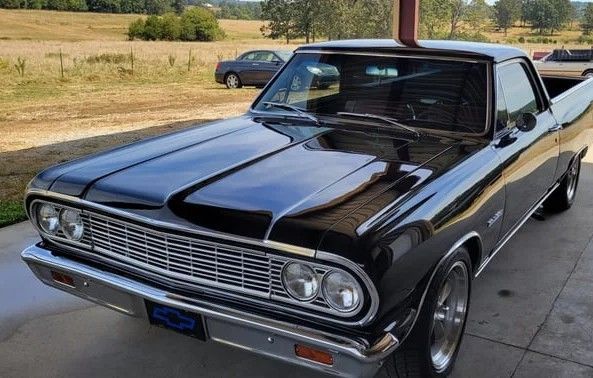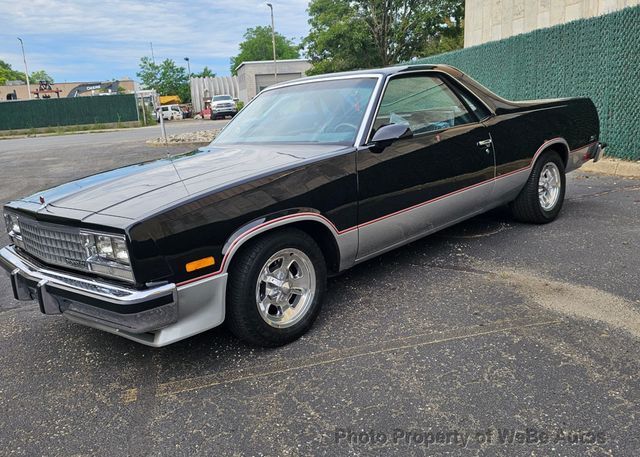
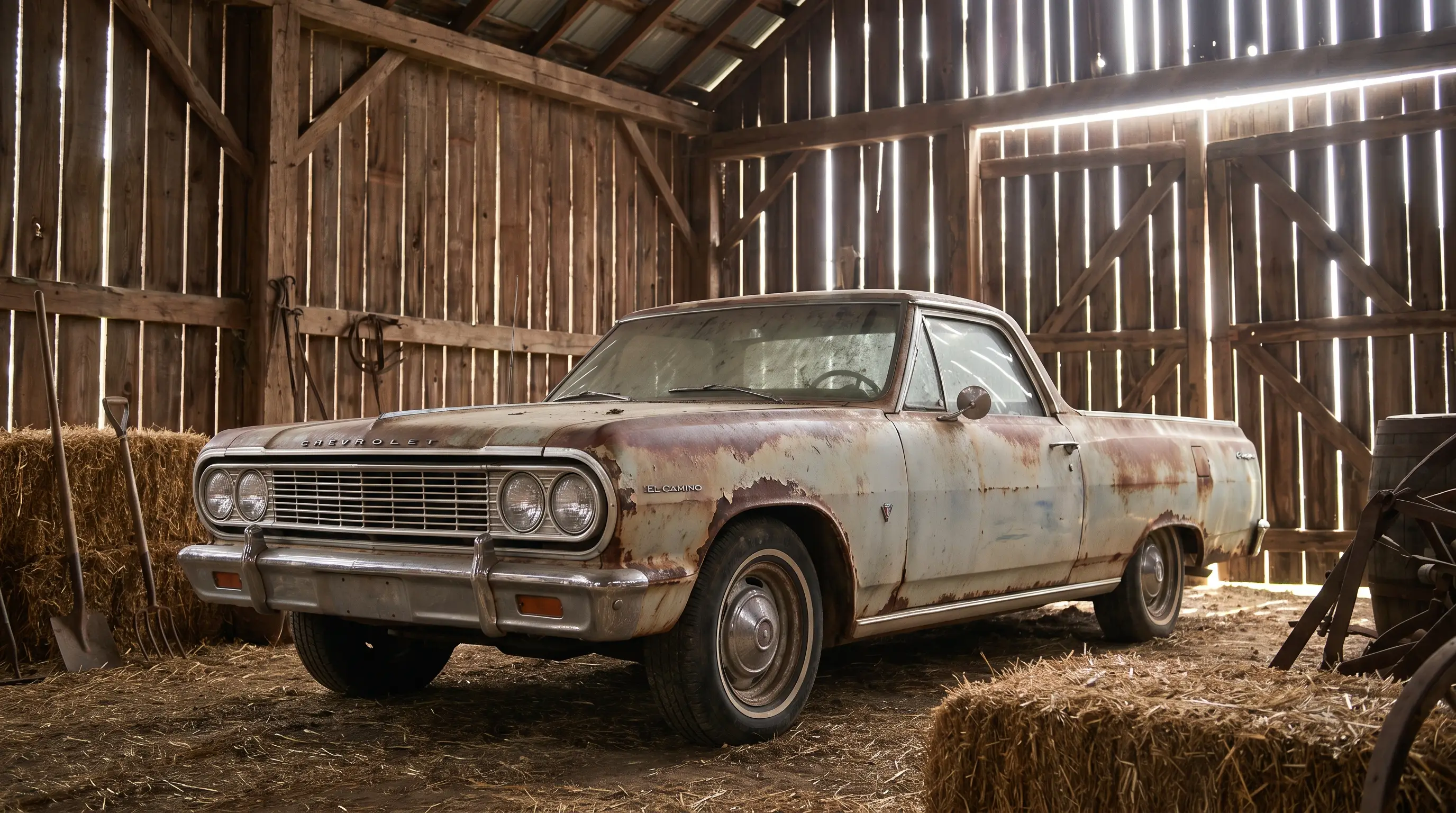
Finding a genuine 1964 El Camino survivor today means working against six decades of hard use. The car was sold as a work vehicle first, and work vehicles get worked. Between rusted beds, replaced drivetrains, and outright scrapping once the original owner moved on to something newer, the population of unmolested 1964 El Caminos still wearing their original sheet metal and drivetrain is smaller than production figures alone would suggest, and finding one in a barn is rarer still than enthusiast forums like to imply.
What Chevrolet actually built in 1964
Chevrolet's factory records show the 1964 El Camino as a low-volume offering compared to the Chevelle sedans and wagons it was based on. Cross-checked production records put the 1964 model year at 32,548 units built, a figure that lines up across the surviving factory-derived tallies used by Chevelle and El Camino researchers rather than a single forum repost. What is well documented is that the El Camino shared its cowl tag and VIN sequencing conventions with the Chevelle line, which means decoding a 1964 car requires the same reference tables collectors already use for Chevelle sedans, not a separate El Camino-only system.
This shared documentation is actually good news for anyone hunting a survivor. Because the El Camino used Chevelle body codes, trim tags, and engine casting conventions, a car's authenticity can be cross-referenced against the same VIN decoding and casting number resources that Chevelle owners rely on. A seller claiming an original drivetrain should be able to produce casting numbers that match the build date stamped on the block, and a buyer who skips that check is trusting a story instead of a record.
Where barn finds actually turn up
The romantic image of a barn find, a dust-covered car pulled from a collapsing structure after decades untouched, does happen with the 1964 El Camino, but less often than with passenger cars of the same era. Because these were bought as work vehicles, many spent their working lives outdoors rather than garaged, which shortened their survival window considerably. The cars that do turn up intact tend to have one of two histories: either a rural owner who parked the vehicle once it stopped running and never got around to scrapping it, or a second or third owner who bought the car cheap in the 1970s or 1980s specifically to store it, intending a restoration that never happened.
Rust is the primary enemy, and it attacks predictable spots. The bed floor, the rear wheel arches, and the lower cab corners are the first areas to go, especially on cars that spent years hauling anything wet or corrosive. A 1964 El Camino that looks solid from ten feet away can still hide serious rot in the bed rails, so any serious inspection has to include getting underneath the car with a light, not just a walk-around in the seller's driveway.
Reading a seller's claims correctly
Survivor hunters run into the same handful of misleading claims again and again. "Numbers matching" gets used loosely, sometimes correctly and sometimes as a phrase repeated without verification. A genuine numbers-matching 1964 El Camino should have an engine casting date that precedes the car's build date by a reasonable margin, not one that postdates it, and the casting location codes should be consistent with a plant that actually supplied Chevelle-based engines in that period. Sellers who cannot produce documentation beyond a verbal history are not necessarily wrong, but a buyer should price the car as unverified rather than take the story at face value.
Original paint claims deserve similar caution. A 1964 El Camino that has survived sixty years with its factory paint intact is unusual enough that it should show consistent wear patterns across every panel, not a suspiciously fresh finish on the bed combined with faded, oxidized paint on the cab. Mismatched wear is the clearest sign of a partial repaint being sold as original.
"Every survivor tells you two stories. One is the story the seller tells you out loud, and the other is the one stamped into the metal. The metal is the one that matters."
- Tom Ramirez
The engines worth verifying most closely
The 1964 El Camino was offered with a range of inline-six and small-block V8 options shared across the Chevelle line, and each carries its own casting family that a knowledgeable buyer can check against a build sheet. The six-cylinder cars, sold in higher volume as budget work vehicles, are the ones most often subjected to an engine swap over the decades, since a tired six was cheap to replace with whatever V8 a later owner had on hand. That makes a documented original six-cylinder 1964 El Camino an unusual find in its own right, not because the engine was rare, but because so few have survived without a substitution somewhere in their history.
V8-equipped cars carry the opposite risk. Because a numbers-matching V8 adds real value, these are the cars most likely to attract a fabricated casting story or a re-stamped block. A buyer should treat any V8 1964 El Camino with unusually pristine casting numbers and no supporting paperwork as a car to verify twice, not a car to take at face value simply because the engine bay looks period-correct at a glance.
Why this history matters to the hunt
Anyone chasing a genuine 1964 El Camino survivor benefits from understanding where this started, since the model's first year set the template for the shared-parts approach that makes decoding these cars possible today. The Chevelle-based design that made the El Camino affordable to build in 1964 is the same design that makes it verifiable now, sixty years later, through documentation that has nothing to do with the El Camino badge specifically.
For collectors ready to move from research to acquisition, the practical path is patience paired with documentation literacy. A car with a thin paper trail is not automatically a bad buy, but it should be priced like one. Those willing to shop classic El Camino listings with casting numbers and cowl tags in hand, rather than trusting a seller's summary, are the ones who end up with a genuinely documented survivor instead of a well-told story wrapped around an ordinary used truck.
What a documented survivor is worth
Documentation changes the value equation more with the 1964 El Camino than with more famous muscle-era models, precisely because so few undocumented examples can be verified after the fact. A car with a clean, cross-checked history, matching casting numbers, a legible cowl tag, and a believable ownership chain, commands a real premium over an otherwise similar example with no paperwork. That gap is only going to widen as the pool of people who remember these cars firsthand continues to shrink, and as documentation becomes the only remaining link to a car's actual history rather than a nice-to-have extra.
Transmission codes deserve the same scrutiny as engine casting numbers, and they get overlooked far more often. A 1964 El Camino ordered with a Powerglide automatic carries a different tag sequence than one built with a three-speed or four-speed manual, and a car advertised as its original combination should have a transmission stamp that lines up with both the block casting date and the cowl tag's build week. Buyers who check only the engine and skip the transmission are leaving an easy verification step on the table, and sellers who cannot produce a legible transmission tag at all should prompt more questions rather than fewer.
The trim tag itself rewards patient reading. Beyond the body style and color codes most buyers already know to check, the tag also encodes the build date down to the week, information that becomes useful once cross-referenced against a claimed casting date on the block or a claimed production sequence for the model year. A tag that has clearly been reattached with the wrong fasteners, or one stamped with characters inconsistent with Chevrolet's known style for that model year, is worth walking away from regardless of how good the rest of the car looks.