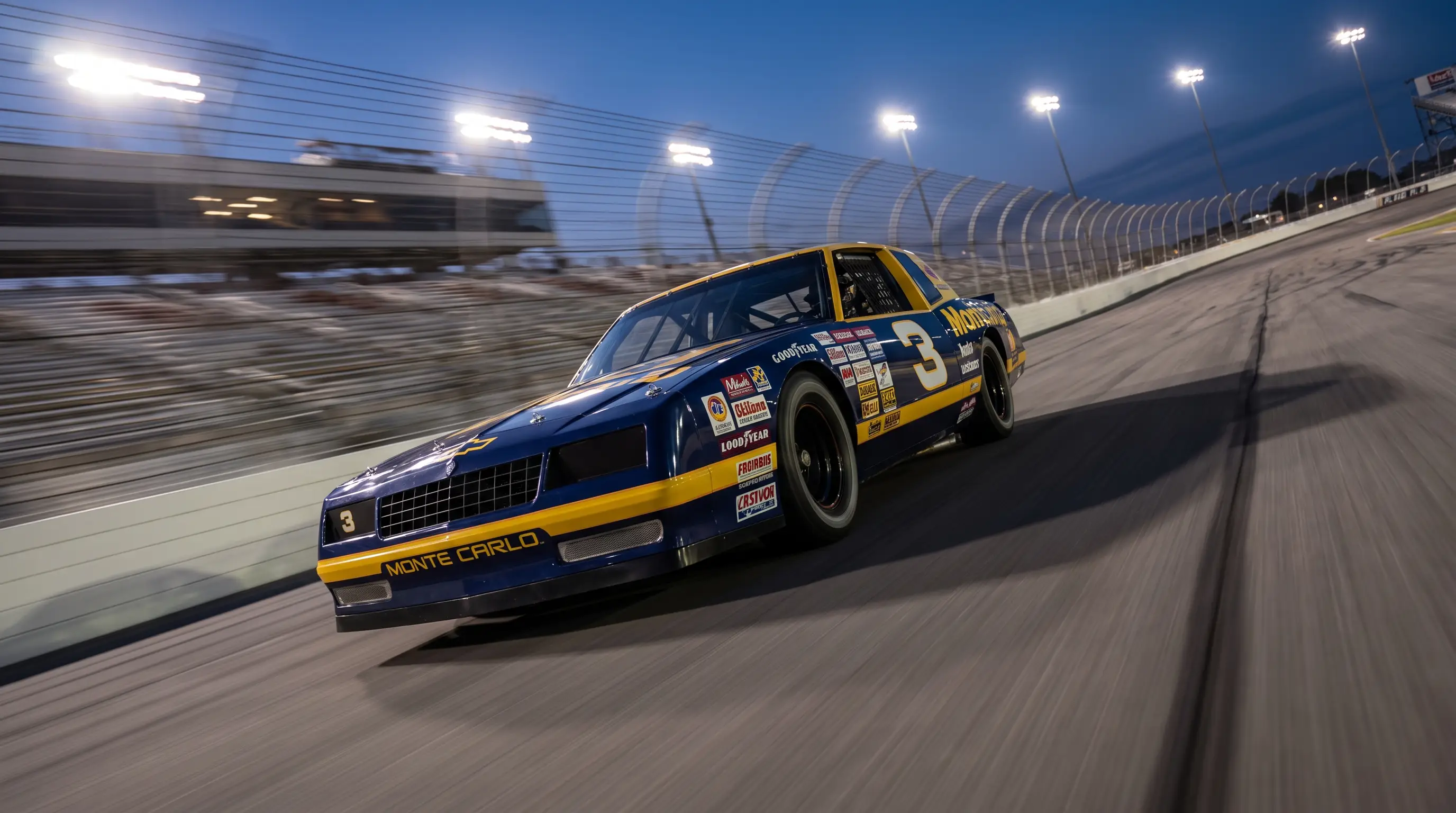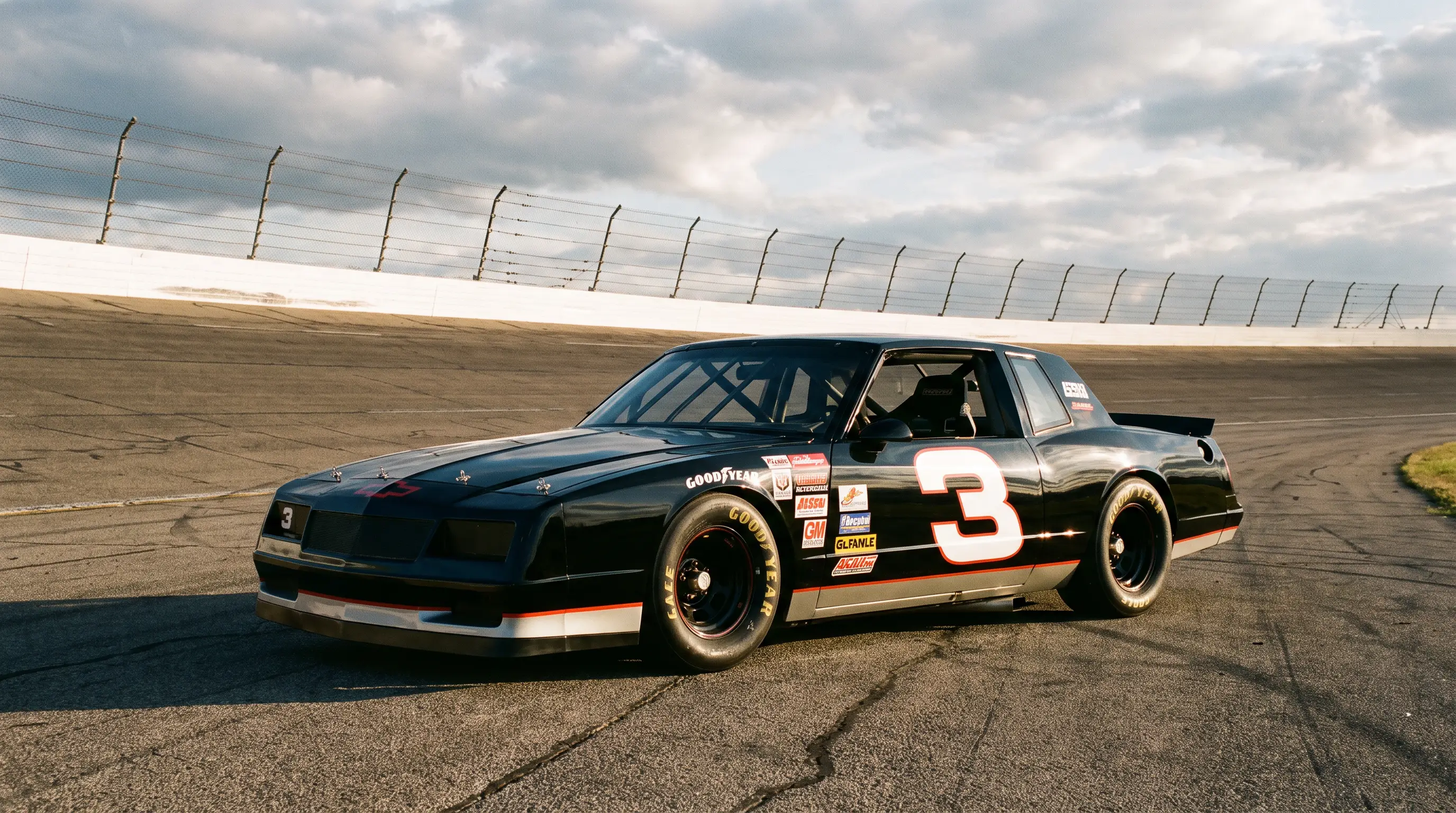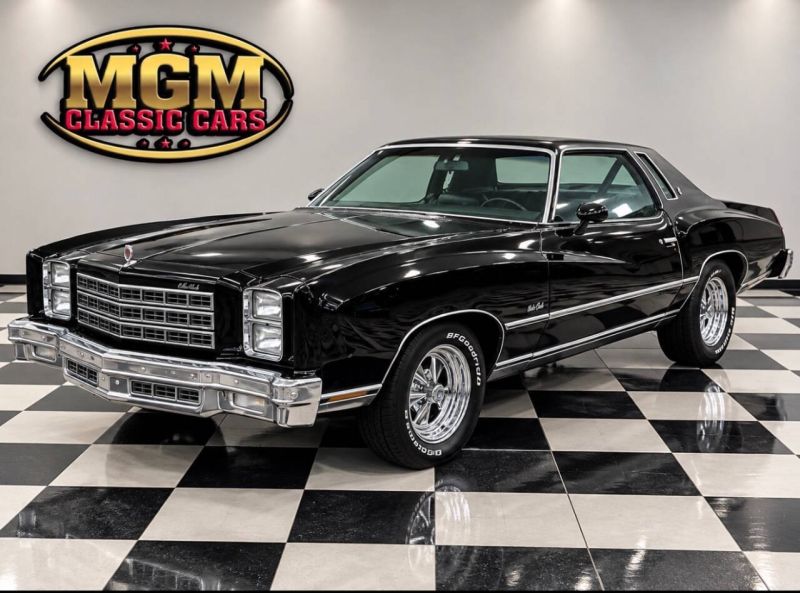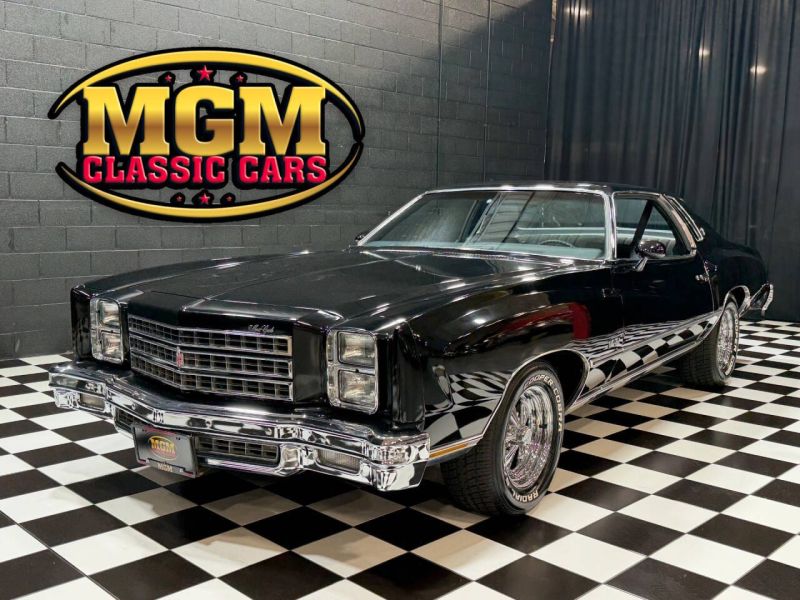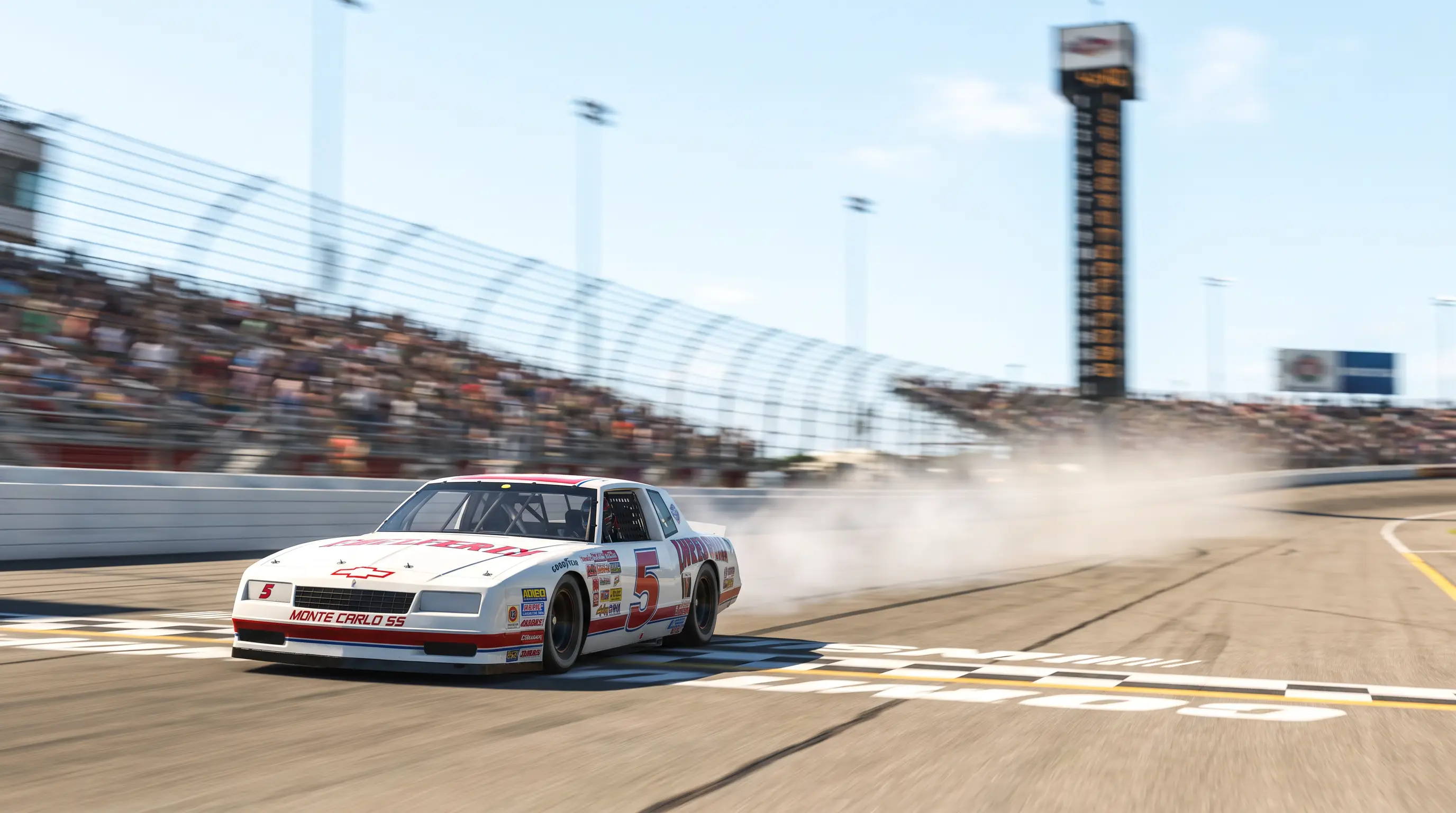
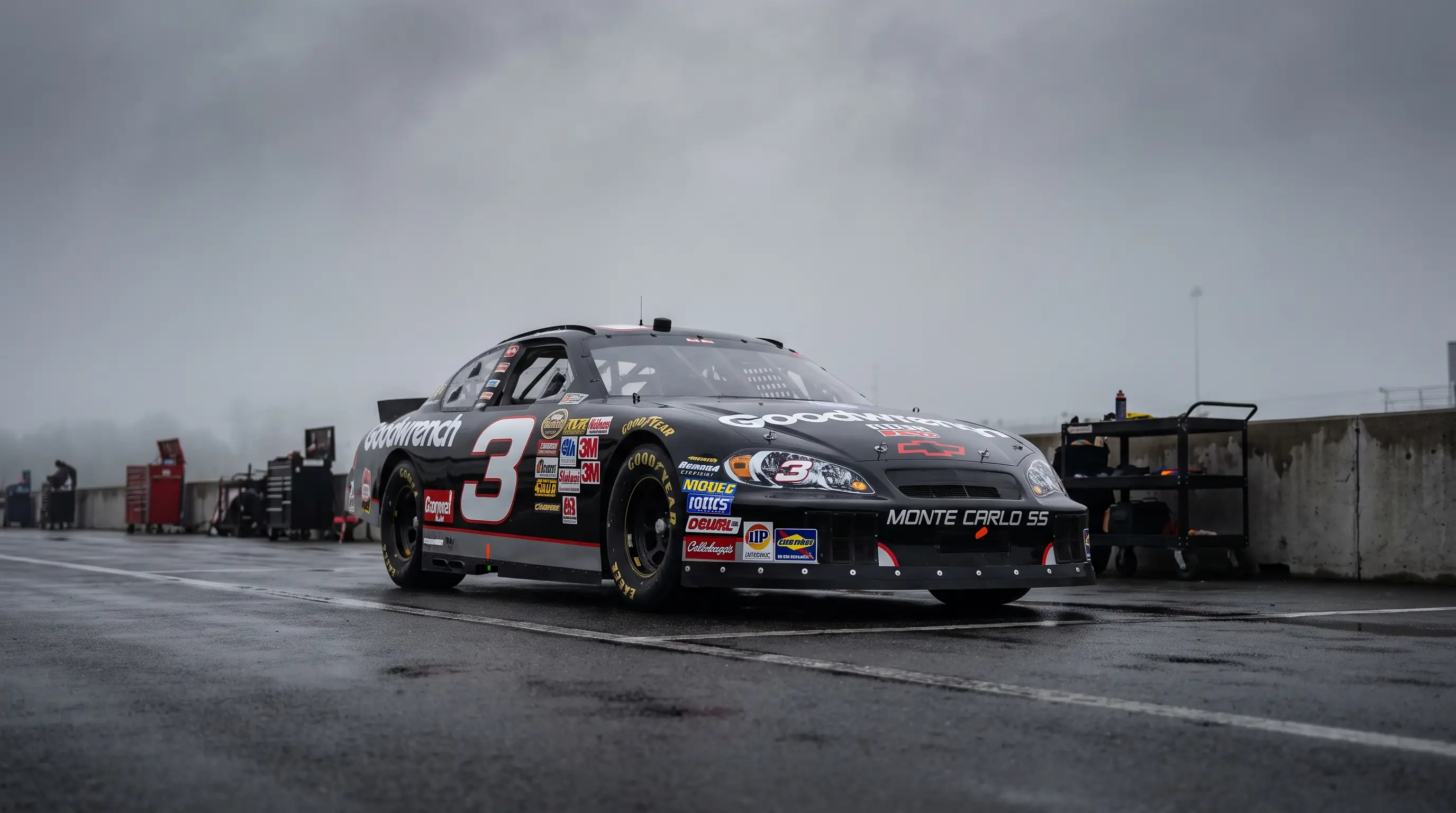
There is a specific shade of black that NASCAR fans of a certain age see in their heads the instant somebody mentions the number three, and that black lived on a Monte Carlo before it lived on anything else most casual fans remember. The monte carlo nascar dale earnhardt story is really the story of how one driver and one body style became so linked in the public imagination that people who have never watched a race can still describe the car from memory.
The driver who matched the car's aggression
Dale Earnhardt built his reputation as a driver who raced with an edge that made other competitors nervous, and the Monte Carlo he piloted for Richard Childress Racing carried that same reputation on the track. The car's aerodynamic improvements through the 1980s, first the sloped SS nose and later the Aerocoupe's reshaped rear glass, gave Earnhardt a platform that could run at the front of the pack on the sport's biggest superspeedways, and he used that platform as aggressively as any driver of his era.
What made the pairing work was not just raw speed. Earnhardt had a reputation for getting more out of a car than its raw numbers suggested it should deliver, and the Monte Carlo's evolving aero packages gave him a chassis that rewarded that kind of aggressive, opportunistic driving style on the tracks where aerodynamics mattered most.
The black car becomes a cultural symbol
The black and silver paint scheme that became inseparable from Earnhardt's identity turned the Monte Carlo into something bigger than a race car. It became a symbol recognized well outside the NASCAR fanbase, showing up on merchandise, in casual conversation, and in the memory of people who could not have named another car on the grid. That crossover into broader popular culture is rare for any race car, and the Monte Carlo earned it through years of Earnhardt running at the front in a body style that already looked purposeful before a single lap was turned.
Part of why the black paint scheme worked so well visually was the Monte Carlo's own lines. The car's flat panels and clean surfaces, refined through the SS and Aerocoupe aero programs, gave the black paint somewhere to sit without visual clutter. A more ornate body style would have fought the simplicity of that color scheme. The Monte Carlo's shape let it read as menacing rather than busy.
What the pairing meant for the road cars
Success on Sunday sold Monte Carlos on Monday, and that old racing industry adage held especially true during Earnhardt's most dominant years. Showroom traffic and enthusiast interest in the Monte Carlo SS and Aerocoupe both benefited from a driver whose on-track presence made the nameplate feel relevant to buyers who had never set foot at a superspeedway. Chevrolet's marketing leaned into that connection deliberately, tying street car advertising to the racing program whenever the timing allowed it.
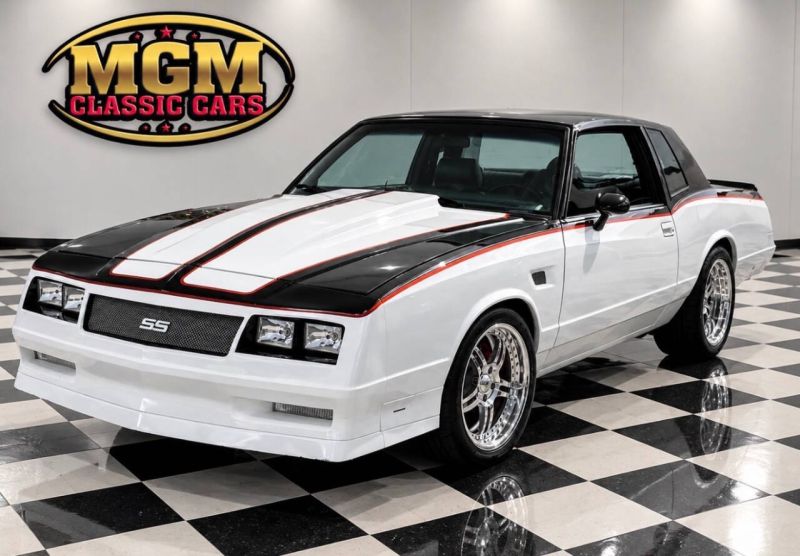
That relationship between the race car and the street car is part of why Monte Carlos from this era still carry weight with collectors specifically interested in the racing connection, even when the individual car in question never turned a competitive lap itself. Owning an SS or Aerocoupe from this window is owning a piece of the same silhouette that ran at the front of the field during one of the sport's most watched eras.
"Earnhardt didn't just drive that Monte Carlo well. He made an entire generation of fans care about a car shape they'd otherwise have ignored, and that kind of influence doesn't fade just because the racing stopped."
- Patrick Walsh
A rivalry that raised the car's profile further
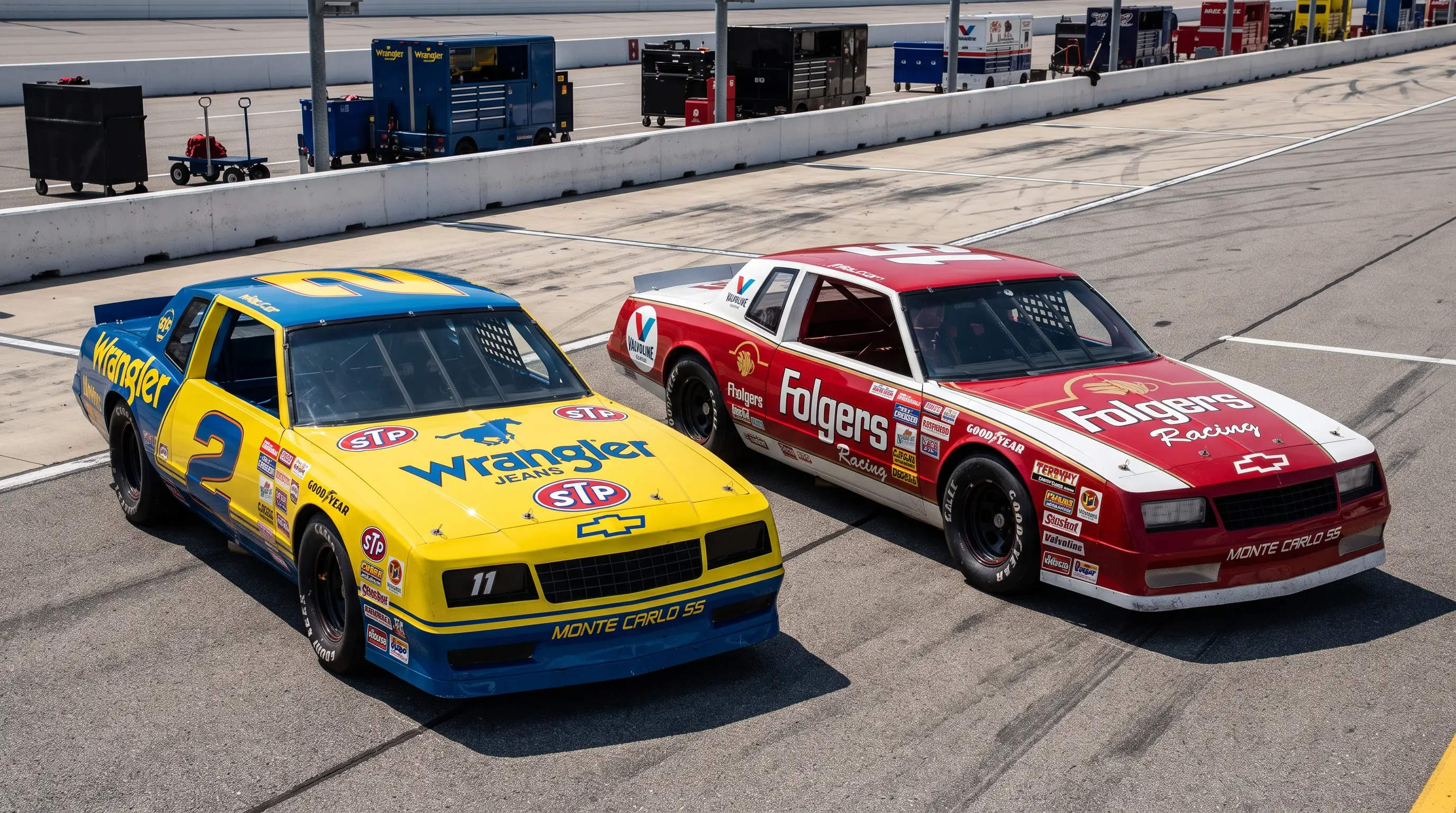
Earnhardt's success in the Monte Carlo did not happen in a vacuum. He raced against a field of talented drivers in competitive equipment of their own, and the rivalries that developed on track during those years did as much to raise the profile of the entire field as any single driver's individual accomplishments could have. Fans tuning in to watch Earnhardt chase down a rival in the closing laps of a superspeedway race were, whether they realized it or not, also watching the Monte Carlo's aerodynamic development get tested in the most demanding conditions the sport could offer.
Those close, hard-fought finishes became appointment viewing for a growing national audience, and the Monte Carlo's silhouette became part of the visual shorthand fans used to describe an era of NASCAR racing that felt more physical and more personal than what came before it. The car and the driver elevated each other, and neither one's legacy today can really be told without the other.
The legacy that outlasted the racing years
Why collectors still chase this exact era
Ask a Monte Carlo collector today which years they prize most, and the SS and Aerocoupe models that overlap with Earnhardt's most competitive seasons come up constantly, often ahead of models that were objectively rarer or more powerful on paper. That preference is not really about spec sheets. It is about the story attached to the shape, and a well-documented example from this window carries an emotional and cultural weight that a purely mechanical comparison cannot fully explain. Buyers are not just purchasing a car. They are purchasing a piece of a specific, well-remembered chapter in American motorsport.
That emotional premium has held up remarkably well over time, and it has arguably grown as the generation who watched those races firsthand has aged and started passing their own memories, and sometimes their own cars, down to children and grandchildren who never saw a single lap live. The story keeps circulating because each new audience finds something in it worth holding onto, and the Monte Carlo remains the physical object that story gets told around.
Decades later, the black Monte Carlo remains one of the most instantly recognizable race cars in American motorsport history, and its influence on how people perceive the entire nameplate has not faded with time. Fans who discover the model today often come to it through the racing story first and the road car second, which is a rare order of operations for a nameplate this old. For anyone wanting the racing program's fuller arc, you can read the background covering the whole competitive era, and a closer look at one specific season is worth a look too if you want the details of a single year's campaign.
If the racing story has you wanting to own a piece of the era yourself, you can always shop classic Monte Carlo listings and find an SS or Aerocoupe that carries the same shape Earnhardt made famous. The car earned its reputation the hard way, lap after lap, and that reputation has held up remarkably well.
Sources and notes
- Dale Earnhardt - Wikipedia
- Sportsnaut - Dale Earnhardt Sr Was Almost NASCAR's "Man in Blue"
- Barn Finds - Dale Earnhardt Movie Car: 1988 Chevrolet Monte Carlo
- Silodrome - A NASCAR Homologation Special: The Chevrolet Monte Carlo SS Aerocoupe
- Autoblog - The Forgotten Chevy Monte Carlo That Was Built Just to Win NASCAR
- Chevrolet Monte Carlo - Wikipedia