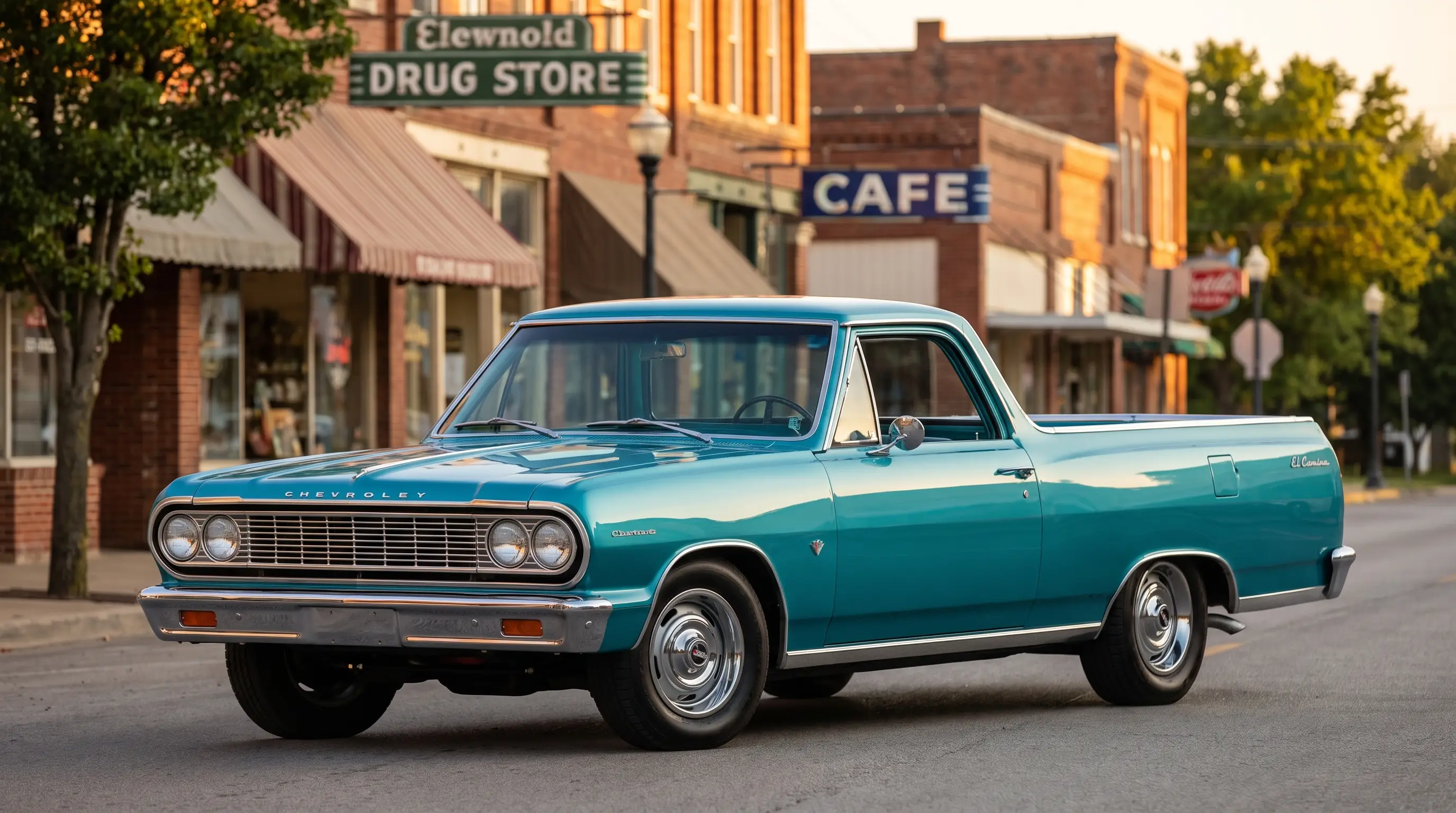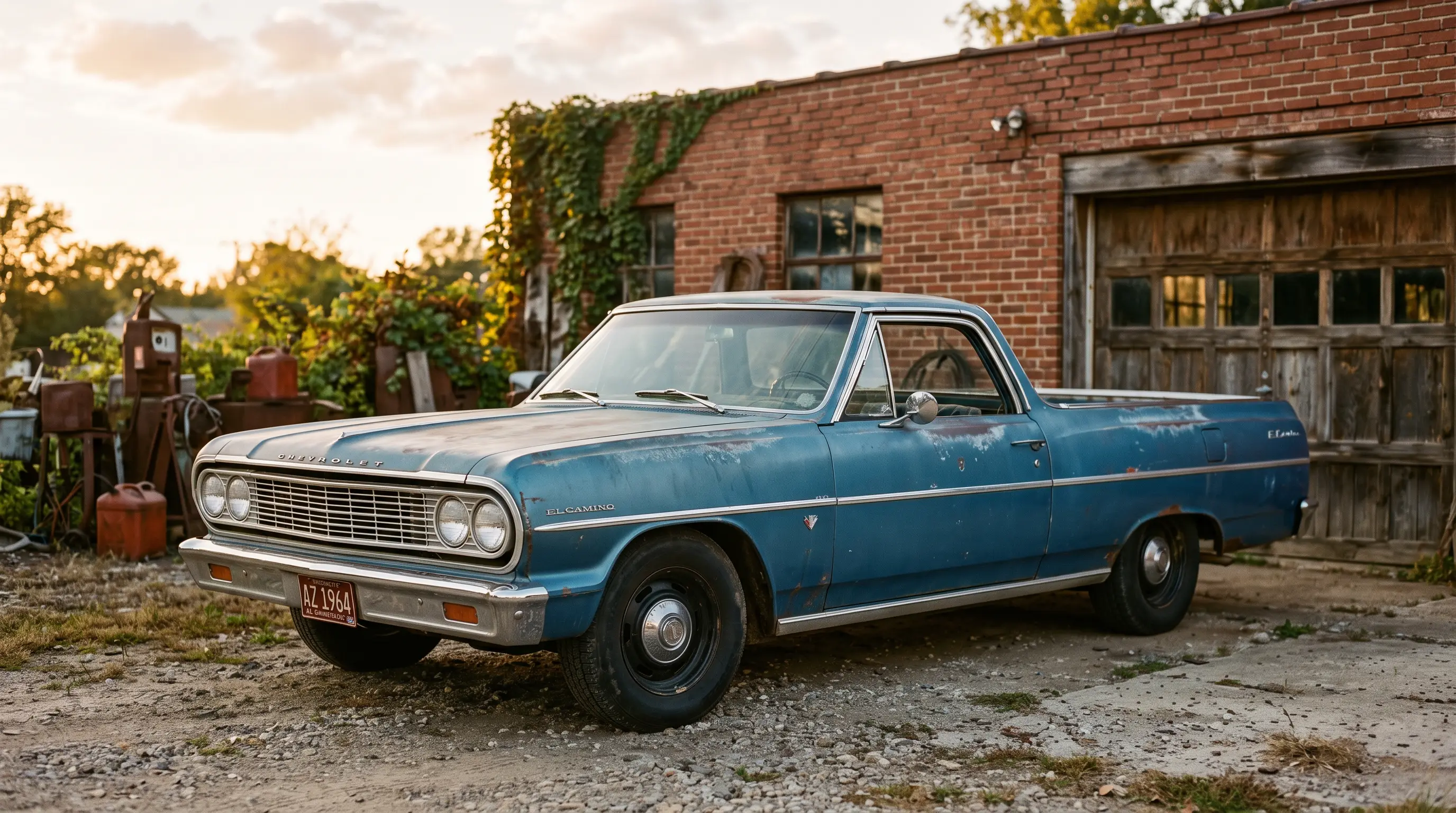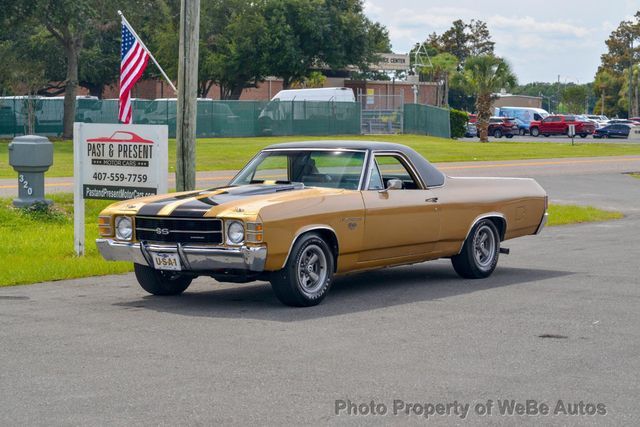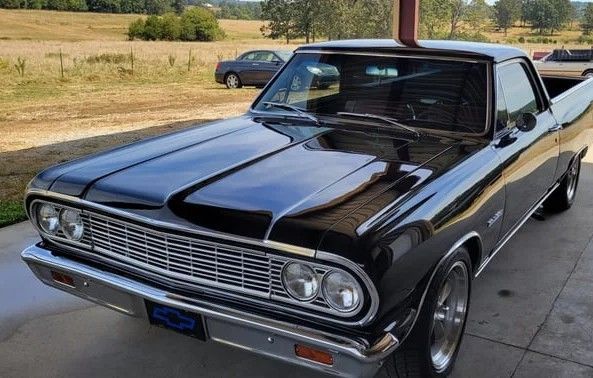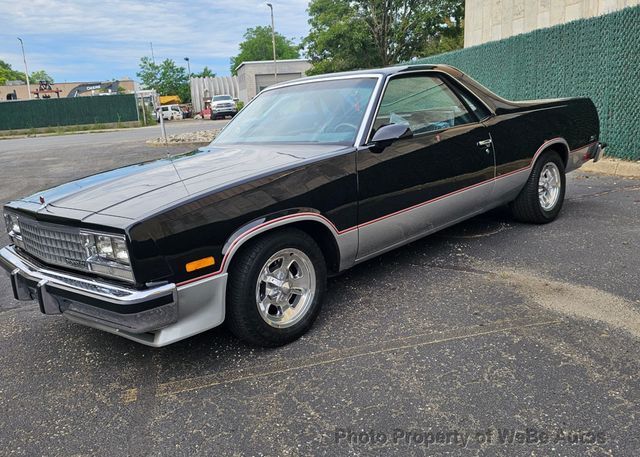
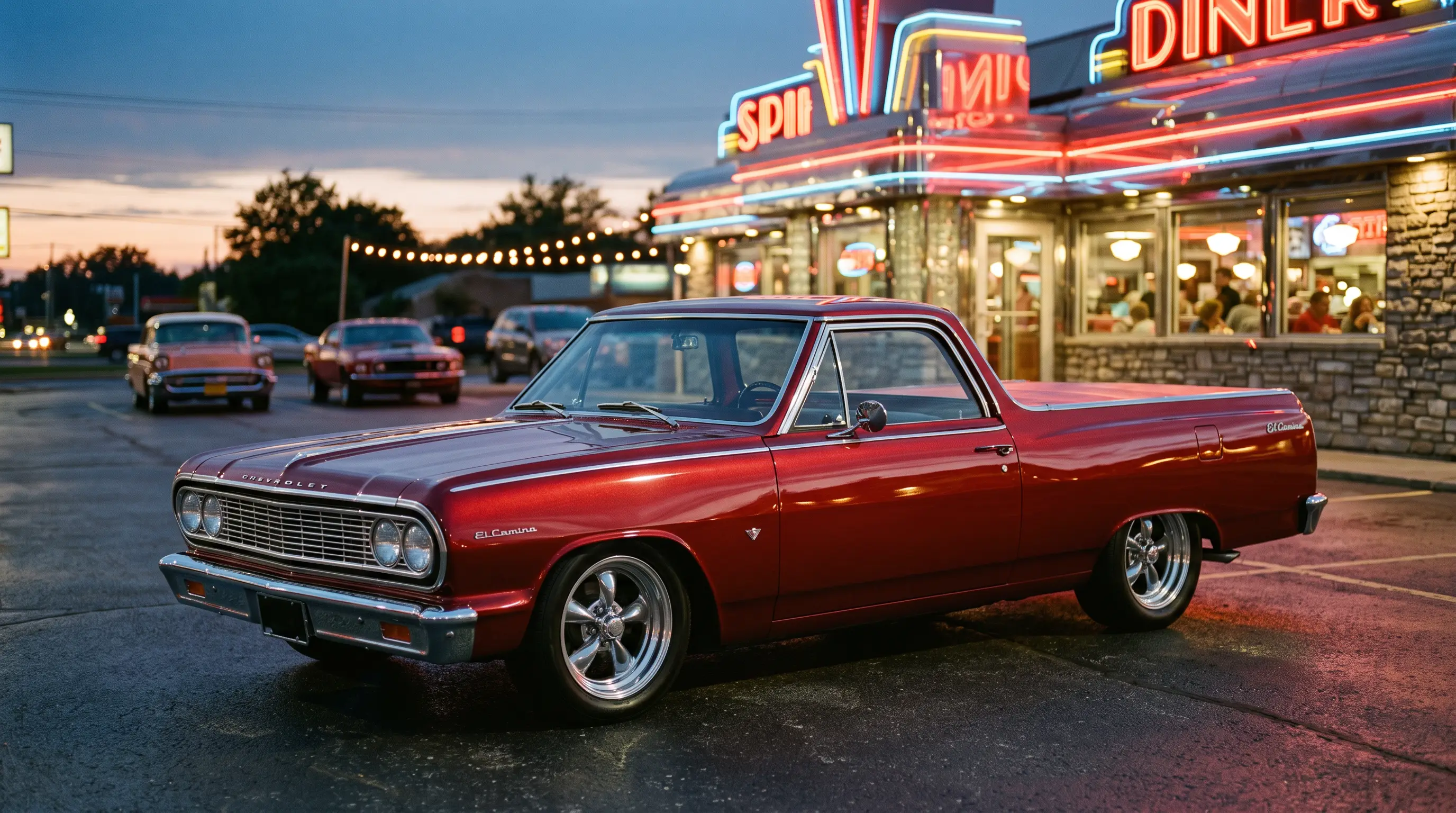
The el camino 1964 custom scene did not wait for a sanctioned car show to prove itself. It grew up in driveways, at drive-ins, and along the boulevards where a fresh coupe utility wearing a Chevelle face and a pickup bed was already a curiosity before anyone touched the paint. Chevrolet had just brought the El Camino back after a four year absence, and the people who bought the 1964 version early were, more often than not, the same people who could not leave a car stock for long.
A blank canvas that Chevrolet handed over willingly
Part of what pulled the 1964 El Camino into the custom world so quickly was the platform itself. It rode on the new A-body Chevelle chassis, a mid-size body that was lighter and more tossable than the full-size 1959-60 El Camino had been, and it came with a parts bin shared across an entire General Motors lineup. Builders did not need exotic components. A 283 or 327 small block, a set of aftermarket wheels, a lowered stance, and a two-tone paint job were all within reach of a working owner with a Saturday afternoon and a modest budget.
That accessibility mattered more than any factory option sheet. The base El Camino left the assembly line dressed plainly, which left plenty of room for an owner to add character without fighting the factory's own styling statement. After years of cataloging period build sheets and dealer invoices, one pattern keeps repeating: very few 1964 El Caminos stayed in the trim their first owner drove home in. The car was a starting point, not a finished thought, and the custom scene understood that faster than Chevrolet's own marketing department did.
Wheels, stance, and the visual language of the era
Reverse chrome wheels, American Racing five-spokes, and the occasional set of Super Sport wheels borrowed from a Chevelle parts counter all showed up on 1964 El Caminos within a year or two of sale. Lowering blocks in the rear and de-arched springs up front gave the coupe utility a stance that read as purposeful rather than accidental, a look that translated directly from street builds into the emerging car show circuit of the mid-1960s.
Paint told its own story. Factory colors like Palomar Red and Tuxedo Black were common starting points, but scallops, pinstriping, and two-tone treatments running along the beltline were widespread by 1966 or 1967 on cars that had started life in 1964. The bed itself, uniquely useful compared to a two-door hardtop, became a canvas too, sometimes carpeted, sometimes fitted with a tonneau, sometimes left rugged on purpose to keep the truck half of the car's identity visible.
Car clubs, cruise nights, and a community that took the El Camino seriously
Regional car clubs across California and Texas embraced the 1964 El Camino faster than clubs on the East Coast did, largely because the cartruck concept had cultural roots in West Coast custom traditions stretching back to the 1950s. Clubs built around Chevelles frequently welcomed El Camino owners as close cousins rather than outsiders, since the two shared nearly everything under the skin. Cruise nights in cities like Van Nuys and San Bernardino regularly featured 1964 El Caminos parked alongside hardtops and convertibles, their beds sometimes doubling as impromptu seating for spectators.
The lowrider tradition that grew through the late 1960s and into the 1970s eventually adopted the El Camino as well, valuing the long, flat bed and the Chevelle's suspension geometry for the hydraulic setups that became a signature of that scene. That history belongs to the culture rather than to any single build, but it is impossible to talk honestly about how the 1964 El Camino earned its reputation without acknowledging the communities that kept choosing it decade after decade.
Readers who want the whole picture on how the 1964 model came together mechanically and stylistically will find that context explains a lot of what the custom scene was reacting to and building on.
Reading the clues on an original custom build
Spotting genuine period customization on a surviving 1964 El Camino takes a practiced eye. Non-factory wheel bolt patterns, filled trim holes left over from removed emblems, layered paint hiding under a rocker panel, and mismatched date-coded components under the hood all point toward a car that was worked on decades ago rather than last year. None of that should scare off a buyer. It is simply part of reading the car honestly, the same way a researcher reads a body's stampings and casting numbers to understand what a car actually is rather than what it claims to be.
Interior work followed a similar pattern to the exterior. Tuck-and-roll shops that reworked Chevelle bench seats used the same patterns and vinyl rolls on El Camino interiors, sometimes adding a wood-rim wheel or a shifter conversion if the owner wanted a sportier feel behind the column shift. None of this required specialized knowledge of the El Camino specifically. It required only the willingness to treat a truck-badged car as a passenger car underneath, which is exactly what the platform was.
What the custom era means for collectors today
A 1964 El Camino that carries genuine period-correct custom work, rather than a modern restomod reinterpretation, occupies an interesting spot in today's market. Purists sometimes prefer an unmolested original, but a well-documented custom build with photographs, club records, or magazine features from the 1960s or 1970s carries its own kind of provenance. Cars with a traceable custom history, especially ones tied to a known regional club, tend to hold collector interest even when the modifications themselves would never pass a strict concours judge's checklist.
For anyone chasing an example that still shows that lineage, whether restored to its custom-era look or left as a foundation for a build of your own, it helps to find a classic El Camino with clear records rather than guessing at a car's past from paint alone.
"The 1964 El Camino was never really a stock car in most owners' minds. It was a starting point that Chevrolet happened to sell finished."
- Sarah Whitfield
The lasting appeal of a working platform
What keeps the 1964 El Camino relevant to custom builders even now is not sentiment alone. The body still photographs well lowered, the parts interchange freely with Chevelle stock, so builders are not chasing rare components, and the model carries none of the over-restored stigma that follows more famous muscle cars from the same era. It is possible to build a period-style custom 1964 El Camino today using largely period-correct methods, and the result reads as authentic rather than costume. That authenticity, more than any single spec sheet number, is what has kept this car circulating through custom culture for six decades.
Magazine coverage from the period helps confirm all of this without relying on memory alone. Regional hot rod and custom publications occasionally featured a lowered El Camino in show coverage or a reader's ride spread, usually without much fanfare, treating it as one more entry among dozens of Chevelles and Impalas rather than as a novelty. That casual acceptance in the contemporary press is itself useful evidence for anyone trying to date a car's modifications today, since a build style photographed in a 1968 magazine spread rules out the possibility that the same treatment was applied decades later by someone chasing a look rather than living it.
Owners who kept their El Caminos through the 1970s and 1980s often layered new trends onto older custom work rather than starting from bare metal each time, which is why some surviving cars show a kind of visible history: an early scallop job under later flake, a set of factory Rally wheels swapped in after wire wheels fell out of favor, a bed liner added once the show duty gave way to actual hauling again. Reading that layered history correctly, rather than assuming the most recent look is the only one that ever existed, is part of what separates a careful appraisal from a quick guess at a swap meet.