
By the time you reach the el camino vs ranchero 1972 final muscle round, the fight had quietly changed shape, and factory paperwork from both companies shows it plainly. 1972 was the first model year General Motors required engines to be rated in SAE net horsepower rather than the gross figures used through 1971, and Ford followed the same industry-wide switch. That single accounting change makes 1972 look, at a glance, like a dramatic step backward for both the El Camino and the Ranchero, when in reality a meaningful share of the drop on paper reflects how the number was measured rather than how much power actually left the crankshaft. Untangling that distinction is the whole story of this model year.
Car Features
6 min read
1972: The Last Muscle Round of the Cartruck War
1972 closed out the true muscle era for both the El Camino and Ranchero, complicated by the industry-wide switch to net horsepower ratings that made both trucks look weaker on paper than they really were.
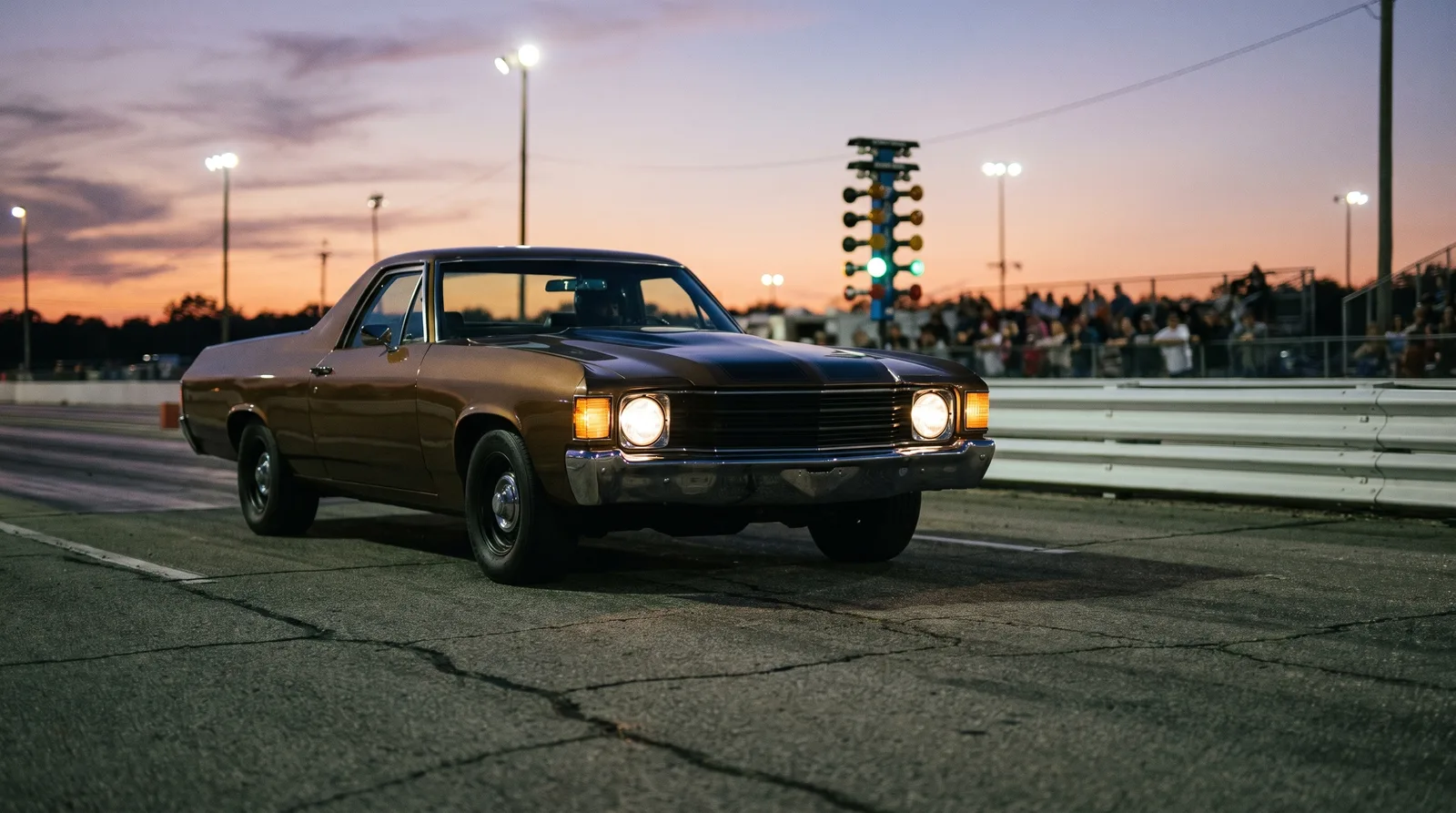
One big-block left standing on the El Camino side
The El Camino's SS454 continued into 1972, but with only one big-block option remaining. The LS6 was gone, and what stayed was the LS5 configuration now rated at 270 net horsepower, a figure that reads as a steep collapse from the 360 gross-rated LS5 of 1970 until you remember the net rating includes accessories, exhaust restriction, and a lower compression ratio Chevrolet had already begun phasing in to run on lower-octane, lower-lead fuel. The compression drop was real and did cost genuine output, unlike the pure accounting shift in the rating method, and both factors landed in the same model year, which is exactly why 1972 confuses casual comparisons between it and 1970.
| Spec | 1972 El Camino SS454 | 1972 Ranchero GT |
|---|---|---|
| Rating standard | SAE net | SAE net |
| Top big-block | 454 cu in LS5, 270 hp net | 429 cu in Cobra Jet, detuned |
| Compression | Reduced from 1970 spec | Reduced from 1970 spec |
| Emissions equipment | Expanded PCV, leaner carburetion | Expanded PCV, leaner carburetion |
Ford's Cobra Jet goes through the same reckoning
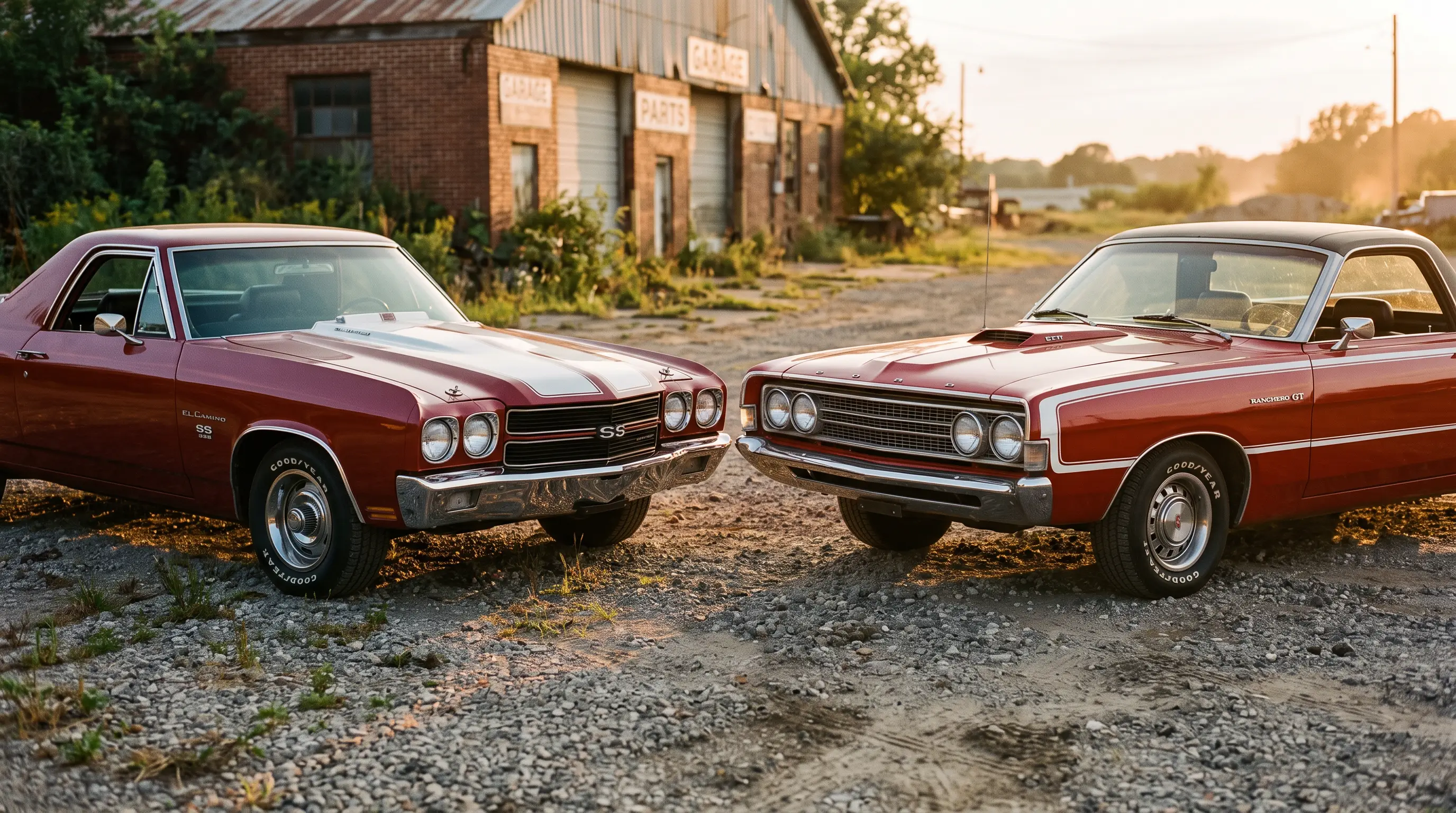
The Ranchero side went through the same reckoning. Ford's 429 Cobra Jet option remained available into 1972 in reduced form, with the Super Cobra Jet already retired the year before. The GT package still existed and still carried the visual language of a performance truck, but the underlying engine was tuned for the same lower-compression, lower-lead reality Chevrolet was navigating. Both companies were managing the same three pressures at once: insurance surcharges on high-displacement engines, the phase-out of leaded high-octane fuel, and early emissions equipment that was not yet refined enough to recover the power it was costing.
Marketing a shrinking performance story
What is genuinely notable about 1972 is how both companies handled the marketing of a shrinking performance story. Neither Chevrolet nor Ford pretended the SS454 or GT package still meant what it had meant in 1970. Advertising copy shifted toward comfort, trim, and versatility rather than leading with a horsepower figure the way both brands had in the peak years. That is a tell about where the market was heading. Buyers were still interested in a sporty-looking car-truck, but the era of the factory selling raw displacement as the headline was ending for both nameplates at almost exactly the same time, which says more about the regulatory and insurance climate than it does about either company losing interest in performance.
"A 1972 window sticker and a 1970 window sticker are not speaking the same language. Compare the engines, not just the number stamped next to them."
- Tom Ramirez
For collectors evaluating a 1972 El Camino SS454 or Ranchero GT today, the practical takeaway is that these are genuinely detuned trucks relative to their 1970 counterparts, but they are also the last model year either nameplate offered a big-block at all in this configuration before further tightening arrived later in the decade. That combination, real but reduced performance plus the status of being an end-of-an-era option, is exactly why 1972 examples still draw serious interest from buyers who understand the net horsepower context rather than dismissing the year outright because the number on paper looks smaller than 1970's.
Insurance tables and fuel quality shaped what buyers actually chose
Insurance underwriting in this period deserves more credit than it usually gets for shaping what buyers actually chose to order. By 1972, insurers had built detailed tables tying premium surcharges directly to displacement and horsepower brackets, and a big-block El Camino or Ranchero fell squarely into the highest bracket regardless of how the factory chose to rate the engine that year. That reality pushed a meaningful share of buyers who might have ordered a big-block in 1968 or 1970 toward a small-block or six-cylinder configuration by 1972, not because the option had disappeared, but because the true cost of owning it, insurance included, had climbed faster than most household budgets could absorb. Surviving big-block cars from this specific year are consequently rarer than the option's continued availability on paper would suggest.
Fuel quality changes compounded the compression story further. As leaded premium gasoline became harder to find in some markets ahead of the wider phase-out later in the decade, both companies had already begun engineering their engines to tolerate lower-octane fuel without pinging or detonation, which meant compression ratios were coming down for reasons that had nothing to do with horsepower ratings at all. A 1972 buyer filling up at a station that had already switched to lower-octane regular fuel needed an engine tuned for that reality, and both Chevrolet and Ford built their 1972 big-blocks with that practical concern in mind well before it became a universal industry requirement.
Why 1972 has aged into a real collector year
Resale and collector interest in 1972 examples took decades to catch up with what the cars actually represent. For much of the 1980s and 1990s, buyers chasing big-block El Caminos and Rancheros gravitated almost exclusively toward 1970 models, treating anything from 1971 onward as a lesser consolation prize once the net horsepower figures became widely understood. That view has softened considerably as more collectors have come to appreciate 1972 specifically as the final year either nameplate offered genuine big-block displacement before further tightening arrived, a status that gives these cars a legitimate claim to historical significance independent of their reduced output relative to two years earlier.
1972 closes out the true muscle chapter for both the El Camino and the Ranchero. What follows in later years is a different kind of car-truck, one built around comfort, style, and downsized platforms rather than displacement. Readers who want the complete arc from the mid-size clash of the 1960s through this final muscle round should read the whole picture for full context on how the rivalry evolved year over year. And for anyone drawn to the idea of a documented 1972 big-block example, it is worth taking time to shop classic El Camino listings and see how sellers are currently presenting net-rated performance trucks from this specific window.
Sources and notes
Related Reading

About the author
Tom Ramirez
Corvette researcher and historian based in Bowling Green, Kentucky. Two decades documenting Corvette production history from original factory records.
Related Listings - Chevrolet El Camino

Comments
Be the first to comment on this article.