
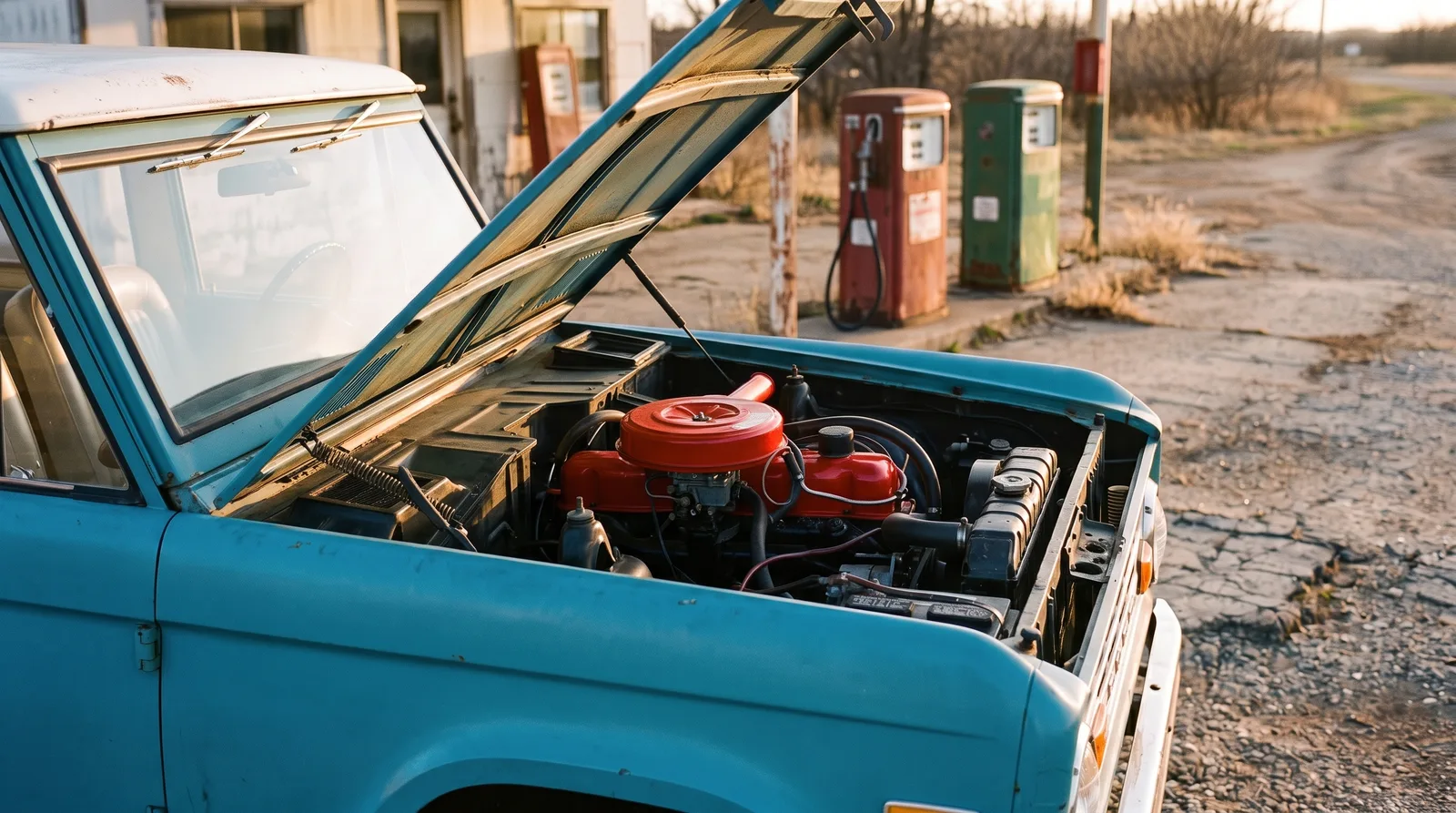
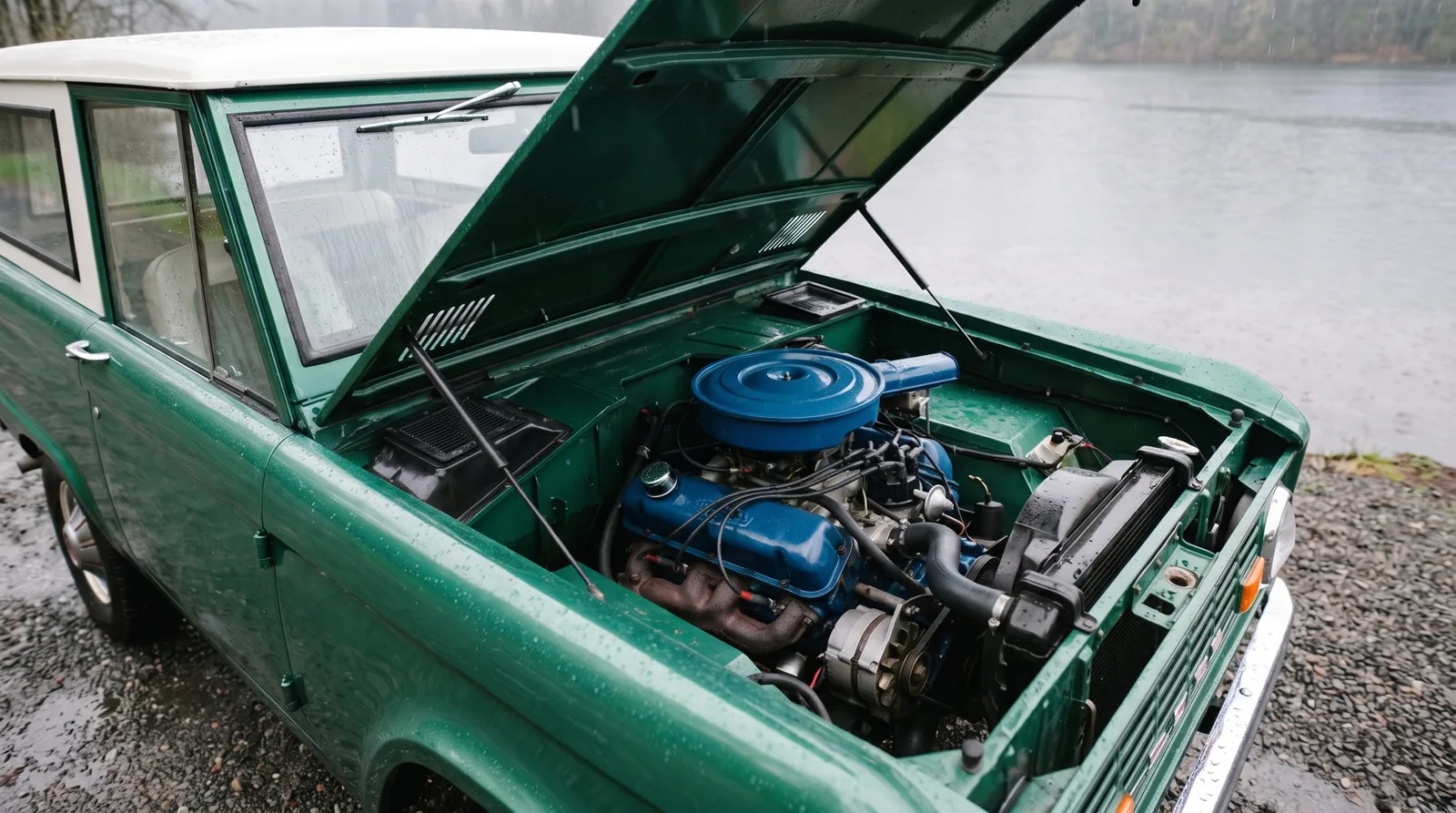
The Ford Bronco 200 six is the engine most first-generation Broncos actually ran, and it gets less attention than either the base 170 it replaced or the V8s that eventually crowded it out of the conversation. That is a shame from an engineering standpoint, because the 200 is a genuinely well-sorted small inline six, and understanding what it does well explains why Ford leaned on it as the standard engine for most of the classic Bronco's early production run.
Car Features
6 min read
The 200 Six and the Bronco's Inline Evolution
An engineering look at the ford bronco 200 six, the volume engine that replaced the 170 and quietly carried most early Broncos through daily ownership.

An evolution, not a redesign
Ford replaced the 170 cubic inch six with the larger 200 cubic inch six as the Bronco's standard engine within a few years of the truck's 1966 launch. This was not a clean-sheet engineering exercise. The 200 shares its basic architecture with the smaller six, a simple, low-stressed inline design that Ford had already proven across multiple vehicle lines. What changed was displacement, achieved through a longer stroke, which is the most straightforward way to add torque to an existing engine family without redesigning the block from scratch.
That evolutionary approach matters because it tells you what Ford was optimizing for: reliability and cost control, not novelty. An automaker chasing a headline spec would have gone bigger, sooner. Ford instead made a measured, incremental change that kept the six-cylinder Bronco simple to build and simple to service while giving buyers a noticeable improvement over the base 170.
What the extra displacement actually bought
The jump from 170 to 200 cubic inches translated into a real gain in low-end torque, which is the number that matters for a light utility truck doing trail work, towing light loads, or just merging onto a highway without struggling. Horsepower numbers on both sixes look modest by V8 standards, but the 200 closes enough of the gap that it stopped feeling like the truck's obvious weak point the way the 170 sometimes did in period reviews and owner complaints.
The engineering tradeoff is straightforward. More displacement in a similar physical package means more mass reciprocating inside the engine, which typically costs a small amount in smoothness and fuel economy compared to the 170. In practice, Bronco buyers accepted that tradeoff readily, because the improvement in usable, everyday power outweighed the modest cost in refinement.
Why it became the volume engine
Once the 200 replaced the 170 as standard equipment, it became the engine under the hood of the largest share of six-cylinder early Broncos built. That volume matters today for a practical reason: parts availability and mechanical familiarity within the collector community are stronger for the 200 than for the rarer 170, simply because more of these engines exist and more shops have direct experience with them.
From an ownership standpoint, that translates into lower long-term risk for a buyer choosing a 200 six Bronco over a rarer engine option. Fewer unknowns, more documented service history across the wider owner community, and a broader base of comparable examples to check your own truck against.
"The 200 six is a case study in getting more out of an existing design instead of starting over. It is not glamorous engineering, but it is honest engineering, and honest engineering is what kept these trucks running for decades."
- Emily Chen
How it stacks up against the V8 options
Buyers comparing a 200 six Bronco against a V8 truck need to be clear about what they are trading. The six gives up top-end power and, in most configurations, some towing capacity, in exchange for a lighter front end, generally better fuel economy, and a simpler engine to diagnose and maintain. Neither choice is objectively correct. It depends on how the truck is actually going to be used, and honestly evaluating that use case before buying saves a lot of buyer's remorse later.
I would rather see a buyer choose a well-documented, mechanically sound 200 six than an underdocumented V8 truck with an unclear history. The six will not win a spec sheet argument, but it will start reliably and it will not surprise you with a hidden problem the way a mystery V8 swap sometimes does.
| Spec | 170 six | 200 six |
|---|---|---|
| Displacement | 170 cubic inches | 200 cubic inches |
| Role | Original base engine | Replacement standard engine |
| Basic architecture | Shared inline six block family | Shared inline six block family, longer stroke |
| Parts availability today | More limited | Broader, higher production volume |
If you want read the background on how the six-cylinder engines and the body configurations were developed together at launch, that context explains a lot about why Ford made the choices it did. When you are ready to actually shop, go find a classic Bronco and cross-check the listed engine against any available documentation before you assume the spec sheet in the ad is accurate.
Where the 200 six fits in the wider timeline
It is worth remembering that the 200 six did not stay the top engine option for long once Ford began offering V8s in the Bronco lineup. That does not diminish what the 200 accomplished. It was the engine that carried the largest share of daily Bronco ownership through the truck's first several years, doing unglamorous, dependable work while the V8 options got the attention in showroom brochures. Engineering history tends to remember the loudest number on the spec sheet, not the engine that quietly did the job for the most owners, and the 200 six is a clear example of that imbalance.
I find it useful to think about the 200 the same way I think about any well-engineered, mid-tier component in a larger system. It was not designed to be the best possible answer to every question. It was designed to be a reliable, cost-effective answer to the question most buyers were actually asking, which was simply: will this truck start every morning and keep running without expensive surprises. On that measure, the 200 six delivered consistently, and that consistency is exactly why it earned its place as the standard engine for the bulk of the early Bronco's production run.
Anyone evaluating a 200 six Bronco today should weigh that history honestly. This is not the engine that will win a bench-racing argument. It is the engine that explains why so many early Broncos are still on the road decades later, doing the same unglamorous, dependable work they were built for in the first place.
The engineering verdict
The 200 six is not a truck that impresses anyone at a car show, and it was never meant to. It is a well-executed, incremental improvement over an already-proven design, and that kind of quiet competence is exactly what let the early Bronco earn a reputation for reliability that outlasted the flashier engine options in the lineup. Judge it on those terms and it holds up well.
Sources and notes
Related Reading

Have a
Ford Bronco
for Sale?
Reach thousands of serious classic car collectors across the US.
Sell It Here →
Selling a classic? Here's how: where to sell your classic car online
Are You a Classic Car Dealer?
List your full inventory and connect with targeted classic car buyers.
Join as a Dealer →

About the author
Emily Chen
Bay Area engineer with a deep focus on vintage Japanese and European performance cars. Approaches classic car research and restoration with an analytical eye.
Related Listings - Ford Bronco

More in Car Features

Comments
Be the first to comment on this article.