
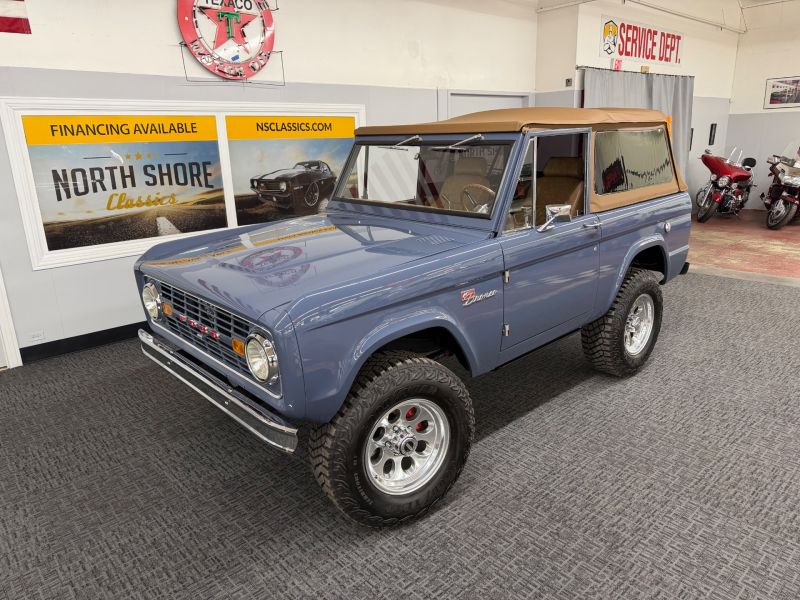
A meaningfully heavier nose. That is what Ford hung on the front axle when it offered the 289 cubic inch V8 as an option in the early Bronco, and that added front-end mass explains more about how these trucks drive and handle than any horsepower figure does. The 289 V8 turned the Bronco into a genuinely quick small truck for its era. It also changed the way the truck sat, steered, and wore over the decades that followed.
Car Features
6 min read
The 289 V8 That Gave the Bronco Muscle
The ford bronco 289 v8 turned the early Bronco into a genuinely quick truck, at the cost of a heavier front end. A straight look at what that tradeoff means.
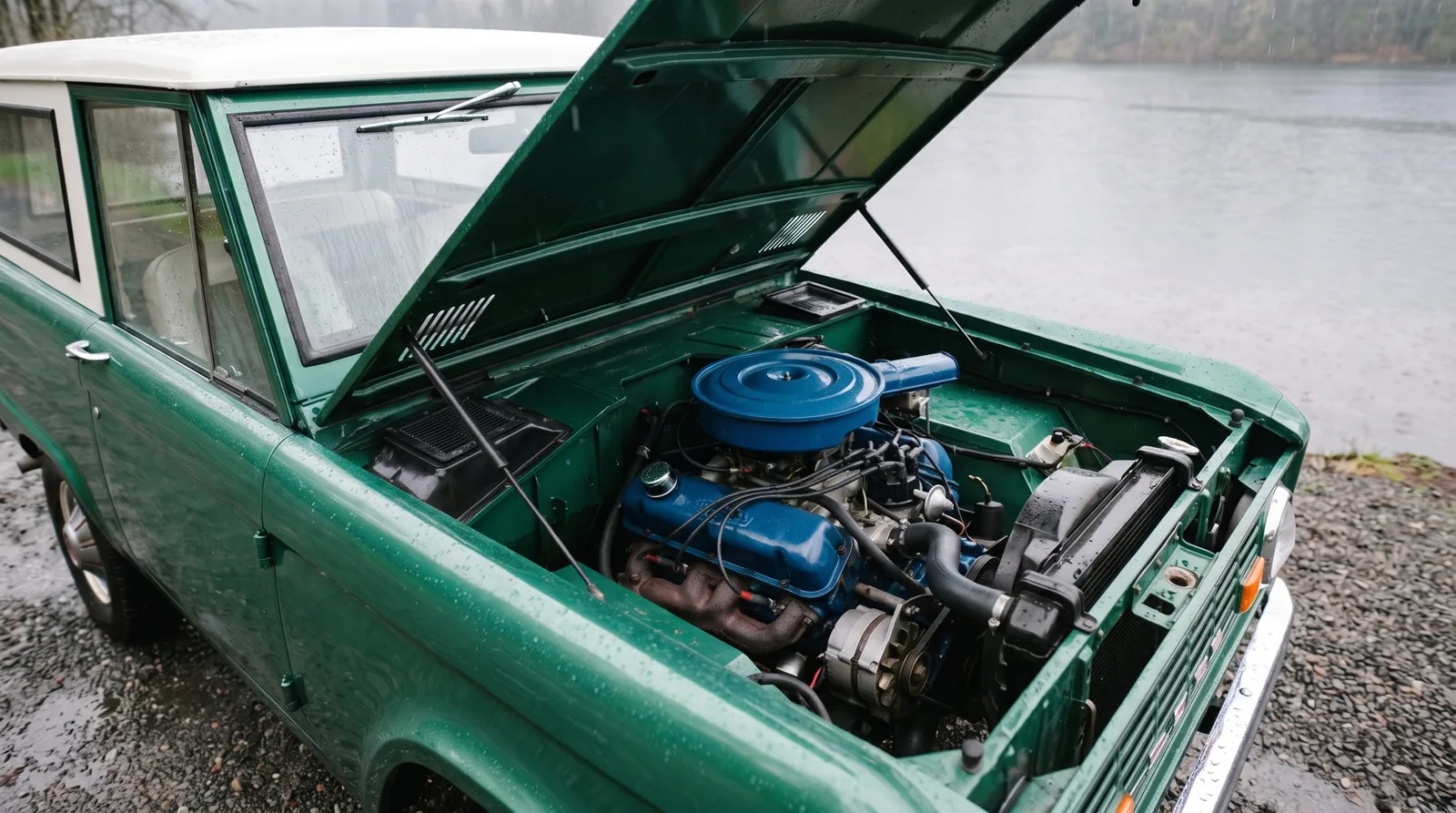
The number that mattered: displacement, not marketing
Ford added the 289 V8 as an option partway through the 1966 model year, the Bronco's launch year, giving buyers who wanted real acceleration an alternative to the standard six-cylinder engines. This was the same small-block V8 family Ford was already running successfully in its passenger cars, proven, well-understood, and easy for dealers to service without special training. Ford was not experimenting here. It was dropping a known-good engine into a light truck platform and letting the numbers do the talking.
The result was a Bronco that could genuinely move. Compared to either six-cylinder option, the 289 gave up nothing in reliability while adding real, usable power. That combination is why the 289 V8 Bronco developed its own following almost immediately, separate from the six-cylinder trucks that made up the bulk of production.
What the extra weight actually costs you
Here is the part enthusiasts sometimes skip past. A V8 up front on a short-wheelbase, live-axle truck changes the physics, not just the acceleration numbers. Front-end weight increases, which affects steering feel, front suspension wear, and how the truck handles compared to a lighter six-cylinder example. None of that makes the V8 truck worse. It makes it different, and buyers evaluating a 289 Bronco today should know they are getting a truck with a distinct handling character, not just a six-cylinder Bronco with more power bolted in.
I have looked at plenty of 289 Broncos with worn front suspension components that a comparable six-cylinder truck of the same age and mileage did not show to the same degree. That is not a defect. That is physics doing exactly what physics does when you add mass over the front wheels of a light truck.
Why this engine option matters to collector value
A documented, factory-original 289 V8 Bronco commands real interest in today's market, and it should. It is the engine that gave the early Bronco genuine performance credibility, and that credibility carries weight with buyers who want more than a slow, honest trail truck. The catch, and there is always a catch in this segment, is verifying the engine is actually original to the truck and not a later swap dressed up to look period-correct.
Swapped V8s are common enough in this market that I tell every buyer the same thing. Do not take the engine's presence as proof of anything. Check casting numbers, check any available build documentation, and be honest about what you can and cannot verify before you pay a premium for factory V8 originality.
"A 289 under the hood raises the price. A documented, original 289 raises it for the right reason. Learn the difference before you write a check."
- Dan Reeves
Comparing it honestly against the sixes
The 289 V8 gives up the lighter front end and slightly better fuel economy of the six-cylinder trucks in exchange for real acceleration and a stronger following in the collector market. Neither option is objectively right. A buyer who wants a truck to drive hard and enjoy the extra power should chase the V8. A buyer who wants the lightest, simplest, most economical version of the early Bronco should stick with the six. Both are legitimate choices, and the market supports healthy demand for both.
I get asked which one holds value better over time, and the honest answer is that both hold value fine when the truck is clean and the story checks out. The V8 tends to draw a slightly wider buyer pool because it appeals to people who never cared much about six-cylinder trucks in the first place. That wider pool can mean a faster sale when the time comes, which is worth factoring in if liquidity matters to you as much as enjoyment does.
| Spec | 289 V8, early Bronco |
|---|---|
| Displacement | 289 cubic inches |
| Engine family | Ford small-block V8, shared with passenger car lineup |
| Notable tradeoff | Added front-axle weight versus six-cylinder trucks |
| Verification priority | Confirm factory-original casting numbers before paying a V8 premium |
For the whole picture on how the engine lineup evolved alongside the Bronco's body configurations, that background fills in a lot of the context around why the V8 option arrived when it did. When you are ready to compare real trucks, go shop classic Bronco listings and cross-reference any V8 claim against actual documentation rather than taking a listing description at face value.
What actually breaks first on a hard-driven V8 truck
Front springs sag sooner on a 289 truck than on a six-cylinder example carrying similar mileage. Steering components wear at a faster rate, and the extra mass changes the load path through the frame in ways that show up eventually as cracking or fatigue in spots a six-cylinder truck rarely stresses the same way. None of this is a reason to avoid the 289. It is a reason to inspect the front end of any V8 Bronco more carefully than you would a six, and to budget accordingly if the truck has clearly seen hard use.
Buyers who plan to actually drive a 289 Bronco regularly, not just show it, should factor that wear pattern into their inspection checklist before they buy, not after. A seller who has kept up with front suspension maintenance on a V8 truck is worth paying a premium for, separate from any premium tied to the engine's collector status.
A quick reality check on power claims
I see a lot of listings that lean hard on the word "V8" without backing it up with any real detail. Ask specifically what displacement is under the hood, ask for photos of casting numbers, and treat vague answers as a red flag rather than an oversight. This engine has a genuine following and genuine value when documented. It also has enough undocumented swaps in the wild that skepticism is the correct default position, not an insult to the seller.
Bottom line
The 289 V8 earned its reputation honestly. It made the early Bronco quicker, it built a real collector following, and it is worth a genuine premium when the documentation backs up the claim. Skip the documentation step and you are just buying a heavier front end and a story. Do the verification work and the 289 is one of the strongest engine choices in the entire first-generation lineup.
Sources and notes
Have a
Ford Bronco
for Sale?
Reach thousands of serious classic car collectors across the US.
Sell It Here →
Selling a classic? Here's how: the best sites to sell a classic car
Are You a Classic Car Dealer?
List your full inventory and connect with targeted classic car buyers.
Join as a Dealer →

About the author
Dan Reeves
Performance engine builder from North Carolina's motorsports corridor, focused on swaps, forced induction and making real, repeatable power.
Related Listings - Ford Bronco
Comments
Be the first to comment on this article.