
105 horsepower. That is the whole pitch for the Ford Bronco 170 six, and it is also why most people underestimate this engine. It was never supposed to impress anyone on a spec sheet. It was supposed to start every morning, run for a decade, and cost less to fix than it cost to fill up. Judged by that standard, the 170 did its job better than almost anything else Ford put under a Bronco hood in the first generation.
Car Features
7 min read
The 170 Six, the Bronco's Humble First Heart
The ford bronco 170 six heritage is not about horsepower. A numbers-first look at the base engine that made the early Bronco affordable and reliable.
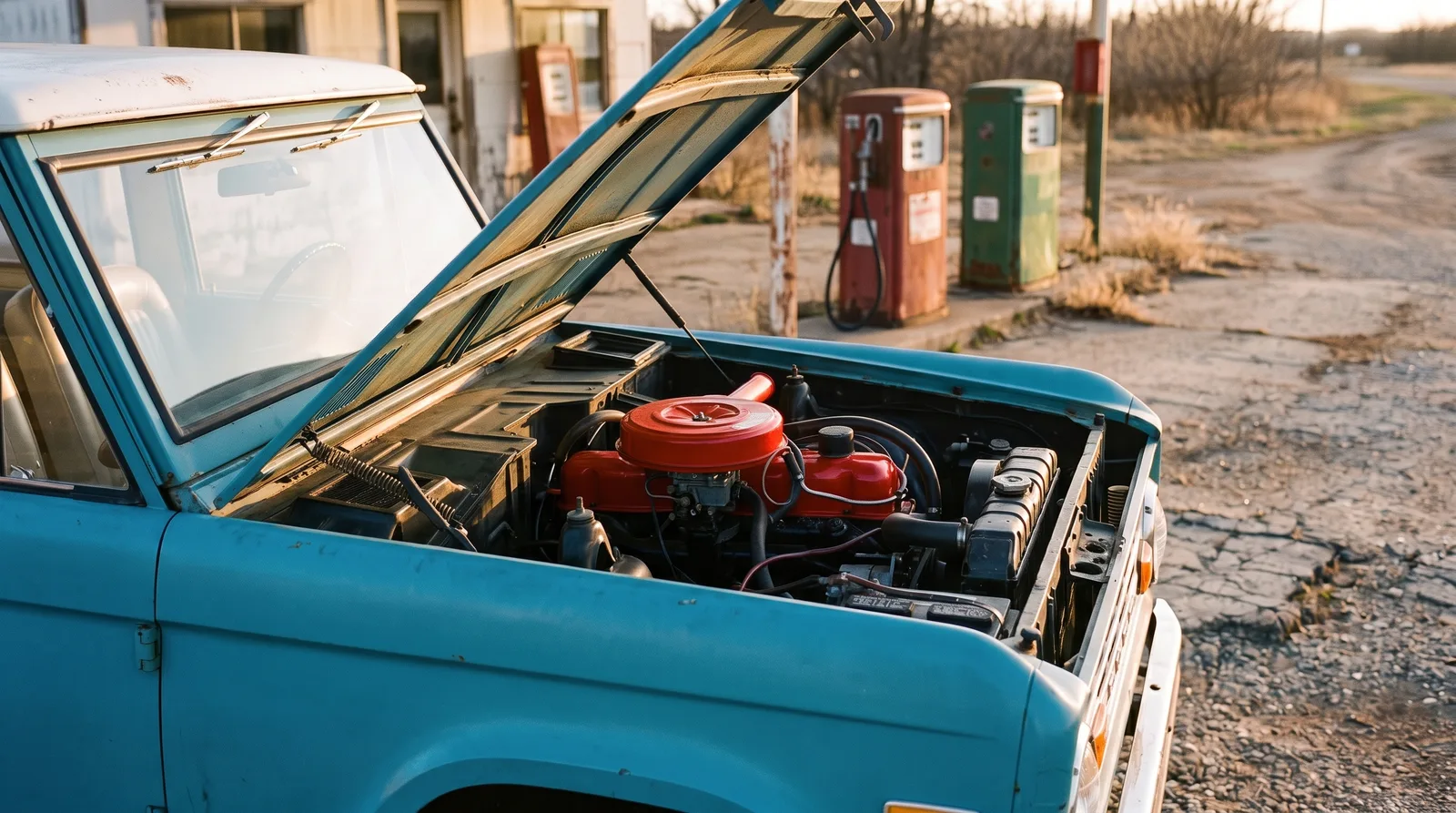
The engine nobody asked to be exciting
Ford launched the Bronco in 1966 with the 170 cubic inch inline six as the standard, base-level engine. It was a small, simple, low-compression unit already familiar from Ford's compact car lineup, and putting it in the Bronco was less a performance decision and more a cost decision. Buyers who wanted a basic, affordable trail and utility vehicle got a basic, affordable engine to match. Nobody bought a 170 six Bronco expecting to win a stoplight drag race. They bought it expecting it to run.
That is the heritage worth understanding here. The 170 was never marketed as the heart of the Bronco. It was the entry point, the engine that got the base price low enough to sell the truck to buyers who might have otherwise walked past it toward something cheaper.
What the numbers actually say
The 170 six produced right around 105 horsepower in early Bronco applications, a figure that looks unremarkable next to the V8 options that came later, but the number that matters more is torque delivered low in the rev range, which is what actually moves a light utility truck off the line and up a grade at low speed. Horsepower sells brochures. Low-end torque and a light curb weight are what made this combination work in the real world.
Fuel economy was the other selling point, and it mattered more in period than most modern buyers give it credit for. A buyer cross-shopping a Bronco against a full-size truck in the mid-1960s was often making a practical decision, not a performance one, and the 170 six fit that practical buyer exactly.
Why it got replaced, and why that is not an insult
Ford moved to the larger 200 cubic inch six as the standard engine by the early 1970s, and that change tells you something honest about the 170's limitations rather than a knock on the engine itself. Buyers wanted a bit more power without giving up the six's simplicity and economy, and the 200 delivered that. I go into that transition in a related story if you want the full comparison between the two.
The 170 did not disappear because it failed. It disappeared because Ford had a better version of the same idea ready to go. That is a normal product cycle, not a defect.
What the 170 six means for collectors today
Here is the blunt part. A 170 six Bronco is not the engine a buyer chases for bragging rights, and it never will be. What it offers instead is honesty. A documented, numbers-matching 170 tells you exactly what kind of truck you are buying: a base-model early Bronco, built to be simple transportation, not a performance machine dressed up after the fact. For a buyer who wants an original, unmodified example of how most first Broncos actually left the factory, that honesty has real value.
The mistake I see is buyers assuming a six-cylinder Bronco is worth less across the board than a V8 truck. That is not automatically true. A clean, documented 170 six original can outvalue a rough, undocumented V8 conversion every time, because originality and paper trail matter more to serious buyers than raw output on a truck nobody is racing.
"People ask me if the 170 six is worth anything. Wrong question. Ask if it's original and documented. That answer decides the value, not the cylinder count."
- Dan Reeves
| Spec | 170 six, early Bronco |
|---|---|
| Displacement | 170 cubic inches |
| Output | 105 hp at 4,400 rpm, 156 lb-ft at 2,400 rpm |
| Role in lineup | Base engine, standard from Bronco launch |
| Replaced by | 200 cubic inch six as new base engine |
The full background on how the six-cylinder options fit into the Bronco's original engine lineup is covered in our ford bronco half cab retrospective, which walks through the body and engine decisions Ford made together at launch. If you are shopping this segment now, go look at Broncos for sale now and pay attention to which engine is actually under the hood versus what the listing headline claims. That gap trips up more buyers than any other single issue in this market.
Why originality is harder to find than you would think
Here is a number that surprises people. A large share of surviving early Broncos on the market today have had some form of drivetrain swap over the decades, usually toward a V8, because owners in the 1970s and 1980s wanted more power and did not think twice about pulling a six for something bigger. That means a truck that left the factory with a 170 or 200 six often does not have one anymore. Finding a documented, unmolested 170 six original is genuinely harder than finding a V8-swapped truck, even though the swap itself lowers collector value in most cases.
That inversion, the original base engine being rarer than the upgraded one, is exactly the kind of detail that separates a serious buyer from a casual one. Casual buyers assume more cylinders means more value. Serious buyers know that originality, in either direction, is what actually protects a resale number over the long run.
What to check before you believe the badge
Do not trust an engine badge or a seller's description on its own. Cross-check the engine casting numbers and any available build documentation against what the truck is claimed to have left the factory with. A 170 that has been swapped in from a parts truck to replace a failed original engine of a different displacement is a common enough scenario that it needs to be ruled out, not assumed away. This is basic due diligence, and it applies whether you are buying a six-cylinder base truck or a documented V8, but it matters more here because six-cylinder trucks get less scrutiny from buyers who assume there is nothing to verify on a "plain" engine.
None of this is complicated. It just takes a buyer willing to look past the sales pitch and check the actual numbers, which is the same discipline that applies to every corner of this market and every engine option Ford ever put in this truck.
Bottom line
The 170 six will never be the engine that makes headlines. It is the engine that made the early Bronco affordable and reliable enough to sell in the first place, and a documented original example deserves more respect from buyers than it usually gets. Judge it on what it was built to do, not on a horsepower number it was never trying to win.
Sources and notes
Related Reading

Have a
Ford Bronco
for Sale?
Reach thousands of serious classic car collectors across the US.
Sell It Here →
Selling a classic? Here's how: sell my classic car
Are You a Classic Car Dealer?
List your full inventory and connect with targeted classic car buyers.
Join as a Dealer →

About the author
Dan Reeves
Performance engine builder from North Carolina's motorsports corridor, focused on swaps, forced induction and making real, repeatable power.
Related Listings - Ford Bronco
More in Car Features
Comments
Be the first to comment on this article.