
The 1961 Impala SS 409 is where Chevrolet's biggest performance engine of the era first met the Impala's top trim level, and the pairing is worth examining on its own terms rather than through the nostalgia that later attached to it. This was a mid-year introduction, a limited run, and an engineering decision that shaped everything Chevrolet did with big block performance for the rest of the decade.
Car Features
7 min read
The 1961 Impala SS 409: The First Hot Impala
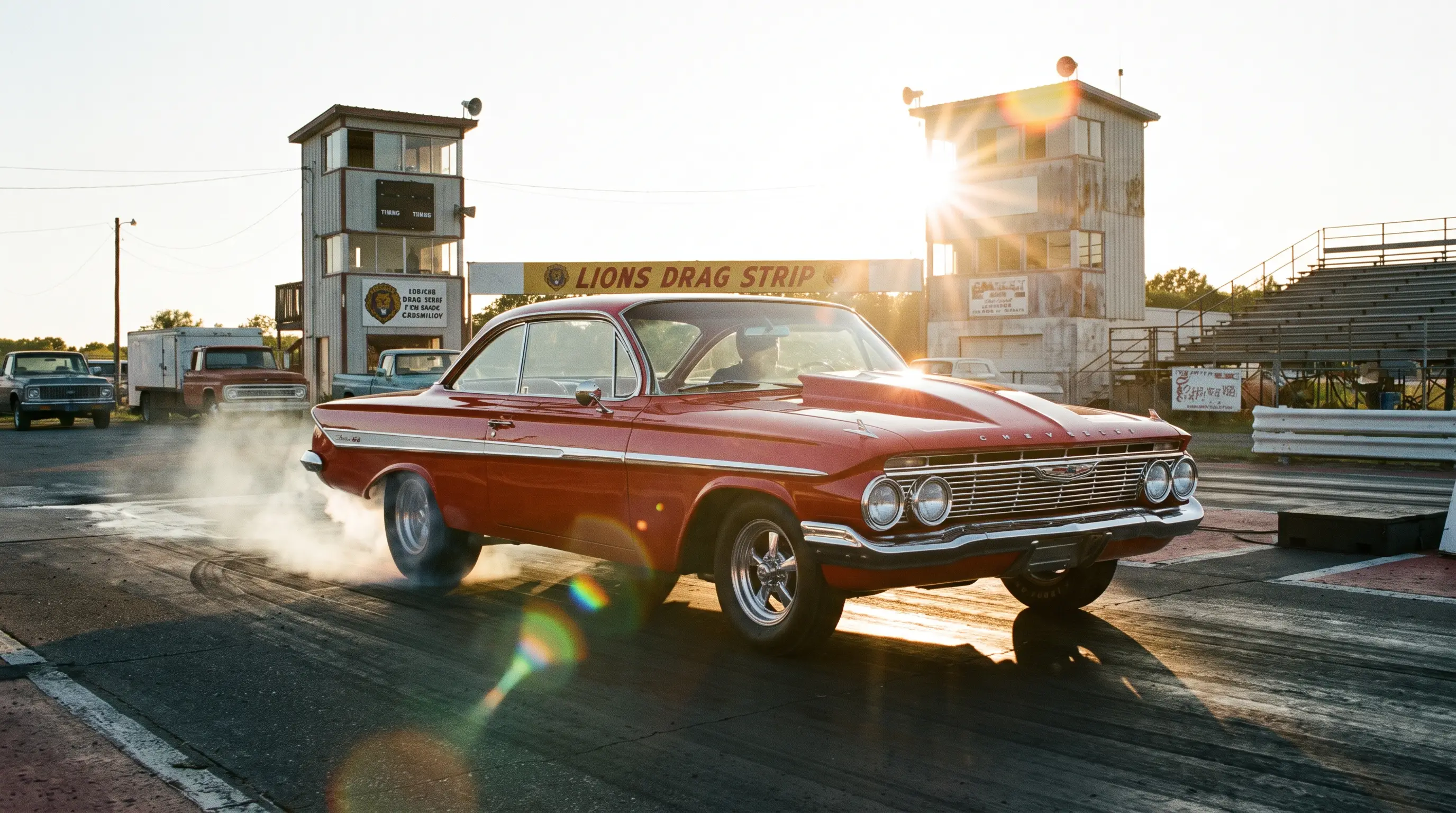
The 1961 Impala SS 409 paired a 360 horsepower big block with the new SS package, an efficient engineering move that built roughly 142 cars.
What actually changed under the hood
The 409 cubic inch V8 arrived partway through the 1961 model year, rated at 360 horsepower with a single four barrel carburetor. That figure is easy to verify against factory literature, and it represents a substantial jump over the Impala's standard 283 and 348 cubic inch engine options. The 409 shared its basic architecture with the existing 348 W series big block, using a larger bore and stroke rather than an entirely new design. That is an important distinction. Chevrolet was not inventing a new engine family from scratch. It was extracting more displacement and more output from an architecture already in production, which kept development costs down and let the 409 reach dealer lots quickly once approved.
Compression ratio sat at 11.25 to 1, which is high for a production engine intended for street use, and it required premium fuel to run without detonation. That compression ratio is one reason the 409 felt notably stronger than the 348 it displaced at the top of the lineup, and also one reason it was not a casual daily driver engine for every buyer.
The SS package itself
Separate from the engine, the 1961 Super Sport package added heavier duty suspension components, a larger diameter front sway bar, power assisted brakes as standard equipment, and specific SS badging along with a passenger grab bar. The package was available across engine choices in 1961, which means not every SS car had the 409. The combination of the SS chassis package and the 409 engine together is what created the specific car people mean when they reference this model, and conflating the badge with the engine leads to confusion when researching production numbers. For anyone who wants read the background on how the Impala line developed across these years, the distinction between trim package and engine option is a good starting point before digging into any single model year.
Testing the performance claims
Period road tests backed up the numbers. Motor Trend's 1961 test of a 409 car with a 4.56 rear axle ran the quarter mile in 14.02 seconds at 98 mph, and Car and Driver's stock four speed test car ran 15.2 seconds at 94 mph, with results varying by rear axle ratio and tune. Either way, that was genuinely quick for a full-size passenger car in 1961. The engineering tradeoff was clear even then. This was a heavy car, generally over 3,600 pounds depending on options, carrying an engine tuned for output rather than smoothness or fuel economy. Owners who wanted the performance accepted the compromises that came with it, including a stiffer ride from the upgraded suspension and a thirstier engine at the pump.
What makes the 1961 car an honest engineering story rather than a marketing one is that Chevrolet did not oversell it. The factory literature stated the horsepower rating plainly and let the car's performance speak for itself in competition, where 409 equipped cars did well in stock class drag racing almost immediately.
"The 409 in 1961 was not a flashy engineering exercise. It was a straightforward bore and stroke job on an existing block that happened to produce a genuinely strong result, and that kind of efficient engineering is worth more respect than it usually gets."
- Emily Chen
Where it sits in the bigger picture
The 409 would continue through 1965 with progressively higher outputs, and the version most people know from popular culture is actually the later dual carb setup rather than this original 1961 single carb engine. Understanding the 1961 car in isolation, before the reputation built up around later years, gives a clearer picture of how Chevrolet's engineers actually approached the problem of adding real performance to a full-size passenger platform without a ground up redesign. There is another one worth knowing if the goal is tracing how the SS badge itself came to exist before the 409 was ever paired with it.
The 1961 Impala SS 409 also matters as a benchmark for anyone comparing engine outputs across the early big block era. It is the baseline number that every later 409, 396, and 427 figure gets measured against, and knowing that baseline prevents the common mistake of assuming every 409 badged car made the same horsepower. They did not. The rating changed nearly every year the engine was in production.
Chevrolet built the 1961 Impala SS 409 across its regular full-size assembly plants rather than in a dedicated performance facility, which means these cars came off the same lines as standard Impalas with the 409 and SS package added as build options. Dealers had to specifically order the combination, and not every dealership stocked one on the lot. Buyers who wanted the 409 in an SS often had to special order the car or wait for one of the limited allocations to arrive, which is part of why the surviving population is so small compared to the total 1961 Impala production run. Of the roughly 453 Impala SS cars built for 1961, only about 142 carried the 409, and exact plant-by-plant allocation records are not something Chevrolet published in detail, so treat any specific regional breakdown with caution.
That special order nature also explains some of the variation collectors find in surviving cars. Options like power steering, power brakes, and specific rear axle ratios were mixed and matched by individual buyers rather than bundled into a single fixed 409 package, so no two 1961 Impala SS 409 cars are guaranteed to be optioned identically. Anyone researching a specific car needs the original build sheet or a verified Protect-O-Plate rather than assuming a standard configuration.
What this means for buyers today
A verified 1961 Impala SS 409 is a rare find, and rarity plus documented originality drives value more than raw horsepower comparisons to later, more powerful versions. Anyone shopping this specific model year should prioritize confirming the engine and SS package are original to the car through the trim tag and partial VIN stamping rather than assuming a 409 badge tells the whole story. For those ready to compare the market directly, it is worth taking time to browse classic Impala listings and see how documented cars from this era are currently priced relative to their condition and paperwork.
The engineering case for the 1961 Impala SS 409 holds up under scrutiny. It was a real, verifiable performance jump built on a sound and cost effective architecture decision, sold in limited numbers, and it set the stage for everything Chevrolet did with big block Impalas for years afterward.
Treat the 1961 car as a baseline data point rather than a curiosity, and the rest of the 409 story across 1962 through 1965 makes a lot more engineering sense. Every horsepower increase in later years traces back to refinements on this same core architecture, not a clean sheet redesign.
Sources and notes
- Over-Drive Magazine: 1961 Chevrolet Impala SS 409 Road Test (Motor Trend reprint)
- Barn Finds: 1 of 142, 1961 Chevrolet Impala SS 409
- Bonhams: One of 142 Produced, 1961 Chevrolet Impala SS 409 Sports Coupe
- HowStuffWorks: 1961 Chevrolet Impala SS 409, A Profile of a Muscle Car
- HowStuffWorks: 1961, 1962, 1963, 1964 Chevrolet Impala Super Sport
- Wikipedia: Chevrolet Impala
Related Reading
Have a
Chevrolet Impala
for Sale?
Reach thousands of serious classic car collectors across the US.
Sell It Here →
Are You a Classic Car Dealer?
List your full inventory and connect with targeted classic car buyers.
Join as a Dealer →

About the author
Emily Chen
Bay Area engineer with a deep focus on vintage Japanese and European performance cars. Approaches classic car research and restoration with an analytical eye.
Related Listings - Chevrolet Impala




Comments
Be the first to comment on this article.