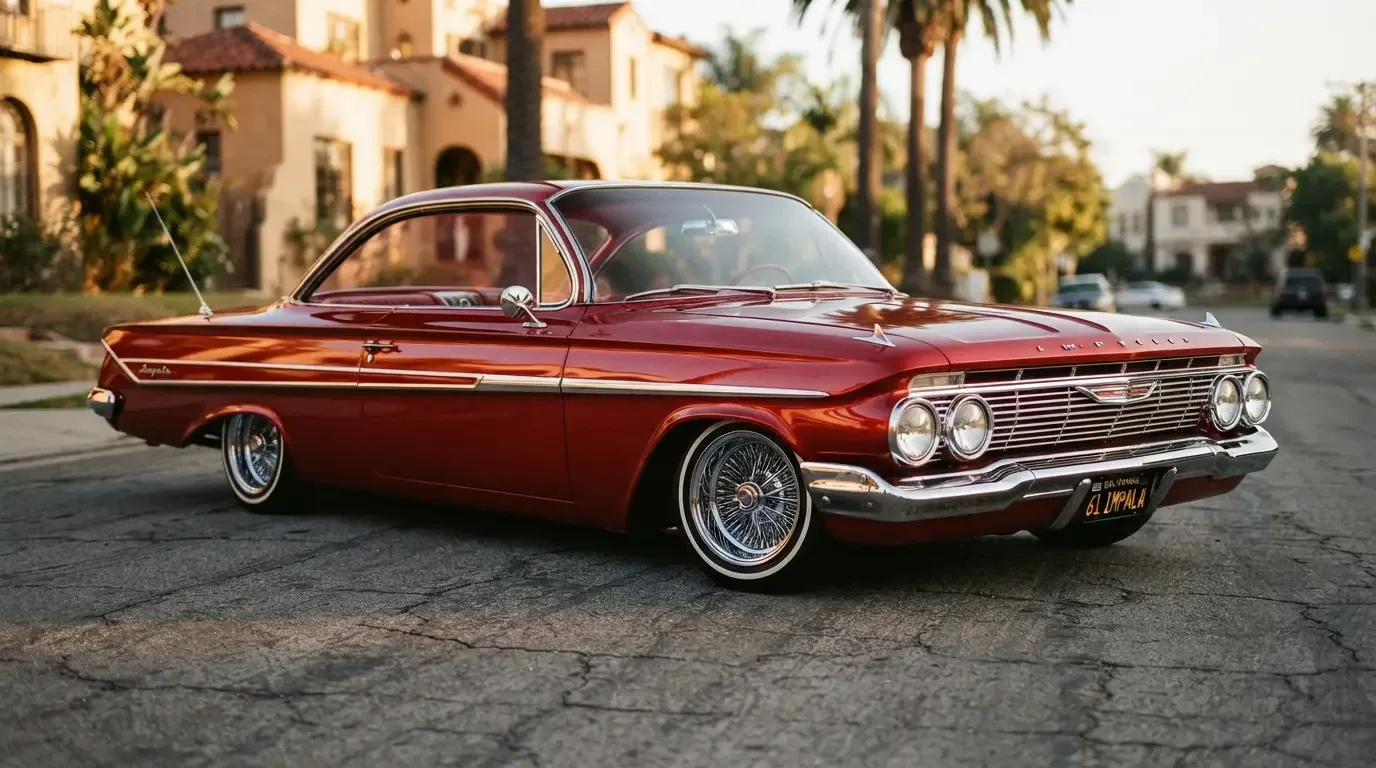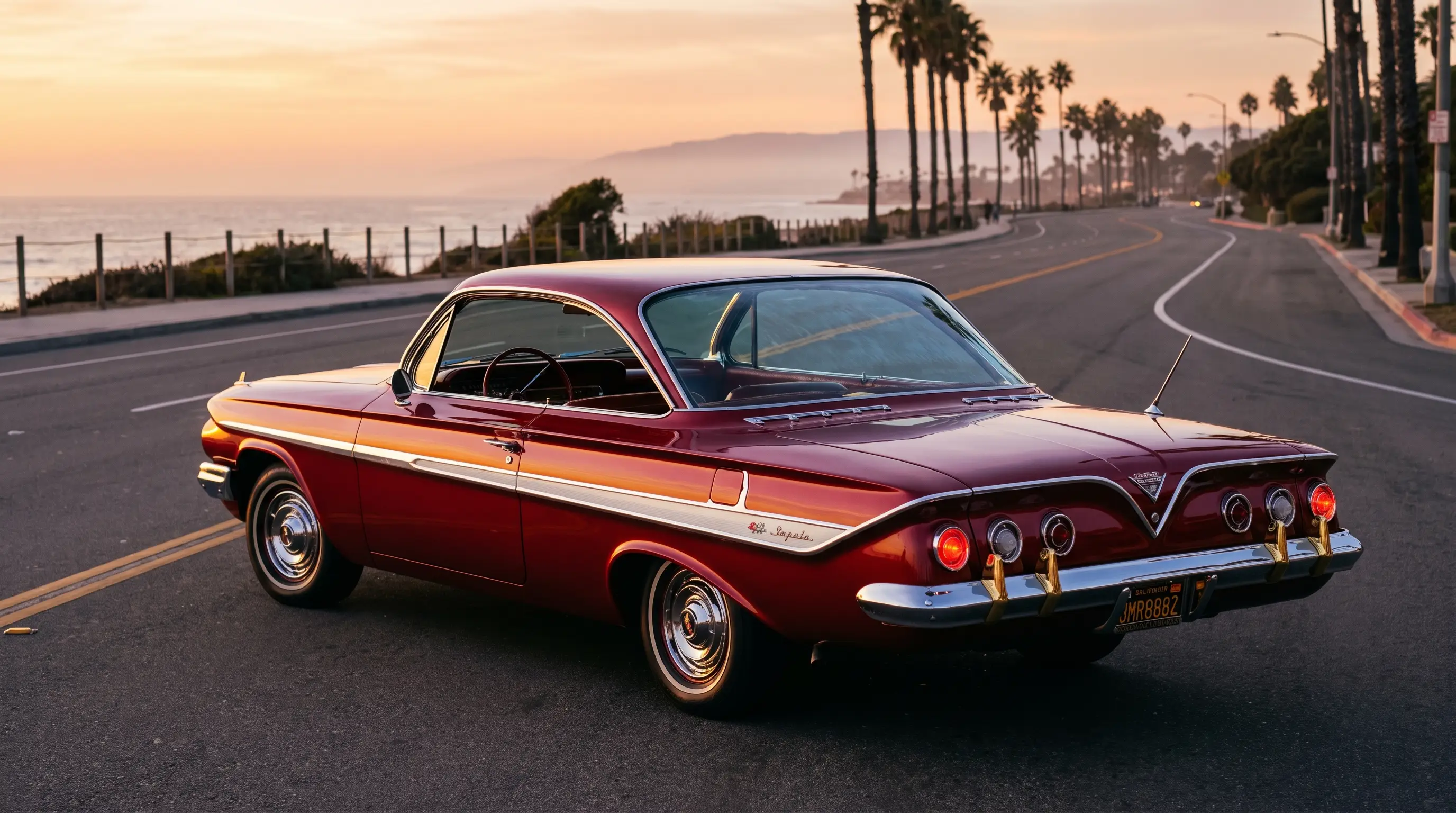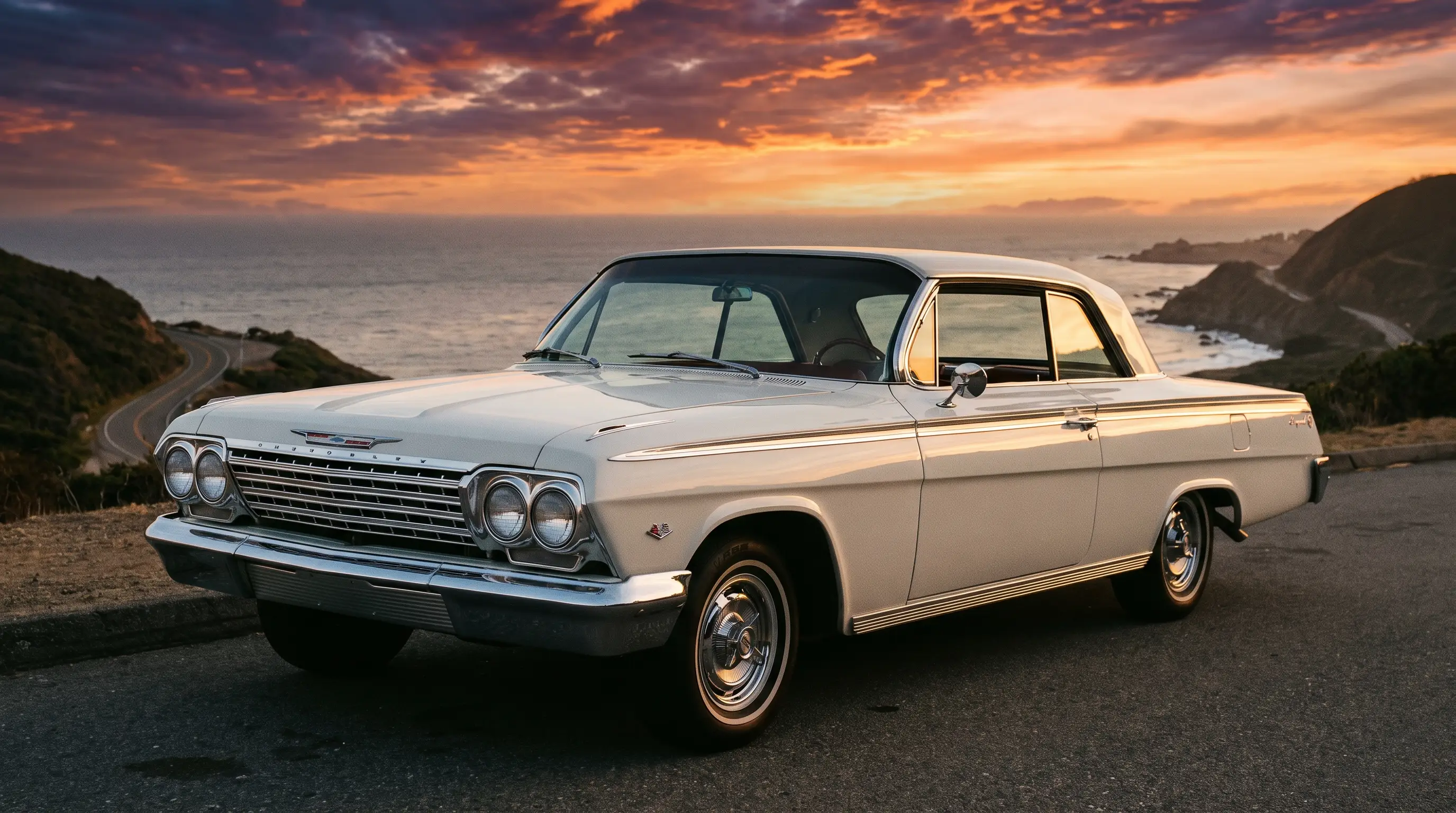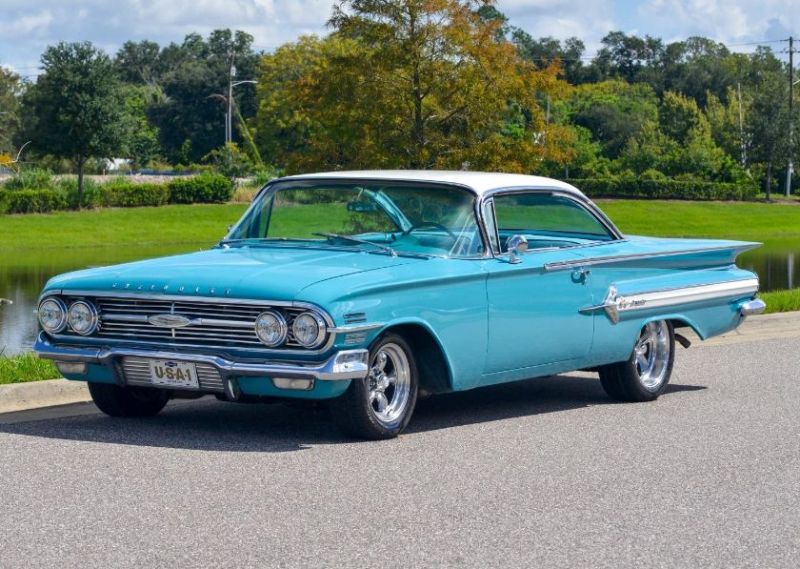
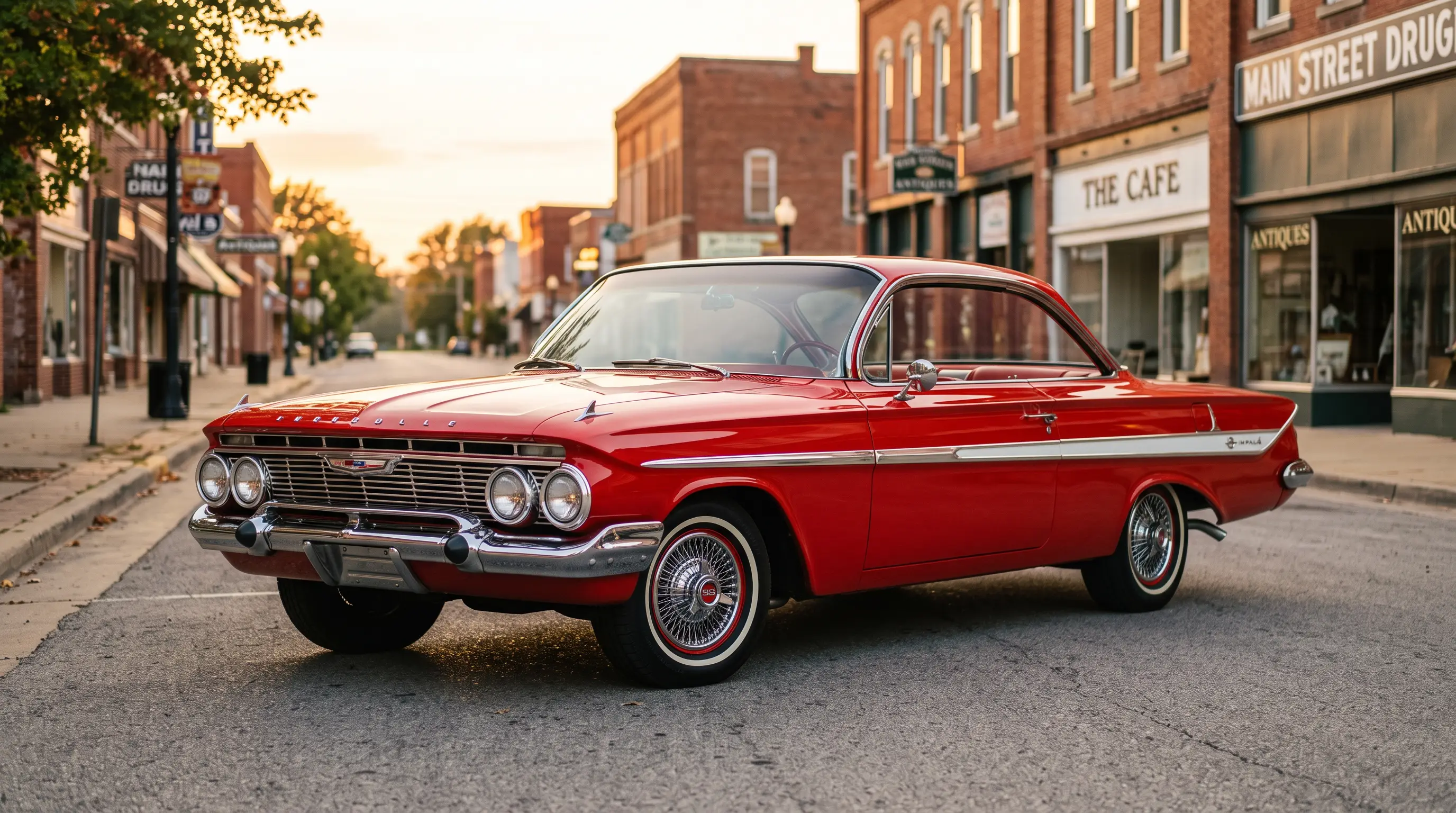
Every legendary nameplate has a quiet, almost accidental first chapter before it becomes the thing everyone remembers. The 1961 impala ss origins fit that pattern exactly. The Super Sport option that would define Impala performance for the rest of the decade did not launch as a headline product. It arrived mid-year, in limited numbers, almost as an experiment, and only in hindsight does it look like the beginning of something that mattered.
A mid-year option, not a full launch
Chevrolet introduced the Super Sport package partway through the 1961 model year rather than at the season's opening, which is itself a telling detail. The division was not staking its full marketing budget on the concept the way it would with later, fully established SS models. Instead, the option was made available on the Impala across several body styles, giving dealers and buyers a way to order a more performance-focused version of the car without Chevrolet committing to a dedicated standalone model just yet.
The package bundled heavier-duty suspension components, upgraded brakes, specific wheel and trim details, and access to the strongest engine options in the Impala lineup, including the newly available 409 cubic inch big block that had debuted that same model year. This was Chevrolet testing the waters, bundling handling and stopping upgrades with genuine engine muscle, aimed squarely at buyers who wanted more than a chrome-heavy image car.
Why 1961 was the right year for this idea
The timing was not coincidental. Chevrolet had just introduced an entirely new full-size body for 1961, a cleaner, more compact-looking design that moved away from the low, wide, fin-heavy proportions of the 1959 and 1960 cars. That new body, paired with the introduction of the 409 big block, gave Chevrolet's engineers a genuine performance story to tell for the first time in the Impala's short history. Previous model years had sold on styling and prestige. 1961 offered an actual mechanical case for buyers who cared about handling and straight-line performance, and the Super Sport option was the vehicle, quite literally, for making that case.
Production numbers for the very first Super Sport option in 1961 were modest, on the order of a few hundred cars so equipped across the model year, reflecting its status as a mid-year, low-key introduction rather than a marquee launch. That modest start is exactly why early SS-equipped 1961 Impalas carry such outsized collector interest today. A low original production number combined with genuine historical significance as the first appearance of a naming convention that would define Chevrolet performance cars for decades afterward is precisely the kind of combination that drives sustained long-term demand.
What the package actually bought a buyer
It is worth being precise about what the 1961 Super Sport option delivered, because later decades of marketing around the SS badge sometimes overstate what the earliest cars actually included. The package added heavier-duty springs and shocks, a quicker-ratio steering setup on some applications, upgraded brake components suited to the additional performance on offer, and specific trim and wheel details that visually distinguished an SS-optioned car from a standard Impala on the same body style. Buyers who wanted the full performance case also had to order the 409 big block separately, since the SS option and the strongest available engine were not automatically bundled together in every configuration.
That distinction matters for anyone researching an original car today. A genuine 1961 SS-optioned Impala without the 409 is still a legitimate, historically significant example of the option's first year, even though it lacks the outright power that later became inseparable from the SS reputation. Treating the suspension and brake upgrades as the core of the original package, with the big block as a desirable but separate add-on, gives a more historically accurate picture than assuming every early SS car was necessarily a 409 car as well.
From option package to identity
What makes the 1961 introduction significant in hindsight is not its size but its direction. Chevrolet learned from that mid-year experiment that a meaningful subset of Impala buyers wanted a genuinely performance-oriented option, not just a styling package, and the division built directly on that lesson in subsequent model years, expanding SS availability and eventually giving it a more prominent place in Impala marketing. None of that expansion happens without the tentative, limited 1961 rollout proving the concept first.
That evolutionary path connects directly to the broader story of how the full-size Impala changed shape and purpose across the early 1960s, a story covered in full in our complete history tracing the generation the 1961 body opened and the models that followed it through 1964.
Collecting the first Super Sport Impalas
For collectors specifically interested in the origin point of the SS badge, a documented 1961 Impala with the original Super Sport option represents a genuinely different collecting proposition than a later, more common SS-badged Impala from subsequent model years. Verification matters enormously here, since the option was not a separate trim printed clearly on every build sheet in the way later SS packages would be. Buyers need documentation tying a specific car to its original Super Sport order, because the option's low volume and mid-year introduction make it easy for an undocumented car to be mistakenly represented as an original SS when it was not.
"The 1961 SS option gets overshadowed by everything that came after it, but that is exactly why it matters. This is the moment Chevrolet figured out that performance, not just chrome, could sell an Impala. Everything the SS badge became later traces back to this one modest mid-year option."
- Sarah Whitfield
What to look for today
Anyone chasing an early Super Sport Impala should prioritize documentation above all else, then engine originality, and only then cosmetic condition. A verified original 1961 SS car, even one needing cosmetic work, holds more genuine collector value than an undocumented example dressed up to look the part. This is one corner of the Impala market where paperwork genuinely outweighs polish, precisely because the option's low production numbers make fakes and misattributions a real and persistent risk.
Buyers ready to explore this era should take a look at what is on the market today. You can find a classic Impala and compare early SS-optioned cars against the standard full-size lineup from the same generation, which offers a useful baseline for understanding just how much the Super Sport package moves value even in its earliest, most understated form.
The quiet start of a loud legacy
Nothing about 1961 impala ss origins suggests a company confident it had found its next big performance icon. It suggests a company testing an idea carefully, in limited numbers, on a car whose reputation still rested primarily on chrome and styling. That caution is exactly what makes the origin story worth telling. The most consequential automotive nameplates rarely announce themselves loudly at the start. They begin as a modest mid-year option, and only decades later does anyone recognize the moment for what it actually was.