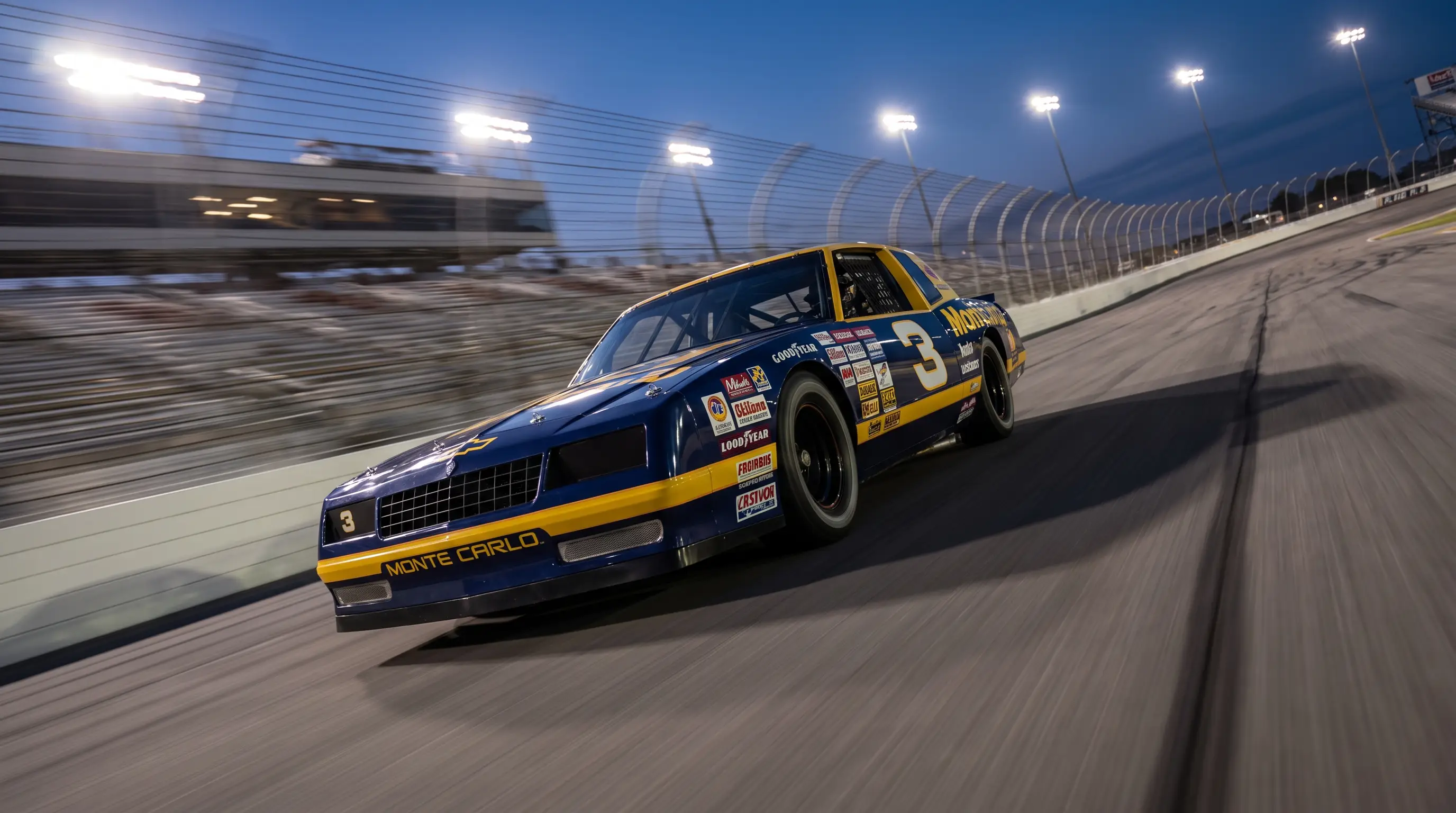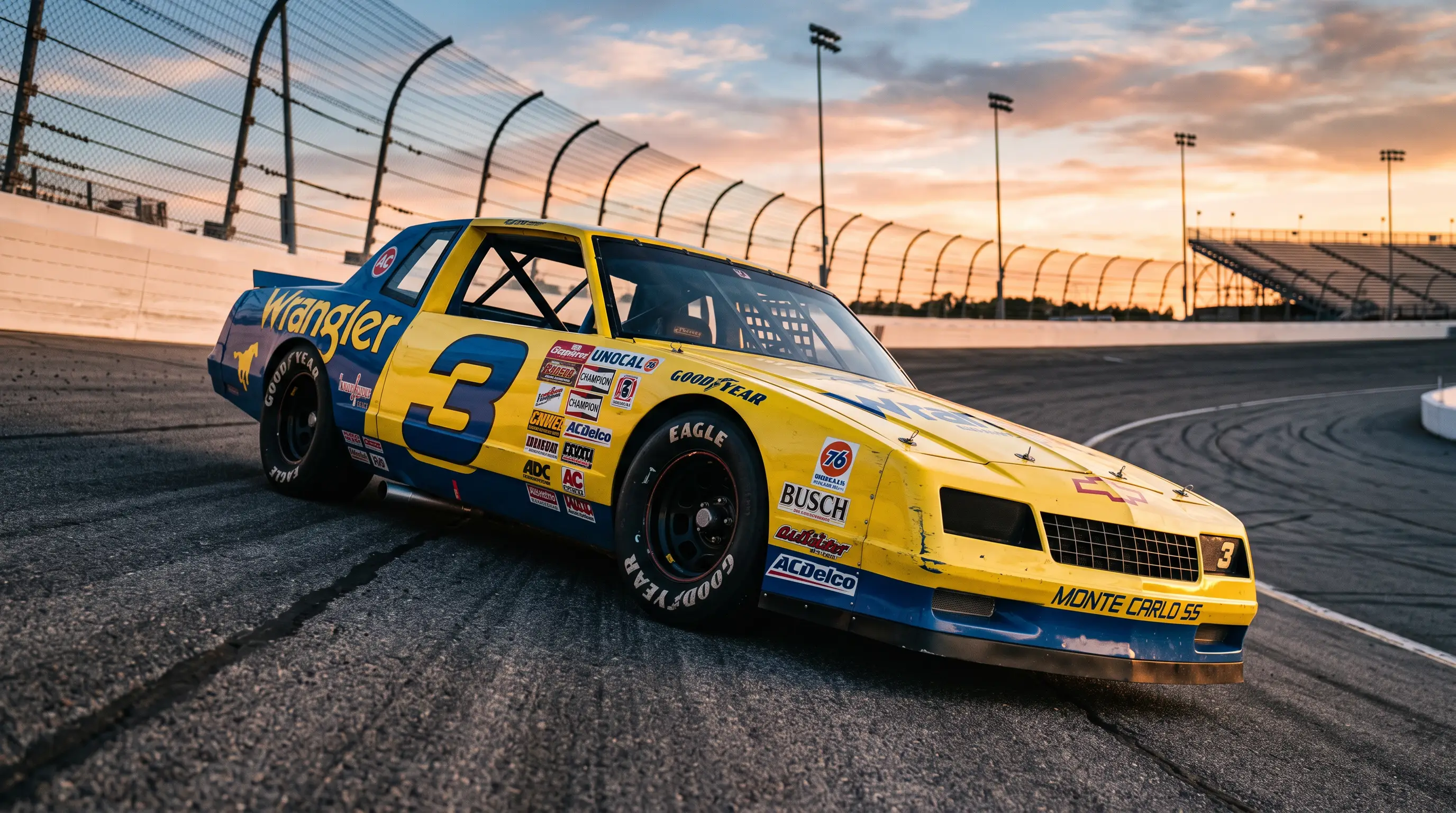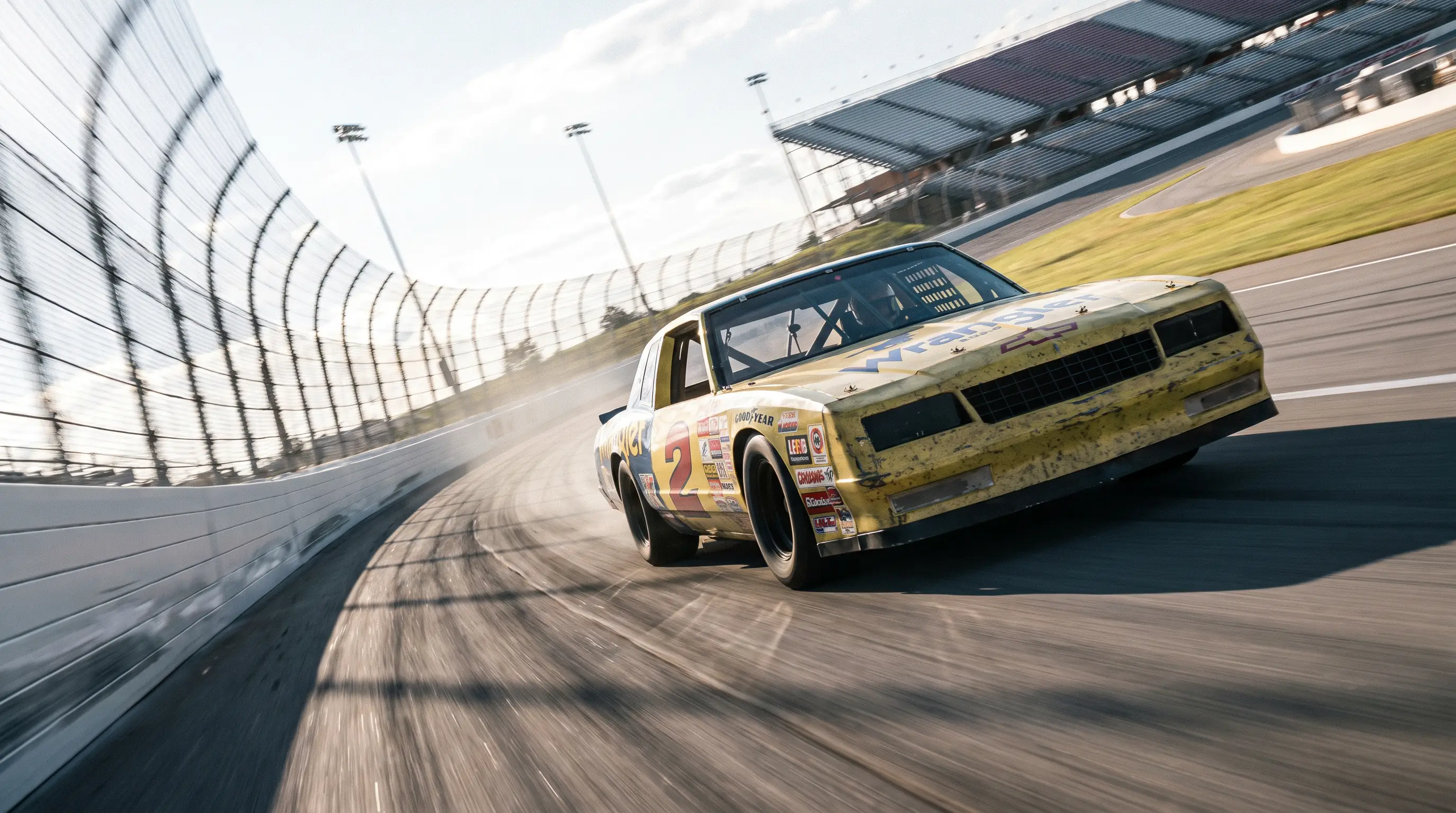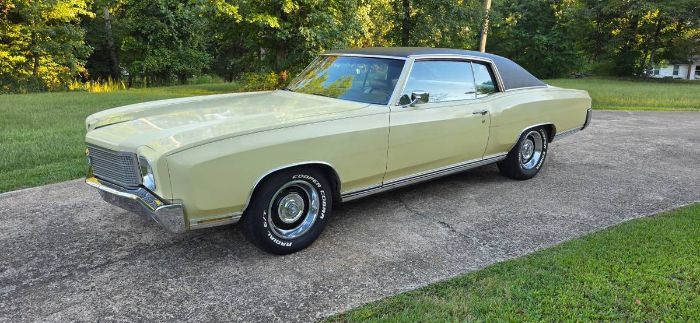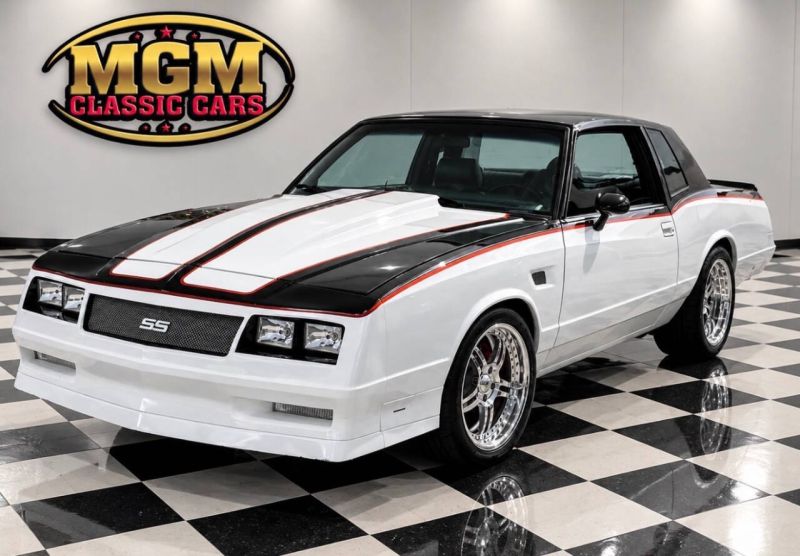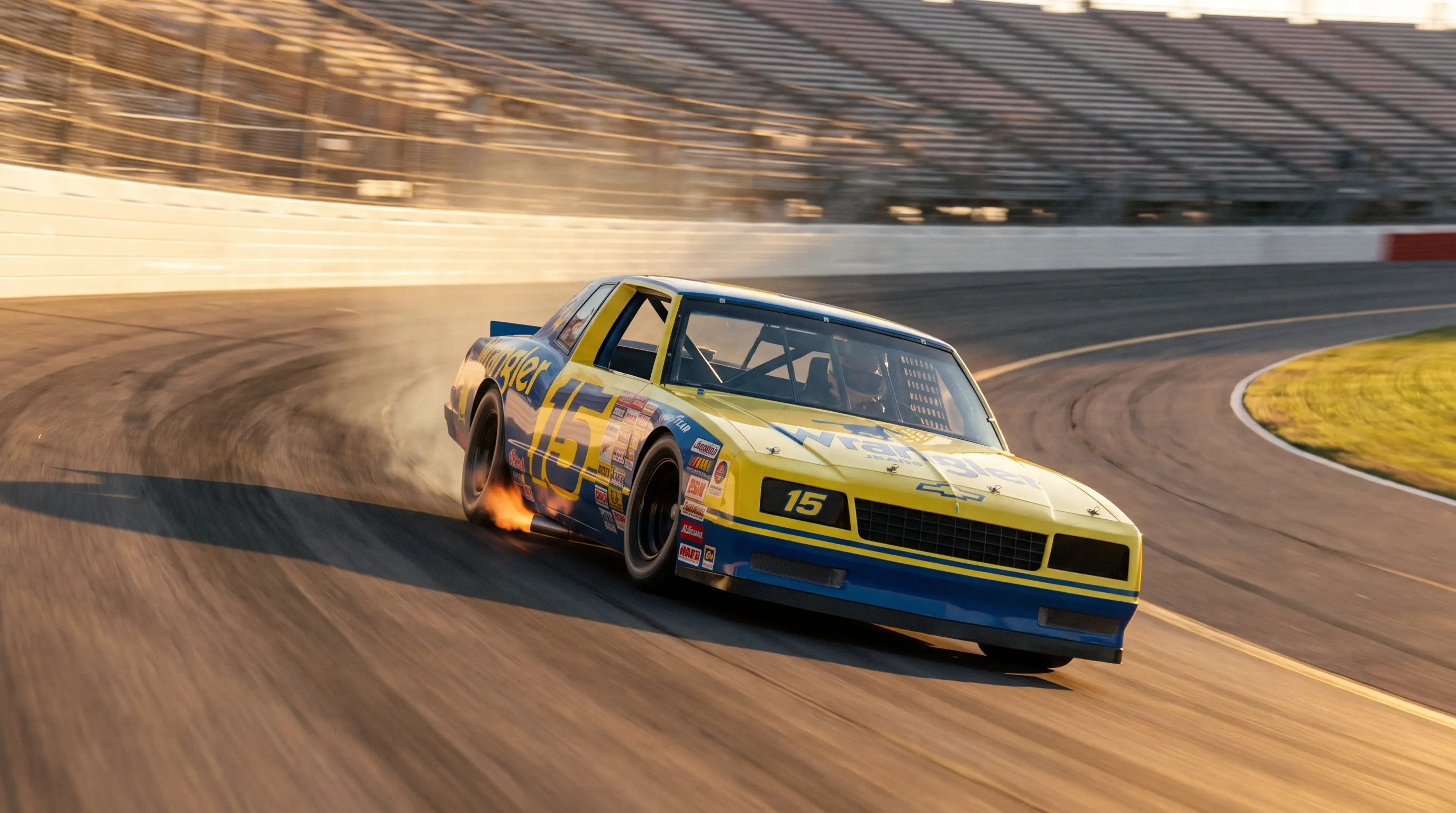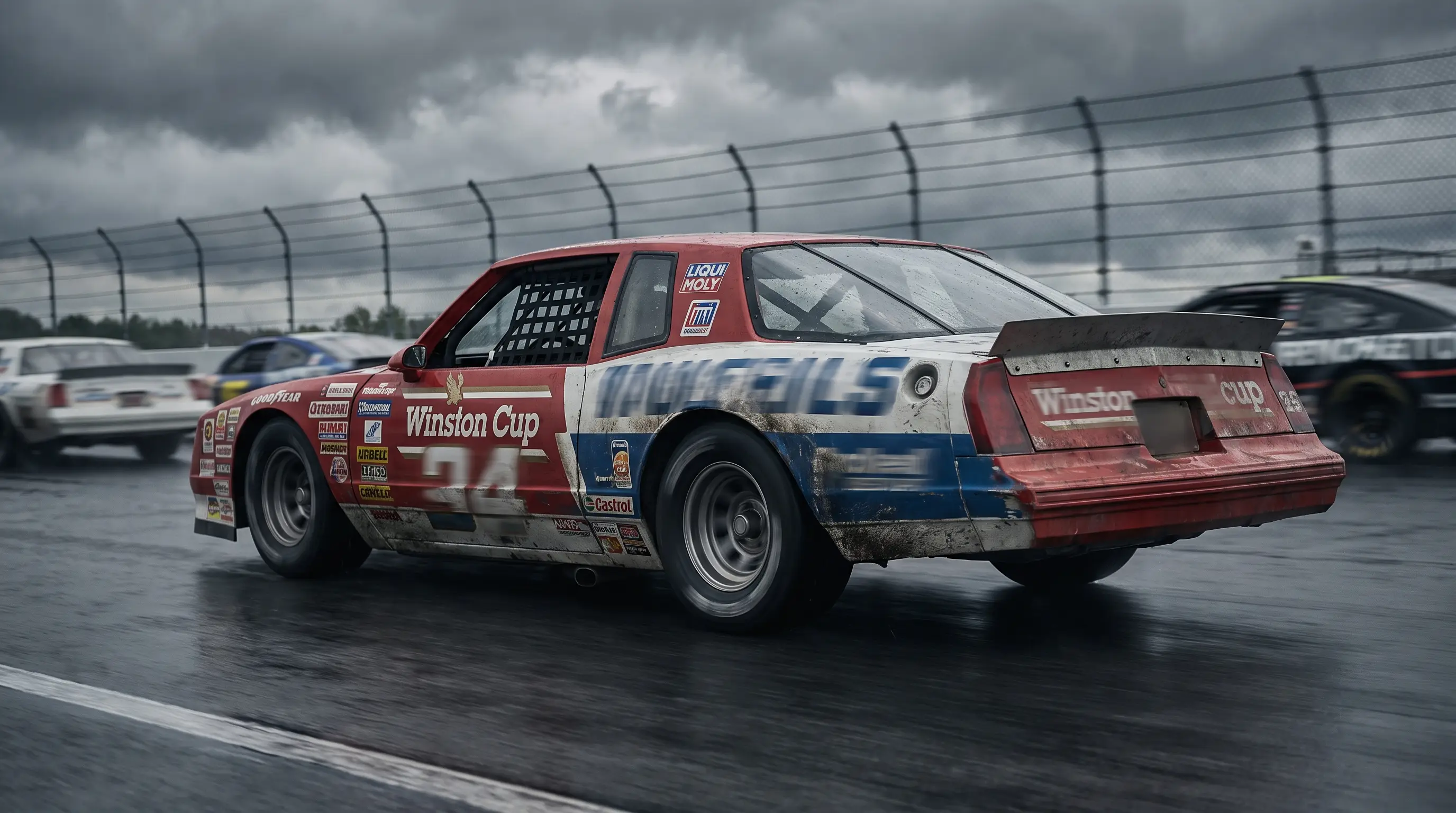
Walk into a Chevrolet dealership in 1983 and ask why the new Monte Carlo SS looked different from the coupe sitting next to it on the lot, and a salesman who knew his product would tell you the truth without hesitation. That nose was not styled for the parking lot. It was styled for Daytona, and the street car buyers were driving home was a direct descendant of a body Chevrolet had reshaped specifically to win NASCAR races.
A street car built to answer a racing problem
The standard Monte Carlo of the early 1980s was a boxy, formal-roofed coupe that looked good in a showroom and terrible in a wind tunnel. On the superspeedways, that boxiness translated directly into a car that got outrun by Ford's more aerodynamic Thunderbird, and Chevrolet's factory-backed NASCAR teams were losing races they should have been competitive in simply because the production shape they were required to race was working against them. The Monte Carlo SS, introduced for the 1983 model year, existed to fix that problem, with a more sloped nose and a lower front air dam that gave race teams a legal starting point closer to what they actually needed on track.
That is an unusual origin story for a production trim package. Most performance variants exist to sell a faster engine or a sportier interior. The Monte Carlo SS existed first to satisfy NASCAR's homologation rules, which required a certain number of a given body style to be sold to the public before it could be raced, and only second to give street buyers something with genuine performance appeal. The two goals ended up reinforcing each other neatly, but the racing need came first.
The Aerocoupe takes the relationship further
By 1986, Chevrolet pushed the same logic further with the Aerocoupe, a version of the Monte Carlo SS with a dramatically sloped rear glass replacing the formal notchback roofline. The change looked strange to buyers used to the traditional coupe silhouette, but on a superspeedway it cut drag meaningfully at the speeds NASCAR teams were running by the mid-1980s. Chevrolet built just 200 Aerocoupes for 1986 largely to satisfy homologation minimums, then expanded production to roughly 6,052 units for 1987 once the shape proved itself on track.
What buyers got for their money was a genuinely unusual piece of American production car history, a mainstream coupe whose most distinctive styling feature existed for a reason that had nothing to do with anyone's daily commute. Few production cars from any era can claim their roofline was dictated by NASCAR aerodynamic requirements rather than a stylist's sketch, and that fact alone has made surviving Aerocoupes a favorite among collectors who care about the story behind a shape as much as the shape itself.
"Most buyers who ordered an Aerocoupe in 1987 knew exactly why that back window looked the way it did. They were not buying a styling exercise. They were buying the same shape Earnhardt and Bodine were racing that same season."
- Patrick Walsh
How the shape evolved between 1983 and 1987
The changes between the original 1983 SS nose and the fully realized 1987 Aerocoupe were not a single leap but a series of small, deliberate adjustments made as race teams reported back what worked at speed. Chevrolet's engineers tightened panel gaps, adjusted the front air dam angle, and refined the transition between hood and fender across several model years, treating the production car almost like an ongoing prototype for whatever the next racing season needed. That kind of continuous, track-informed revision is unusual for a mainstream production coupe, and it is part of why enthusiasts studying the Monte Carlo SS lineage often talk about specific model years rather than treating the whole run as one static package.
What the street cars actually delivered
None of this would matter much if the street SS and Aerocoupe had been all show and no substance, but Chevrolet backed the aero-focused bodywork with genuine performance underneath, built around the L69 305 cubic inch H.O. V8 rated at 175 horsepower, the only factory engine offered in the U.S.-market SS, giving buyers real straight line credibility to match the racing-inspired sheet metal. The combination made the SS package one of the more coherent performance stories of the mid-1980s, a decade when a lot of manufacturers were selling sportier looks without much engineering behind them.
The street cars never raced themselves, obviously, but every one that left a dealership carried a direct connection to the race program, down to sharing wind tunnel data with the actual competition cars running that same season. That is a closer relationship between showroom and racetrack than most manufacturers managed during the era, and it is a large part of why the Monte Carlo SS and Aerocoupe hold their value so well among buyers who understand what they are looking at.
Why homologation rules mattered so much in this era
It is worth remembering how strict NASCAR's production requirements actually were during this period, because it explains why the SS and Aerocoupe existed at all rather than Chevrolet simply racing whatever shape its engineers preferred. A manufacturer could not show up with a one-off aerodynamic body built purely for competition. It had to convince NASCAR that ordinary buyers wanted that same shape enough to purchase a minimum number of them through normal dealer channels, and that requirement forced every manufacturer's race program to stay tethered to something a regular customer could actually drive home.
That tether is exactly what makes this chapter of Monte Carlo history interesting to collectors rather than just to racing historians. The homologation requirement meant Chevrolet's engineers had to solve a genuine consumer product problem, selling enough Aerocoupes to real buyers, at the same time they were solving a racing problem, and the fact that both goals were satisfied by the same shape is a small engineering success story that gets overlooked next to the flashier race results it enabled.
A relationship that ran in both directions
The connection between race Monte Carlo and street SS was never one-way traffic. Lessons learned building enough Aerocoupes to satisfy NASCAR fed directly back into how Chevrolet approached the car's final years on the G-body platform, and the production run of Aerocoupes stands as one of the clearest examples in American automotive history of a racing rulebook directly shaping what buyers found on a dealer's lot. For readers who want the whole picture of how that racing program developed across the decade, the street SS and Aerocoupe are not a footnote to that story. They are the reason the story worked as well as it did.
Buyers who want that same connection between showroom and speedway today can still shop classic Monte Carlo listings and find SS and Aerocoupe examples carrying the exact shape that NASCAR's rulebook helped create.
Few nameplates from the era offer that kind of documented, traceable link between a rulebook and a dealer showroom, and it is a story worth knowing whether the car in question ever turned a lap at Daytona or simply commuted its whole life to a job in town. The shape tells the story either way, and that is a rare thing to be able to say about any production coupe from the 1980s.