Talladega, spring of 1986, and the air itself seems to be working against the cars. Down the long backstretch the leaders are running nose to tail at nearly 200 miles per hour, and a driver in a dark Chevrolet is feeling every pound of air pile up against his rear glass. That driver was fighting a problem no amount of horsepower could solve. The story of the Monte Carlo NASCAR effort is, at its heart, the story of how Chevrolet answered that exact problem, and of the fierce, mustached competitor who turned the answer into championships.
Stock car racing in the 1980s was entering one of its most technical chapters, a period fans would later call the aero wars. The Chevrolet Monte Carlo sat right in the middle of it. To understand why a road-going coupe suddenly grew a strange sloping back window, you have to understand what was happening at 200 miles per hour on the biggest tracks in the sport.
A personal-luxury coupe goes racing
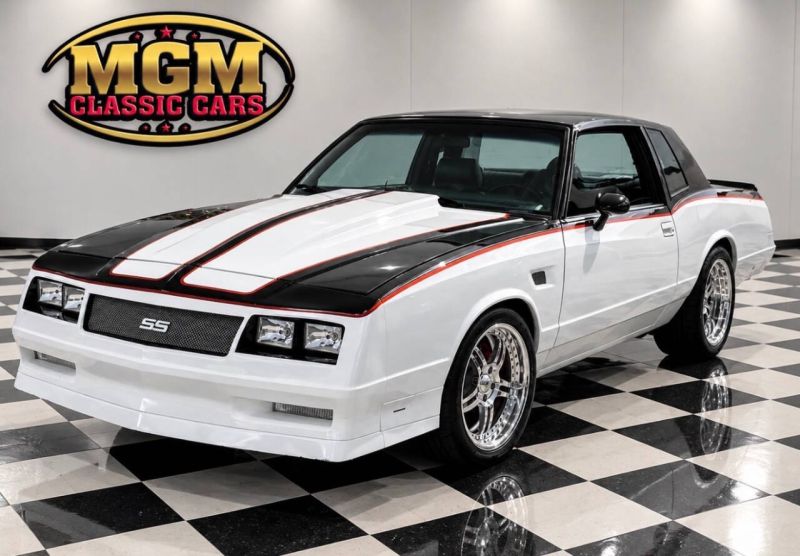
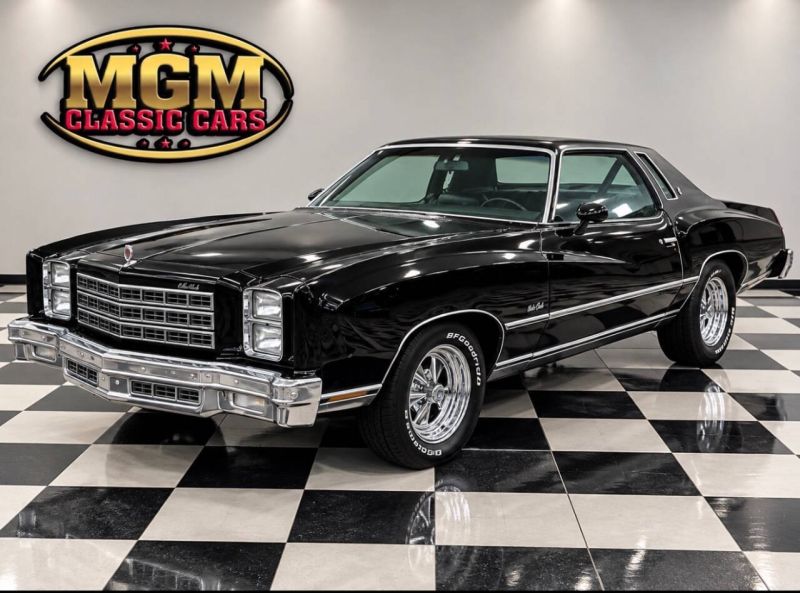
There is a lovely irony at the center of this. The Monte Carlo was conceived as a comfortable personal-luxury coupe, a car for gliding to the country club, not for trading paint at Daytona. Yet its long hood and formal roof gave stock car builders a shape they could work with, and Chevrolet had been racing versions of the Monte Carlo since the 1970s. By the time the SS badge returned in 1983, the model was already a familiar sight on the high banks.
The connection between showroom and speedway was direct in that era. NASCAR still built its rules around cars people could actually buy, so the body a fan cheered on Sunday was, at least in silhouette, the body sitting in the Chevrolet dealership on Monday. That link is a big part of why the Monte Carlo NASCAR story resonates. People saw themselves in the car. The full sweep of the model, from luxury coupe to racing icon, runs through more on the chevrolet monte carlo.
The long road to the banking
The 1980s chapter did not come out of nowhere. The Monte Carlo had history on the high banks stretching back to the first generation, when the early-1970s cars turned laps in the hands of the sport's biggest names of the day. Legends of the Junior Johnson era ran Chevrolets, and the model quietly built a reputation as a body that could win before the SS badge ever became a marketing centerpiece. That earlier groundwork mattered, because by the time the aero wars arrived, teams already trusted the Monte Carlo.
What changed in the 1980s was the stakes and the science. Television money was pouring into the sport, the crowds were swelling, and the manufacturers treated Sunday results as national advertising. A win at Daytona sold cars in a way a magazine ad never could, so Chevrolet, Ford, and Pontiac poured real engineering into shaving hundredths off a lap. The Monte Carlo, a car that had started life as a boulevard cruiser, suddenly found itself at the center of a corporate fight measured in wind-tunnel hours.
That is the beauty of the story. A model designed for comfort became a weapon of aerodynamic warfare, and it did so because the people running these teams saw something in its bones. The long hood, the willing small-block V8, the familiar shape the fans already loved: all of it added up to a car worth fighting for. By 1986 that fight had produced one of the most distinctive silhouettes the sport has ever seen.
The aero wars and a strange rear window
Here is where the mechanics of the problem take over the plot. On superspeedways like Daytona and Talladega, where cars run flat out for lap after lap, aerodynamic drag decides everything. Ford had a slippery weapon in the Thunderbird, whose smooth shape cut through the air with less effort. The standard notchback Monte Carlo SS, with its upright rear window and formal deck, pushed too much air. Drivers could feel it. Engineers could measure it.
Chevrolet's answer was the Aerocoupe. The fix was elegant in its simplicity: replace the upright rear glass with a large, gently sloping fastback window and shorten the trunk lid. Air now flowed off the back of the car more cleanly, cutting the drag that had been holding the Monte Carlo back on the fastest tracks. It looked unusual in a parking lot, almost awkward, but at speed it was exactly what the car needed.
Enter the Intimidator
Every great racing story needs a driver who makes the machine unforgettable, and the Monte Carlo found its man in Dale Earnhardt. The son of a short-track racer from Kannapolis, North Carolina, Earnhardt drove with an aggression that earned him the nickname the Intimidator and a devotion from fans that few athletes in any sport have matched. When he strapped into a Chevrolet, the connection between driver and car became something close to mythology.
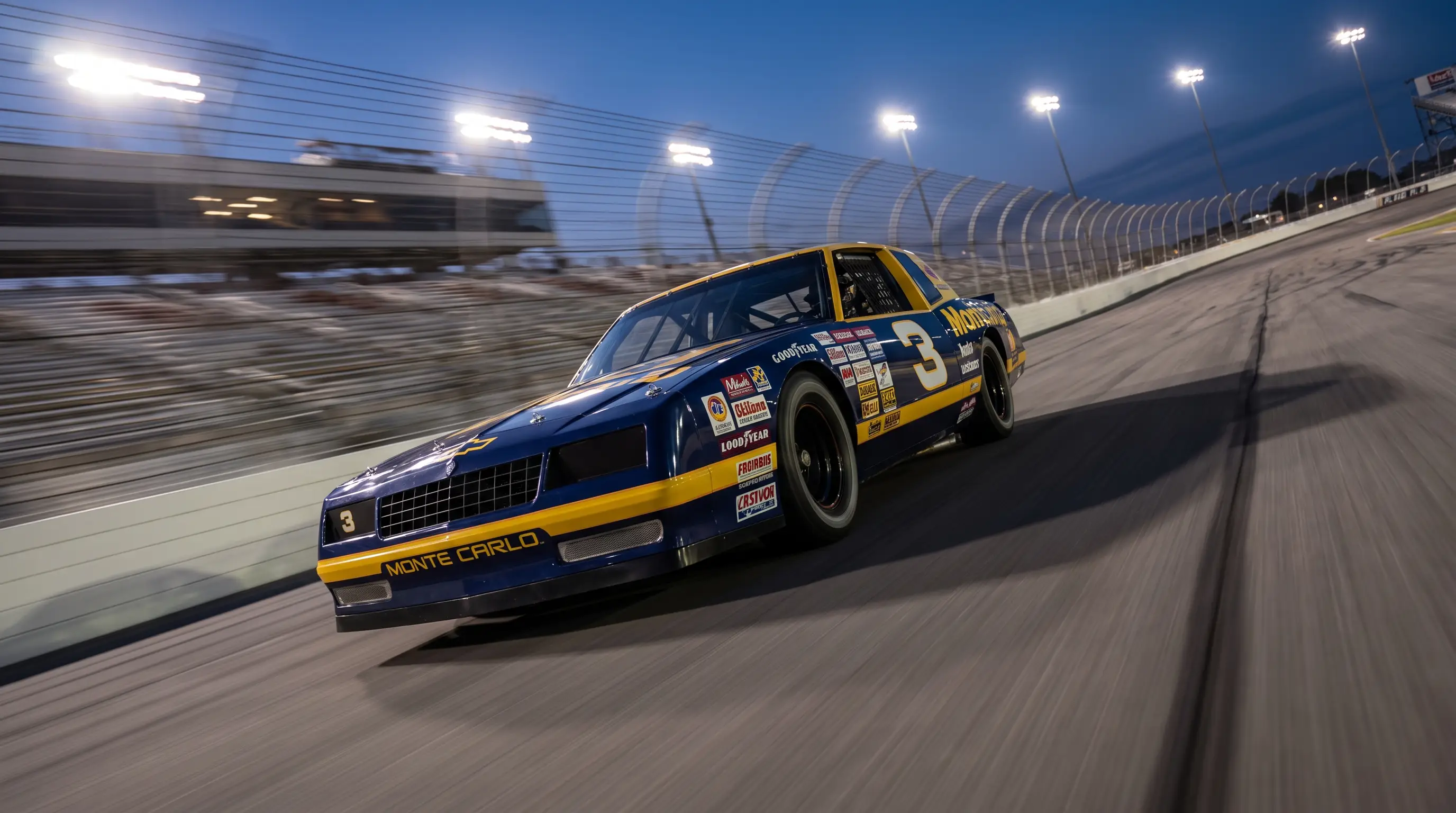
Earnhardt won the Winston Cup championship in 1986 and again in 1987, driving the Richard Childress Racing Wrangler-sponsored No. 3 Monte Carlo, and the Aerocoupe form was his weapon on the fast tracks during that run. The 1987 season in particular became the stuff of legend, a year of relentless dominance that fans still talk about. For a generation, the shape of the Monte Carlo and the sight of Earnhardt working through traffic became one and the same image.
"You could not separate the car from the man. Earnhardt made the Monte Carlo look alive, wrestling it through the corners like it owed him money, and the crowd loved every second of it."
- Patrick Walsh
What the numbers looked like
Strip away the romance for a moment and the record still stands on its own. The Monte Carlo was a workhorse for Chevrolet teams through the 1980s, carrying not just Earnhardt but a deep field of contenders. The Aerocoupe body specifically gave Chevrolet drivers a fighting chance on the superspeedways during the years it was legal, before rule changes and a new body style eventually moved the sport on.
| Detail | Figure |
|---|---|
| Racing nameplate era | Monte Carlo SS, 1983 to 1988 |
| Aero solution | Aerocoupe fastback rear window |
| Aerocoupe race years | 1986 and 1987 |
| Signature driver | Dale Earnhardt |
| Championships in era | 1986 and 1987 |
| Chief rivals | Ford Thunderbird, Pontiac 2+2 |
Those rivalries mattered. The Ford Thunderbird pushed Chevrolet to build the Aerocoupe in the first place, and the back-and-forth between manufacturers drove the technical arms race that made the era so compelling to watch. Racing has always improved the breed, and the fingerprints of that competition are all over the cars that survive today.
It helps to picture what these races actually looked like. At Daytona and Talladega the cars ran in great tight packs, inches apart, drafting nose to tail at speeds that pinned the crowd to its feet. In that kind of racing a slippery body was not a luxury, it was survival, because the car that punched a smaller hole in the air could stay hooked to the draft and pounce on the last lap. The Aerocoupe's whole reason for being was to keep a Chevrolet driver in that hunt, and when it worked, the payoff came in front of a hundred thousand people and a national television audience.
There is a human texture to the era that the record books miss. These were the years when the sport crossed over from a regional passion into a national obsession, and the drivers became household names. A fan could stand in a Chevrolet showroom, look at a Monte Carlo SS, and connect it in his mind to the roar he had heard the previous Sunday. That link between the ordinary and the heroic, between the car you could buy and the car that won, is the emotional engine of the whole story. It is why grown adults still get misty talking about a coupe with a funny-shaped back window.
From the banking to the collector market
The racing pedigree did something lasting to the road cars. A genuine Monte Carlo SS Aerocoupe was always rare, but its link to Earnhardt and the aero wars turned it into a blue-chip collectible over time. Collectors do not just buy the metal. They buy the memory of Sunday afternoons, of a black number 3 slicing through the pack, of an entire era of the sport. That emotional weight is real money in today's market.
It also created a healthy world of tribute cars and memorabilia, which keeps the story alive for fans who will never own the genuine article. If the badge itself intrigues you, its meaning stretches well beyond the track, and that is another one worth knowing. For anyone tempted to bring a piece of this history home, it pays to see what actually trades hands. You can browse classic Monte Carlo listings and watch how racing provenance separates the special cars from the ordinary ones.
Why the story endures
Back to that spring afternoon at Talladega, and the driver fighting the air. What makes the Monte Carlo NASCAR chapter endure is that it was never only about a car. It was about a clever engineering answer to a hard problem, about a driver who became a folk hero, and about the tight bond between the machine on the track and the machine in the showroom. All of that came together in one improbably shaped Chevrolet coupe.
The nameplate would return to the sport years later on a very different, front-drive platform, but that is another story for another day, and it never carried the same romance. The classic Monte Carlo earned its NASCAR legend the hard way, in the aero wars, with a rear window shaped by a rule book and a driver who refused to lift. That is the version fans mean when they talk about the Monte Carlo on the banking, and it is the version worth remembering.
The classic rear-drive Monte Carlo left NASCAR behind after the 1980s, but its place in the sport's history is fixed. Ask any longtime fan about the aero wars or the Intimidator's championship years and the Monte Carlo is right there in the story, sloping rear window and all. Some cars are remembered for how they looked in a driveway. This one is remembered for how it looked at the front of the field.