
The 1967 Chevy Nova doesn't get talked about much on its own. It sits at the tail end of a redesign that most people lump together as "the 1966-67 cars," and in a lot of ways that's fair, because Chevrolet didn't change much between the two years. But 1967 is worth pulling apart from 1966, because it's the last model year of a body style that lasted exactly two years before General Motors moved on to something else entirely. Short generations are rare in this business, and this one deserves its own record.
Car Features
6 min read
The 1967 Nova: The Short Second Generation
1967 was the last year of Chevrolet's short-lived second-generation Chevy II/Nova body, and the year the convertible and wagon quietly disappeared for good.
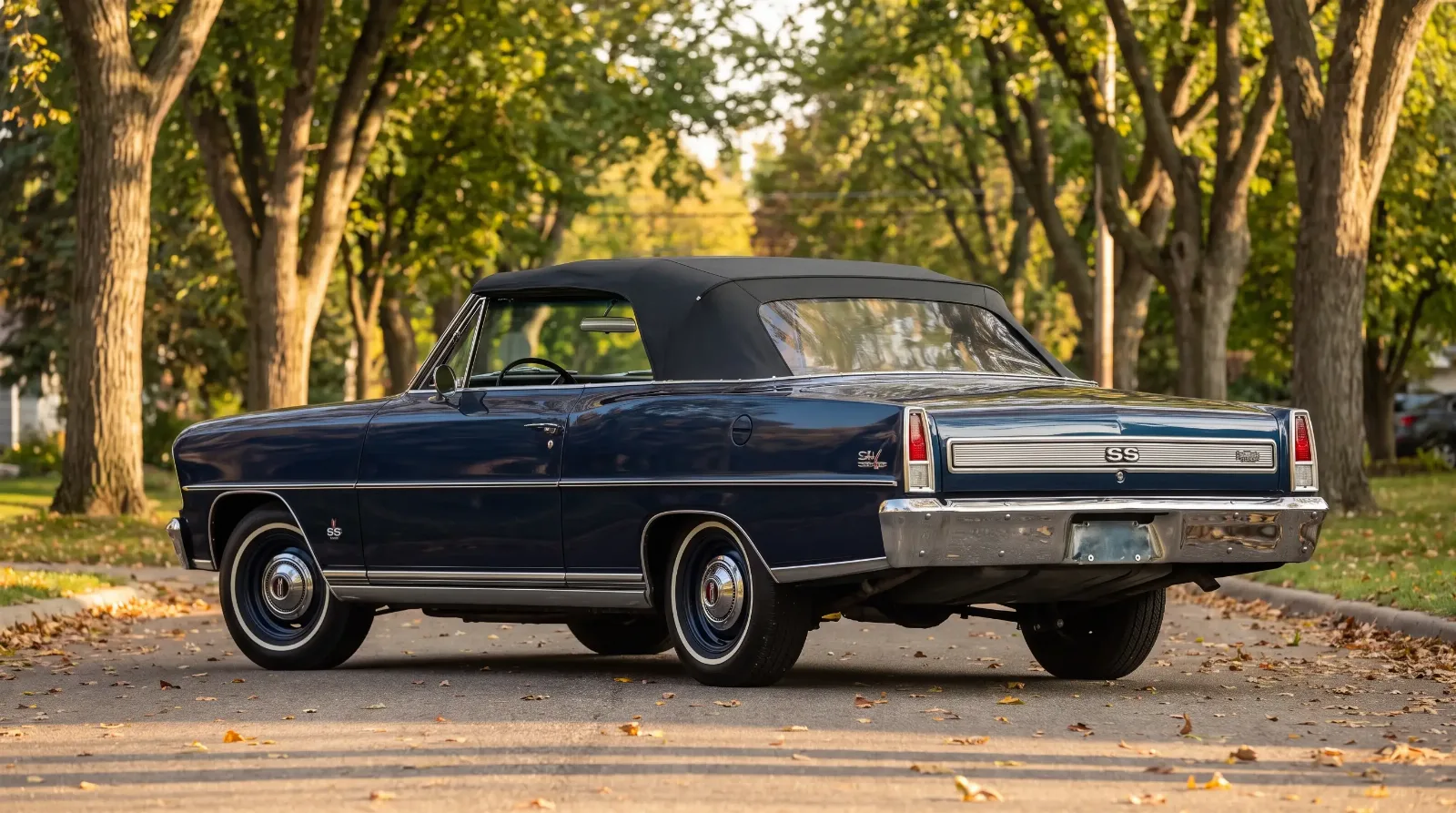
A one-year-and-done kind of redesign
Chevrolet completely reengineered the Chevy II for 1966. The first generation, built from 1962 to 1965, had been a plain unibody economy car with styling that owed a lot to the early Falcon-and-Valiant compact wars. The 1966 car threw most of that out. Chevrolet gave it a longer wheelbase, cleaner sheet metal with a Coke-bottle hip that echoed the full-size Impala, and a proper Super Sport package for buyers who wanted more than grocery-getter duty. That was the platform 1967 inherited almost unchanged, which is exactly why so many sources fold the two years into one entry. Read the gen2 chapter if you want the full account of what changed in 1966 and why.
What makes 1967 its own subject is simpler than people expect: it's the last year Chevrolet built this specific body before moving to the 1968 redesign, and it's the year the lineup quietly lost two body styles it would never get back.
What actually changed between 1966 and 1967
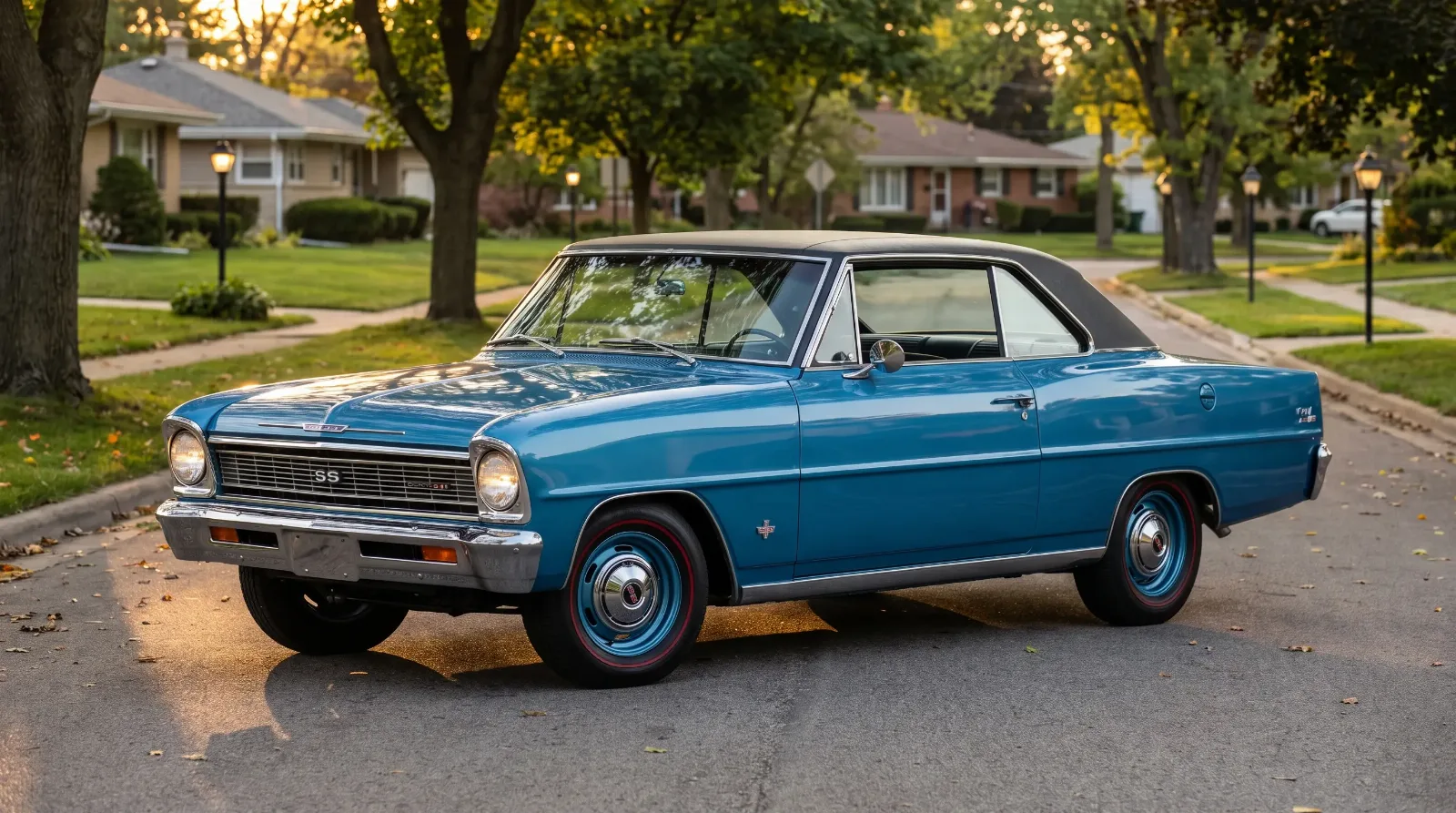
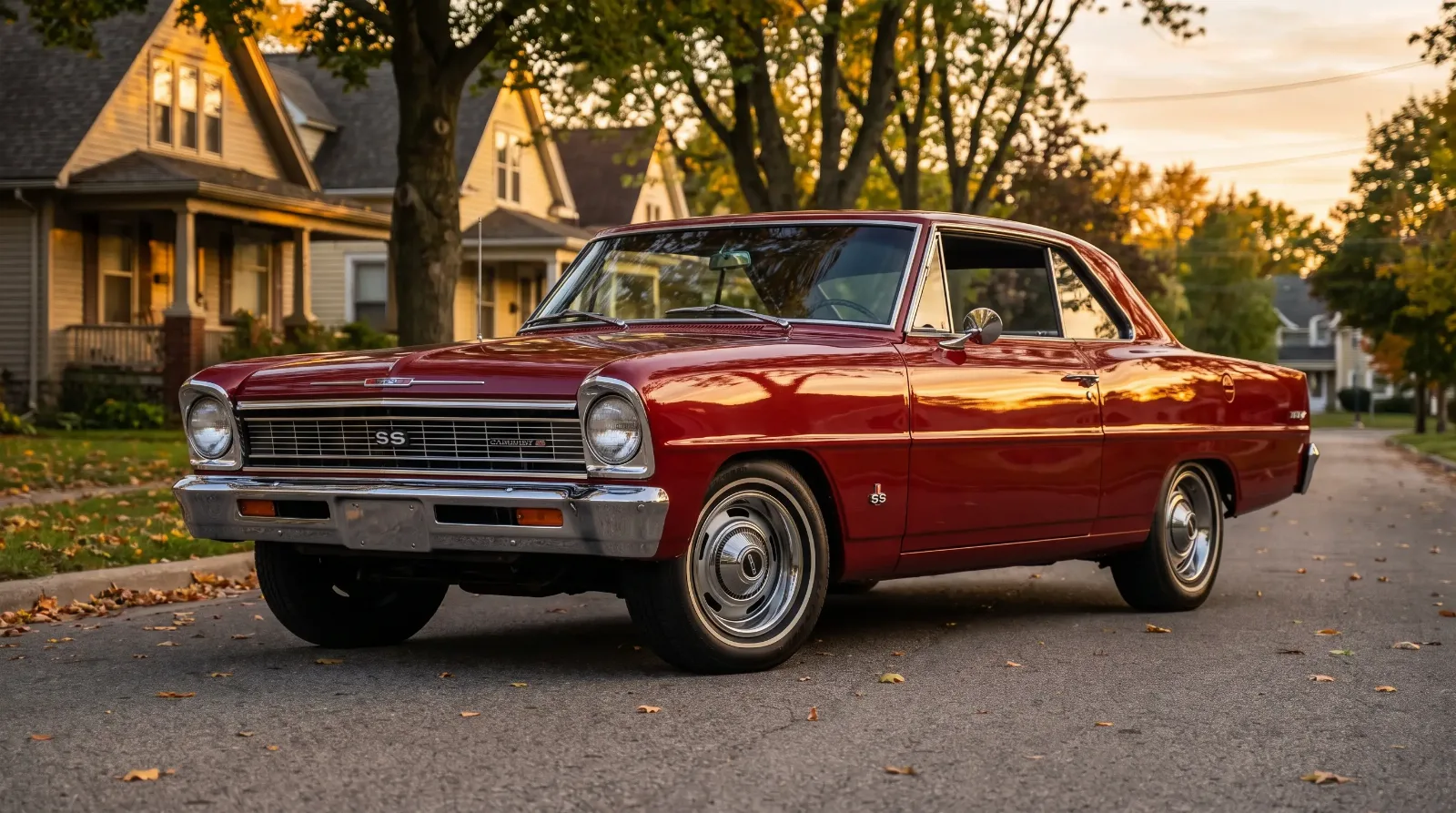
Cosmetically, 1967 is a light trim revision, not a redesign. The grille texture changed, the taillight treatment was cleaned up, and Chevrolet shuffled some interior trim and upholstery choices across the Chevy II 100, Chevy II Nova, and Nova SS trims. None of it is dramatic if you're looking at the two years side by side in a parking lot. The differences that matter more are under the hood and on the order sheet.
For 1967, Chevrolet expanded the V8 lineup that had debuted the year before. The 283 cubic inch small block remained the volume V8 choice, but the 327 cubic inch small block became a factory option in the Nova SS, giving buyers meaningfully more power than the 283 could offer without stepping up to a full-size car. The standard 1967 327 was the L30, rated at 275 horsepower, and while the 350-horsepower L79 was not listed as an official option that year, a handful still made it into 1967 Novas built with leftover parts, carrying a slightly reduced rating of around 325 horsepower. Six-cylinder buyers still had the 194 and 230 cubic inch inline sixes, which is what most Chevy IIs actually left the factory with. The V8 cars get all the attention now, but they were the minority even in SS trim.
Body styles and the ones that didn't survive
The 1966-67 lineup offered five distinct body styles: two-door sedan, four-door sedan, two-door Sport Coupe hardtop, convertible, and four-door station wagon. That's a broad spread for what was still marketed as a compact, and it reflects how Chevrolet was trying to cover every angle of the segment at once, from fleet sedans to a genuine muscle-adjacent hardtop. By 1968, the wagon and convertible were both cut from the lineup, and the sedan and hardtop carried the nameplate forward alone (plus the new SS-only coupe emphasis). If you want to see where the story goes from here, the next story in this set covers the moment the Chevy II name itself started fading in favor of Nova.
That narrowing wasn't unique to this car. GM was consolidating body styles across several compact and intermediate lines in the late 1960s as convertible demand cratered industry-wide. But it means the 1967 Nova convertible and wagon are the last of their kind under this generation's sheet metal, which gives both a certain finality that 1966 examples, oddly, don't carry in quite the same way.
Production numbers and what that means for scarcity
Total Chevy II/Nova production for 1967 came in noticeably lower than 1966, with model-year output slumping to around 106,500 cars, the lowest total the nameplate had seen since its 1962 launch. Part of that reflects a maturing compact market where Chevrolet's own Camaro, new for 1967, was pulling some of the same performance-minded buyers who might otherwise have looked at a Nova SS. Part of it is simply that 1966 was the launch year for the redesign and got a bigger initial push.
What matters for someone shopping today is that 1967 cars, especially SS models and anything with the 327, are not common. Survival rates on any 1960s compact are rough to begin with, and cars built for a single model year in a two-year body style tend to get thinned out faster in parts bins and swap-outs than cars that ran for four or five years with a bigger supply of interchangeable pieces.
"The tank sticker and the trim tag are what separate a real 1967 SS from a nicely redone Chevy II 100 with SS badges bolted on. I've seen both, and the paperwork is the only thing that settles the argument for good."
Tom Ramirez
Buying one today
A 1967 Nova is a smaller, lighter alternative to a Chevelle for anyone chasing that era's small-block Chevrolet feel without the size or the price premium. The trade-off is parts availability for the specific 1966-67 body, which doesn't share every panel and trim piece with the 1968-and-later Nova despite the family resemblance. Buyers should verify the trim tag matches the car's claimed drivetrain and body style before paying SS money for a car that started life as a base sedan. For the full arc of how this nameplate got here and where it went next, our Nova retrospective lays out the whole timeline in one place.
Values on documented SS 327 cars have moved up steadily as buyers recognize how few genuine examples are left, while six-cylinder sedans remain some of the more affordable entry points into 1960s Chevrolet ownership. Either way, a 1967 is a car defined as much by what it stopped being the year after as by anything Chevrolet did to it that year.
Sources and notes
Related Reading
Have a
Chevrolet Nova
for Sale?
Reach thousands of serious classic car collectors across the US.
Sell It Here →
Are You a Classic Car Dealer?
List your full inventory and connect with targeted classic car buyers.
Join as a Dealer →

About the author
Tom Ramirez
Corvette researcher and historian based in Bowling Green, Kentucky. Two decades documenting Corvette production history from original factory records.
Related Listings - Chevrolet Nova
Comments
Be the first to comment on this article.