
The 1991 Camaro Z28 made the same peak power as the 1990 IROC-Z it replaced: 245 hp from the 350, automatic only. What changed was the name on the car, the bodywork around it and the calendar it was sold on. That is the blunt summary. The longer one is worth having, because the 1991 and 1992 Z28 are the last third-generation performance Camaros, and on recent sales they cost less than the IROC-Z they replaced.
Car Features
7 min read
The 1991 to 1992 Z28: After the IROC-Z
The Z28 came back for 1991 with the IROC-Z's 245 hp, a new spoiler and hood blisters. The real numbers on the last third-gen Z28.

For 1988 to 1990, the IROC-Z had taken the Z28's place at the top of the range. The full background on that car is in the IROC-Z Camaro story. When Chevrolet's deal with the International Race of Champions ran out, the IROC name went with it, and for 1991 the Z28 returned as the range-topper. This is a narrow look at those two model years and what the numbers say about them.
What the 1991 Camaro Z28 actually changed
Start with timing, because it explains a lot. The 1990 model year was short, roughly August to December 1989, and Chevrolet built only 34,986 Camaros in it. The 1991 cars followed from early calendar 1990. In practice, a new Z28 bought during most of calendar 1990 was a 1991 model.
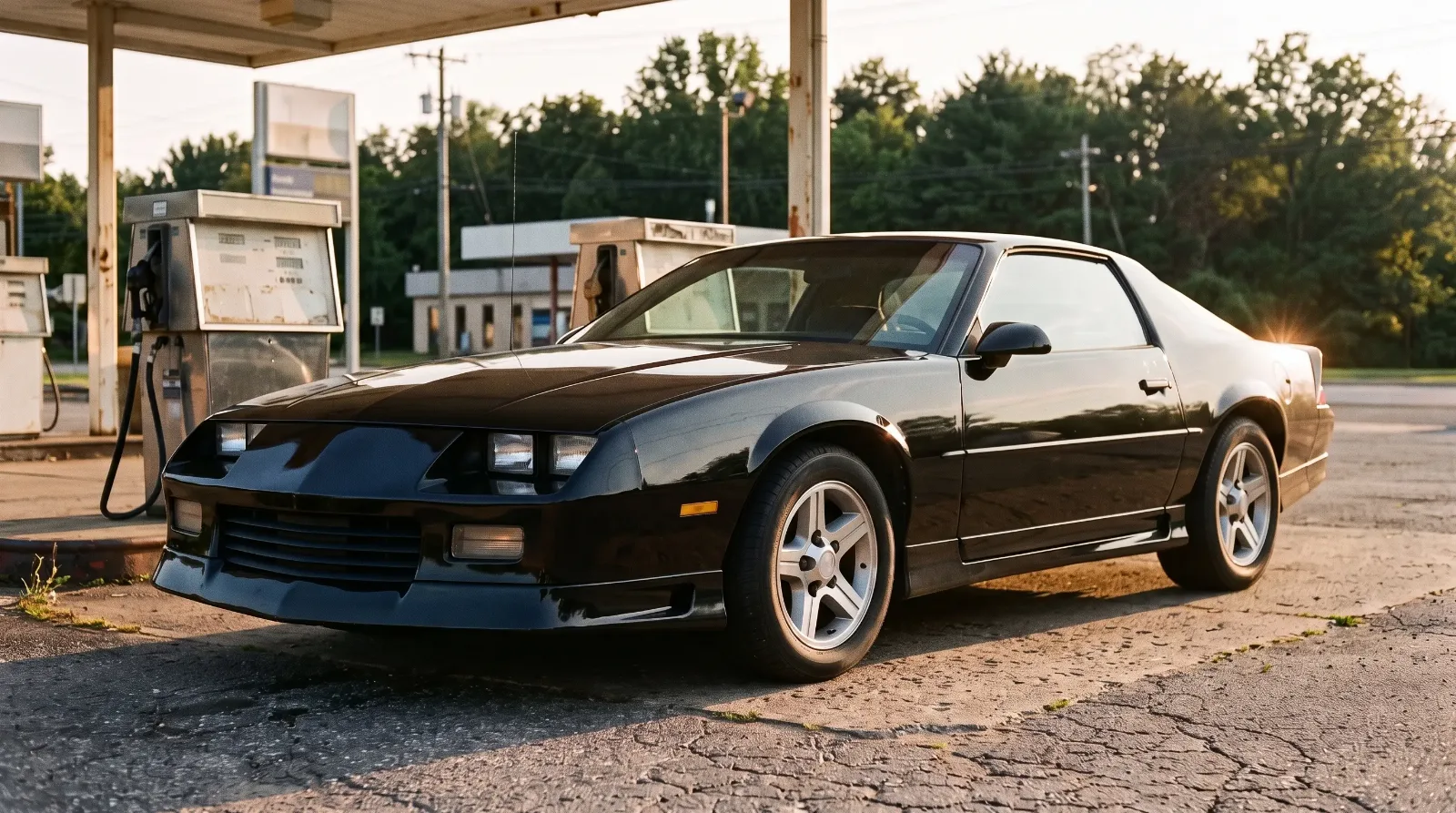
The visual changes were real and easy to spot. Every 1991 Camaro got a new ground effects package, with restyled lower valances and a restyled rear bumper, and on the coupe the third brake light moved off the spoiler and back to the top of the hatch, now housed inside the glass. The Z28 added three things of its own:
- A high-rise rear spoiler, on coupes only.
- Hood blisters, which were non-functional.
- New 16-inch wheels.
Underneath, less moved. The Tuned Port Injection engines carried over, and the 350 kept the 245 hp rating it had in the 1990 IROC-Z. One quieter change matters more to an owner today than the spoiler does: from 1991, GM used different seam sealers, structural adhesives and assembly techniques in key areas of the body. That will not show up on a dyno. It can show up on a 35-year-old car that has spent winters outside.
The engines: real numbers, not brochure numbers
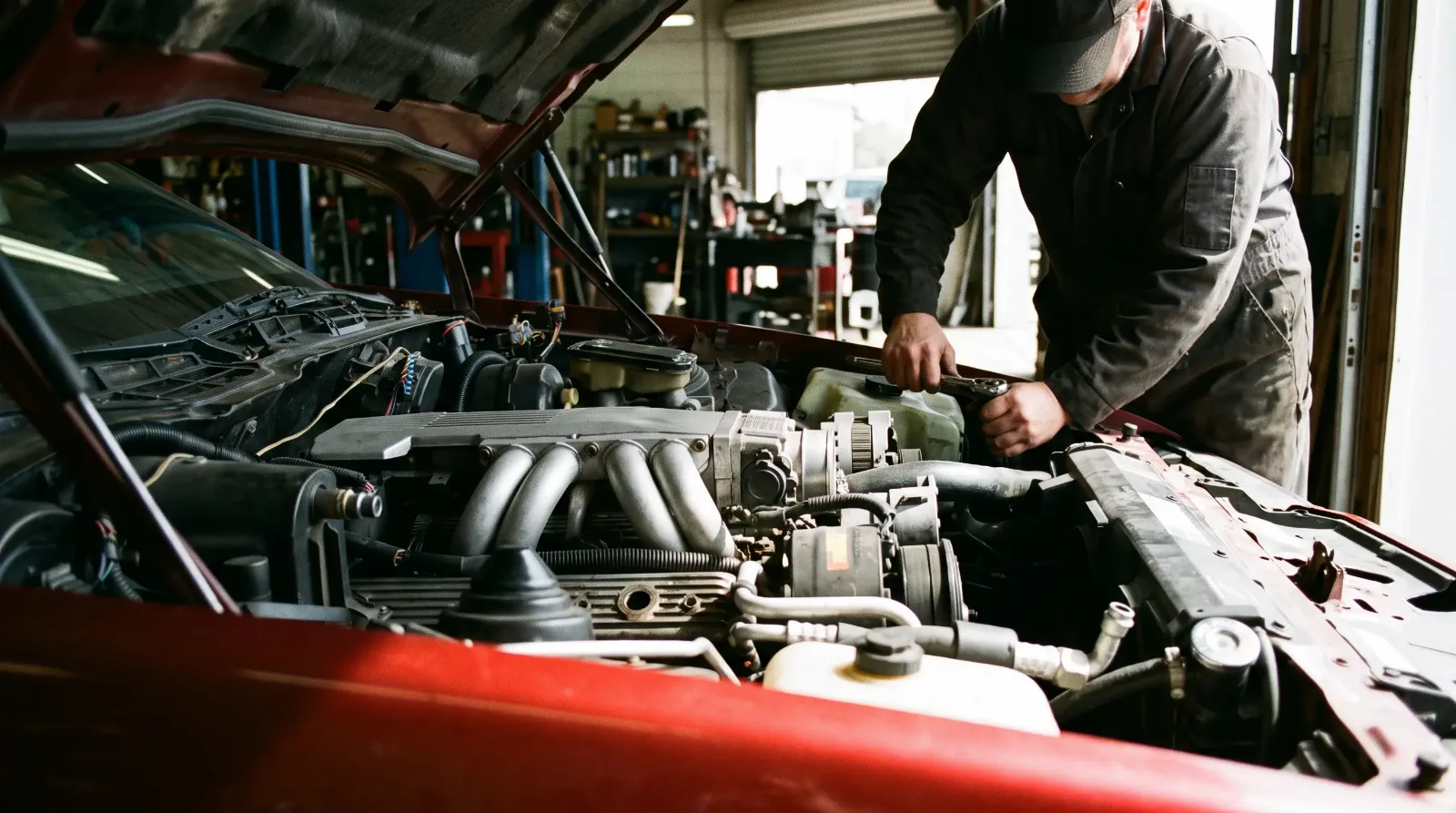
Two engines, three ratings. The rating on the 305 depended on the transmission, which confuses people reading old listings, so here it is in one place.
| Engine | Transmission | Power | Torque |
|---|---|---|---|
| LB9 5.0 liter (305) TPI | Automatic | 205 hp | 285 lb-ft |
| LB9 5.0 liter (305) TPI | Five-speed manual | 230 hp | 300 lb-ft |
| L98 5.7 liter (350) TPI | Automatic only | 245 hp | 345 lb-ft |
The 245 hp L98 is the top of the whole third generation. The V8 range across 1982 to 1992 runs from 145 hp for the 1982 LG4 305 to 245 hp for the 1990 to 1992 L98, all SAE net. Some enthusiast sites list 270 hp for 1992. No engine listing supports that number, so treat it as noise.
The real choice was the old one. Want the most power? Take the 350 and the automatic. Want three pedals? Take the 305 and give up 15 hp and 45 lb-ft. The 350 was automatic only, as it had been in the IROC-Z, and that did not change for the last two years.
How quick was it? Road & Track tested a 1992 Z28 in its December 1991 issue and ran 0 to 60 mph in 6.9 seconds and the quarter mile in 15.2 seconds at 92.0 mph. The magazine's page does not say which engine the car had, so take the result as a Z28 number, not an L98 number. For a 1992 car, that is respectable. It was not a giant killer.
"Same 245 hp, same automatic, new spoiler. If you paid extra in 1991 for the badge, you paid for the badge. If you buy one now for less than an IROC-Z, you are getting the better deal."
Dan Reeves
Spoilers, hood blisters and the 1LE
The serious hardware hid behind a package most buyers never saw. The 1LE was not in the dealer literature. It was triggered by ordering the G92 performance axle and the G80 limited slip while deleting air conditioning. For 1991 it went on the Z28 coupe, and output climbed fast: 478 cars for 1991 and 705 for 1992, against 62 for 1990. The 1LE brought larger 11.65-inch front rotors with dual-piston aluminum PBR calipers, an aluminum driveshaft and a baffled fuel tank.
Read the 1992 figure carefully. Of those 705 cars, 589 were B4C police coupes that used 1LE brakes, which leaves 116 true civilian 1LE cars. The B4C itself was badged as an RS but built on Z28 and 1LE hardware. If someone offers you a "1992 1LE Z28," ask for the paperwork first. There were not many to go around.
T-tops stayed on the order form for the RS and the Z28 in 1991 and 1992. So did the convertible, which brings us to production.
Production, prices and what the numbers say
Total Camaro output was 100,838 for 1991 and 70,007 for 1992. The Z28 was a small slice of that. One enthusiast source counts 12,452 Z28 coupes and 3,203 convertibles for 1991, and its coupe figure includes the 478 1LE cars and the 592 B4C police coupes built on Z28 hardware. For 1992, the same source gives 6,451: 5,197 coupes, again including the 1LE and B4C cars, and 1,254 convertibles. Most third-gen buyers in these years went for the RS.
Price, for 1992: a Z28 coupe started at $16,055. The 1991 sticker price has not turned up in a source we trust, so we will not guess. Every 1992 Camaro also carried a 25th Anniversary badge on the dash, and the optional Heritage package added stripes and trim for $175 with no mechanical change. The full rundown on the 25th Anniversary cars is its own story.
What a 1991 to 1992 Z28 costs now
Here is the result that matters to a buyer. In September 2026, a 1991 Z28 with the LB9 and an automatic sold for $12,038 at no reserve on Hagerty Marketplace. A day later, a black 1992 Z28 with the Heritage package, the L98 and an automatic sold there for $14,445, also at no reserve. Two sales are not a market, but they point the same way. For comparison, a 14,000-mile 1990 IROC-Z sold for $28,500 in 2025, and a 13,166-mile 1990 IROC-Z 350 was recently listed at $58,995. The Z28 trades well below its predecessor, even with the same top engine.
Why? The name. The IROC-Z carries the stories and the nostalgia. The 1991 and 1992 Z28 carry revised body sealing, the last-year details and the same 245 hp. For someone who wants to drive the car, the numbers favor the Z28. If you are shopping, start with 1991 Camaros for sale and check the build, not just the badge.
For context on where these two years sit in the generation, the details are in the full third-gen history, and the long version covers the Camaro from the start. The epilogue is short. The 1993 Z28 arrived with the LT1 350 at 275 hp, 30 hp more than the best third-gen engine. The 1991 and 1992 cars were the end of a line, and their spec sheet shows it: the most a third-gen Z28 ever got, and not one horsepower more.
Sources and notes
- Wikipedia: Chevrolet Camaro (third generation)
- CamaroTech: third-generation Camaro year-by-year description and production
- GM EFI: guide to the third-gen Chevrolet Camaro
- Muscle Car Facts: 1992 Camaro (production, price, Road and Track test)
- Hagerty Marketplace: 1991 Chevrolet Camaro Z28 auction
- Hagerty Marketplace: 1992 Chevrolet Camaro Z28 Heritage auction
Related Reading
Have a
Chevrolet Camaro
for Sale?
Reach thousands of serious classic car collectors across the US.
Sell It Here →
Selling a classic? Here's how: compare the places to sell classic cars
Are You a Classic Car Dealer?
List your full inventory and connect with targeted classic car buyers.
Join as a Dealer →

About the author
Dan Reeves
Performance engine builder from North Carolina's motorsports corridor, focused on swaps, forced induction and making real, repeatable power.
Related Listings - Chevrolet Camaro



Comments
Be the first to comment on this article.