
Somewhere in a climate-controlled trailer, there is a Nova worth more than most people's houses. That sentence would have sounded absurd to anyone who bought one new off a Chevrolet lot in the late 1960s, when the Nova was the car you chose specifically because it was not going to bankrupt you. But the most expensive chevy nova ever sold at auction proves the compact's reputation as an affordable performance car and its current status as a genuine collector prize are two very different chapters of the same story.
Car Features
6 min read
The Most Expensive Nova Ever Sold
How a dealer-built 427 conversion turned Chevrolet's budget compact into a car that now commands serious auction money.
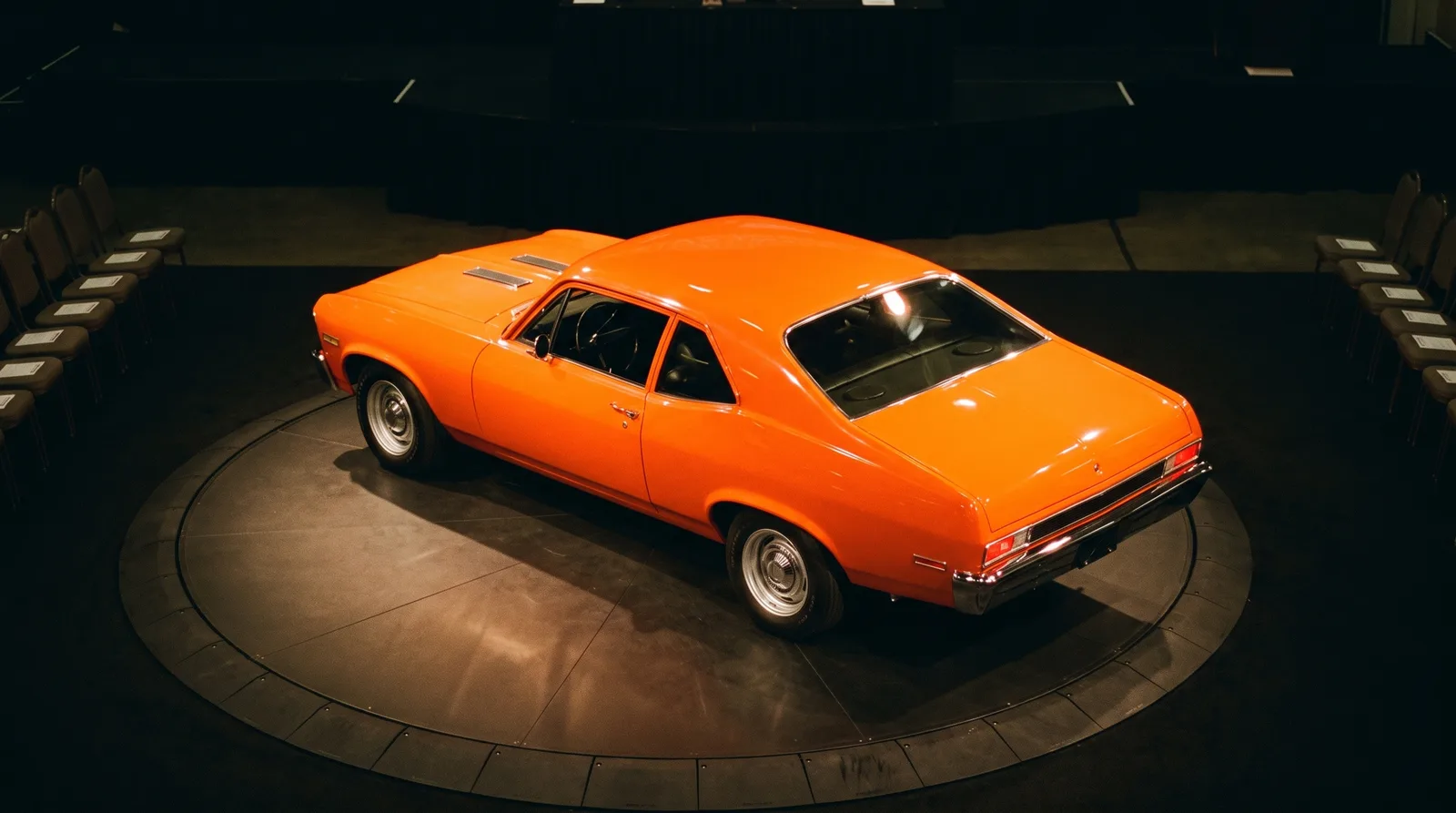
The car that broke the ceiling
The Nova that commands the biggest numbers today is not a garden-variety SS. It is a 1969 Yenko Nova S/C, one of just 38 known Novas, 37 production cars plus a single automatic prototype, fitted with the 427 cubic inch L72 big-block by Don Yenko's dealership network as a dealer-installed performance package, built specifically to compete with the era's factory muscle cars while dodging Chevrolet's internal limits on how much engine the compact platform could carry from the factory. Chevrolet never intended a small-block compact to carry a 427. Yenko's shop did it anyway, in extremely limited numbers, which is exactly the combination, rare factory-adjacent history plus real performance, that collector markets reward most. It should not be confused with the better-known 1970 "Yenko Deuce," a separate 175-car run built around a tuned LT1 350 after insurance costs and looming 1970 emissions rules made a 427-powered compact impossible to sell.
Documented 1969 Yenko Novas with verified build sheets and matching numbers have crossed the auction block for real money. One sold for $852,500 at Mecum's Kissimmee sale in January 2026, breaking the previous record of $418,000 set in 2015. The scarcity is the whole story here. Where a standard SS 396 Nova was built in meaningful volume across several years, the Yenko 427 conversions numbered under 40 total, and surviving examples with clean paper trails, only a handful are believed to exist today, are a fraction of that already small number.
Why documentation decides the number
A 1969 Yenko Nova without its original build sheet, tank sticker, or dealership paperwork is still a fast, historically interesting car. It is not the car that sets records. The gap between a well-restored tribute and a documented original can run into six figures, because what collectors are actually paying for at the top of this market is certainty, not just speed. A numbers-matching engine confirmed against factory records is worth more than an identical-looking replacement block, even if the replacement runs exactly as strong on a dyno.
That obsession with paperwork is not unique to the Nova, but it hits harder here because so few of these cars were built and so many have been recreated, cloned, or restored using non-original drivetrains over the decades. Buyers shopping at this level bring documentation experts to inspections. A casing stamp in the wrong font, a casting number that does not match the production window, any of these can move a car from record-setting territory to merely expensive territory in a single afternoon.
This is also why a handful of specialist appraisers have built entire careers around exactly one question: is this the real thing. For a car this rare, the difference between yes and no is not a matter of opinion or taste. It shows up in stamped numbers, in the paper a dealership kept sixty years ago, and in whether a casting date lines up with when the engine actually would have left the foundry. Buyers who skip that step are not buying a bargain. They are buying a very expensive question mark.
| Variant | What sets it apart | Collector standing |
|---|---|---|
| Standard SS 350/396 Nova | Factory-built performance package, wider production | Strong, but not record-setting |
| Yenko Nova S/C (1969) | Dealer-installed 427 L72, 38 built | Sets the ceiling for the model |
| Documented tribute or clone | Correct appearance, non-original drivetrain | Valuable, well below original pricing |
The auction moment itself
Watching one of these cars cross the block is a different experience from watching a Chevelle or a Camaro do the same thing. There is no roar from the crowd the way there is for a Hemi car. Instead there is a quiet, focused attention from a smaller group of bidders who already know exactly what they are looking at and exactly what the paperwork in the auction house's binder confirms. The bidding tends to move in careful increments rather than the frantic jumps you see on a headline muscle car, because everyone in the room understands precisely how few of these exist and how unlikely another one is to surface soon.
That patience is its own kind of tell. Buyers who chase hype move fast and loud. Buyers who understand real scarcity move deliberately, because they know the next chance might not come for years. The full arc of how the Nova got from budget compact to six-figure rarity is worth understanding on its own terms, and our full Nova feature walks through that whole trajectory.
"I watched a Yenko Nova sell once and the room was almost silent. No cheering, just a lot of people doing math in their heads. That's how you know a car has actually arrived."
Patrick Walsh
What it means for everyone who isn't buying at that level
None of this changes the reality for the vast majority of Nova owners and shoppers, who are not chasing a 1969 Yenko 427 Nova and never will be. It does, however, put a ceiling on the conversation that helps explain why standard SS Novas have climbed steadily in value even without a single record-setting sale attached to them. When the rarest version of a car proves the platform can command real money, buyers pay closer attention to everything below it too.
For most people getting into this hobby, the far more relevant story is not the record sale, it is the first car, the one bought to learn on rather than to invest in. That is a different kind of Nova story entirely, and the next story in this set covers exactly that side of the ledger. If the record-setting Yenko convinced you the Nova deserves a serious look, the Nova culture story is the right place to understand why this car built that kind of loyalty in the first place.
Sources and notes
Related Reading
Have a
Chevrolet Nova
for Sale?
Reach thousands of serious classic car collectors across the US.
Sell It Here →
Selling a classic? Here's how: sell my classic car
Are You a Classic Car Dealer?
List your full inventory and connect with targeted classic car buyers.
Join as a Dealer →

About the author
Patrick Walsh
Automotive journalist covering classic car shows, events, and the enthusiast community across North America.
Related Listings - Chevrolet Nova




Comments (1)
S
Steve K.
4 weeks ago
Double the 2015 record and the room stayed quiet. Somebody should have at least clapped. Just saying.