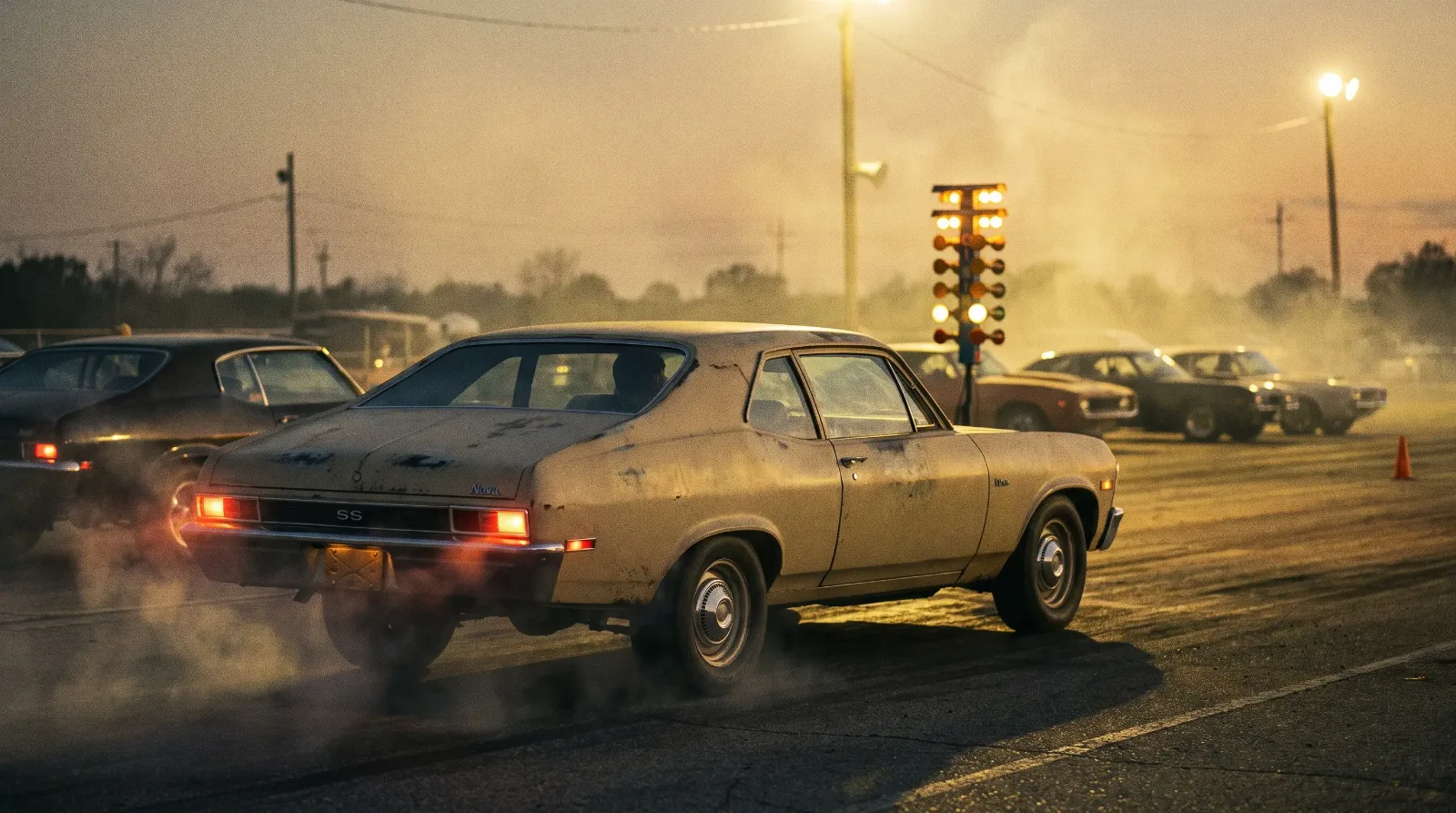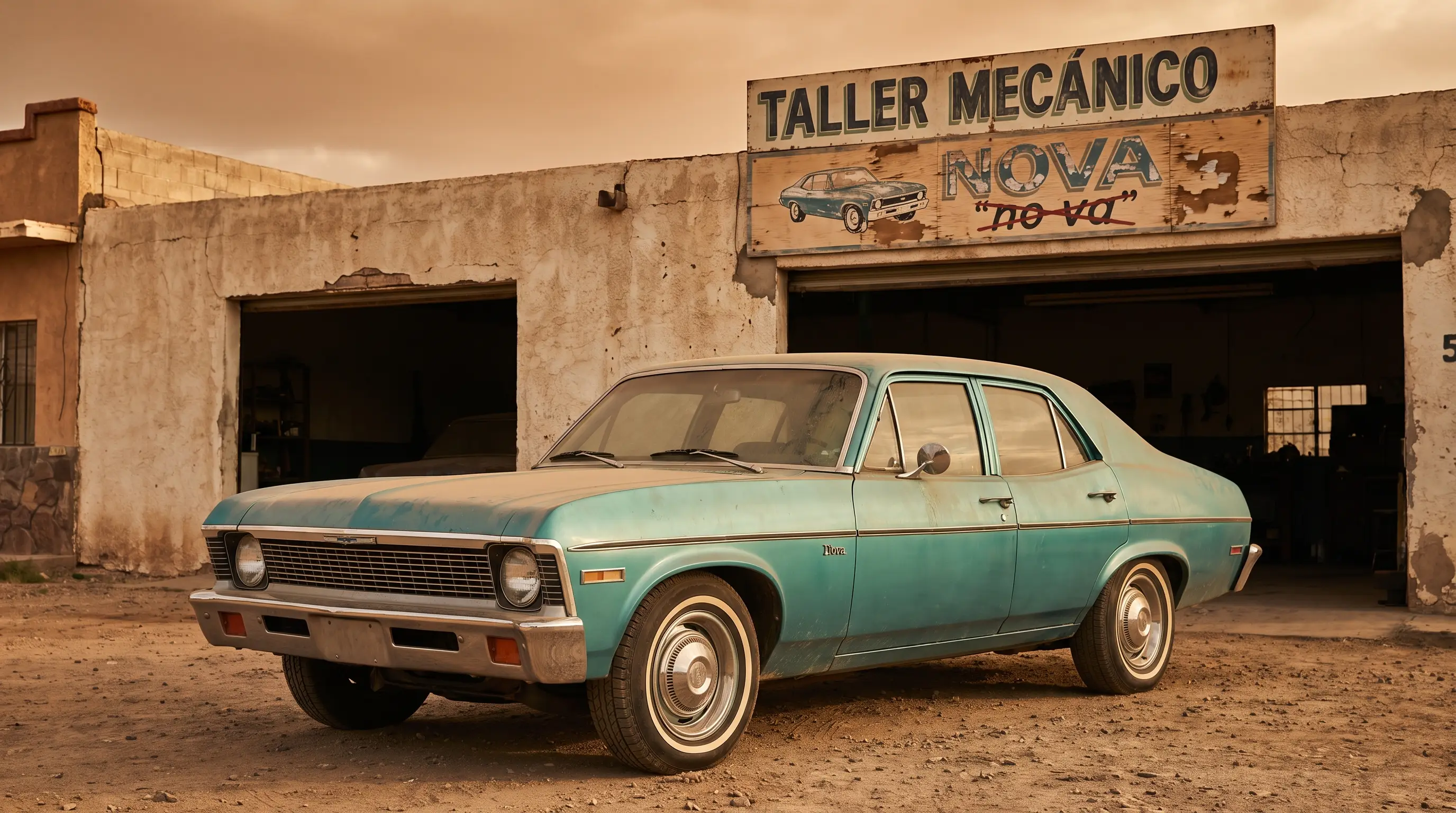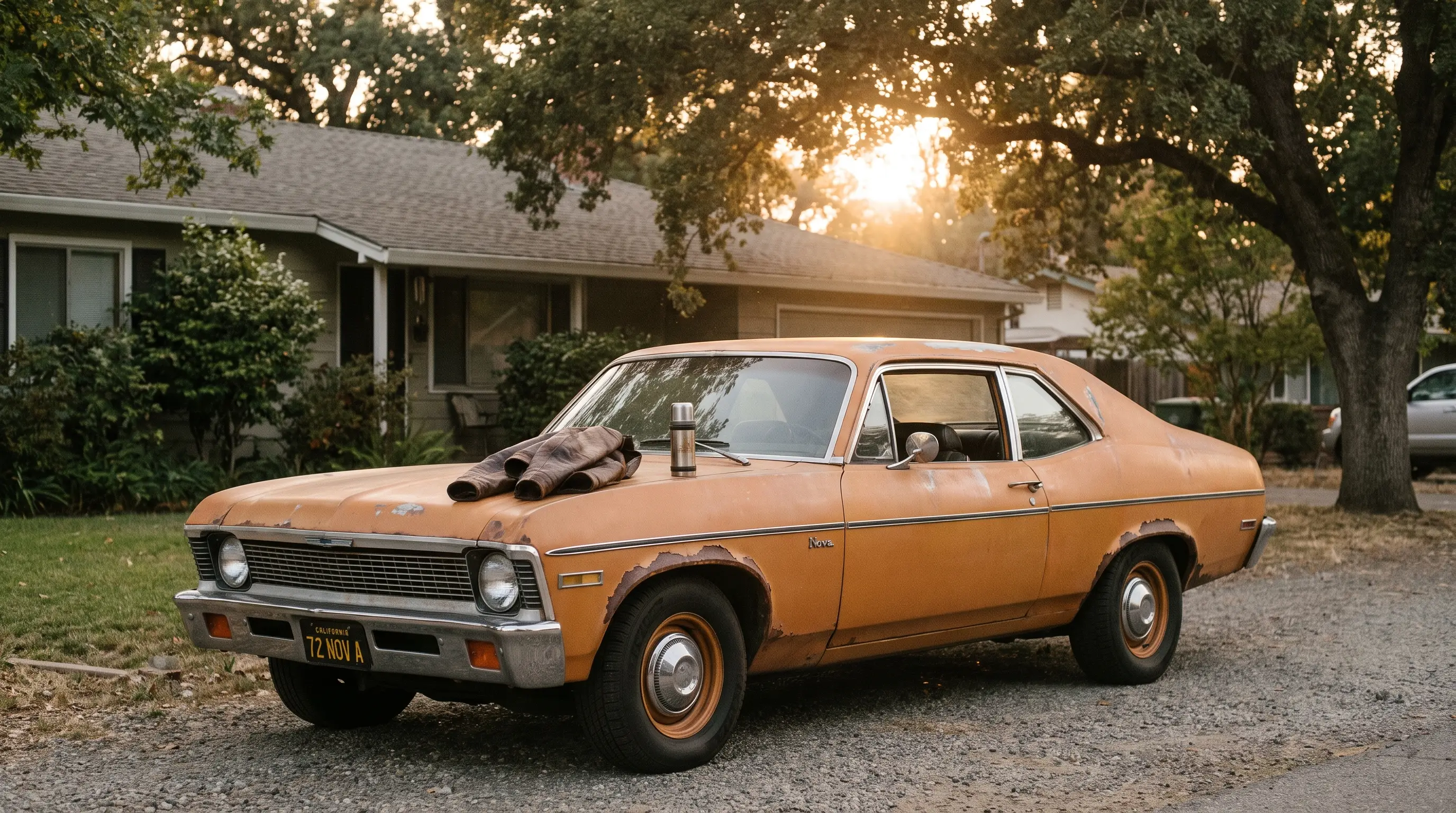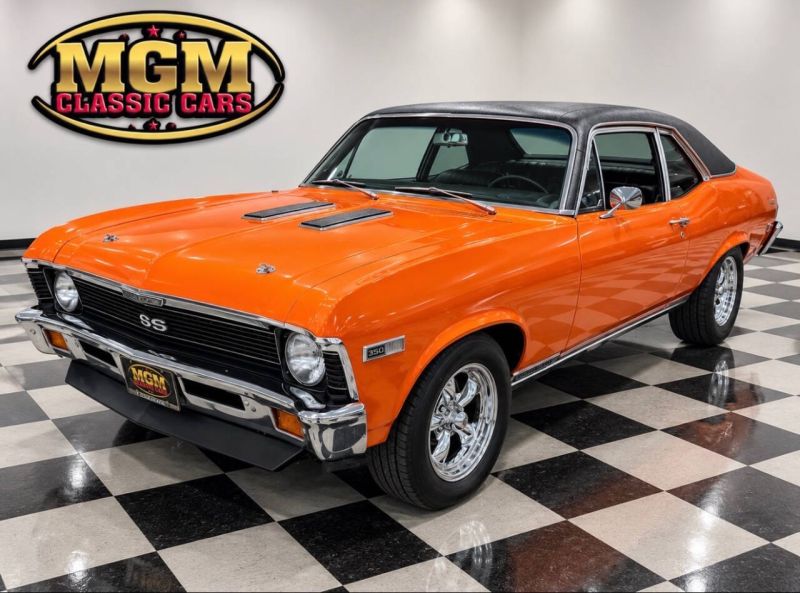
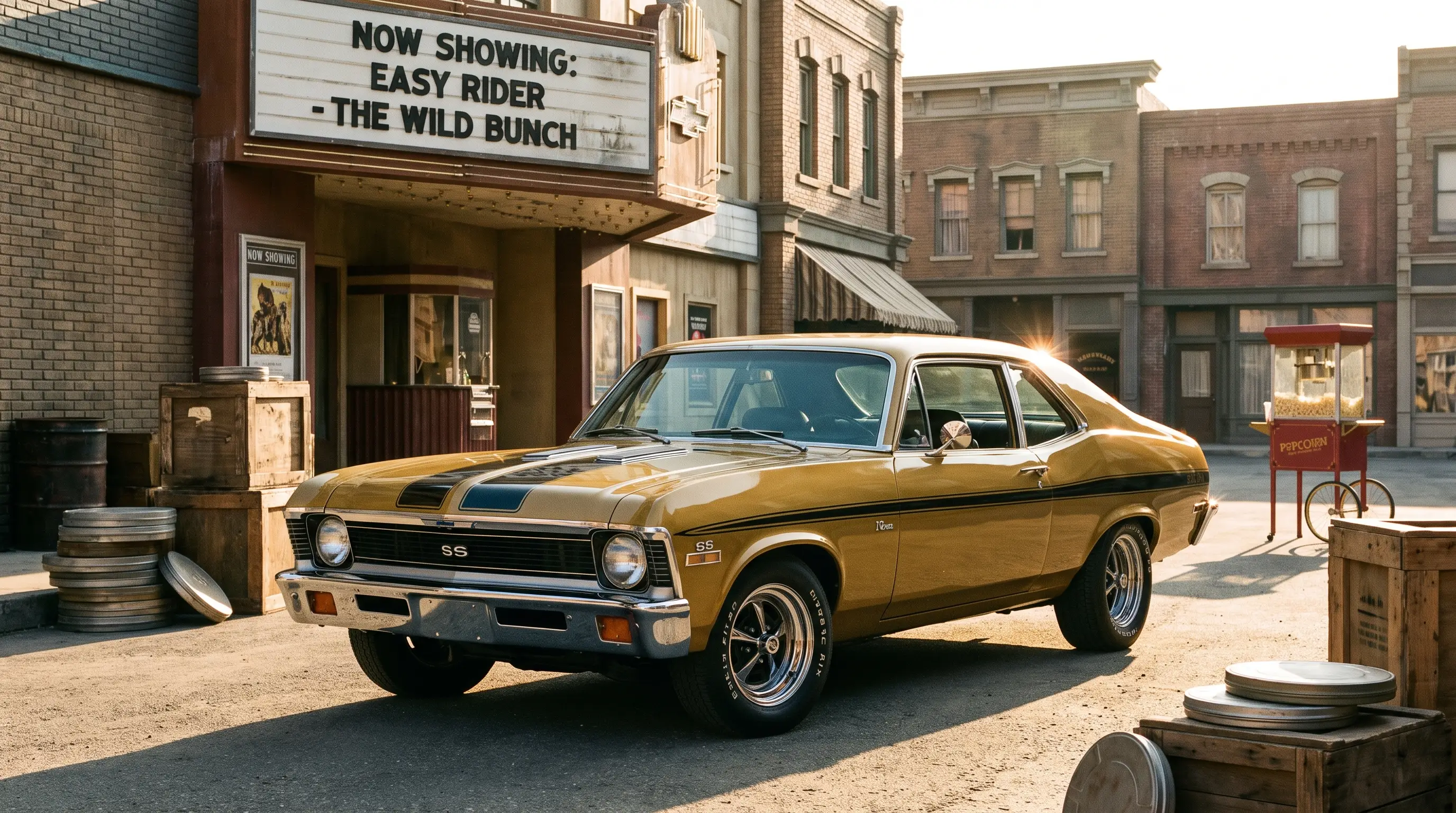
Every car guy has a moment where the movie stops being about the plot and starts being about the car parked in the driveway of a scene nobody else remembers. For a lot of us, that car was a Chevy Nova. It never got the marquee treatment a Mustang or a Charger got. It showed up in the background of a hundred films and television shows doing exactly what it did in real driveways across the country: being the car a regular family, a working guy, or a kid on his first repossession run actually drove. That is the real story of the chevy nova in movies, and it is a better one than most people expect.
The everyman car that Hollywood couldn't avoid
Set decorators do not chase glamour when they are dressing a scene meant to feel like 1974 America. They chase what was actually parked on the street, and from 1962 through the late 1970s, that meant a Nova sat somewhere in almost every frame of suburban or small-town footage a studio shot. Chevrolet built millions of them across three generations, and the compact's plain-Jane trims outsold the SS and muscle variants by a wide margin. When a production needed a background car that read as ordinary, working-class, and unmistakably American without pulling focus from the actors, a Nova did the job better than almost anything else on the lot.
That is why so many Nova sightings on screen are incidental. A II-generation coupe idling at a diner. A III-generation four-door parked outside a police station. Nobody wrote a line of dialogue about it, and nobody needed to. The car was doing its job the same way it did in 1971 Ohio: getting somebody to work on time.
When the Nova got a starring role
The Nova's clearest starring role came decades later, in Quentin Tarantino's Death Proof, the 2007 half of the Grindhouse double feature. Kurt Russell's Stuntman Mike drives a 1970 Chevy Nova rigged so that he survives every crash while his passengers do not, and the production dressed the car with a chrome rubber-duck hood ornament as a nod to Convoy and a license plate, JJZ-109, that winks at Steve McQueen's Mustang from Bullitt. It is the rare case of a Nova getting the hero-car treatment a Charger or a Mustang usually gets, chase scenes, stunt choreography, and all. Pulp Fiction used a 1974 Nova in its Monster Joe's Salvage Yard scene the same decade the model was still just background iron for most productions.
Restoration and build television has been kinder to the Nova than feature films ever were. MotorTrend-family shows built around real-world garage work, including Roadkill, have featured Novas as budget sleeper projects, and the format suits the car for a practical reason. A Nova costs less to acquire than a Chevelle or a Camaro of the same year, which leaves more of a television build's budget for the engine swap and the suspension work that makes for compelling footage. Producers know their audience wants to see a transformation, and a Nova gives them more room to show one.
Why the Nova reads differently on screen than a Camaro does
A Camaro or a Chevelle SS on screen tells the audience something specific about a character before he says a word: money, aggression, a taste for speed. A Nova tells a quieter story. It says the character is practical, or that he is starting from nothing, or that this is a first car rather than a dream car. Directors who understand American car culture use that distinction on purpose. Put a teenage character behind the wheel of a battered Nova and the audience reads "just getting started" without a line of exposition. Put the same character in a restored SS 396 and the story reads completely differently.
That contrast is part of why the Nova keeps surfacing in coming-of-age stories and blue-collar dramas rather than in car-chase blockbusters. It photographs as honest. A production that wants a hero car photographs a Hemi Cuda. A production that wants a real person's car photographs a Nova, and the culture chapter in this series covers exactly why that read has held up for fifty years without going out of style.
"Nobody in Hollywood ever built a poster around a Nova, and that's exactly why it still shows up in every era-accurate street scene worth its salt. It doesn't perform. It just belongs there."
— Patrick Walsh
The Nova's second life in front of the camera
As the collector market has caught up with the Nova over the past decade, its screen presence has shifted again. Car shows built around auctions and private sales now film Nova transactions with the same attention once reserved for Chevelles and Camaros, because buyers are finally paying attention. That shift in coverage tracks closely with what is happening in the market itself, which is a story worth reading on its own terms if you want another angle on where Nova values are heading next.
None of this changes what made the car useful to filmmakers in the first place. It photographs like a real car because it was built to be a real car, sold to real families who needed something that started every morning and did not cost a fortune. That plainness is exactly what a good production needs when the story calls for a character who is not living in a movie at all, just driving to work in one.
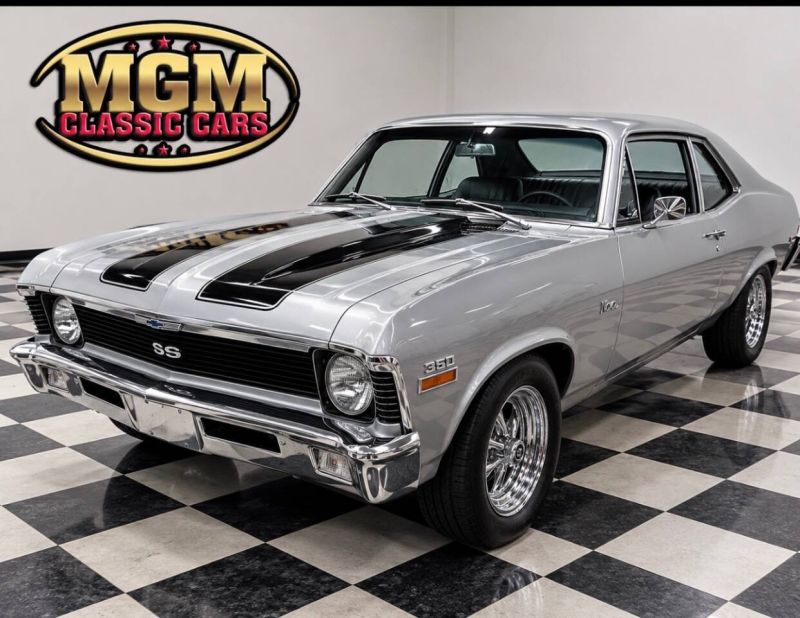
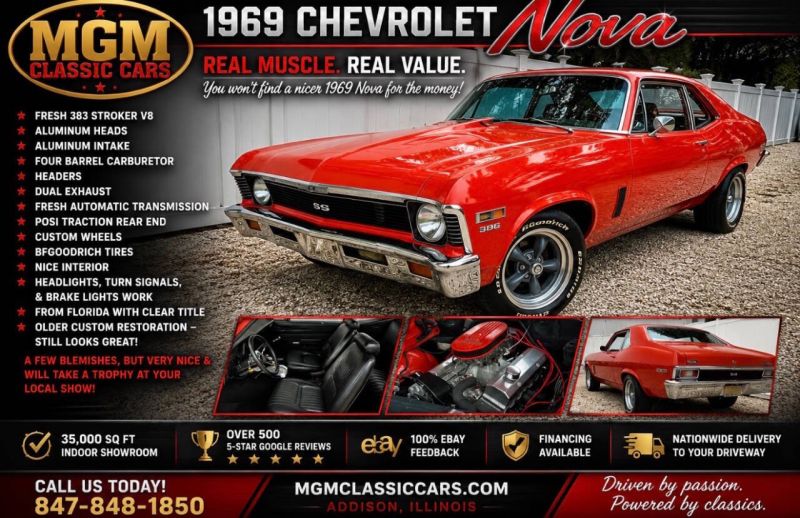
If watching all of this on screen for years has you wanting to see one in person, there are classic Chevy Novas for sale right now in every condition from driver-quality to fully sorted, and most of them look a lot like the cars that never got a single line of dialogue but showed up in the background of half of American film anyway.