
Forget horsepower for a minute. The SS 454 versus GSX Stage 1 fight was never really about who had the bigger number on the window sticker. It was about torque, and specifically about which car put that torque down to the pavement fastest off the line. That's a different argument than the one most people have about muscle cars, and it's the one that actually mattered to buyers cross-shopping these two in 1970.
Car Features
7 min read
SS454 vs Buick GSX Stage 1: The Torque-King Battle
Forget horsepower. The 1970 SS454 vs GSX Stage 1 fight came down to torque and who put it down first. Here's what the dyno sheets actually showed.
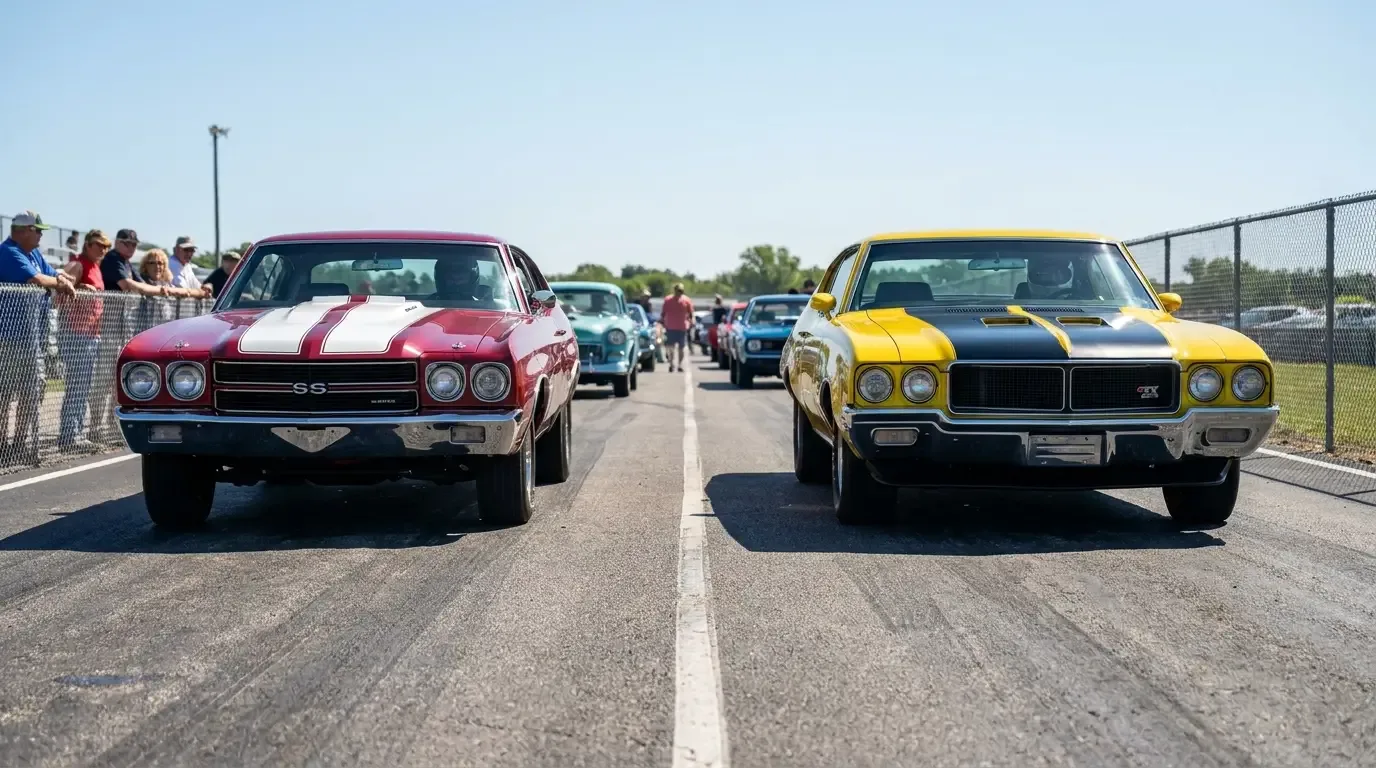
Chevrolet's SS 454 came in two flavors that year, the LS5 and the LS6, both built around a 454 cubic-inch big-block. Buick's GSX Stage 1 ran a 455 cubic-inch V8 with a factory tune aimed squarely at low-end torque instead of top-end horsepower. Two different engineering departments, two different philosophies, same basic goal: win the stoplight. This is part of the A-body muscle war, and it's the round where the numbers stop being marketing copy and start being an actual argument.
The torque numbers, and why they matter more than horsepower
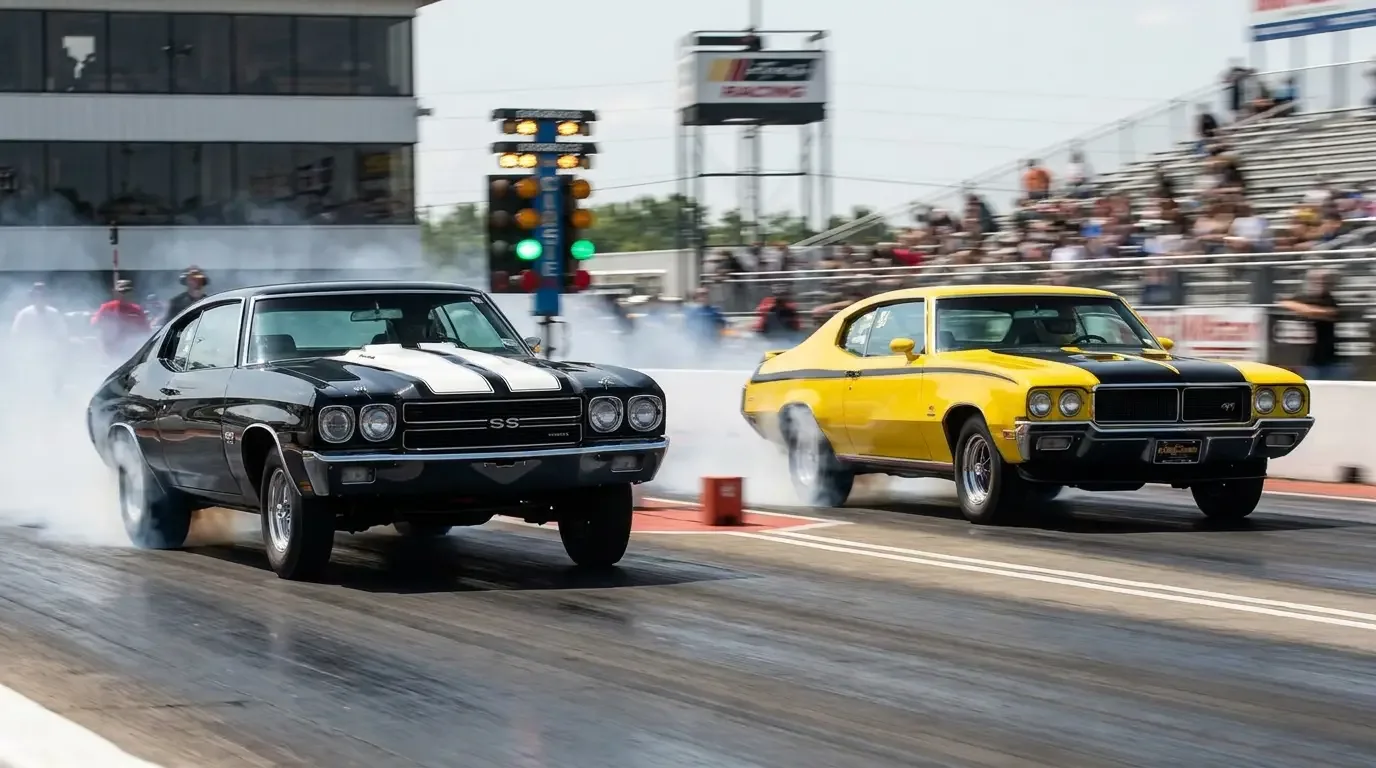
Buick advertised the GSX Stage 1 at 510 lb-ft of torque, peaking at a low 2,800 rpm, a figure that put it at or near the top of the entire muscle car field for 1970 and raised eyebrows at the time given Buick's reputation as the quiet, comfortable division. Chevrolet's LS6 454 countered with a factory rating of 450 hp and 500 lb-ft of torque, a reputation as one of the strongest factory big-blocks of the era, full stop. Both companies were chasing the same metric because torque, not peak horsepower, is what actually launches a heavy car hard off the line. A dyno sheet with a huge horsepower peak way up at 6,000 RPM looks great in an ad. It doesn't win a stoplight race against a car making serious torque at 3,000 RPM.
That's the part period road tests sometimes glossed over. A quarter-mile time depends on the whole power curve, the gearing, the weight, and the tire, not just one number pulled off a spec sheet. The GSX Stage 1 and the SS 454 LS6 both understood that, and both were tuned by engineers who cared more about the number that actually moved the car than the number that looked good in print.
What separated the two on paper
The LS6 454 carried a factory rating that made it, on paper, one of the highest-output engines GM sold to the public that year. Buick's Stage 1 package sacrificed some of that peak number in exchange for a torque curve that came on hard and early, which is a legitimate engineering tradeoff, not a lesser one. Motor Trend ran a GSX Stage 1 to a 13.38 at 105.5 mph in the quarter mile, while Hot Rod's 1970 LS6 Chevelle test posted a 13.44 at 108.7 mph, close enough that gearing, tires, and the individual car on a given day could flip the result either way. That the 360-hp Buick could hang with a car rated 90 hp higher surprised people who assumed Chevrolet's bigger reputation meant a faster car by default. Reputation and timing slips are two different things. Don't confuse them.
| Car | Engine | Focus |
|---|---|---|
| 1970 Chevelle SS 454 LS5 | 454 cu in V8, 360 hp / 500 lb-ft | Balanced power delivery, broader availability |
| 1970 Chevelle SS 454 LS6 | 454 cu in V8, 450 hp / 500 lb-ft | Highest factory output, built for straight-line performance |
| 1970 Buick GSX Stage 1 | 455 cu in V8, 360 hp / 510 lb-ft | Low-end torque emphasis, limited production |
Figures are factory gross ratings for the 1970 model year; exact output varied by carburetor and transmission calibration.
The gearing and traction side of the equation
Torque numbers only tell part of the story. Rear axle ratio and tire compound decided a lot of these stoplight fights just as much as the engine did, and that's the part car magazines from 1970 sometimes buried three paragraphs deep instead of leading with it. A GSX Stage 1 optioned with the right rear gear and a good set of period bias-ply tires could put its torque down more effectively than an LS6 car geared for highway cruising instead of the strip. Two identical engines with two different rear ends produce two different quarter-mile results, and that's just as true comparing a Chevelle to a Buick as it is comparing two Chevelles to each other.
This is the kind of detail that gets lost when people argue muscle car rivalries purely off advertised numbers. The factory literature tells you what the engine could theoretically produce. It doesn't tell you what a specific car, with a specific gear ratio and a specific set of tires, actually ran at the strip on a given Saturday. Anyone comparing surviving cars today needs to look at the full drivetrain spec, not just the displacement badge on the fender, before drawing conclusions about which one would have actually won.
Why the GSX rarely got a fair shake
Part of the reason this rivalry never got the attention the Chevelle-GTO fight got is simple: Buick built the GSX Stage 1 in small numbers, and it never had Chevrolet's dealer reach or marketing budget behind it. A low-production car that mostly went to buyers who already trusted Buick doesn't generate the same magazine ink as a Chevrolet sold through thousands of dealers nationwide. That's not a knock on the engineering. It's just how distribution and marketing spend work, then and now.
What the dyno sheets and the quarter-mile slips from the era actually show is a much closer fight than the sales numbers or magazine coverage would suggest. If you're chasing the torque war specifically, and not just the horsepower headline, the GSX Stage 1 deserves to be in that conversation with the LS6, not treated as a footnote to it.
What this means for a buyer today
If you're shopping this era of big-block muscle now, the practical difference is availability and documentation, not performance. LS6 cars are well documented, heavily chronicled, and command a real premium because of their reputation and their rarity as genuine numbers-matching examples. GSX Stage 1 cars are rarer still and take longer to find, but a documented one is arguably the better torque story for anyone building a collection around the engineering, not just the brand. Anyone serious about this era should go shop 1970 SS454s and see what's actually available and how the asking prices compare to what the documentation supports.
"The LS6 gets the reputation. The GSX Stage 1 gets the quiet respect from guys who actually looked at the timing slips instead of the ad copy. Torque wins races off the line. Horsepower wins arguments at car shows. Know which one you're actually trying to buy."
Dan Reeves
Chevrolet's biggest fight wasn't confined to General Motors, though. Mopar had its own answer to this whole war, and that story picks up in next: SS vs Plymouth Road Runner.
Sources and notes
- HotCars: Buick's 510 lb-ft muscle car nobody expected
- HotCars: The muscle car that quietly outran everything in its era
- Car Guy Chronicles: '70 Buick Stage 1 Skylark and GSX
- HotCars: 1970 Chevelle SS454 LS6 was not the most powerful muscle car of the '70s
- GM Authority: 1970 Chevelle SS LS6 vs 1970 Buick GS Stage 1
Related Reading
Have a
Chevrolet Chevelle
for Sale?
Reach thousands of serious classic car collectors across the US.
Sell It Here →
Are You a Classic Car Dealer?
List your full inventory and connect with targeted classic car buyers.
Join as a Dealer →

About the author
Dan Reeves
Performance engine builder from North Carolina's motorsports corridor, focused on swaps, forced induction and making real, repeatable power.
Related Listings - Chevrolet Chevelle
Comments
Be the first to comment on this article.