
A young couple stands beside a new sedan in a photograph from the fall of 1941, the husband's hand resting on the fender the way people touch things they are proud of. Neither of them knows yet that within a year there will be no new cars to buy, that this fender under his palm belongs to one of the last ordinary model runs the American auto industry will complete for the better part of four years. The photograph does not know it either. It just shows two people and a car, in a moment that history had not yet marked as an ending.
Car Features
6 min read
Cars From 1940-1942: The Final Pre-War Run
Built without any sense of an ending, the cars of 1940 through early 1942 turned out to be the last full statement of pre-war American design.
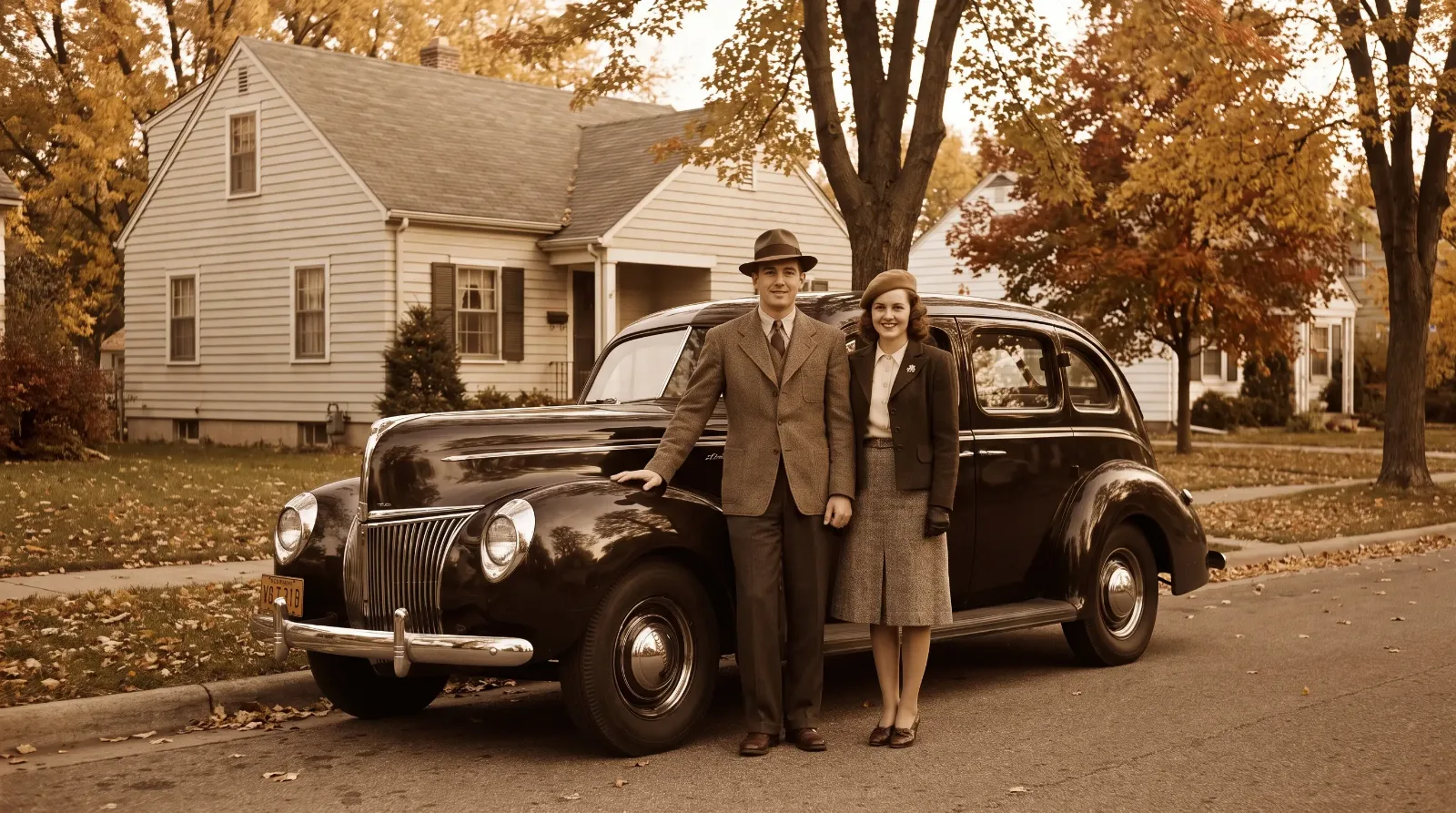
That is the strange quality of the cars built between 1940 and early 1942. They were not designed as farewell statements. They were simply the next model year, and the one after that, built by people who had every reason to expect a 1943 model would follow. It never did, not in any form its designers would have recognized, and that unplanned finality is what gives this narrow stretch of production its particular weight now.
A model year with no idea it was the last one
Walk through a 1940 or 1941 showroom brochure and nothing about the language suggests an ending. The copy promises next year's improvements, the usual seasonal optimism of an industry that had grown used to steady annual progress. Fenders grew fuller, dashboards grew busier with chrome, and engineers kept refining the same engines they had been refining for years. It reads, entirely reasonably, like the middle of something rather than the end.
The 1942 models, rushed into a shortened production season and finished in the trim substitutions and painted parts of the blackout period, carry a different feeling once you know what came after them. They look almost apologetic in hindsight, cars built by people watching material allocations tighten week by week, still trying to deliver something that felt like normal progress even as the ground shifted under the entire industry.
Advertising from those final months is its own kind of document. Some ads kept the same cheerful, forward-looking tone right up until the day the presses stopped running, promising features and comfort as though the following year's models were a foregone conclusion. Reading them now, knowing what the writers and illustrators did not, gives the copy an unintended poignancy. Nobody in that art department was composing an elegy. They were just doing their job, the same job they had done every autumn for years, and the ordinariness of that effort is part of what makes the surviving pages worth studying.
What survives, and what it looks like now
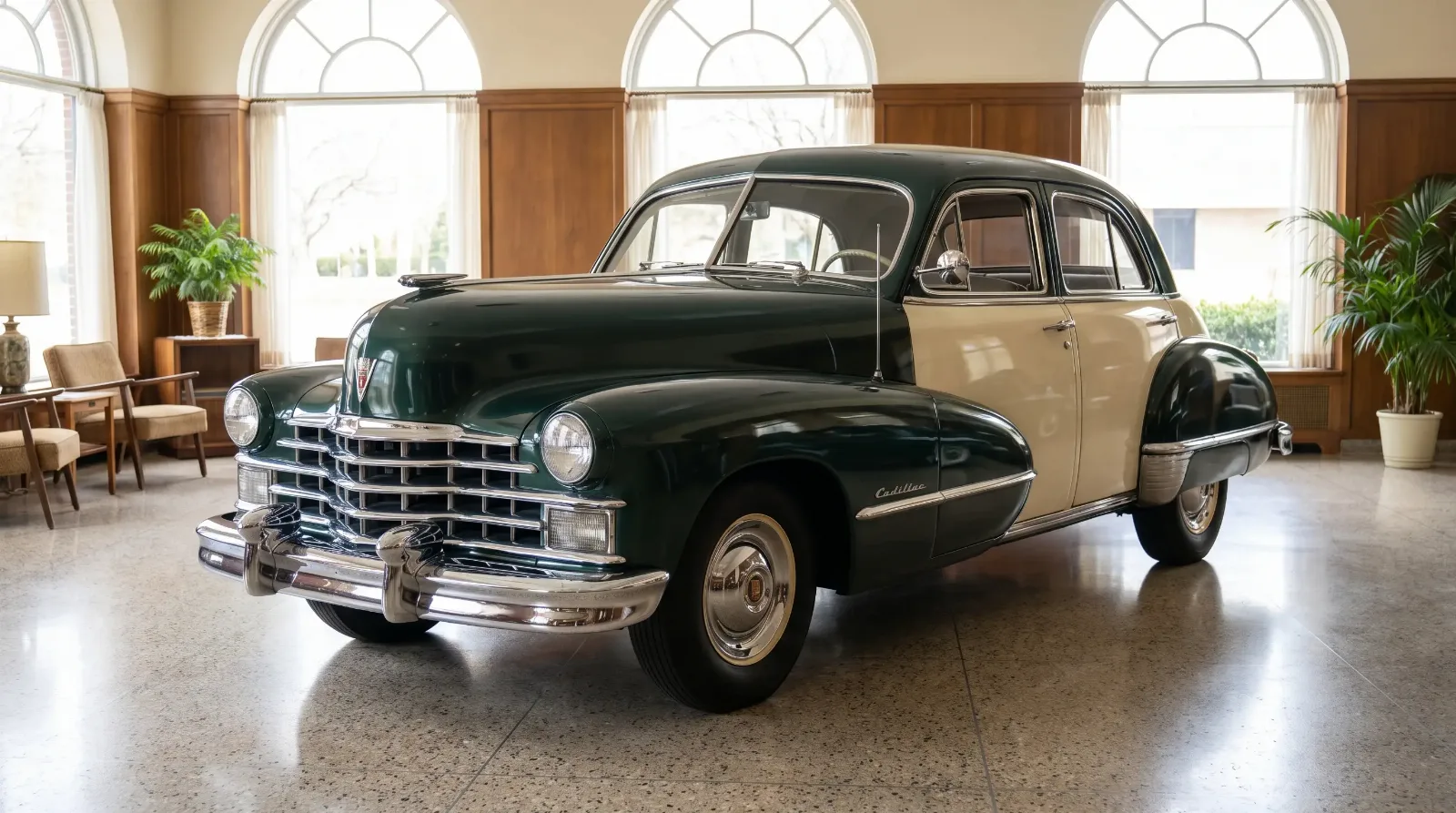
Cars from this window occupy an odd place in collections. They are not rare in the way a coachbuilt one-off is rare, since factories built them in meaningful numbers before the freeze. But they are rare in a quieter sense, as the last ordinary link to a design language that would not return once the war ended and styling moved on. A well-kept 1941 sedan, in particular, sits at the edge of two very different eras, close enough to prewar proportions and details to feel of a piece with the 1930s, close enough to the postwar cars that followed to feel like their direct ancestor.
Finding one in honest, unmolested condition takes patience. Many were driven hard through the war years by owners who had no replacement coming, then driven hard again through the postwar shortage by owners still waiting their turn for something new. The ones that survive in good shape were often set aside early, by someone who sensed, correctly, that a car like this would not be easy to replace.
A surprising number of the best-preserved examples spent the war years quite literally under a sheet, laid up on blocks by an owner drafted into service or transferred to a war plant far from home. Some of those cars were never reclaimed, sold off by families decades later, still wearing their original paint under decades of dust. Those are the ones collectors hope to find, not because they were saved with any historical intent, but because they were simply forgotten in the right way, in a dry barn or garage, while the world outside kept moving.
The last look of an era before the shift
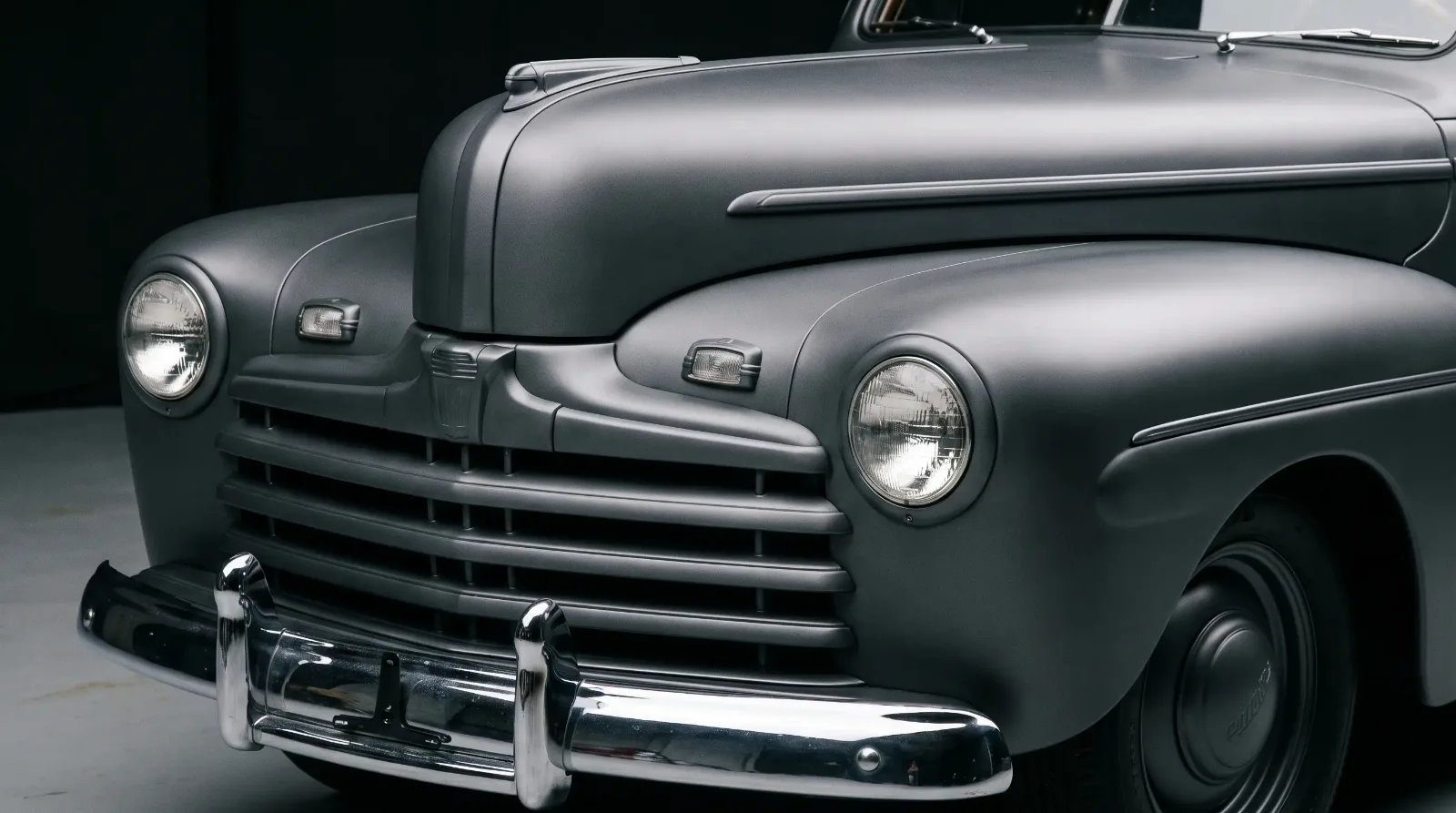
Design historians tend to treat 1942 as a hard line, but it is worth remembering how much continuity actually crossed it. The rounded fenders, separate headlamps, and running boards that defined 1940 and 1941 cars did not vanish overnight. They lingered into the immediate postwar years before finally giving way, around 1948 and into 1949, to the flatter, more integrated bodies that announced a genuinely new look. You can trace exactly how that shift unfolded in read on, which picks up the story where this one leaves off.
For now, the cars of 1940 through early 1942 remain a closing chapter rather than an opening one, the last full expression of a design vocabulary that had been building since the 1930s. They deserve to be looked at that way, not as leftovers waiting to be replaced, but as the final, complete statement of an era that did not know it was ending.
"There is a particular sadness and a particular grace in a car that was built without knowing it was the last of its kind. You can feel it in the details, the care taken with things that, a year later, no factory had the material to bother with anymore."
Nora Beckett
Where to look if you want one
Buyers drawn to this narrow window should expect to look carefully and compare several examples before committing, since condition varies enormously across cars that lived through both the war shortage and the postwar rush. It helps to vintage cars for sale and study how originality and documented history affect asking prices before settling on a specific car.
What you are really buying, in the end, is not just a sedan or a coupe from a particular pair of years. You are buying the last uninterrupted breath of a design era, built by people who had no idea it was about to be interrupted, a piece of the fuller story told in the cars from 1940 1942 story.
Sources and notes
Related Reading
Have a
Classic Car
for Sale?
Reach thousands of serious classic car collectors across the US.
Sell It Here →
Are You a Classic Car Dealer?
List your full inventory and connect with targeted classic car buyers.
Join as a Dealer →
#classic car history
#pre-war classics
#cars from 1940 1942
#1941 sedans
#1940s automotive design
#final model year

About the author
Nora Beckett
Automotive features writer and photographer who tells the human stories behind the cars, from show fields to cross-country road trips.




Comments
Be the first to comment on this article.