
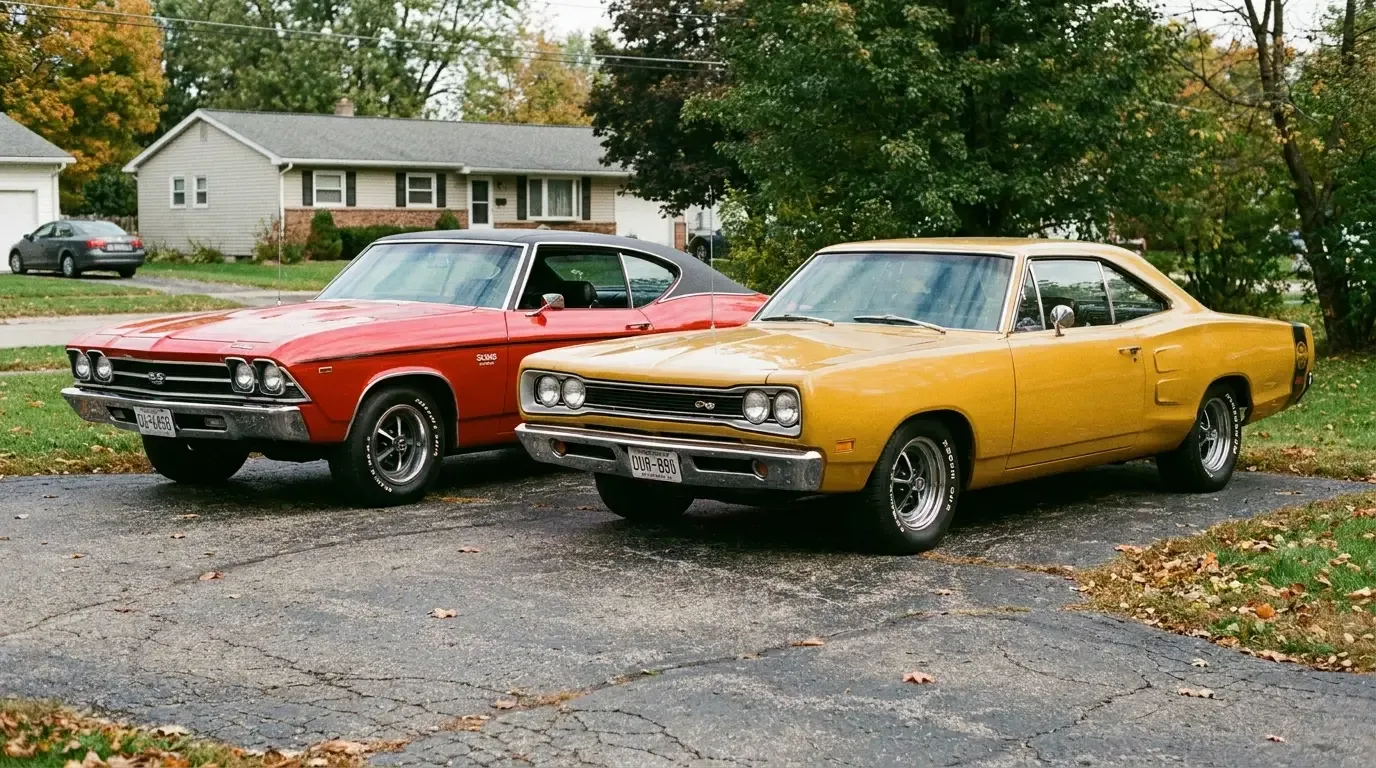
There's a specific sound that separates this rivalry from every other one in the muscle car era: a horn that goes "beep beep." Plymouth licensed the Road Runner name and likeness from Warner Bros. for $50,000 (plus another $10,000 to develop the "beep beep" horn), slapped a cartoon bird on the fender, and built a car around a joke that turned out to be dead serious on the street. Chevrolet never needed a cartoon. The Chevelle SS had been selling on reputation since 1964, and by the time the Road Runner showed up in 1968, the SS396 was already a known quantity at every stoplight from Detroit to Bakersfield.
Car Features
6 min read
SS vs Plymouth Road Runner: Chevy Meets Mopar
Two philosophies, one street corner: how the stripped-down Road Runner and the polished Chevelle SS fought over the same muscle car buyer.
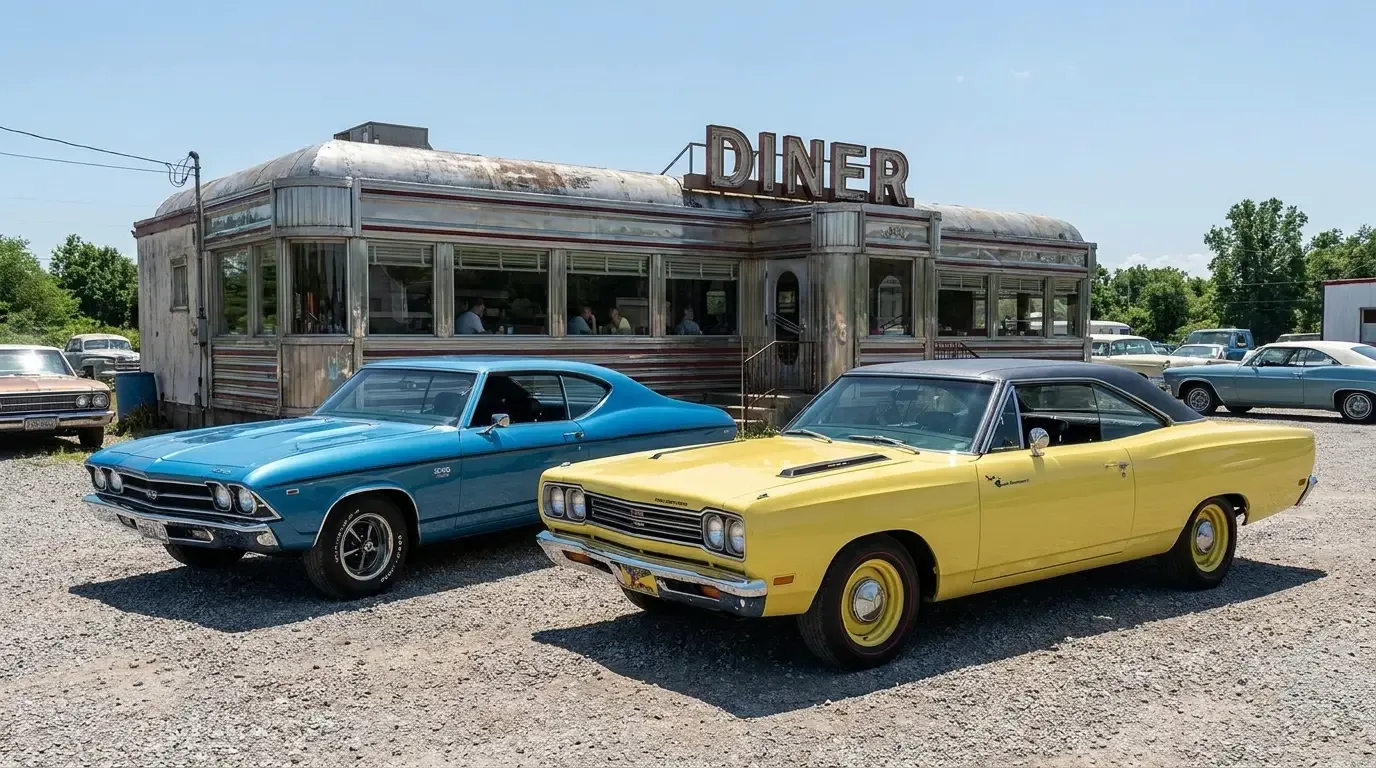
What makes this one interesting isn't which car was faster on a given Saturday night. It's that these two cars represented opposite philosophies aimed at the exact same buyer, and both philosophies worked.
Two different ideas about what a muscle car should be
Plymouth built the Road Runner as a reaction. Mopar had watched the GTO and the Chevelle SS get more expensive and more accessorized every model year, and Plymouth product planners bet there was still a market for the stripped-down version: a mid-size car with a big engine, rubber floor mats, roll-up windows, and not much else. The base Road Runner came with a 383 rated at 335 horsepower, bench seat, and a price that undercut the GTO by a real margin. It was muscle car as a tool, not a statement.
The Chevelle SS took the opposite approach. By 1968 it had bucket seats available, a proper console, SS badging inside and out, and an engine lineup that ran from a mild 300-horse 396 up to the L78's 375 horsepower. Chevy wasn't chasing the stripped-down buyer. It was selling a complete package, and for a lot of guys who wanted their muscle car to also look sharp parked outside a diner, that mattered.
You can read the full context in the full muscle-war story, but the Road Runner rivalry sits apart from the GTO fight because it wasn't really about who had the nicer car. It was about whether "nicer" mattered at all.
The 440 changes the conversation
For 1969, Plymouth answered the horsepower question that the base 383 couldn't fully settle. The 440 Six Barrel arrived mid-year, a three two-barrel carburetor setup on the big block that put the Road Runner solidly in the same performance conversation as anything Chevrolet was building, at a price that still stayed well under the SS396's window sticker with options loaded on. Chevelle guys who'd been comfortable with their car's reputation suddenly had a legitimate reason to check the specs before they lined up.
Chevrolet's response wasn't a mid-year special. It was volume and flexibility. The SS package could be ordered across a wide range of trim levels, meaning a buyer could get the drivetrain without committing to the full show-car treatment, or go the other direction and load it up. That flexibility is part of why the Chevelle's complete history reads less like one car's story and more like a family of cars sharing a badge.
Where they actually raced
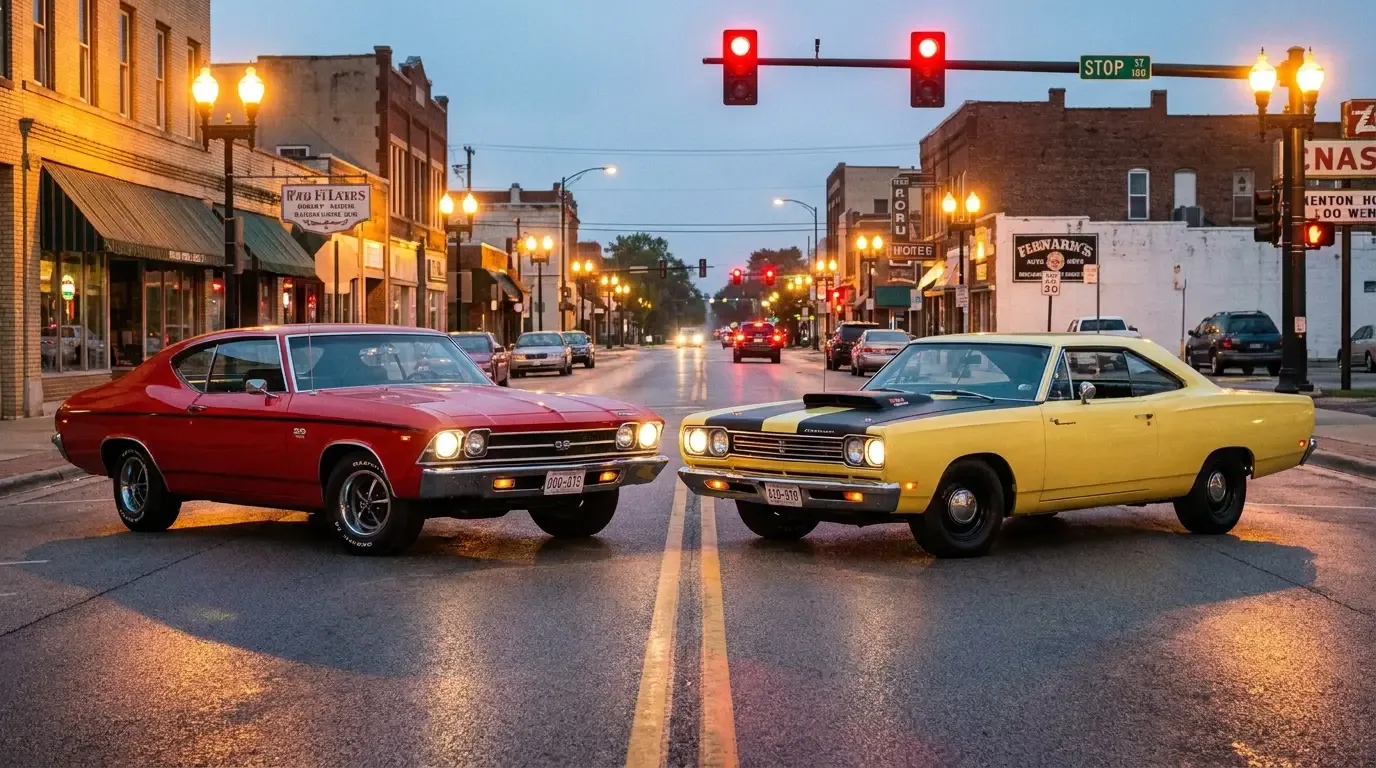
These two cars showed up at the same tracks and the same street corners constantly through 1968 and 1969, and the matchups tended to split along predictable lines. In stock trim with similar engine displacement, the cars ran close enough that driver skill and gearing decided more races than raw specification sheets did. The Road Runner's lighter base curb weight helped it in stoplight-to-stoplight situations. The Chevelle's broader engine range meant a well-optioned SS396 with the L78 and a tight rear gear could hang with anything Plymouth brought, at the cost of a much heavier price tag.
What actually decided most of these street races wasn't the factory spec sheet. It was who'd spent the winter under the hood.
| Spec | Chevelle SS396 (1969) | Road Runner 440 Six Barrel (1969) |
|---|---|---|
| Base engine | 396 cu in, 325 hp | 383 cu in, 335 hp |
| Top factory engine | 396 cu in L78, 375 hp | 440 cu in Six Barrel, 390 hp (NHRA rated it 410 hp) |
| Approx. base price | Higher, options-heavy | Lower, deliberately stripped |
| Standard interior | SS trim, more standard content | Bench seat, rubber mats, minimal trim |
What the market says about them now
Collector interest in both cars has stayed strong, but they attract slightly different buyers. The Road Runner draws people who like the joke and the honesty of the concept, a fast car that never pretended to be a luxury item. The Chevelle SS draws buyers who want the complete package, a car that photographs as well parked as it runs down a quarter mile. Values on well-documented six-barrel Road Runners and numbers-matching L78 Chevelles have both moved up over the past several seasons, with condition and originality driving the real spread more than which nameplate is on the fender.
If you want to see what's actually available right now, you can see Chevelle SS for sale and get a feel for where the market sits on the Chevy side of this rivalry.
"The guy who bought the Road Runner wasn't cheap. He just knew what he wanted the car to do, and he didn't want to pay for anything else. The Chevelle guy wanted the car to do the same thing and look good doing it. Both of them were right, and both of them usually beat whoever pulled up next to them thinking the other guy's choice was a mistake."
Patrick Walsh
The rivalry that outlasted the decade
By the early 1970s, both cars had grown more powerful and, in the Road Runner's case, less stripped-down than the original concept intended. But the core argument between them, whether a muscle car needed to be a complete package or just a fast one, never really got settled. It just moved on to other cars. That argument is still the most interesting part of this particular matchup, more than any specific dyno number or quarter-mile time that's impossible to fully verify fifty-plus years later anyway.
For where this rivalry goes from here, next: SS vs Dodge Super Bee covers the other budget-brawler fight the Chevelle had on its hands during the same stretch of years.
Sources and notes
- Plymouth Road Runner - Wikipedia
- The $50,000 Secret Hidden In Every Road Runner's Horn - HotCars
- 1969 Plymouth Road Runner 383 Coupe Specs - Automobile-Catalog
- 1969 Motor Trend Car of the Year: The Plymouth Road Runner - Fossil Cars
- 1969 Plymouth Road Runner 440 Six Barrel A12 - Horsepower Memories
- 375 Horsepower! 1969 Chevrolet Chevelle SS 396 L78 - Barn Finds
Related Reading
Have a
Chevrolet Chevelle
for Sale?
Reach thousands of serious classic car collectors across the US.
Sell It Here →
Are You a Classic Car Dealer?
List your full inventory and connect with targeted classic car buyers.
Join as a Dealer →

About the author
Patrick Walsh
Automotive journalist covering classic car shows, events, and the enthusiast community across North America.
Related Listings - Chevrolet Chevelle
Comments (1)
N
Norm Delgado
2 months ago
Condition grade IV cars are where most real buyers actually operate. Nice to read something that takes that seriously.