
Pontiac's own paperwork from the mid-1970s makes the answer less mysterious than the folklore suggests. The GTO wasn't killed by a single villain. It was worn down by three separate pressures arriving at once, each one capable of ending a car like this on its own, and together they made continuing the nameplate past 1974 close to impossible.
Car Features
7 min read
Why Pontiac Discontinued the GTO After 1974
The GTO wasn't killed by one decision. Insurance costs, emissions regulation, the oil embargo, and GM's shifting priorities all closed in on the nameplate at once.
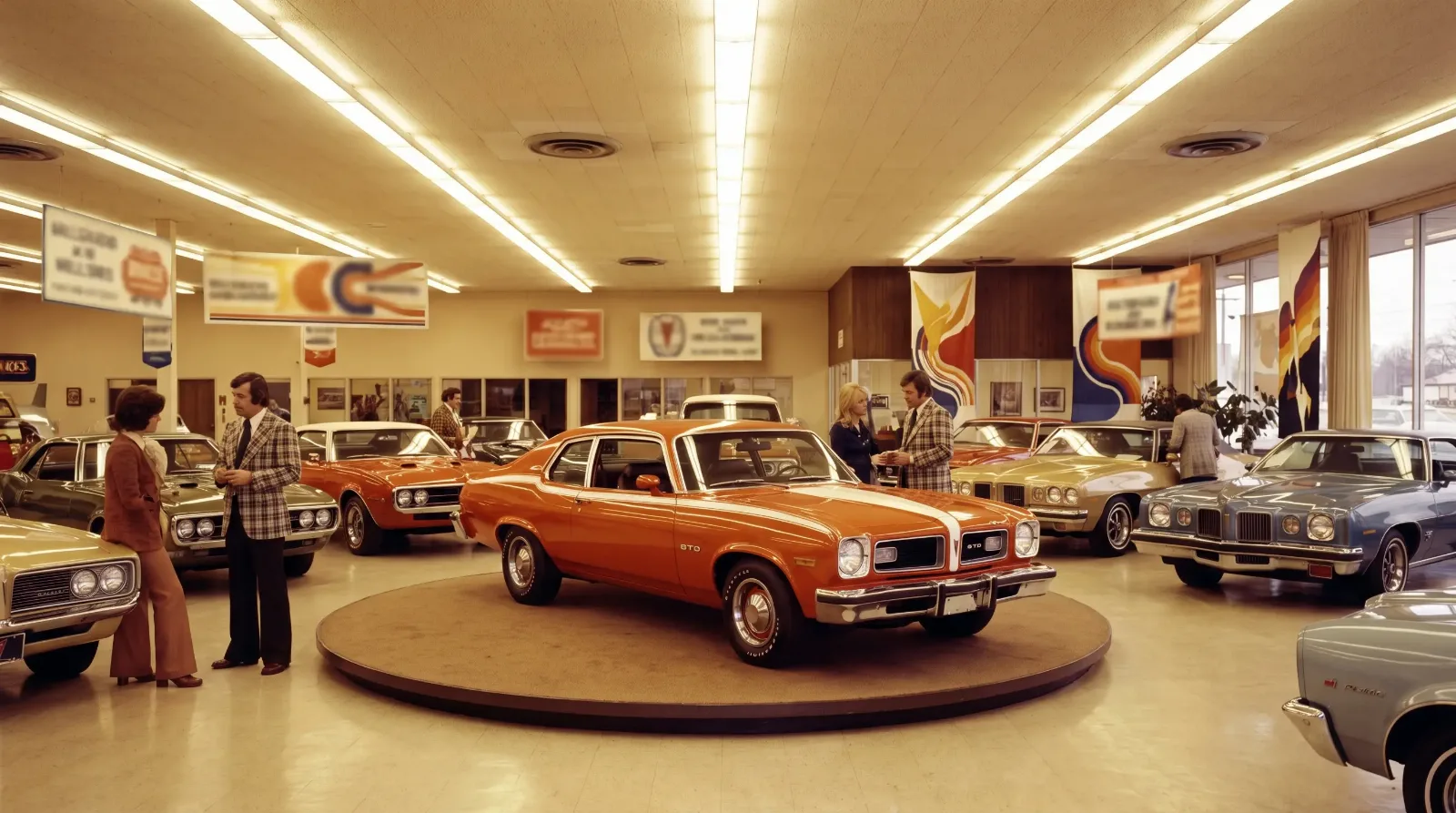
Insurance rewrote the market first
By the early 1970s, insurers had built actuarial tables specifically around performance cars, and the surcharges attached to a GTO policy had grown steep enough to change buying decisions. A young buyer who could stretch to afford the car itself often could not afford what it cost to insure. This wasn't unique to Pontiac. Every manufacturer building a midsize V8 coupe watched the same demographic get priced out of the category through the early 1970s. Pontiac's own sales figures for the GTO reflect the trend directly: volume dropped year over year through the early 1970s well before emissions regulations reached their strictest point, which tells you the insurance pressure arrived first and did real damage on its own.
Emissions and fuel economy closed the door
The second pressure came from Washington. The Clean Air Act amendments working through the early 1970s forced every automaker to redesign engines around emissions control rather than output, and Pontiac's engineering teams spent those years detuning compression ratios, adding exhaust gas recirculation, and preparing for catalytic converters that would become mandatory across the industry for 1975. None of that engineering work was compatible with the kind of horsepower figures that had defined the GTO a decade earlier. Then came the October 1973 oil embargo, which sent gas prices climbing and buyer psychology with it. A V8 coupe marketed around performance was a difficult sell in a market suddenly anxious about fuel costs, regardless of how efficient that particular V8 actually was.
A corporate decision, not just a market one
General Motors was also making broader portfolio decisions in this period that worked against a standalone performance nameplate. Pontiac's own product planning was shifting resources toward the Firebird and Trans Am, which had a clearer performance identity and stronger sales momentum heading into the mid-1970s. Keeping the GTO alive as a compact Ventura variant with modest volume was a harder case to make internally when the division's engineering and marketing dollars were already stretched. Corporate decisions like this rarely get documented as dramatically as enthusiasts imagine. More often it's a quiet line item that simply doesn't get renewed for the next model year, and that's essentially what happened to the GTO after 1974.
"Nobody signed a memo that said kill the GTO. What happened is simpler and less dramatic. The car stopped making sense on a spreadsheet, and Pontiac had other nameplates that did."
Tom Ramirez
The dealer floor plan problem
There's a less romantic factor that rarely makes it into the popular telling of this story: dealer floor plans and inventory carrying costs. A low-volume specialty model like the compact GTO tied up dealership capital sitting on lots while more mainstream Ventura and LeMans variants moved faster. Dealers had less incentive to push a GTO option package that required them to carry a slower-turning variant, and Pontiac's own zone offices were watching sell-through rates as closely as anything happening in Washington. A nameplate that isn't turning inventory efficiently becomes an easy target when a division is looking to simplify its lineup, regardless of how emotionally attached enthusiasts are to the name on the fender.
Pontiac also had to weigh what continuing the GTO would have required going forward. The 1975 model year brought the mandatory catalytic converter, and adapting the GTO's existing 350 to run cleanly with a catalyst, on top of the compression and emissions work already done for 1974, would have meant another full round of engineering investment for a car that was already selling in modest numbers. Spending that engineering budget on the Firebird and Trans Am, where the sales volume and the performance identity were both stronger, was the more defensible business decision even if it wasn't the more sentimental one.
Reading the production numbers correctly
It's worth being precise about what actually ended in 1974, because the popular version of this story oversimplifies it. Pontiac did not decide the GTO name was worthless, and what ended in 1974 was a specific run of vehicles that had already been squeezed through two years of dramatic platform changes, first the 1973 Colonnade redesign and then the 1974 move to the compact X-body. By the time Pontiac pulled the plug, the GTO had already been transformed twice in two years trying to survive a market that no longer wanted what it originally sold.
| Pressure | Effect on the GTO |
|---|---|
| Insurance surcharges | Priced out core younger buyers through early 1970s |
| Emissions regulation | Forced detuned compression, reduced output |
| 1973 oil embargo | Shifted buyer psychology away from V8 coupes |
| GM product strategy | Resources shifted toward Firebird/Trans Am |
Comparing it to how other nameplates survived
It's worth noting that some of Pontiac's contemporaries facing identical pressure made a different call and survived, at least for a while longer. The Firebird and Trans Am continued through the mid-1970s and beyond, eventually becoming some of the strongest-selling performance nameplates GM had by the end of the decade. The difference wasn't that those cars were exempt from insurance surcharges or emissions rules, they weren't. The difference was volume and image flexibility. The Firebird could lean harder into styling, into a sportier but less overtly muscle-focused identity, and keep selling in numbers that justified continued engineering investment even as horsepower numbers fell across the board. The GTO's identity was narrower and more literally tied to raw performance, which left it with less room to pivot when performance itself became a harder thing to sell.
That's the real lesson in why the GTO specifically didn't survive when some of its siblings did. It wasn't singled out by regulators or insurers. It was simply less able to adapt its core identity to a market that had stopped rewarding the thing it was built to represent, and Pontiac made the business decision to let a car with a narrower path forward step aside for nameplates with more room to grow.
What it means for the car today
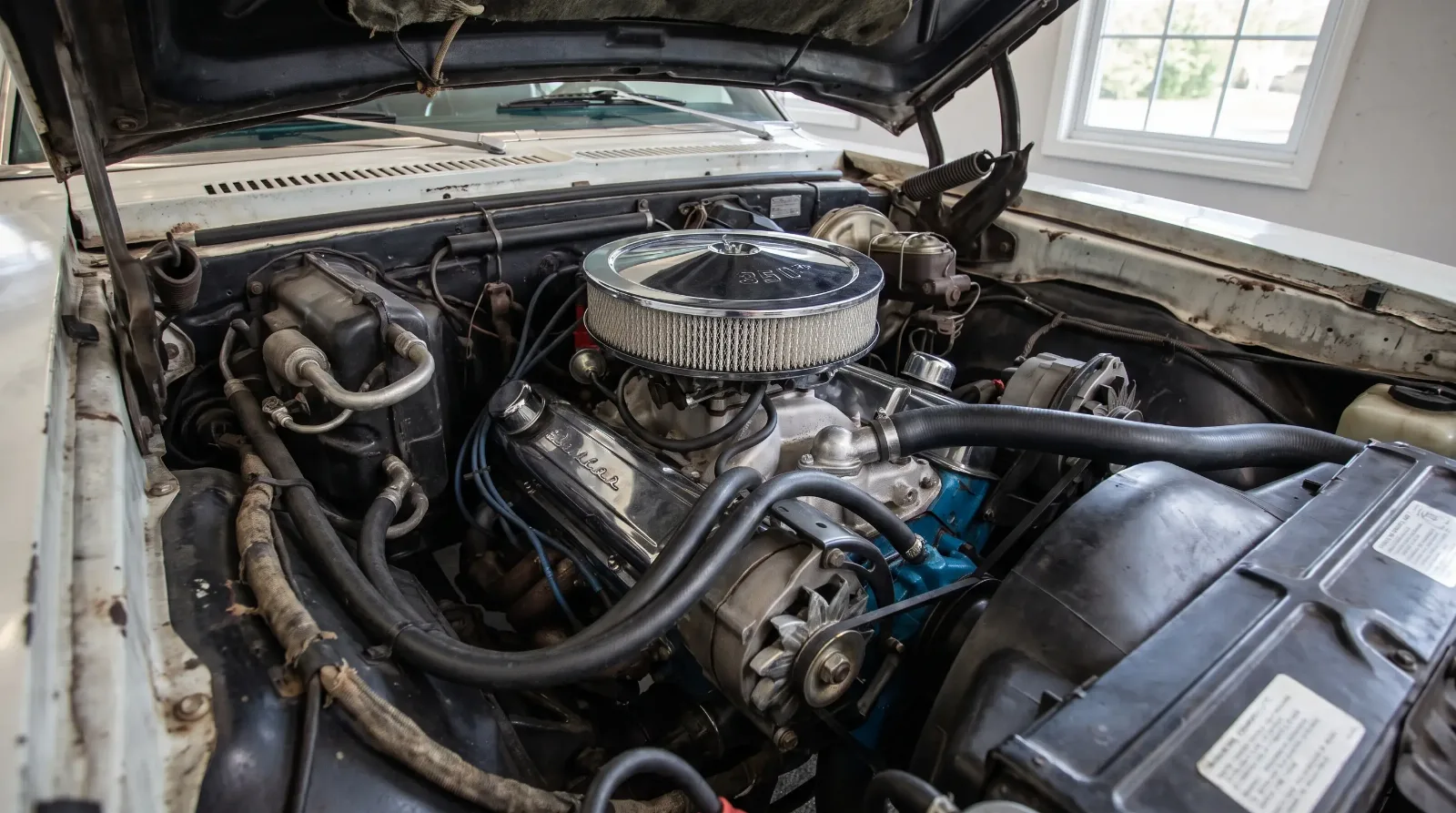
None of this makes the surviving 1973-74 cars less interesting. If anything, understanding the full weight of pressure Pontiac was working against makes the engineering choices in those final two years easier to respect rather than dismiss. This is the tail end of the 1973-74 GTO story, and it connects directly to what was actually happening under the hood of that last model year. The 1974 GTO's standard 350 V8 tells its own story about how net horsepower ratings and emissions equipment reshaped what a factory V8 could deliver, and read on for that breakdown. For the complete arc of the nameplate from its 1964 debut through its 1974 exit, Pontiac GTO history ties every one of these pressures together into a single, coherent decade.
Sources and notes
Related Reading
Have a
Pontiac GTO
for Sale?
Reach thousands of serious classic car collectors across the US.
Sell It Here →
Are You a Classic Car Dealer?
List your full inventory and connect with targeted classic car buyers.
Join as a Dealer →

About the author
Tom Ramirez
Corvette researcher and historian based in Bowling Green, Kentucky. Two decades documenting Corvette production history from original factory records.
Related Listings - Pontiac GTO

Comments
Be the first to comment on this article.