
Here is the short version. The Thunderbird Q-code 428 was the strongest engine Ford put in this generation of Thunderbird, identified on the door tag by the letter Q in the engine code position. That single letter tells you more about a 1966 Thunderbird's potential than almost anything else on the build sheet.
Car Features
7 min read
The Q-Code 428 Thunderbird
The letter Q on a 1966 Thunderbird door tag means the 428 is under the hood, nothing more, and that single letter is the only thing that should set the price.
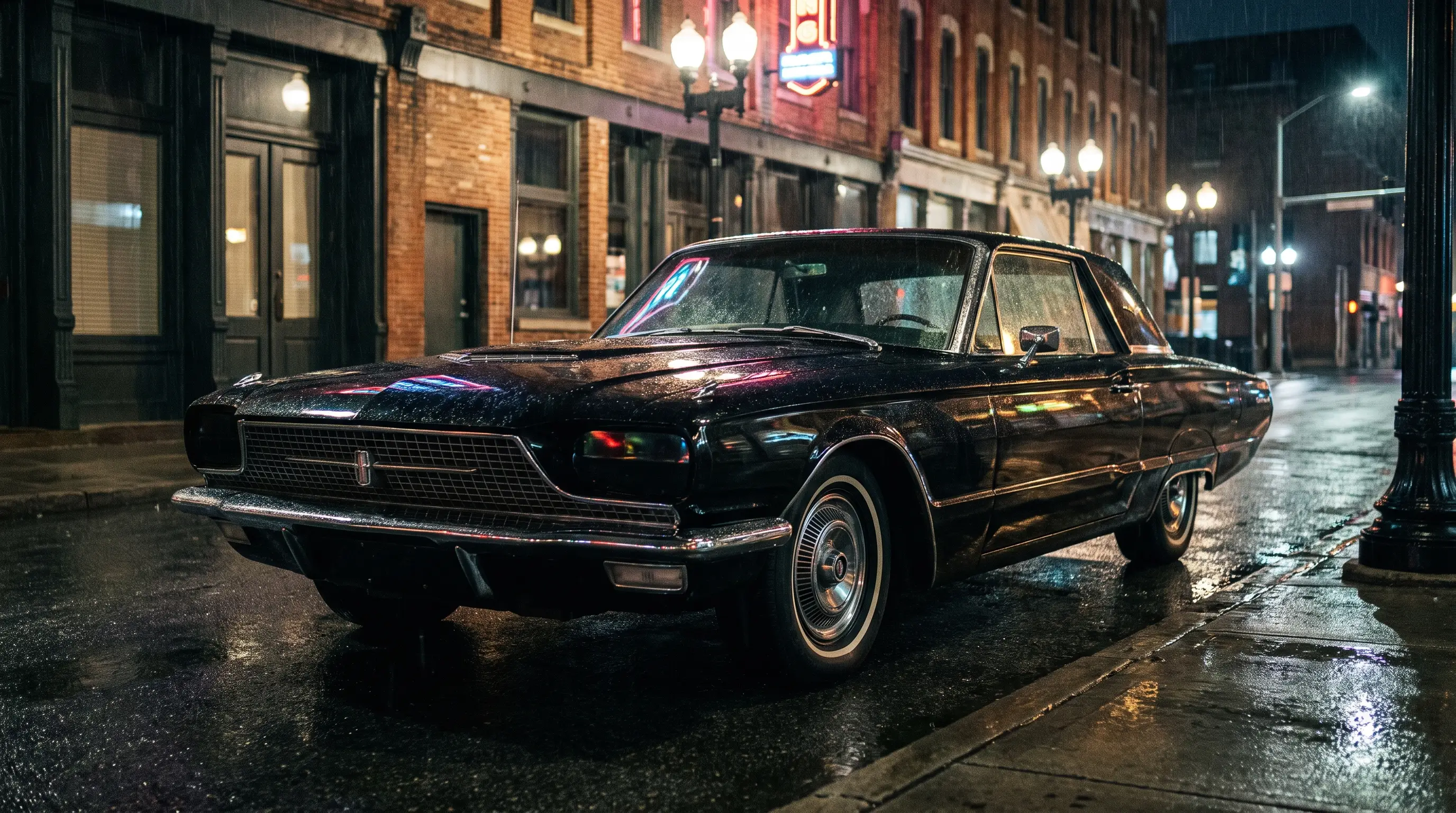
What the letter actually means
Ford used a coded system on the vehicle identification and door data plates to identify engine options without spelling anything out in plain text. On a 1966 Thunderbird, the Q code specifically points to the 428 cubic inch V8, the largest engine Ford offered in this car during its final year on the 1964 body. That is it. No mystery, no hidden trim package tied to it, just a factory shorthand for the biggest engine on the order sheet.
Buyers get this wrong constantly. A Q-code badge or reference does not mean special suspension, special brakes, or any unique cosmetic treatment. It means one thing: the 428 is under the hood instead of the 390. Everything else about the car, trim level, roof style, interior, was ordered independently of the engine code. For the record, the fifth character of the VIN carries this same information: Q for the 428, Z for the standard 390, and it is that VIN character, not just the visor tag, that a serious buyer should cross check.
The number that matters
345 horsepower (SAE gross). That is the figure period literature attaches to this engine, and it puts a Q-code Thunderbird meaningfully ahead of a 390 equipped car in available torque, even if the horsepower gap on paper looks modest. Torque, not horsepower, is what a heavy personal luxury coupe actually uses day to day, merging onto a highway or pulling away from a stop with a full load of passengers and options.
Production numbers for Q-code cars specifically are not something I will guess at here, since a reliable published breakdown of 428 versus 390 take rates for 1966 is not something I can point to with confidence. What I will say plainly is that any engine offered as the top option in a given year, in any American car from this period, tends to represent a smaller share of total production than the standard engine. That is a pattern, not a specific claim about this car, and it is worth remembering before anyone quotes you a rarity number without a source behind it.
| Spec | 1966 Thunderbird Q-code |
|---|---|
| Engine | 428 cubic inch FE V8 |
| Door tag code | Q |
| Horsepower | 345 hp (SAE gross) |
| Standard alternative | 390 cubic inch V8 |
Why the code beats the sales pitch
Anyone selling a Thunderbird as a Q-code car should be able to point directly to the door tag or a supporting build document, not just tell you it drives like it has the bigger engine. Engines get swapped. Badges get added. A confident verbal claim proves nothing on its own. The letter on the tag, cross checked against the car's VIN and any surviving paperwork, is the actual evidence, and evidence is what determines value, not enthusiasm.
I have looked at plenty of listings over the years that lean hard on the word Q-code in the headline while the photos never once show the door tag itself. That is a pattern worth noticing. If a seller has the documentation, they show it, because it only strengthens their position. If they do not show it, ask directly before you get emotionally attached to the car.
"A Q-code claim without a door tag photo is just a nice story. I have watched buyers pay a real premium for that story more than once, and I have watched a few of them find out the hard way that the tag said something different."
- Dan Reeves
Context before the purchase
For the fuller picture of how this body generation of Thunderbird got to a point where a 428 was even offered, the whole picture covers the 1964 redesign that set the stage, engine options included, for everything Ford built through 1966.
If you are shopping specifically for a Q-code car, verify the tag first, price second, and story last. That order protects you every time. When you are ready to compare what is actually available, you can shop classic Thunderbird listings and start requesting door tag photos before you get further than a phone call with any seller.
What the premium actually buys you
Let us be direct about value. A verified Q-code Thunderbird commands a real premium over a comparable 390 car in most transactions, and that premium is earned, not manufactured hype. The 428 is objectively the stronger, more capable engine, and a documented example of the top option in any model year tends to hold interest from a narrower but more committed pool of buyers. Narrower demand with committed buyers is a different market dynamic than broad demand with casual buyers, and it shows up in how these cars sell, sometimes slower to move, but rarely moving at a discount once a genuine buyer is found.
That premium only holds if the documentation holds. Strip away the paperwork and a Q-code car is worth exactly what a 428 equipped Thunderbird with unverified history is worth, which is meaningfully less. The gap between those two numbers is the entire argument for doing the verification work before you write a check, not after.
Cost of ownership, plainly stated
The 428 does not cost more to insure or register than the 390 in any way tied to the engine code itself, but parts and service for a numbers matching FE big block tend to run higher than for the more common 390, simply because fewer shops specialize in it and fewer parts sit on a shelf waiting for a buyer. Budget accordingly. A Q-code car is not a car you buy expecting it to be cheaper to maintain than the standard option. You buy it because the documented rarity and the extra torque are worth that added cost to you specifically, and that is a legitimate reason, as long as you go in with the number in front of you rather than a guess.
The bottom line
Strip away everything else and the Q-code decision comes down to three checks. First, does the door tag actually show Q in the engine position. Second, does the VIN and any surviving build documentation support that tag rather than contradict it. Third, does the asking price reflect a genuine, documented example rather than a car riding on the reputation of the engine alone. Pass all three and you are buying the real thing at a fair number. Fail any one of them and you are paying a premium for a story, which is a different transaction entirely, whatever the seller calls it.
That is not a complicated framework. It just requires the discipline to apply it every time, even when the car looks right, even when the seller seems trustworthy, even when you have already started picturing it in your own garage. The letter Q on a door tag is a small piece of evidence carrying a large amount of weight in the final price, and it deserves to be checked before anything else about the deal is finalized.
Sources and notes
Related Reading
Have a
Ford Thunderbird
for Sale?
Reach thousands of serious classic car collectors across the US.
Sell It Here →
Are You a Classic Car Dealer?
List your full inventory and connect with targeted classic car buyers.
Join as a Dealer →

About the author
Dan Reeves
Performance engine builder from North Carolina's motorsports corridor, focused on swaps, forced induction and making real, repeatable power.
Related Listings - Ford Thunderbird




Comments
Be the first to comment on this article.