
Nobody at a car show ever gathered around to admire a rear axle. The crowd forms around the hood scoop, the stripe package, the engine bay. But talk to anyone who's actually launched a big-block Chevelle hard, over and over, at a real drag strip, and the conversation eventually turns to the part nobody photographs: the 12-bolt sitting under the trunk floor, doing the unglamorous work of not breaking.
Car Features
6 min read
The 12-bolt rear: unsung hero behind every LS6 launch
The 12-bolt rear axle didn't get the spec-sheet glory, but it's what let big-block Chevelles survive repeated hard launches. Here's how it worked.
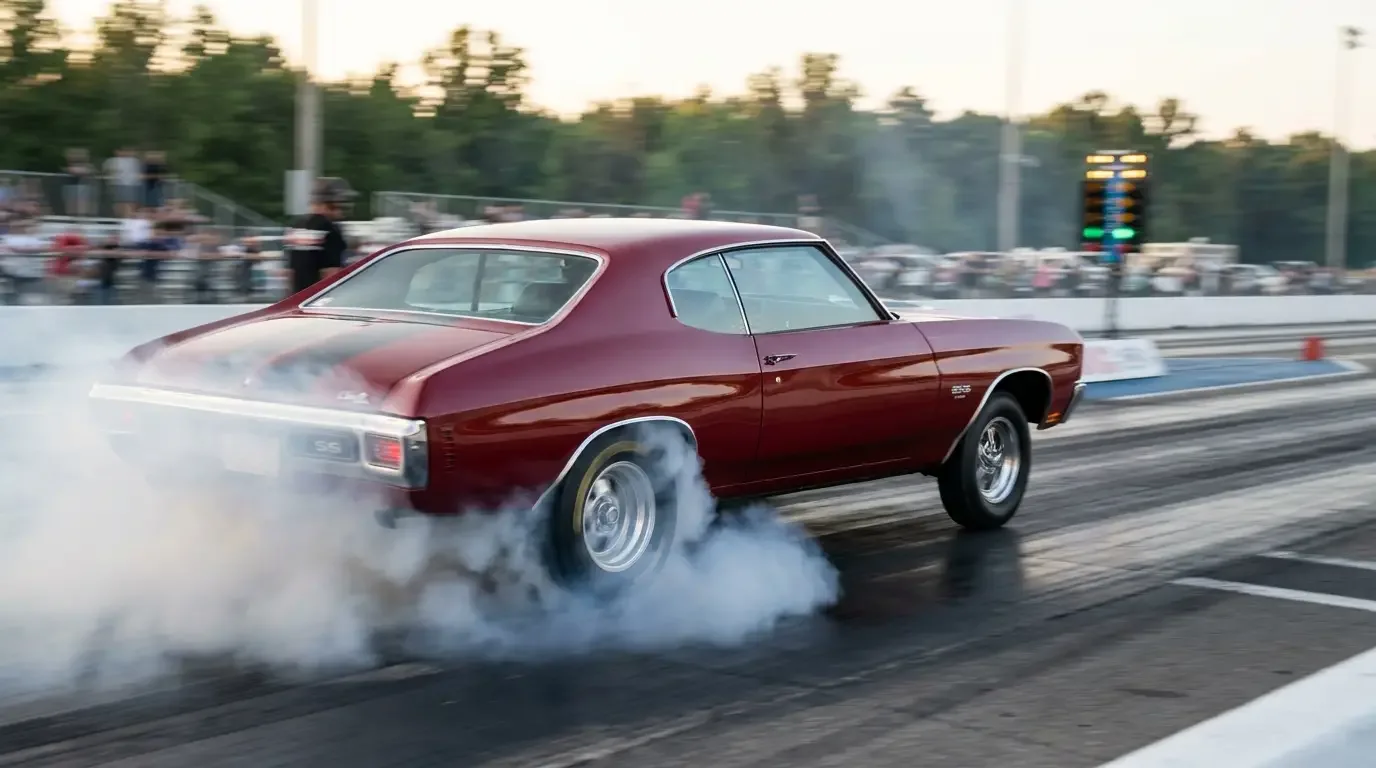
I've sat in the pits at more than one vintage muscle car event listening to guys compare notes on rear gears the way other people compare fishing stories, and the 12-bolt comes up constantly, usually with real affection. It's the part of the car that let all that horsepower actually become forward motion instead of a broken driveline in the staging lanes.
Why the axle mattered as much as the engine
An engine making big torque numbers is only half the equation. That torque has to travel through the driveshaft, into the differential, and out to the wheels without the axle housing flexing, the ring and pinion stripping, or the axle tubes twisting under load. Chevrolet's 12-bolt rear, named for the bolt count on its differential cover, was built specifically to handle that kind of abuse in a way the earlier, lighter 10-bolt housings weren't designed for.
The stronger housing, the larger ring gear diameter, and the beefier axle shafts all added up to a rear end that could take repeated hard launches behind a 454 without the kind of catastrophic failures that plagued lighter-duty axles under the same abuse. It wasn't flashy engineering. It was the right engineering for the job, and that's exactly why it earned the loyalty it did from people who actually raced these cars back when they were just used cars, not investments.
Gear ratios and what they meant on the street
The factory offered a handful of rear gear ratios behind the big-block Chevelles, and the choice said a lot about how an owner planned to drive the car. The 3.31 was the standard gear for 1970, relaxed enough for highway driving without turning the engine unnecessarily hard at 70 miles an hour. A 3.55 gear showed up on early-production cars built before December of that model year, genuinely rare today. Step up to the optional 4.10 and the car woke up hard off the line, at the cost of a lot more engine RPM once you got up to interstate speed.
Positraction was the option that actually made those steep gears usable on the street, since an open differential sending all the torque to one spinning tire in the rain is a good way to end up sideways into a mailbox. A 12-bolt with Positraction and the right gear became a car that could launch hard on a Saturday and still get somebody to work on Monday without drama, which is really the whole appeal of the big-block Chevelle as a concept. It wasn't a dedicated race car. It was a real car that happened to be capable of serious performance when asked.
| Feature | Detail |
|---|---|
| Cover bolt count | 12 bolts, giving the axle its name |
| Common street gears | 3.31 (standard); 3.55 on early-production cars, now rare |
| Optional performance gear | 4.10, the factory's steepest listed ratio for launch and strip use |
| Positraction | Optional limited-slip differential for even power delivery to both wheels |
The stories that stick around a swap meet
Ask enough people who owned these cars new, and you'll hear the same kind of story more than once. A guy tells you about the time he broke a 10-bolt axle on a lighter car and swapped in a 12-bolt out of a wrecked Chevelle at a junkyard for cheap, and never looked back. Another tells you about running the same 12-bolt for twenty years of weekend racing without so much as opening the cover. That's the reputation this axle built for itself, one launch at a time, across a whole generation of owners who needed the drivetrain to survive what the engine was capable of doing to it.
It's a good reminder that the parts of a car that make it legendary aren't always the parts that get the marketing attention. The LS6 legend is built on an engine most people can recite specs for from memory, but that engine would have been sending torque straight to a pile of broken parts without a rear end built to survive what it was asking of it.
Why this axle became a cross-platform favorite
The 12-bolt's reputation grew well beyond the Chevelle over the decades that followed, since GM used the same basic axle family under Camaros, Novas, and full-size cars carrying serious power. That cross-platform use is exactly why a broken axle on one car so often got fixed with a junkyard 12-bolt pulled from something else entirely, and it's part of why the aftermarket support for this housing remains strong today, long after the factory stopped building anything close to it. Builders doing engine swaps into other GM platforms still specifically seek out a 12-bolt over the lighter alternatives, precisely because the reputation earned in period never really faded.
That said, the 12-bolt wasn't invincible, and it's worth being honest about where it did eventually give way. Extreme horsepower builds well beyond what a stock LS6 made, especially with sticky modern tires and a transbrake launching hard off the line, can still overpower a 12-bolt's ring gear and axle shafts. For the power levels these cars actually left the factory with, though, the 12-bolt was more than sufficient, and most of the failures that do show up on original-spec cars today trace back to age, wear, and fifty years of deferred maintenance rather than any inherent weakness in the design.
"Everybody remembers the engine specs. Almost nobody remembers what held the car together every time that engine actually got used the way it was built to be used. The 12-bolt earned its reputation one hard launch at a time, and it earned it quietly."
Patrick Walsh
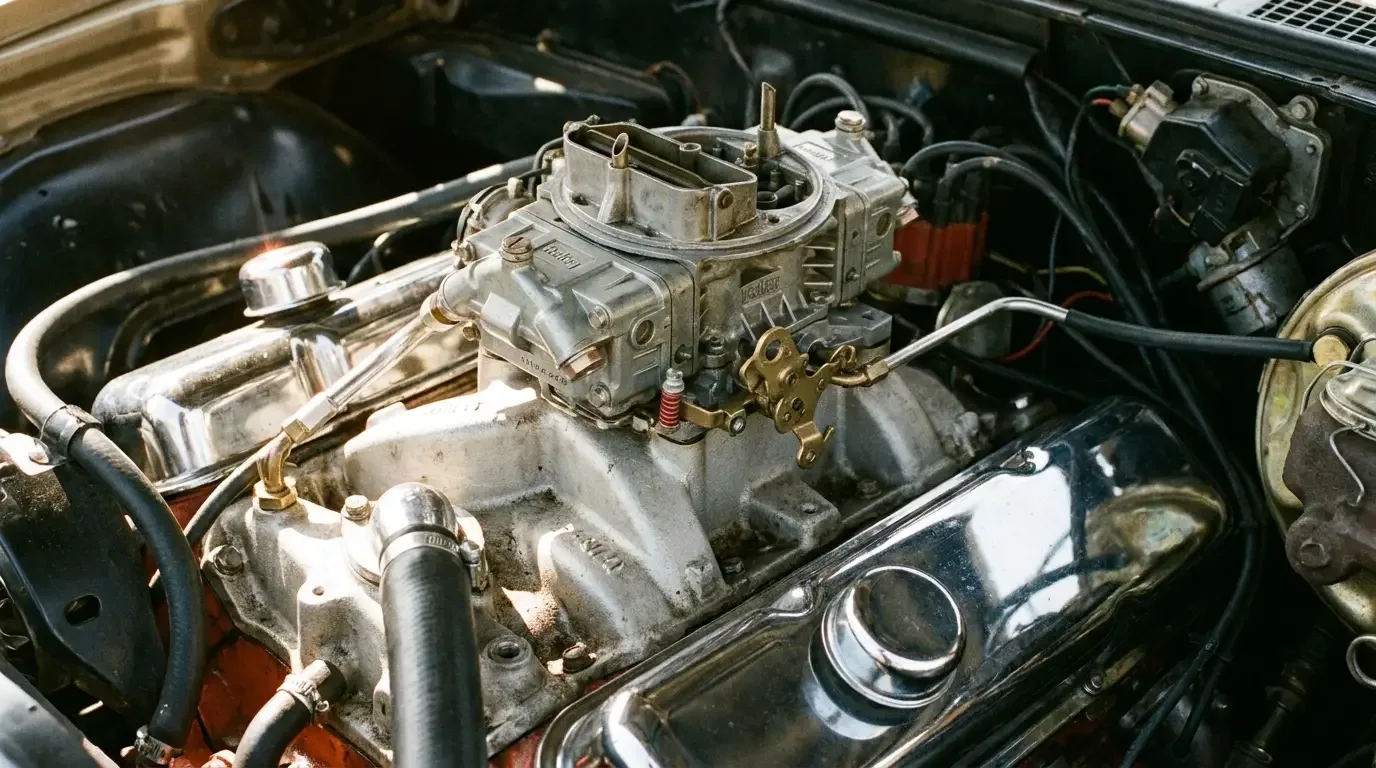
With the drivetrain sorted front to back, the last piece of the puzzle is what fed the fuel and air into that big block to begin with. Next up: next: Quadrajet vs Holley.
Sources and notes
Related Reading
Have a
Chevrolet Chevelle
for Sale?
Reach thousands of serious classic car collectors across the US.
Sell It Here →
Are You a Classic Car Dealer?
List your full inventory and connect with targeted classic car buyers.
Join as a Dealer →

About the author
Patrick Walsh
Automotive journalist covering classic car shows, events, and the enthusiast community across North America.
Related Listings - Chevrolet Chevelle




Comments (1)
F
Frank DeLuca
2 months ago
Exactly the kind of breakdown I was looking for. Bookmarked for when I'm ready to start looking seriously.