
By the late 1970s the Trans Am had a reputation problem it could not out-drive. It looked fast standing still, sold on the strength of a hood decal and a movie career, and in a straight line the horsepower numbers were shrinking every year emissions regulations tightened. What Pontiac needed was a way to prove the car could still do something a showroom poster could not fake, and that thing turned out to be cornering. The WS6 Special Performance Package, introduced for the 1978 model year, is the answer Pontiac gave, and it is the reason the trans am ws6 name still means something specific to people who care about how these cars actually drive rather than how they look parked.
Car Features
6 min read
WS6 and the Handling Legend
When horsepower ran out of road in the late 1970s, Pontiac put its engineering budget into the corner instead. The WS6 package is why the Trans Am's handling reputation still holds up.
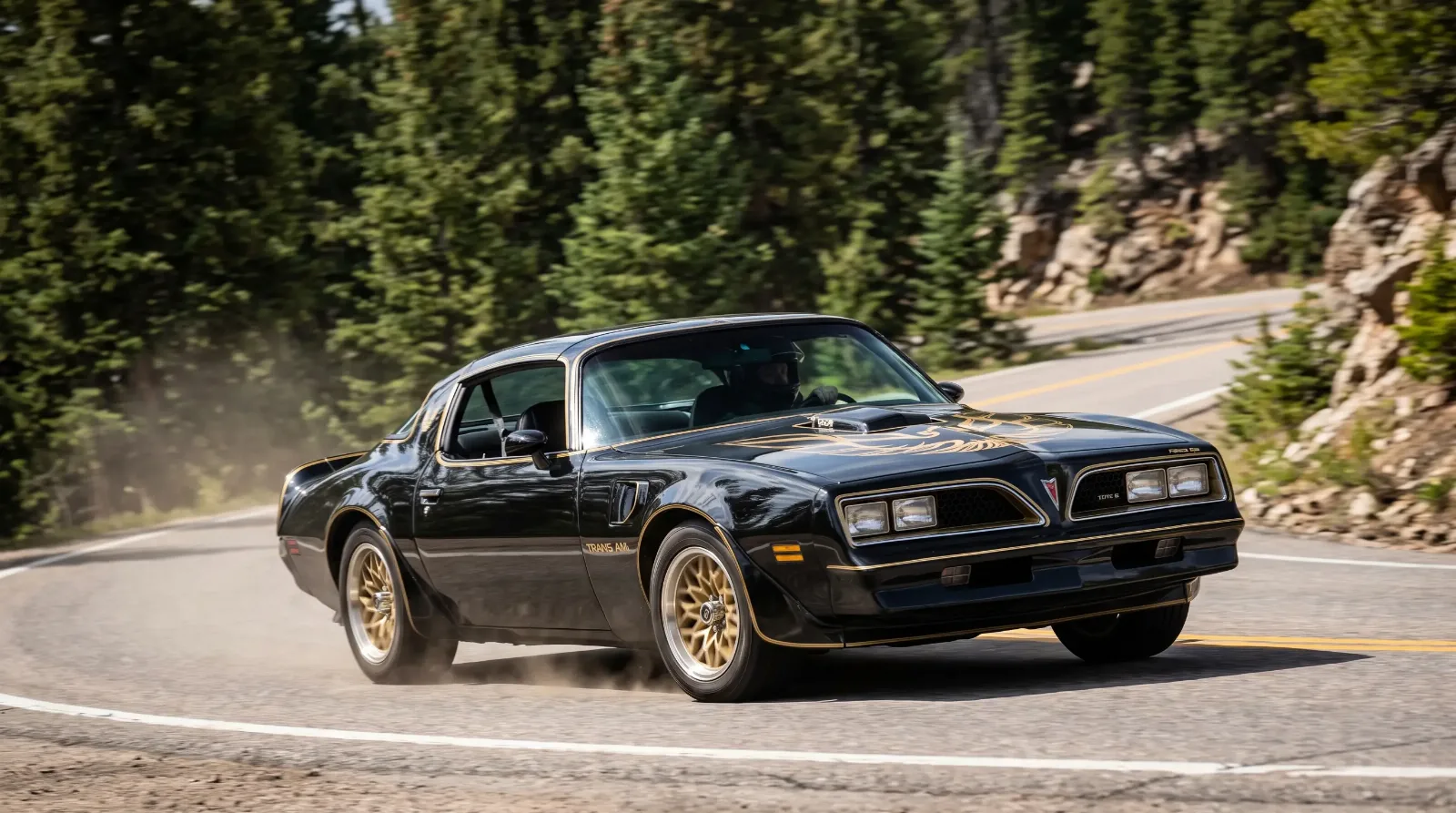
What WS6 actually changed
WS6 was not a styling package and it did not touch the engine. It was a suspension and wheel package, full stop, and that focus is exactly why it worked. The option brought 15 by 8 inch aluminum wheels wearing wider tires than the standard Trans Am wore, a faster steering ratio, larger front and rear stabilizer bars, and specifically valved shocks tuned for the stiffer setup. Pontiac engineers were essentially telling buyers that if the 400 or 403 under the hood could not win a horsepower argument anymore, the chassis underneath it could still win a handling one.
The package showed up on the order sheet at 324 dollars for a base Trans Am in 1978, which was real money on top of an already well-equipped car, and buyers paid it anyway because the difference was noticeable from the driver's seat, not just on a spec sheet.
| Element | Standard Trans Am | WS6 equipped |
|---|---|---|
| Wheels | 15x7 Rally II or Snowflake | 15x8 Snowflake, wider offset |
| Front stabilizer bar | Standard diameter | Larger diameter |
| Rear stabilizer bar | Not always equipped | Added, larger diameter |
| Steering ratio | Standard | Quicker ratio |
| Shock valving | Standard tune | Firmer, package specific |
The road test that made the reputation
Automotive press of the era started praising WS6 cars for handling that embarrassed cars costing considerably more. Car and Driver, testing a 1978 Trans Am, called it very sophisticated and impeccably well mannered, and called the package probably the best performer on the American car market that year. The pattern held across multiple outlets through 1978 and 1979: a Trans Am equipped with WS6 could out-corner sports cars people assumed were inherently better balanced, purely because Pontiac had put real engineering effort into the chassis while the horsepower race was effectively over for the decade.
That reputation stuck, and it is the reason enthusiasts still separate "a Trans Am" from "a WS6 Trans Am" the way some people separate a base model from something genuinely dialed in. The distinction is not cosmetic. It changes how the car behaves the moment you turn the wheel.
"I met a man at a Trans Am gathering who had owned three of these cars back to back, and he told me the WS6 car was the only one of the three he actually missed driving. Not the fastest one. Not the prettiest one. The one that turned in the way he expected a car to turn in, which by 1978 was apparently not something you could take for granted."
Patrick Walsh
Why it mattered more as the decade wore on
Context matters here. Emissions and fuel economy rules were squeezing horsepower out of nearly everything Detroit built through the second half of the 1970s, and the Trans Am was not immune. What Pontiac could still control, though, was geometry, spring rates, and tire contact patch, none of which the EPA had opinions about. WS6 let the division keep selling a genuine performance story at a moment when the old story, built entirely around cubic inches and horsepower, was running out of road.
It also set a template Pontiac would return to. Later WS6-badged packages on subsequent generations of the car kept the same basic idea: focus the engineering budget on how the car handles a corner, not just how it looks doing it. That thread runs from the late 1970s all the way through to the final Firebirds built before the nameplate disappeared.
How it compared to what else was on the road
It helps to remember what else buyers cross-shopped against a late-1970s Trans Am. Domestic sports coupes of the period were, almost without exception, dealing with the same emissions squeeze, and imported sports cars that offered genuinely sharp handling often asked a much higher price for the privilege. A WS6-equipped Trans Am gave a buyer something close to genuine sports car composure in the corners, wrapped inside a package that still seated four, still hauled cargo through a hatch-style rear window on some trims, and still cost meaningfully less than the imports it was quietly outcornering.
That combination, real handling plus everyday usability plus a price that undercut the competition, is a large part of why the package built the following it did. It was not a track-only special. It was a car someone could drive to work all week and then genuinely enjoy on a back road on the weekend, which is a different kind of achievement than simply posting an impressive number in a magazine's controlled test conditions.
Reading the option today
For a buyer looking at a 1978 or 1979 Trans Am now, confirming genuine WS6 equipment matters for both value and expectation. Original WS6 cars carry the option code on the factory build sheet, and the wheel and suspension hardware is specific enough that a knowledgeable inspection can usually confirm or rule it out even without paperwork. Reproduction wheels have made this murkier than it used to be, so documentation still beats a visual check alone.
For the fuller arc of how the Trans Am got to this point, read the Trans Am chapter on how the nameplate evolved through the decade, and for the fight over where that name even came from, a companion piece covers the SCCA connection that gave the car its name in the first place.
Sources and notes
Related Reading
Have a
Pontiac Firebird
for Sale?
Reach thousands of serious classic car collectors across the US.
Sell It Here →
Are You a Classic Car Dealer?
List your full inventory and connect with targeted classic car buyers.
Join as a Dealer →

About the author
Patrick Walsh
Automotive journalist covering classic car shows, events, and the enthusiast community across North America.
Related Listings - Pontiac Firebird




Comments
Be the first to comment on this article.