
Ask a roomful of muscle car people what "sYc" stands for and half of them will guess wrong. The Yenko Super Car badge is smaller than the story behind it, and that mismatch is exactly why the Nova wearing it commands a premium most buyers cannot fully justify with paperwork alone. I appraise a lot of Yenko-related cars. The sYc Novas are the ones that force the most caveats into the report.
Car Features
7 min read
The sYc (Yenko Super Car) Legacy
When Chevrolet shut down the factory COPO Nova program, Don Yenko kept building big-block cars himself and stamped them with a badge of his own. Here is what separates a documented sYc Nova from a car wearing a story.
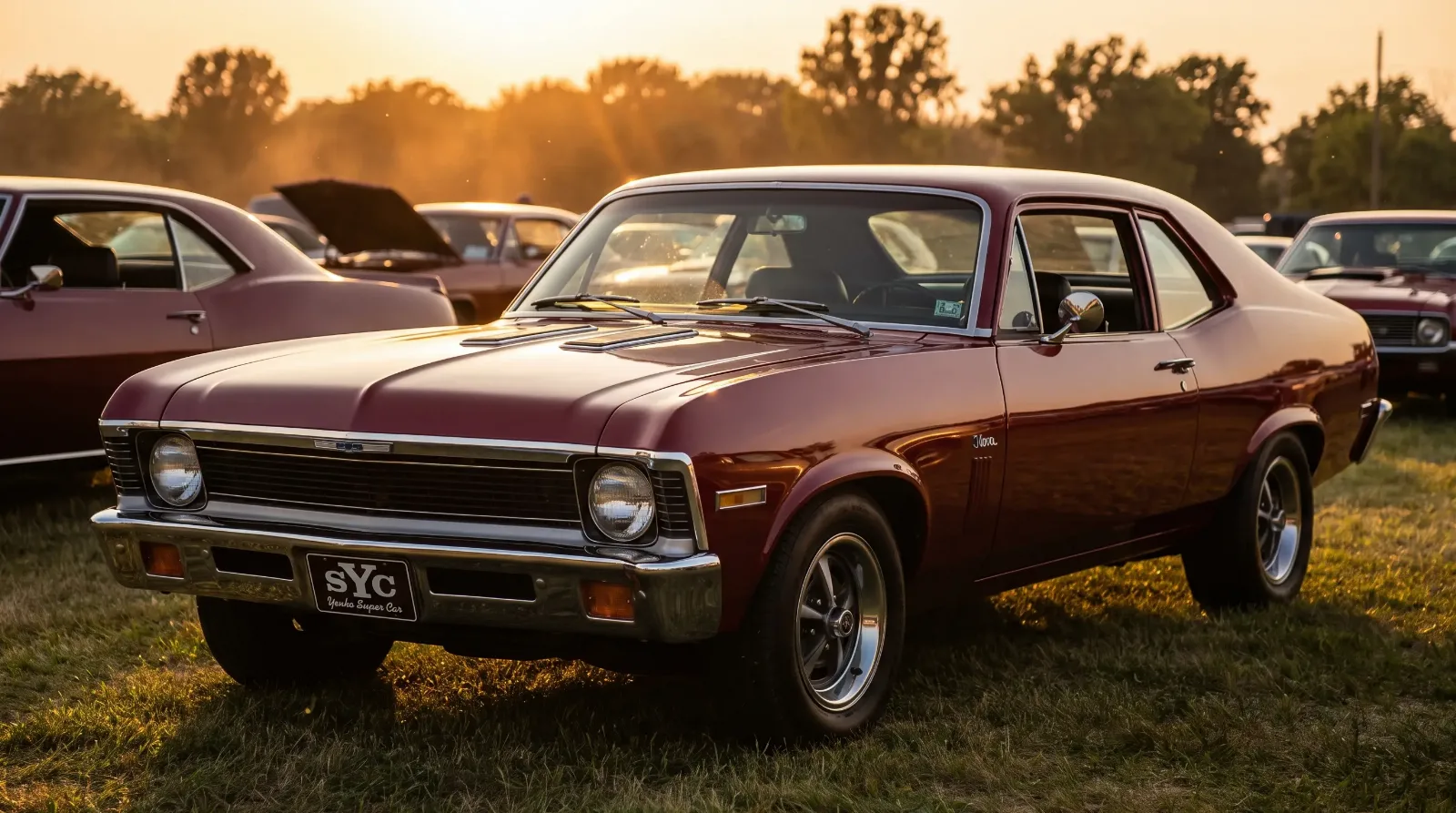
What "sYc" actually means
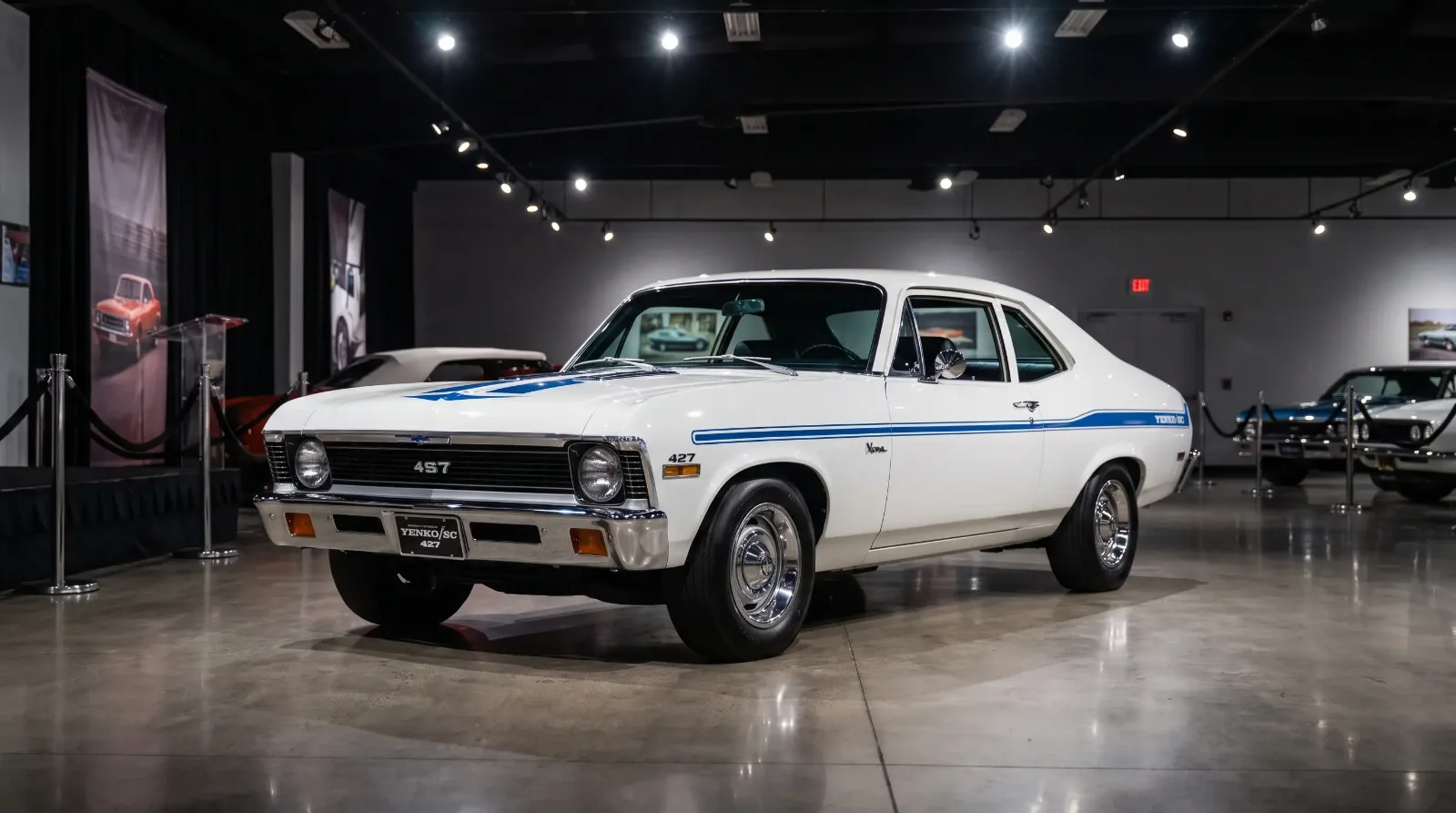
Don Yenko built his reputation on the Camaro and Chevelle versions of the COPO 427, factory-built cars Chevrolet produced under Central Office Production Order 9737 for the 1969 model year. The Nova never got that same factory treatment. GM's policy on big-block weight in the light, short-wheelbase X-body held even for Yenko, so there was no COPO order number that put a 427 into a Nova on the assembly line. Yenko built the car himself instead: he took standard factory-built 396 SS Novas, ordered them through his own Canonsburg, Pennsylvania dealership, and swapped in an 11.0:1-compression L72 427 on his own shop floor, using cast-iron cylinder heads off the SS 396. The sYc badge, standing for Yenko Super Car, is what he stuck on the fender and headrests to mark a car that went through his shop rather than a GM assembly line.
That distinction matters enormously to value, and it is the first thing I check when one of these comes across my desk.
Why Yenko had to invent his own program
Corporate policy on big-block engines in the X-body Nova was never comfortable at General Motors, and unlike the Camaro and Chevelle, the Nova was never handed a factory COPO route to the 427 at all. Insurance pressure and internal safety concerns around a heavy engine in a light, short-wheelbase car kept that door closed. Yenko had built a business and a reputation on exactly this kind of car, and he was not going to let a closed door end it. He turned to dealer-installed conversions instead, buying 427 crate engines and doing the swap at Yenko Chevrolet rather than waiting on a factory order that was never coming. It is the same instinct that produced the Yenko and COPO story in the first place: find a version of the car that still gets built, factory route or not.
The 1969 sYc Nova was a one-year-only run built this way, and by the end of the model year Yenko had converted somewhere around 37 to 38 of these 427 cars, with fewer than ten believed to survive with credible documentation today. For 1970, Yenko moved to a different formula entirely rather than continuing the 427 conversions: he built the Nova around the 350 cubic inch LT-1 small block shared with the Corvette and Z28 Camaro, advertised at 360 horsepower, and this time Chevrolet let the combination through the COPO system at the factory. Nicknamed the "Deuce" as a nod to the Chevy II name, roughly 175 of these LT-1 Novas were built, a different engine, a different build method, and a different badge story from the 427 sYc car that preceded it, even though both wore Yenko's name.
What made a genuine sYc Nova
A real sYc car carries specific evidence beyond the badge itself. Dealer invoice paperwork from Yenko Chevrolet, the engine's casting and stamping details matching a documented crate or take-out unit of the correct type, and continuity of ownership history back toward the original sale are what separate a documented example from a car wearing a reproduction emblem and a story. The badge alone proves nothing. I have seen sYc emblems on Novas with no supporting paperwork at all, and I have seen unmarked cars with a complete Yenko invoice trail. Guess which one I trust.
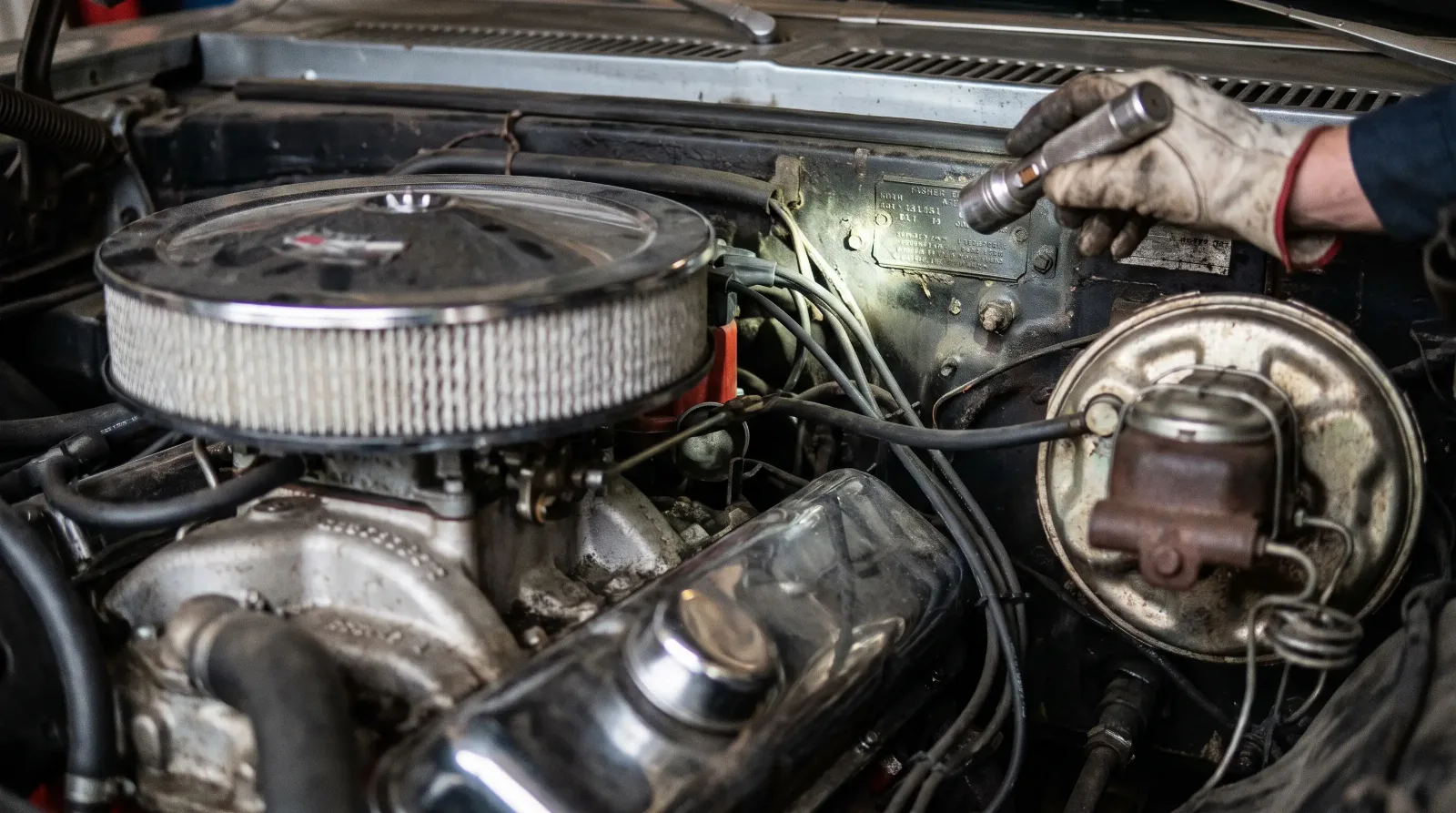
Reproduction sYc emblems have been available through the restoration parts aftermarket for decades, which is exactly the problem. A badge that costs a few dollars and bolts on in five minutes cannot carry the evidentiary weight buyers routinely assign to it. The engine numbers matter more, but even those require a documented reference point. A correct-type 427 or 454 block installed in the 1980s by a previous owner chasing period correctness looks nothing like an engine invoiced through Yenko's shop in 1970, and telling the two apart requires more than a glance under the hood. It requires records that either survived or did not.
The market today
Documented sYc Novas trade in a narrow band compared to the wider muscle Nova market, and the spread between a paper-thin example and a fully documented one is not small.
| Condition tier | Documentation | Approximate market range |
|---|---|---|
| #1, concours | Full Yenko invoice, matching engine records, continuous ownership chain | Around $470,000 per current price guides, though record auction sales have run well above this |
| #2, solid driver | Partial documentation, correct-type engine, some ownership gaps | Around $400,000 per current price guides |
| #3-4, project or undocumented | Badge only, no invoice, unverified engine swap | Standard big-block Nova pricing, no sYc premium |
The gap in that table is the entire appraisal problem. A car in the bottom row can be repainted, rebadged, and re-photographed to look like the top row, and the only defense against that is paper the seller either has or does not have.
"A #2 car with a thin paper trail isn't a #2 car when the check clears. It's a #3 with a good story, and the appraisal has to say so."
Marcus Feld
Buying one without getting burned
Treat the sYc badge as a claim, not a fact. Ask for the dealer invoice or a copy of it before you negotiate on price, not after. Verify the engine's casting numbers against a documented reference for the correct year and displacement, since a correct-type block installed decades later reads very differently to an appraiser than one with contemporaneous paperwork. If the seller cannot produce anything beyond the badge and a family story, price the car as an unverified Nova with an aftermarket big-block swap, full stop.
Get a third party involved before the money changes hands, not after. A pre-purchase inspection from someone who works with this specific segment regularly costs a fraction of the premium a documented sYc car commands over an undocumented one, and it is cheap insurance against buying a good story instead of a good car. Sellers with real paperwork rarely object to that step. The ones who push back hardest are usually the ones with the least to show you.
For buyers working through the wider Yenko universe, the next story in this set covers the 427 conversion story these cars grew out of, and it is worth reading before you commit to anything with a Yenko name attached. The badge means more once you understand what came before it, and that context is part of Chevrolet's Nova history as a whole. Liquidity on these cars is thinner than the headline sale prices suggest. A record sale tells you what one buyer paid for one car on one day. It does not tell you what your car, sitting in your garage without that same paperwork, is actually worth to the next buyer in line.
Sources and notes
- Autoevolution: Super Novas, A Look Back at Yenko's Insane Mini-Muscle Cars
- OnAllCylinders: Who Was Don Yenko
- Audrain Automobile Museum: 1970 Chevrolet Nova Yenko Deuce
- MotoGallery: 1970 Chevrolet Nova Yenko Deuce Review and Specs
- Hagerty Valuation Tools: 1970 Chevrolet Nova Yenko Deuce
- Hagerty Valuation Tools: 1969 Chevrolet Nova Yenko
Related Reading
Have a
Chevrolet Nova
for Sale?
Reach thousands of serious classic car collectors across the US.
Sell It Here →
Are You a Classic Car Dealer?
List your full inventory and connect with targeted classic car buyers.
Join as a Dealer →

About the author
Marcus Feld
Accredited collector-car appraiser who reads the market through hammer prices, condition tiers and risk.
Related Listings - Chevrolet Nova




Comments (1)
E
Eddie Carlisle
2 months ago
The pricing history in this article is useful context. Easy to forget how recently some of these values moved.