
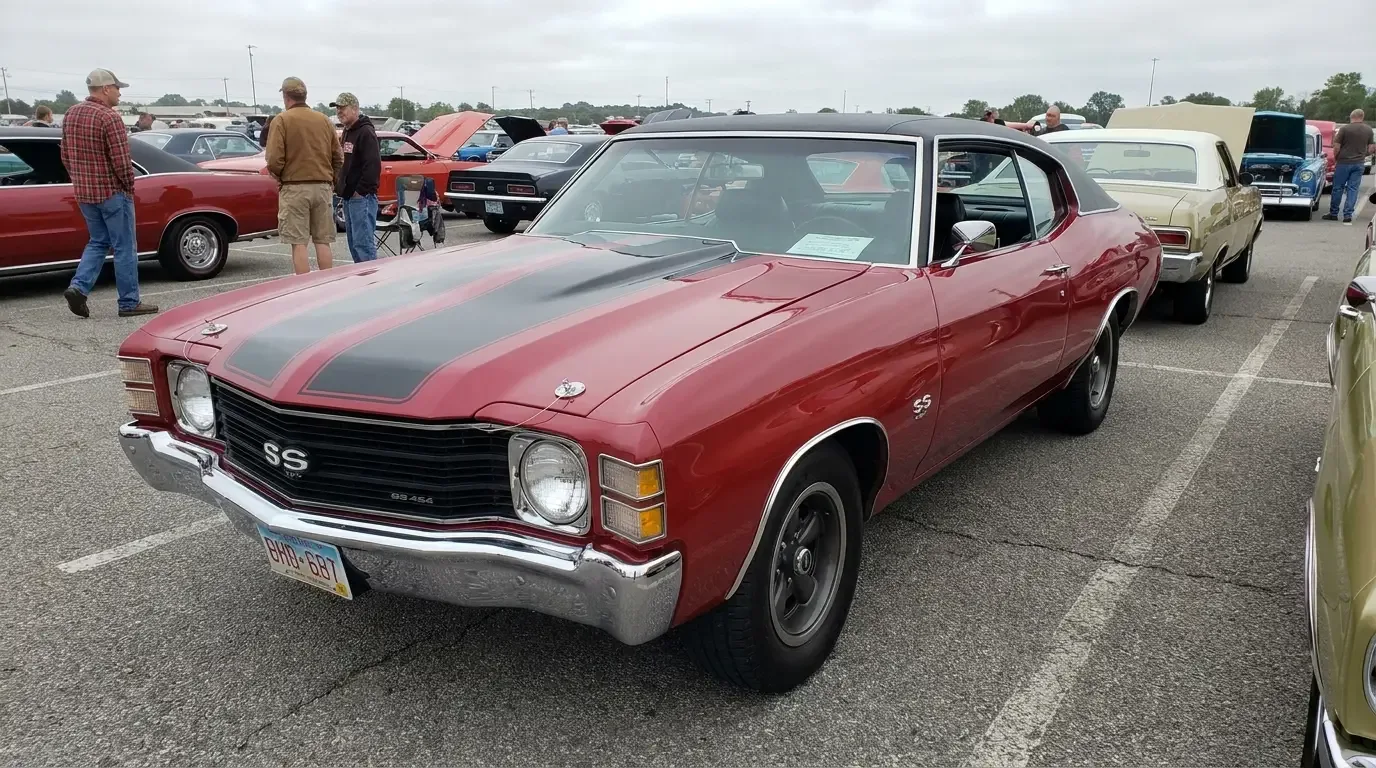
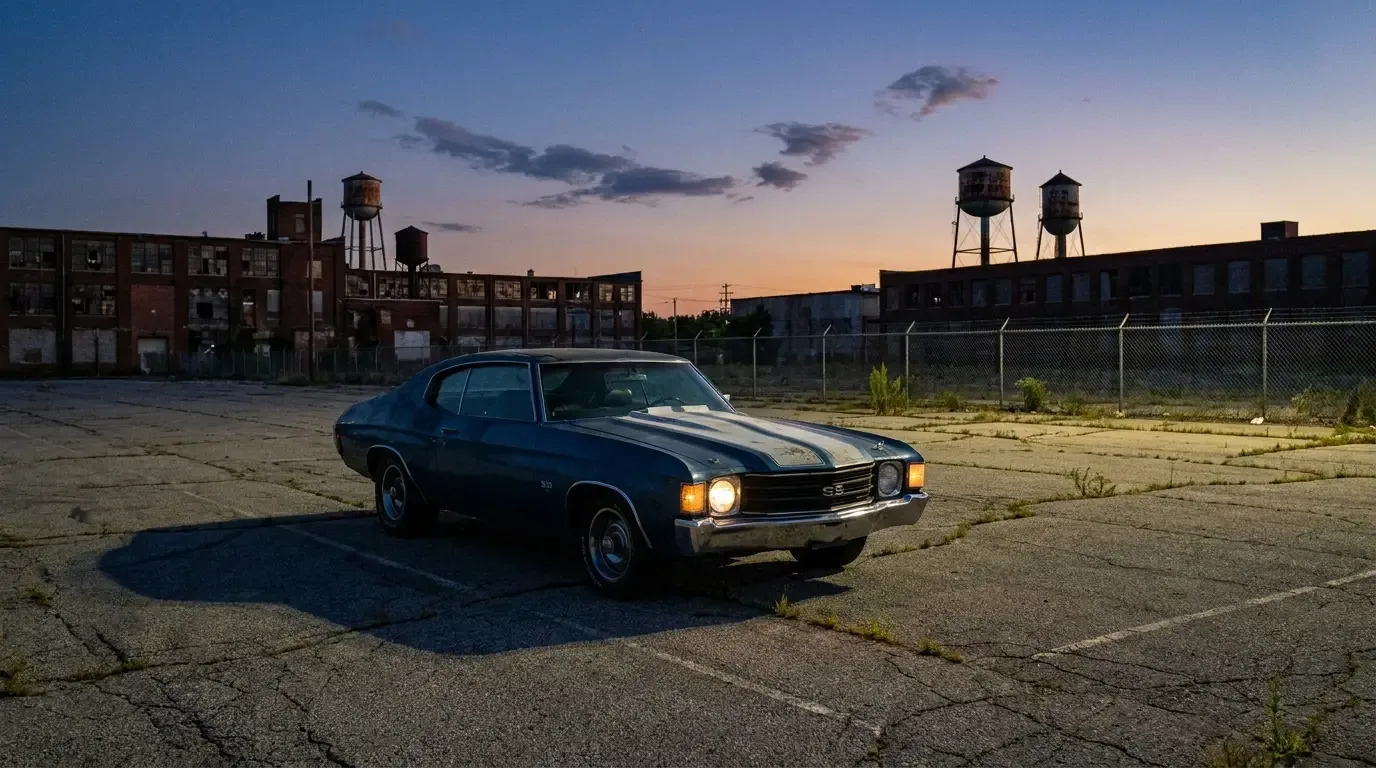
I've had more than one guy roll a 1971 Chevelle into my driveway convinced he'd bought a 1970 with a broken grille. He hadn't. Chevrolet changed the face of the car for 1971, dropped it from quad headlamps to a single round lamp on each side, and reshaped the grille and front bumper to match. Under the hood, something quieter and more permanent happened at the same time. Compression ratios came down across every engine in the lineup, and they never went back up. That's the year worth understanding if you're looking at a second-gen Chevelle, because it's the hinge point between the car's peak and its long, slow decline.
History & Heritage
7 min read
1971 Restyle: Single Headlamps and the Compression Comedown
How the 1971 Chevelle's single-headlamp face and across-the-board compression drop reshaped the SS454 and what it means for buyers today.
What actually changed on the outside
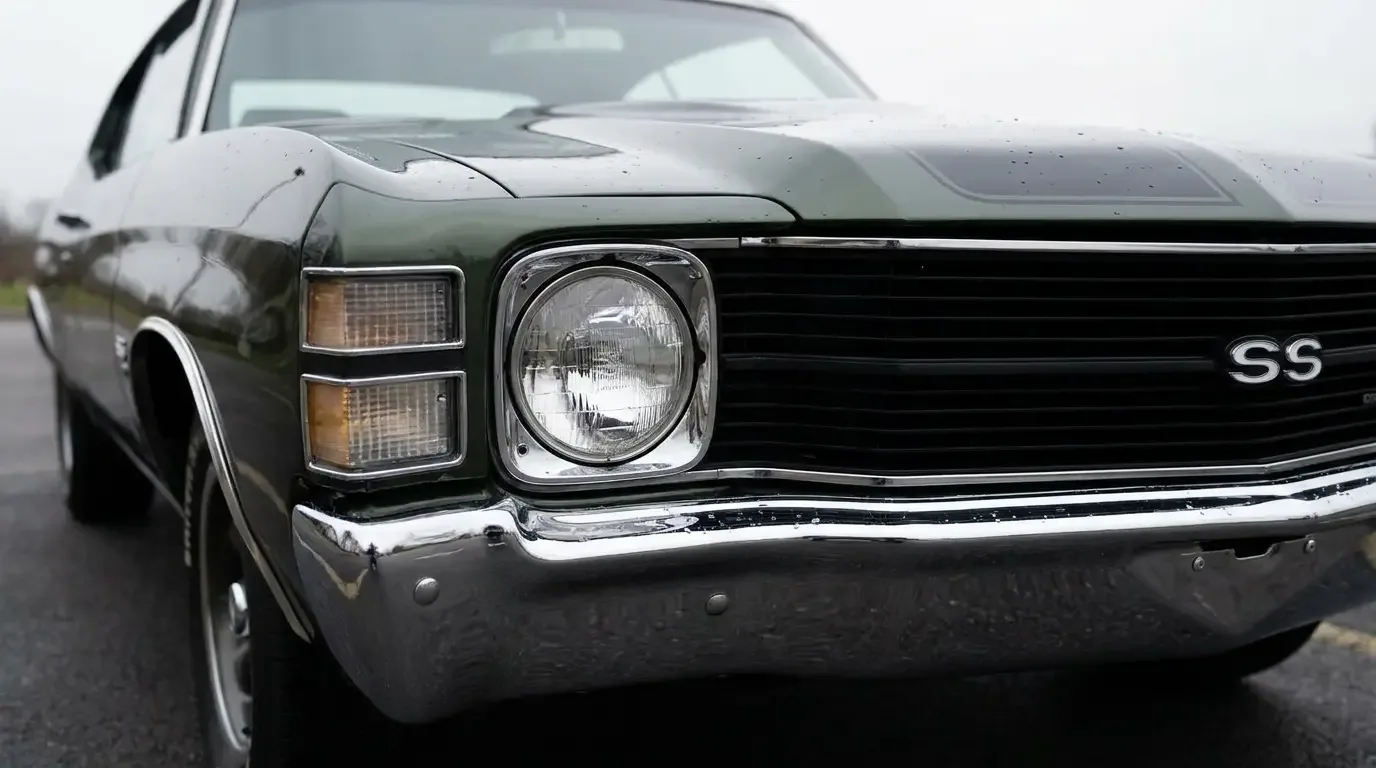
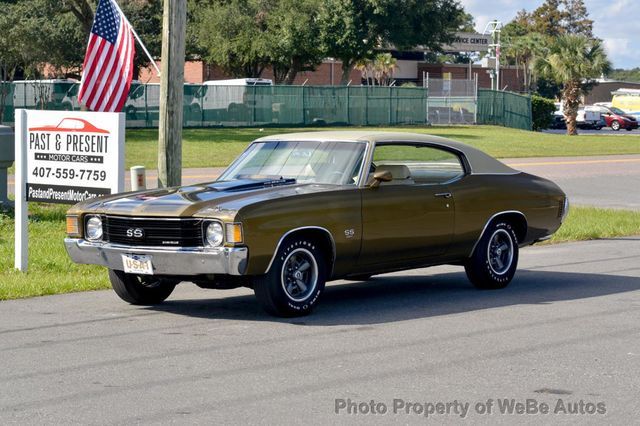
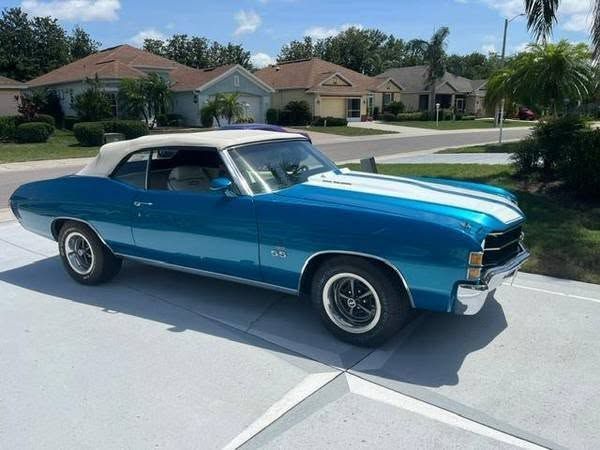
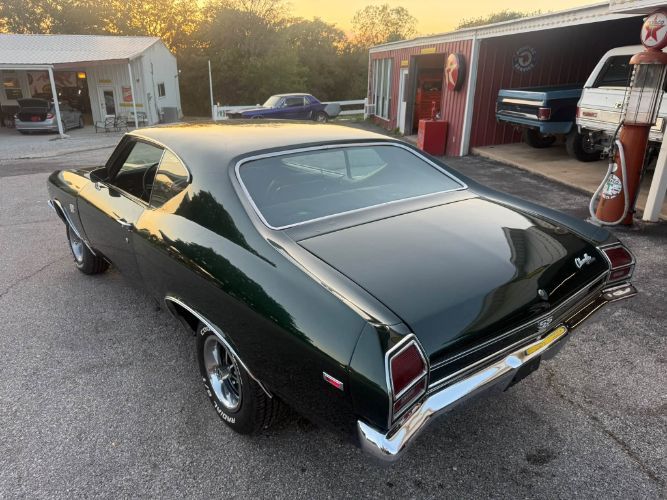
The 1971 restyle wasn't a full body change. The doors, roofline, and greenhouse carried over from 1970. What changed was the front clip: single headlamps in a wider, more horizontal grille opening, a revised hood, and a bumper that sat differently against the new sheet metal. The taillamps got a mild update too. It's a subtler change than the 1968 to 1969 nose job, and I think that's exactly why it gets overlooked. People remember the SS454 grille from 1970 because it's aggressive and famous. The 1971 face is calmer, and calmer doesn't sell calendars.
Inside, Chevrolet kept refining the same dash and console architecture from 1970, with minor trim and color changes rather than anything structural. If you're trying to date a car from across a parking lot, headlamp count is your fastest tell. Single lamps mean 1971 or later. Quad lamps mean 1970 or earlier. It's not a perfect science because of parts swaps over fifty years, but it's the first thing I check before I even walk up to a car.
The compression drop nobody advertised
Here's the part that actually matters mechanically. Every engine in the Chevelle lineup for 1971 saw its compression ratio reduced from 1970 levels. The SS454's LS5 dropped from 10.25:1 down to roughly 8.5:1. The small-blocks took similar hits. This wasn't Chevrolet deciding the cars needed less punch for fun. It was GM getting ahead of a regulatory freight train: lower-octane, lower-lead fuel was coming, emissions testing was tightening, and every domestic manufacturer spent 1971 quietly detuning engines that had been built to run on premium leaded gas with aggressive compression.
The LS6 454, the 450 horsepower monster from 1970, didn't survive the transition into 1971 at all. Chevrolet had floated word that the LS6 would return, but it never reached public sale. Chevrolet dropped it from the Chevelle lineup entirely. The LS5 stuck around as the top SS454 engine, and here's the detail that surprises people: at the lower 8.5:1 compression, factory documentation actually rates the 1971 LS5 at 365 gross horsepower, five more than the 1970 LS5's 360. Engineering refinements to the cylinder heads and cam offset most of what the compression drop cost, which is a more interesting story than the flat "everything got weaker" version most people repeat. On the street, the difference between a 10.25:1 LS5 and an 8.5:1 LS5 is still real. You feel it in throttle response and in how the engine wants to be driven, not just in the number stamped on a spec sheet.
Why this matters more than people think when buying
I see buyers get excited about a 1971 SS454 like it's the same animal as a 1970. Mechanically it's related, obviously, same displacement and mostly the same architecture, but it's not the same car in terms of what the engine is doing under the hood. If someone tells you a 1971 SS454 makes the same power as a 1970 LS6, walk away from that conversation or at least stop taking that person's word on anything else about the car. The 1971 model year is a good car. It's not the same performance ceiling as the year before it, and pretending otherwise gets buyers overpaying for the wrong expectations.
What I look for on a 1971 specifically: matching numbers on the block relative to the cowl tag, correct carburetor for the lower compression engine (a high-compression carb setup bolted onto a low-compression 1971 short block is a common mismatch from decades of parts swapping), and honest disclosure about whether the car has had a later, higher-compression engine dropped in to chase the 1970 reputation. That last one happens more than sellers admit. A 1970 LS6 in a 1971 body isn't a fraud by itself if it's disclosed, but plenty of them aren't disclosed, and that's where a buyer gets burned.
| Spec | 1970 SS454 LS5 | 1971 SS454 LS5 |
|---|---|---|
| Compression ratio | 10.25:1 | approx. 8.5:1 |
| Rated horsepower | 360 hp | 365 hp (gross, pre-net rating change) |
| Headlamps | Quad | Single |
| LS6 availability | Yes | No, discontinued |
"I've pulled apart enough of these to tell you the 1971 cars get a bad rap they don't fully deserve. They're not the 1970 LS6. But a clean, honest 1971 SS454 with matching numbers is still a real muscle car, and it's usually sitting at a friendlier price than the year everybody's chasing."
Mike Sullivan
What a 1971 costs relative to the year everyone wants
Because so much of the market chases the 1970 LS6, a documented 1971 SS454 tends to sell for meaningfully less at auction and in private sales, even though the car underneath it is closely related and, honestly, easier to live with day to day at the lower compression. That gap is where I tell buyers to look if the budget doesn't stretch to a 1970. You're not getting an inferior car, you're getting a car that's priced against a reputation it doesn't have rather than against what it actually delivers. The same logic applies to small-block 1971 Chevelles, which get overlooked entirely by buyers fixated on big-block years and end up as some of the more honestly priced clean examples on the market.
One more thing worth flagging before you write a check on any 1971: parts interchangeability with 1970 is high but not total. The single-headlamp grille, hood, and front bumper are 1971-specific pieces, and reproduction availability on some of that trim is thinner than it is for the more popular 1970 face. If a 1971 shows up with a quad-headlamp front clip grafted onto it, somebody's chasing the wrong year's look, and that's a car with a mismatched identity no matter how clean the rest of it presents.
If you want the full arc of how the second generation got here, Chevelle's golden years lays out the years leading into this one. And if you're shopping right now, you can browse 1971 Chevelles currently listed. The compression story doesn't stop here either. It keeps tightening the following year, which is exactly where next: 1972 picks up.
Sources and notes
- ClassicCars.com Journal: Pick of the Day, 1971 Chevrolet Chevelle SS 454
- HowStuffWorks: 1971 Chevrolet Chevelle SS 454 profile
- MotoGallery: 1970-1972 Chevrolet Chevelle SS 454 specs and history
- Over-Drive Magazine: 1971 Chevrolet mid-size cars fact sheet
- Team Chevelle forum: 454 LS4/LS5 differences by year
Related Reading
Have a
Chevrolet Chevelle
for Sale?
Reach thousands of serious classic car collectors across the US.
Sell It Here →
Are You a Classic Car Dealer?
List your full inventory and connect with targeted classic car buyers.
Join as a Dealer →

About the author
Mike Sullivan
Detroit-area muscle car enthusiast and restoration specialist with three decades of hands-on experience working on American iron.
Related Listings - Chevrolet Chevelle
More in History & Heritage
Comments (1)
L
leadsled_lenny
1 day ago
Summer of 1979 I bought a '71 Chevelle off a kid in Stockton for the 454 alone, figuring I would pull it for a sled project, and when I got it home somebody had already put on a set of 1970 heads and a carb set up for the higher compression, so the thing pinged on every grade on Highway 50 until I sorted it out. Never did shave the trim or french those single headlamps like I planned, which is probably the only reason that car is still out there somewhere wearing its own face.