
Collectors tend to think of dead luxury brands as tragedies, and some of them were. But the more useful way to look at the graveyard of discontinued luxury car brands is as a set of market lessons. Nearly every one of these names died for a reason you can identify, and the reasons repeat. A brand builds its reputation at the top, then either loses the wealthy buyers who sustained it, gets crushed against a rival with deeper pockets, or destroys its own equity chasing volume. The cars they left behind are now among the most collectible objects in the hobby, and the collapse that killed the maker is a large part of why.
History & Heritage
6 min read
Luxury Car Nameplates That Vanished Entirely
Duesenberg, Packard, Pierce-Arrow and more: why these discontinued luxury car brands died, and what their best surviving cars are worth today.
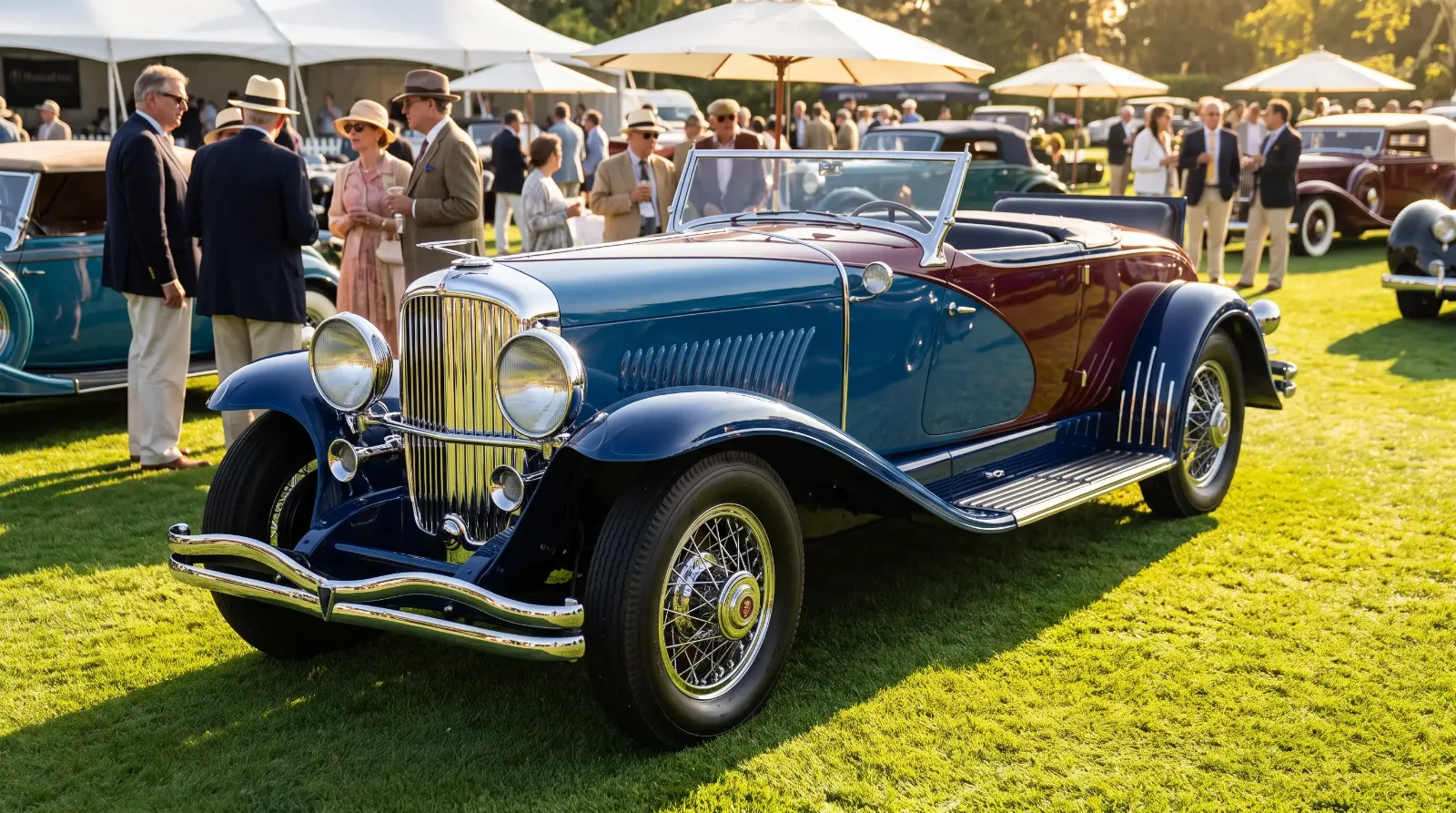
To see where these names fit in the larger arc, it helps to understand how the segment got here before the failures started.
The prewar giants that fell first
The first great cull came with the Depression and the years just after it, and it took some of the finest names in the business. Duesenberg, maker of the most expensive American car of its era, ended production in 1937 when the Cord empire that owned it collapsed. Pierce-Arrow, a Buffalo institution built on quality, folded in 1938. Peerless, one of the so-called "three Ps" of American luxury alongside Packard and Pierce-Arrow, had already left the car business in 1931, and did something almost unbelievable with what remained: it reorganized as a brewery once Prohibition ended.
Marmon built a genuine V16 and was gone by 1933. Franklin, which made its name on air-cooled engines, failed in 1934. Stutz, the great sporting marque, was finished by the mid-1930s. What links them is not bad engineering. Most built superb cars. What killed them was a business model that depended on a small population of very rich buyers, and that population contracted violently after 1929. When your entire market is the top one percent, a shock to the top one percent is an extinction event.
Packard: the slow-motion failure
Packard deserves its own section because its death was the most instructive, and the most avoidable. Before the war Packard was arguably the strongest luxury name in America, a genuine rival to Cadillac and by some measures its superior. The company survived the Depression precisely because it did something the others would not: it moved down-market with the mid-priced One-Twenty in the 1930s to generate volume and cash.
That decision saved Packard in the short run and diluted it in the long run. By the postwar years the brand no longer had a clear identity at the top, and Cadillac had pulled decisively ahead. The 1953 merger with Studebaker was a marriage of two weak partners, not a rescue. The last true Packards were built in 1956. The 1957 and 1958 cars were rebadged Studebakers, derided as "Packardbakers," and the name died in 1958. Packard is the clearest case in the industry of a luxury brand that survived a crisis by cheapening itself, then discovered the cheapening was fatal on a longer timeline.
The postwar names that could not hold on
The second wave of failures was different. These were not brands killed by a depression. They were killed by the economics of competing at the top against corporate rivals with vastly more resources. Chrysler tried to establish Imperial as a standalone luxury make separate from the Chrysler brand from 1955, aiming it squarely at Cadillac and Lincoln. It never got the volume to justify the effort, and Imperial reverted to being a Chrysler model after 1975, with a brief and unsuccessful revival in the early 1980s.
Cadillac's own LaSalle, a companion make meant to sit just below the senior Cadillacs, ran from 1927 to 1940 before being discontinued as redundant. Lincoln spun off a separate Continental Division for the extraordinary Mark II of 1956 and 1957, a hand-finished car reportedly sold at a loss, before folding Continental back into Lincoln when the economics proved impossible. Even a corporate parent with deep pockets could not make a standalone ultra-luxury brand pay.
| Marque | Ended | Primary cause |
|---|---|---|
| Peerless | 1931 | Depression; exited to brewing |
| Marmon | 1933 | Depression; low-volume V16 |
| Duesenberg | 1937 | Cord empire collapse |
| Pierce-Arrow | 1938 | Depression, lost buyers |
| LaSalle | 1940 | Redundant to Cadillac |
| Packard | 1958 | Diluted brand, weak merger |
| Imperial (standalone) | 1975 | Insufficient volume vs. Cadillac |
What the dead names are worth now
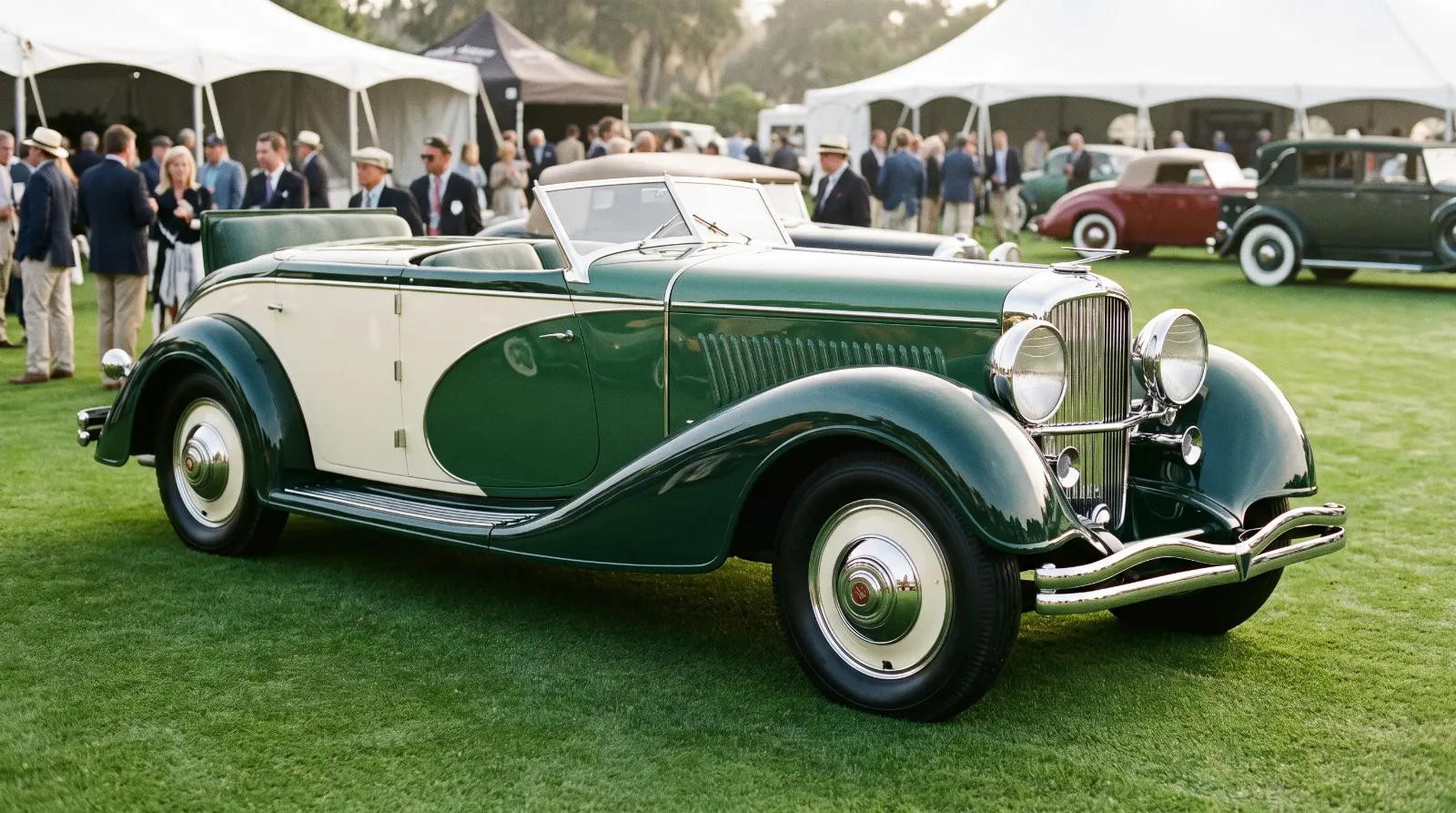
Here is where it gets interesting from a values standpoint. Extinction is not bad for a collectible. In many cases it is the opposite. A brand that died stops making cars, which fixes the supply permanently, and the best of the dead marques trade at strong money precisely because nothing new will ever compete with them. Duesenberg sits at the top of the American prewar market, with the finest Model J examples reaching seven figures at auction. Pierce-Arrow and prewar Packard command serious money for their best cars.
The pattern is not uniform, though, and that is the part buyers get wrong. Rarity alone does not create value. A dead brand needs to have been genuinely great when it was alive for the extinction to matter. Marmon and Peerless are historically important and thinly traded, but they do not reach Duesenberg money, because the market ultimately prices the car, not just the tragedy of the company. Scarcity amplifies quality. It does not manufacture it.
"People ask me whether a dead brand is automatically a good investment, and the honest answer is no. Extinction locks the supply, which helps, but the market still grades the actual car underneath the badge. A great marque that failed can be a blue-chip hold. A mediocre one that failed is just an old car with a sad story, and the auction results say so every year."
David Mercer
The recurring lesson
Read the whole list and the same causes keep surfacing. Depend entirely on the very rich and a downturn wipes you out. Compete at the top without the scale to absorb the losses and you bleed to death slowly. Chase volume to survive and you dilute the equity that made you worth buying in the first place. Every dead luxury nameplate is some combination of those three failures, and the survivors are simply the companies that avoided all three at once.
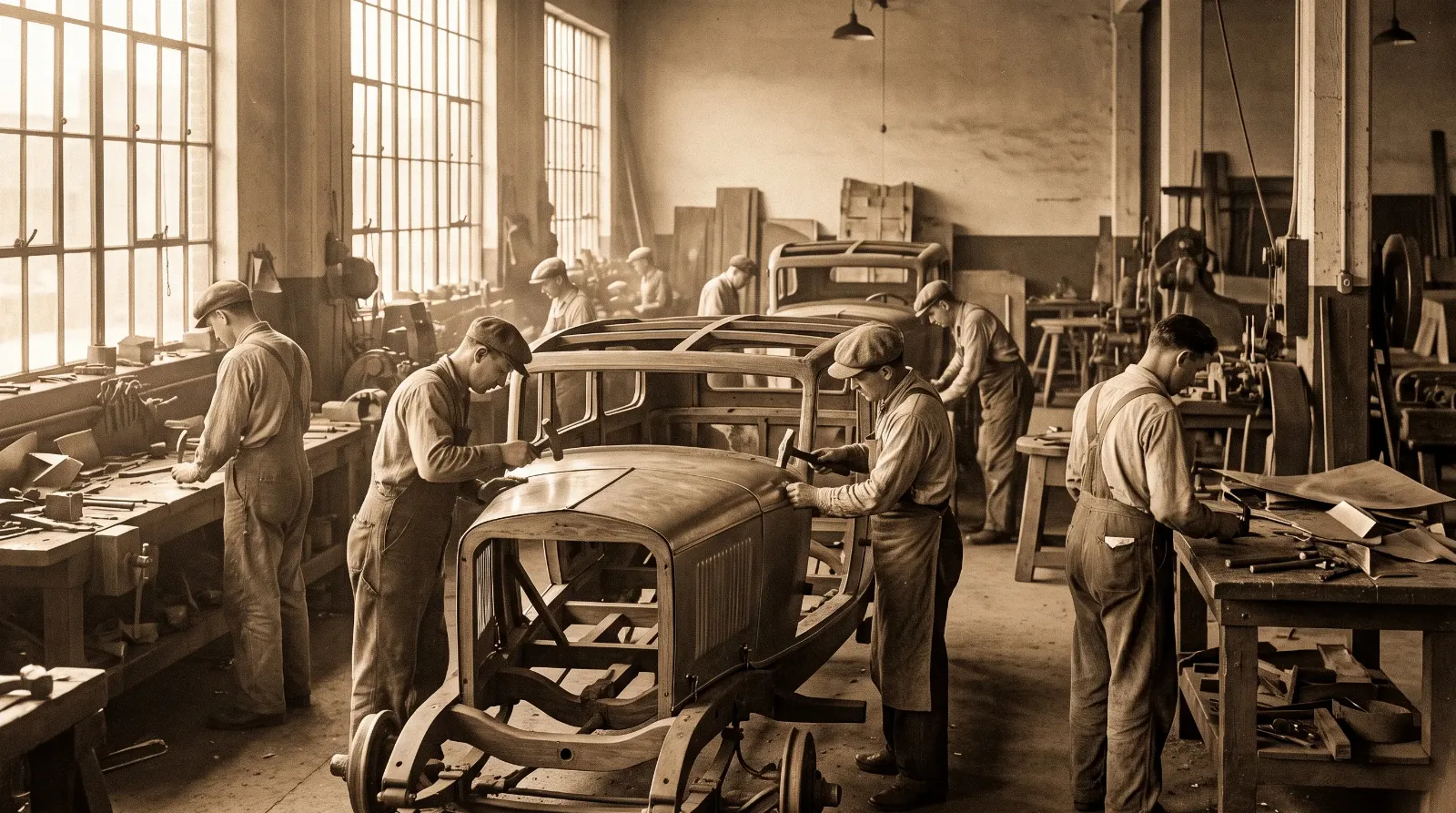
The story of these brands really begins with the craftsmen who built the bodies that made them famous. next: The Gilded Age Origins of the American Coachbuilder.
Related Reading
Have a
Classic Car
for Sale?
Reach thousands of serious classic car collectors across the US.
Sell It Here →
Are You a Classic Car Dealer?
List your full inventory and connect with targeted classic car buyers.
Join as a Dealer →

About the author
David Mercer
Classic car market analyst with two decades of experience tracking collector car valuations, auction results, and investment trends.
More in History & Heritage
Comments
Be the first to comment on this article.