
Somewhere around 1974, Chevrolet started selling comfort the same way it used to sell horsepower. Buyers who wanted a Chevelle were no longer just cross-shopping other muscle cars. Some of them were cross-shopping a Cutlass Supreme or a Grand Prix, and GM's mid-size divisions all reached for the same trick to win that comparison: a bucket seat that turned toward the door when you opened it.
History & Heritage
7 min read
The Swivel Bucket Seats That Defined Colonnade Comfort
How Chevrolet's swivel bucket seat option worked on the Colonnade-era Malibu and Laguna, which trims offered it, and what to check when buying one today.
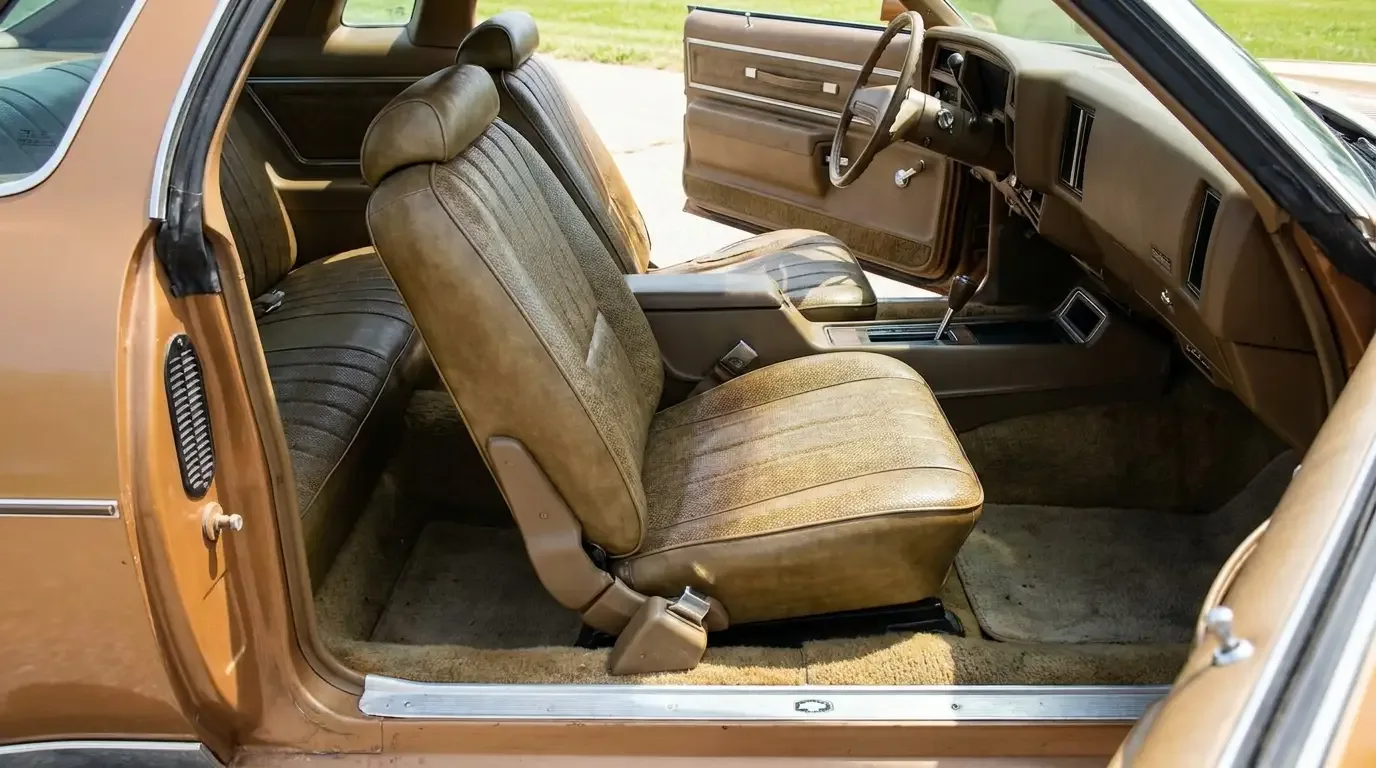
The swivel bucket wasn't a Chevelle invention. Oldsmobile and Pontiac had versions of it on their personal-luxury coupes earlier in the decade, and Chevrolet folded the idea into the Colonnade-era Malibu and Laguna lineup as the buying public shifted away from raw performance. It's a small option in the grand scheme of a car's history, but it tells you almost everything about where Chevrolet thought the Chevelle needed to go once the SS badge stopped carrying the conversation. That shift is part of the Chevelle's later era, and the swivel seat is one of the clearest artifacts of it.
A comfort option built for a different customer
By the time the Colonnade body arrived for 1973, Chevrolet's own market research showed the mid-size buyer had changed. Fewer of them wanted a quarter-mile time. More of them wanted a car that felt like an event to get into and out of, something that read as thoughtful rather than just quick. The swivel bucket answered a real complaint: bucket seats in a two-door coupe with a long door and a low roofline are awkward to enter, especially for anyone getting in wearing a coat or carrying anything. Turn the seat a full 90 degrees toward the door opening, and the geometry of climbing in changes completely. You're not twisting your body into a fixed seat back. The seat meets you partway.
Chevrolet marketed the feature hard in Malibu Classic brochures of the mid-1970s, usually paired with other comfort options like a center console, a fold-down armrest, and cut-pile carpeting. It was never a stand-alone option code by itself in most years. It typically came bundled into a seating package, which is part of why tracking exact production numbers by option code is harder than it should be. If a dealer invoice or factory build sheet on a specific car shows the swivel bucket line item, that's the number to trust over anything else, including this article.
How the mechanism actually worked
The engineering behind it is simpler than people expect. The seat base sits on a pivot point rather than a fixed track mount. A spring-loaded detent holds the seat facing forward under normal driving. Open the door, and a linkage connected to the door hinge releases that detent, letting the seat swing outward on its pivot. Close the door, or apply enough forward pressure by sitting normally and reaching for the belt, and the seat locks back into its forward-facing position for driving. There's no motor and no switch. It's entirely mechanical, which is one reason so many of these units still function on cars that haven't seen real maintenance in decades. Cable-actuated seatbelt anchors of the same era gave GM plenty of grief for reliability. The swivel bucket linkage, by comparison, is a simple, low-stress mechanism and it tends to survive.
What does fail with age is the swivel bearing itself, along with the upholstery around the seat base where the pivot rubs. A seat that swivels with a grinding feel, or one that doesn't lock solidly forward, usually just needs cleaning and lubrication rather than a rebuild. A seat that won't lock at all is a linkage adjustment, not a parts hunt, in most cases.
Where it landed in the Chevelle lineup
The option shows up most often paired with the Malibu Classic and, on the higher end, the Laguna trims, both part of the same personal-luxury push that also produced the Malibu-trim Chevelles collectors look for today when they want a comfortable driver rather than a stripped muscle car. Base Malibu and Deluxe trims could usually be ordered with the option too, but the take rate was lower. Buyers spending Malibu Classic or Laguna money were the ones actually asking for it at the dealership.
The color and material choices followed the broader interior trends of the era: expanded vinyl in earth tones, plaid cloth inserts by the mid-1970s, and eventually velour as that fabric became fashionable toward the end of the decade. None of that is unique to the swivel option. What's unique is the base and pivot hardware underneath, which is specific to cars ordered with it and not something easily retrofitted from a standard bucket seat without swapping the entire seat assembly, mounting rails included.
| Detail | What to know |
|---|---|
| Mechanism type | Spring-loaded pivot with door-linkage release, no motor |
| Typical trims | Malibu Classic, Laguna, some Malibu/Deluxe orders |
| Common failure point | Swivel bearing wear, linkage adjustment, not the seat frame |
| Usual pairing | Center console, fold-down armrest, upgraded carpet |
Finding one today, and what it's worth to a buyer
For a Colonnade Chevelle shopper who isn't chasing a numbers-matching SS build, the swivel bucket option is a genuine bonus rather than a curiosity. It's a feature that still works exactly as intended fifty years later, it's a real talking point at a cruise-in, and it doesn't inflate the price the way a documented big-block build does. Cars with the option intact and functioning tend to sell at a modest premium over otherwise identical cars without it, mostly because so few sellers bother to mention it and so few buyers ask. If you're looking at a Malibu Classic or Laguna and the seller hasn't brought it up, open the door and check yourself.
"People assume every comfort option from this era was marketing fluff, a way to justify a higher sticker price without engineering behind it. The swivel bucket isn't that. It's a genuinely clever, genuinely simple mechanical solution to a real complaint drivers had, and the fact that most of them still work with zero intervention says something about how GM built this stuff when they actually tried."
Tom Ramirez
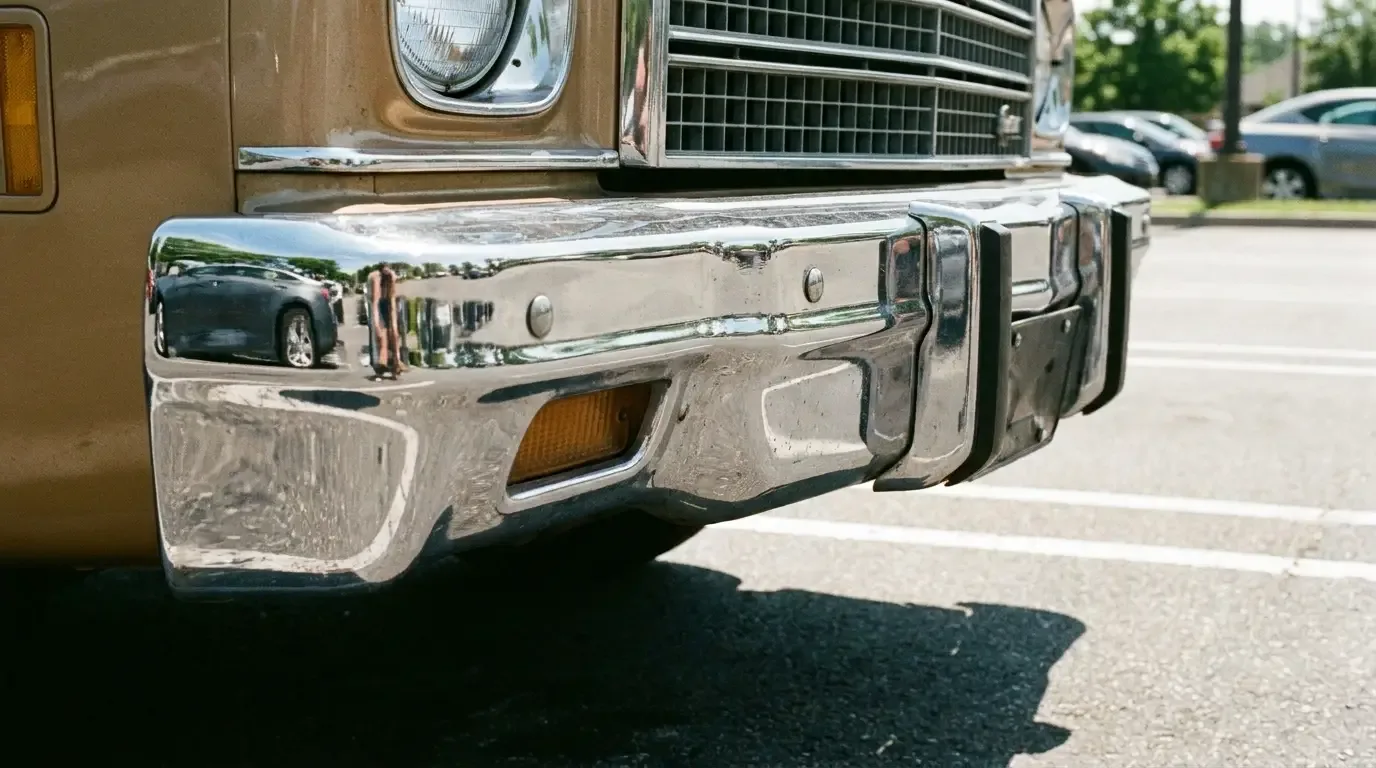
The swivel bucket is a small detail, but small details are usually where the real story of a car generation lives. Chevrolet built the Chevelle's reputation on cubic inches and quarter-mile numbers for most of a decade, then spent the Colonnade years quietly proving it could build comfort just as well when the market asked for it. For the next chapter in that shift, see next: The 5-MPH Bumper Story, which covers the federal mandate that reshaped the Chevelle's face during these same model years.
Sources and notes
- ClassicCars.com Journal, "Pick of the Day: 1973 Chevrolet Monte Carlo that makes it easy to get into"confirms the 90-degree swivel rotation.
- The Hog Ring, "An Old School Spin on Bucket Seats"GM A-body swivel seat history, 1973-1977 model span, pivot-and-track mechanism.
- eBay Motors Blog, "Swivel Seats Through the Years"GM divisional rollout of swivel buckets across Monte Carlo, Chevelle, Cutlass, Laguna.
- Team Chevelle forum, "Swivel Bucket Seats?"owner discussion of trim availability and mechanism condition.
- GM Sports, "1973-1977 Chevelle, Cutlass, LeMans, and all A-body Swivel Bucket Seats"parts source confirming model years and A-body scope.
- Wikipedia, "Chevrolet Chevelle"third-generation Colonnade trim structure and Malibu Classic timeline.
Related Reading
Have a
Chevrolet Chevelle
for Sale?
Reach thousands of serious classic car collectors across the US.
Sell It Here →
Are You a Classic Car Dealer?
List your full inventory and connect with targeted classic car buyers.
Join as a Dealer →

About the author
Tom Ramirez
Corvette researcher and historian based in Bowling Green, Kentucky. Two decades documenting Corvette production history from original factory records.
Related Listings - Chevrolet Chevelle
More in History & Heritage
Comments
Be the first to comment on this article.