
In the summer of 1931, Bentley Motors was insolvent. The company that had won Le Mans four years running could not pay its debts, and a receiver was appointed to sell what remained. What happened next reads less like a corporate merger than a quiet ambush. When the assets came up for auction, the winning bid arrived not from a named rival but from an anonymous shell called the British Central Equitable Trust. Only after the paperwork was signed did the industry learn who had been standing behind it. Rolls-Royce had bought Bentley without ever putting its own name on the offer.
History & Heritage
6 min read
How Rolls-Royce Bought Bentley in 1931 and Made Them Corporate Siblings
How Rolls-Royce bought Bentley in 1931 through a secret shell company, why it wanted a rival's name, and how the two became corporate siblings.
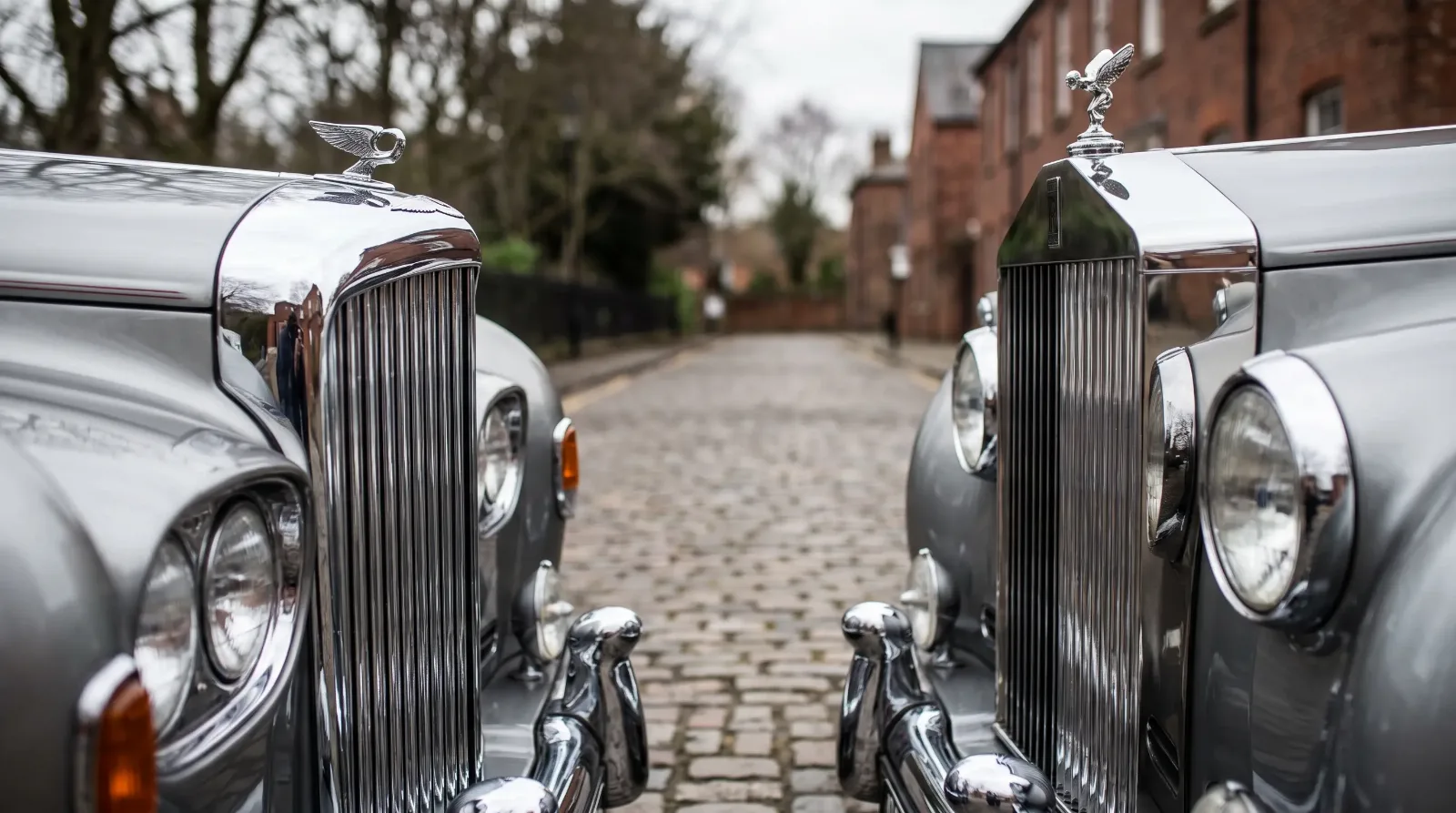
That single transaction created the corporate siblings whose shared history still confuses buyers today. To understand why a Silver Cloud and a Bentley S-Series are nearly the same car, you have to start here, in a receiver's office, with a nine-year-old company that had run out of money. This is the opening chapter of the Rolls-Royce and Bentley sibling story, and it sets the terms for everything that follows.
How Bentley ran out of money
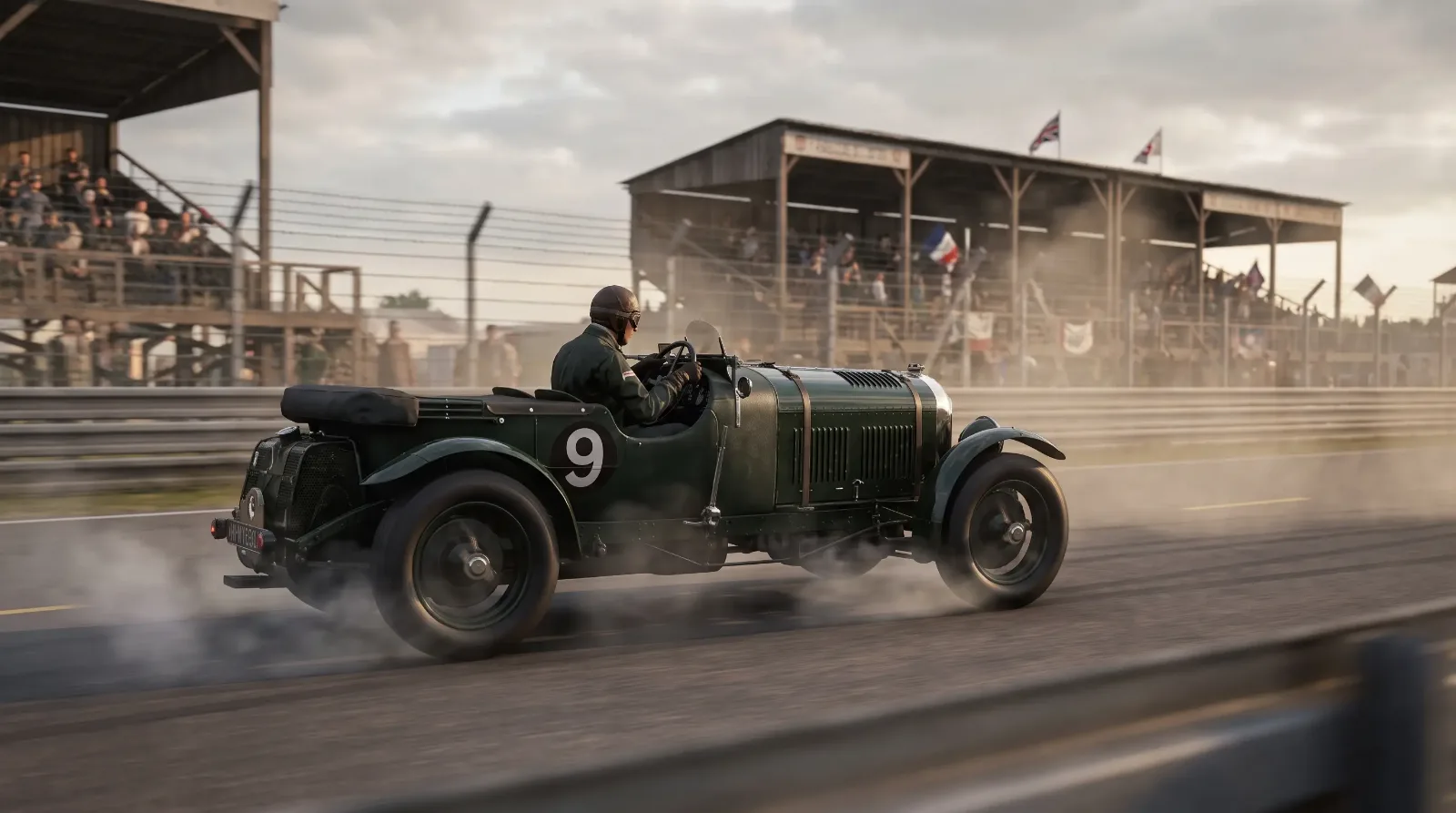
W.O. Bentley founded Bentley Motors in 1919, and for a decade the firm built fast, expensive sporting cars that earned their reputation on the track. The Bentley Boys, a loose circle of wealthy amateur racers, took the marque to victory at the Le Mans 24 Hours in 1924 and then in four consecutive years from 1927 through 1930. The racing was glorious. The accounting was not. Building low-volume competition machinery is an expensive way to run a business, and Bentley leaned heavily on the fortune of chairman Woolf Barnato, the diamond heir who was also one of the Bentley Boys.
When the Wall Street crash rippled into Britain and the wider Depression took hold, the market for a costly sporting car collapsed. The launch of the ambitious 8 Litre model in 1930 did not save the firm. By 1931 Barnato was unwilling to keep underwriting the losses, and the company slid into receivership. The assets, the name, the goodwill, the factory, all of it was now for sale to whoever wanted the pieces.
Why Rolls-Royce wanted a rival's name
The purchase looks strange until you consider what Rolls-Royce actually feared. Bentley was not simply a bankrupt curiosity. It was a respected engineering name with a following among exactly the sporting buyers Rolls-Royce did not serve. In the hands of a capable rival such as Napier, the Bentley name could have become a genuine competitor. Buying it removed that threat and, in the same stroke, handed Rolls-Royce a second brand it could aim at drivers rather than passengers.
A new subsidiary, Bentley Motors (1931) Limited, absorbed the remains. W.O. Bentley himself came along under a service contract, but he held little real authority over the cars that would now wear his name. The design direction belonged to Rolls-Royce, and the founder was, by most accounts, kept at arm's length from the drawing board. He left in 1935, and much of his later reputation as a designer was built elsewhere. The name stayed; the man did not.
The first Rolls-Royce Bentley
The car that announced the new order arrived in 1933. The Bentley 3½ Litre was not a warmed-over racer but a Rolls-Royce product in Bentley clothing, developed at the Derby works from an experimental chassis the parent company already had in hand. It was marketed as "the silent sports car," a phrase that told buyers exactly what had changed. This was no longer a stripped competition machine. It was a refined, well-mannered fast tourer built to Rolls-Royce standards of finish and smoothness.
Enthusiasts of the old firm were divided, and some still are. The Derby Bentleys, built from 1933 until the outbreak of war, were beautifully made and genuinely quick, yet they carried none of the raw character of W.O.'s originals. What they did establish was the template that would define both marques for the next half-century. One chassis, one engineering department, two badges, and a deliberate split in character between the driver's car and the chauffeur's car.
The financial logic was sound. Rolls-Royce had bought a second brand without having to invent one, and it could now reach two kinds of buyer with essentially the same engineering. That efficiency became the whole business model. Rather than develop two distinct cars, the company would develop one and dress it twice, spreading the enormous cost of building to Rolls-Royce standards across a wider range of sales. The Derby years proved the idea worked, and the postwar cars would take it much further.
"The 1931 purchase is the most consequential thing that ever happened to either name, and it happened in a receiver's office rather than a boardroom. Every shared radiator and every common chassis after that traces back to a bid nobody was supposed to see coming."
Sarah Whitfield
What the acquisition set in motion
The 1931 deal did more than rescue a bankrupt firm. It fixed the relationship between the two marques for generations. From that point forward, Bentley and Rolls-Royce would share engineering, share factories, and eventually share nearly identical bodies distinguished mainly by their grilles and mascots. The postwar move to the Crewe factory brought both names under one roof in the most literal sense, and the badge-engineering era that followed was a direct consequence of the corporate structure created in 1931.
For collectors, the takeaway is that a prewar Derby Bentley and a postwar Silver Cloud belong to the same lineage, one born the moment Rolls-Royce absorbed its rival. That lineage is a central thread in the classic luxury car story, and it explains why the two badges have spent most of a century pointing at slightly different buyers while hiding the same mechanicals underneath.
Understanding the corporate marriage is the first step. The next is understanding what the two badges actually shared once the shared cars arrived in showrooms, which is where the practice of badge engineering gets interesting. Read next: Badge Engineering Explained to see how much really separated a Silver Cloud from its Bentley twin.
Related Reading
Have a
Classic Car
for Sale?
Reach thousands of serious classic car collectors across the US.
Sell It Here →
Are You a Classic Car Dealer?
List your full inventory and connect with targeted classic car buyers.
Join as a Dealer →

About the author
Sarah Whitfield
Third-generation classic car collector specializing in pre-war American and European coachbuilt automobiles. Researcher and concours enthusiast.
More in History & Heritage
Comments
Be the first to comment on this article.