Two Engines, Two Philosophies
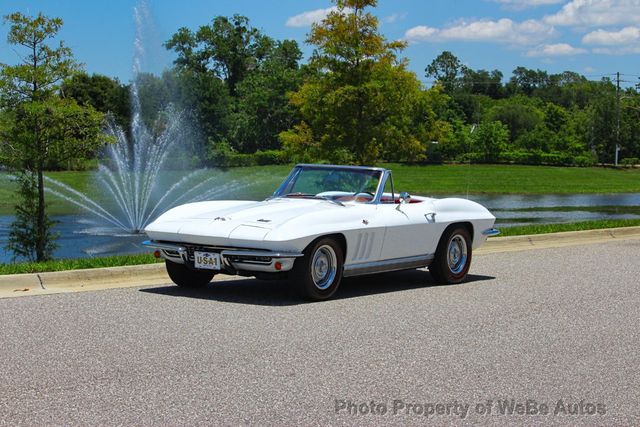
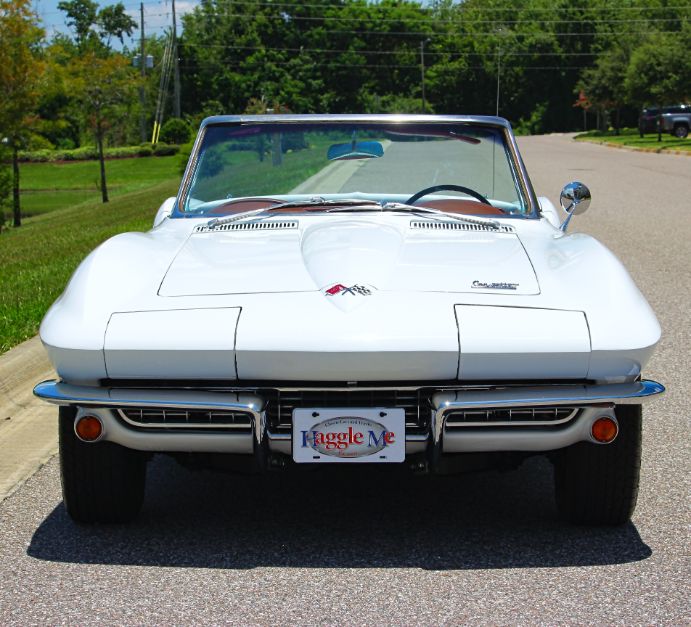
For most of its fourteen-year production run, the Chevrolet Corvette C3 offered buyers a choice that went far deeper than a line on an order sheet. You could have a small-block V8 — compact, rev-happy, balanced — or a big-block that displaced enough iron to make the earth shake on a standing start. The decision was also, whether buyers realized it or not, a vote on what the Corvette was fundamentally supposed to be: a sports car that rewarded skill and precision, or a muscle car that answered every question with torque.
That tension ran through the entire Mako Shark era and was never fully resolved. The engineers who built the C3 were not of one mind about it, and neither were the customers who bought it. What they left behind is a generation of machines that split into two distinct camps — and a historical record that makes the argument for both.
Zora Arkus-Duntov and the Case for the Small Block
Zora Arkus-Duntov, the Belgian-born engineer who became the Corvette's most passionate internal champion, was not impressed by displacement for its own sake. He wanted the Corvette to handle. He wanted weight balanced between the axles, a chassis that responded to driver inputs, and an engine that rewarded commitment rather than just rewarding a heavy right foot. By those measures, the small-block was always his engine.
The early C3's base powerplant was a 327 cubic-inch V8, carried over from the C2 in various states of tune. By 1969 the block had grown to 350 cubic inches — the displacement that would define the Corvette's small-block identity for decades — but the character remained the same: a high-winding, free-revving engine that made its power in the upper ranges of the tachometer rather than at idle.
The peak of the small-block era arrived in 1970 with the LT-1. Based on the 350-cubic-inch block, the LT-1 was a high-compression, solid-lifter engine that produced a factory-rated 370 horsepower — a figure that period road tests suggested was, if anything, conservative. It breathed through a Holley carburetor, spun a high-lift camshaft, and rewarded drivers who kept the revs up. The LT-1 was available through the 1972 model year, making it a three-season production run at the top of the small-block hierarchy.
"The LT-1 didn't need displacement to make its point. It made its point at six thousand RPM."
— Period road test summary, Car and Driver, 1970
Weight distribution mattered here. A small-block C3 carried significantly less mass over the front wheels than its big-block counterpart — period accounts suggest the difference was in the range of 150 pounds or more at the nose — and that translated directly into steering feel, turn-in response, and the willingness to rotate under trail braking. The small-block car was the one that cornered like a sports car.
The Big Block Enters the Picture
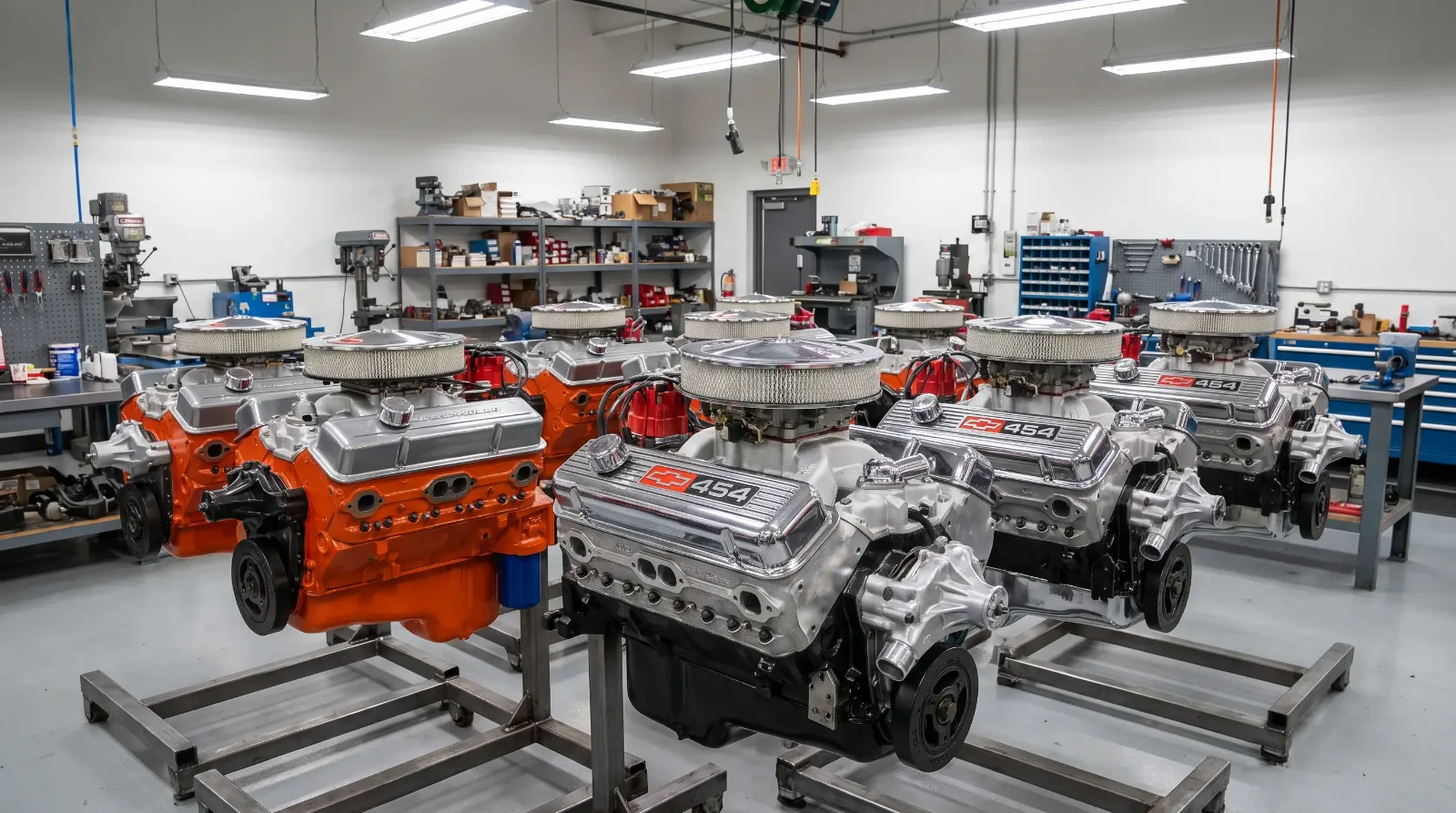
The big-block Corvette arrived in 1965 with the C2 generation and followed the body style into the C3. By 1968, when the new Mako Shark-inspired body debuted, the 427-cubic-inch big-block was already a known quantity — a brawling, torque-rich engine that had earned a devoted following among buyers who measured performance in elapsed time rather than lap times.
The 427 was available through the 1969 model year in multiple states of tune. The L36 produced a rated 390 horsepower in relatively mild trim; the L68 added triple two-barrel carburetors for a factory rating of 400 horsepower; the L71 reached 435 horsepower with those same three carburetors and a more aggressive camshaft. At the top of the hierarchy sat the L88, a racing-oriented package nominally rated at 430 horsepower — a number that observers of the era widely understood to be a deliberate understatement, with actual output considerably higher.
These were not subtle machines. The 427 produced peak torque — in some versions exceeding 460 lb-ft — at engine speeds where the small-block was still warming up. In a straight line, the big-block Corvette was devastatingly fast by any standard of the era. Quarter-mile times in the mid-13-second range were achievable with the hottest 427 combinations in period testing, numbers that put the Corvette in rarefied company.
The 454 Era: Power Under Pressure
For 1970, the 427 gave way to a new 454-cubic-inch big-block, and in its first year the engine arrived in spectacular form. The LS6, available for the 1971 model year, carried a factory rating of 425 horsepower and 500 lb-ft of torque — numbers that made it one of the most powerful engines ever offered in a production Corvette. The LS5, the more accessible 454 option, was rated at 390 horsepower in 1970 and continued into subsequent years in progressively detuned form.
The timing was unfortunate. Just as the 454 reached its performance peak, the regulatory and market environment began to turn against it. Insurance surcharges on high-horsepower cars were rising sharply. The industry had agreed to reduce compression ratios to accommodate lower-octane unleaded fuel. Emissions regulations were tightening in ways that punished large-displacement, high-compression engines particularly severely.
The result was a rapid decline in big-block output figures. The LS4 454 — the version that carried the engine through 1973 and 1974 — was rated at 270 horsepower by the end of its production run, a number that reflected both genuine power reduction and the industry's switch from gross to net horsepower ratings in 1972. The engine that had once defined straight-line supremacy had become a shadow of itself. After the 1974 model year, GM dropped the big-block option from the Corvette entirely.
The Small Block Inherits the Earth
From 1975 onward, every C3 Corvette left the factory with a 350-cubic-inch small-block under its hood. The performance situation was not encouraging — catalytic converters, reduced compression, and tightening emissions standards pushed horsepower ratings into the low 200s and, in some model years, below — but the platform that emerged from the malaise era was structurally the same one Duntov had always preferred.
There is something fitting in the small-block's survival. The big-block had been an argument made in a particular historical moment: when fuel was cheap, regulations were loose, and the market rewarded displacement. When those conditions changed, the big-block had nowhere to go. The small-block, with its better packaging, lower weight, and greater adaptability to fuel injection and emissions hardware, was the engine with a future.
Engine Comparison: C3 Corvette Key Options
| Engine | Displacement | HP (gross) | Torque (lb-ft) | Years Available | Character |
|---|---|---|---|---|---|
| L46 (350) | 350 cu in | 350 hp | 380 lb-ft | 1969–1970 | Hydraulic lifters, strong street manners, balanced performer |
| LT-1 (350) | 350 cu in | 370 hp | 380 lb-ft | 1970–1972 | Solid lifters, high-revving, Duntov's preferred street engine |
| L36 (427) | 427 cu in | 390 hp | 460 lb-ft | 1968–1969 | Hydraulic lifters, broad torque curve, usable street power |
| L71 (427) | 427 cu in | 435 hp | 460 lb-ft | 1968–1969 | Tri-carb, aggressive cam, quarter-mile weapon |
| L88 (427) | 427 cu in | 430 hp* | 450 lb-ft | 1968–1969 | Racing application, actual output reportedly far higher |
| LS5 (454) | 454 cu in | 390 hp | 500 lb-ft | 1970–1974 | Broad torque, heavy but tractable, progressively detuned |
| LS6 (454) | 454 cu in | 425 hp | 500 lb-ft | 1971 only | Peak big-block performance, high compression, one-year peak |
| LS4 (454) | 454 cu in | 270 hp | 390 lb-ft | 1973–1974 | Detuned, emissions-compliant, final big-block appearance |
| L48 (350) | 350 cu in | 165 hp† | 255 lb-ft | 1975–1982 | Post-big-block standard engine, sole option from 1975 |
*L88 horsepower rating widely considered understated for insurance and homologation reasons. †Net horsepower rating; industry switched from gross to net measurement in 1972.
What the Divide Really Meant
Looking back at the C3's engine history, the big-block versus small-block divide was never purely a question of performance. It was a question of what performance meant — and who was buying the Corvette to find out.
The small-block buyer was often responding to the car's European sports car heritage, the lineage of Sebring and Le Mans that the Corvette had been building since the mid-1950s. These were buyers who read road tests that discussed oversteer balance and lateral g-force. They wanted to drive fast, not just go fast.
The big-block buyer was operating in a different tradition entirely — one that valued the ability to destroy a stoplight encounter with a GTO or a 428 Mustang, that measured credibility in elapsed time and trap speed. For these buyers, the Corvette's fiberglass body and independent rear suspension were beside the point. The engine was the car.
GM, for its part, never fully resolved the argument. The company sold both versions, marketed both, and let the buyer decide. That pragmatism was commercially sensible but philosophically evasive. The Corvette was simultaneously a sports car and a muscle car, and the two interpretations required engineering compromises that ultimately served neither perfectly.
What the C3's engine history ultimately reveals is that the Corvette's identity was always contested ground — not just between Duntov and the marketing department, not just between the track-day drivers and the drag strip regulars, but within the car itself. Every C3 Corvette with a big-block under its hood was a declaration that displacement is destiny. Every LT-1 was a rebuttal. The argument lasted from 1968 to 1974, produced some of the most memorable production engines Detroit ever built, and ended not with a verdict but with a regulation.
The small block won by default. Whether it won on merit is a conversation that C3 owners are still having in concours paddocks and club parking lots more than fifty years later.
Sources and notes
- National Corvette Museum — Corvette History Archive — institutional history and production records for the C3 generation
- Hemmings Motor News — The LT-1 Engine Story — detailed technical history of the 1970–72 LT-1 small-block
- MotorTrend — 1971 Corvette 454 Road Test Archive — period testing data and performance figures for the LS6 engine
- Super Chevy — History of the Big-Block Corvette — comprehensive overview of 427 and 454 production options and sales figures
- Chevy Hardcore — C3 Corvette Engine Options Decoded — RPO code breakdown and year-by-year availability for all C3 V8 variants