
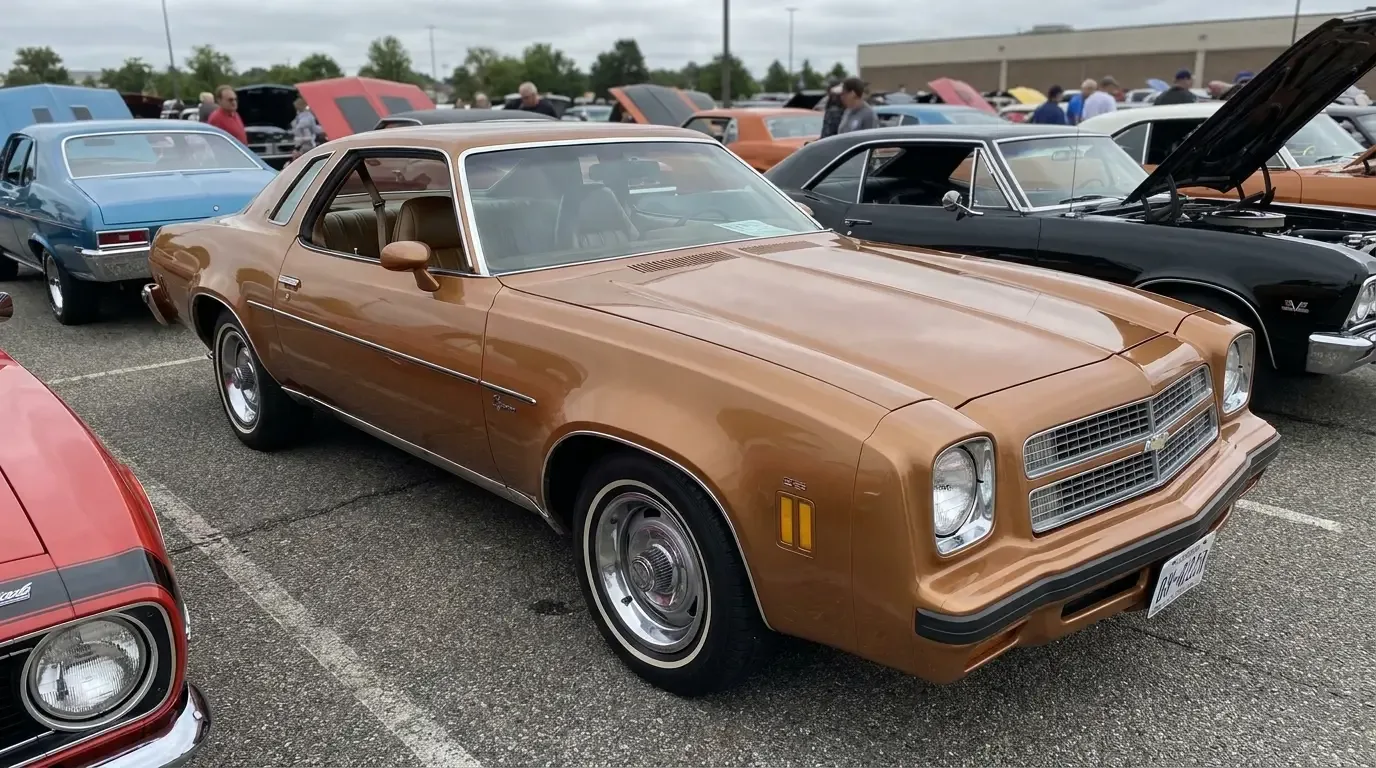
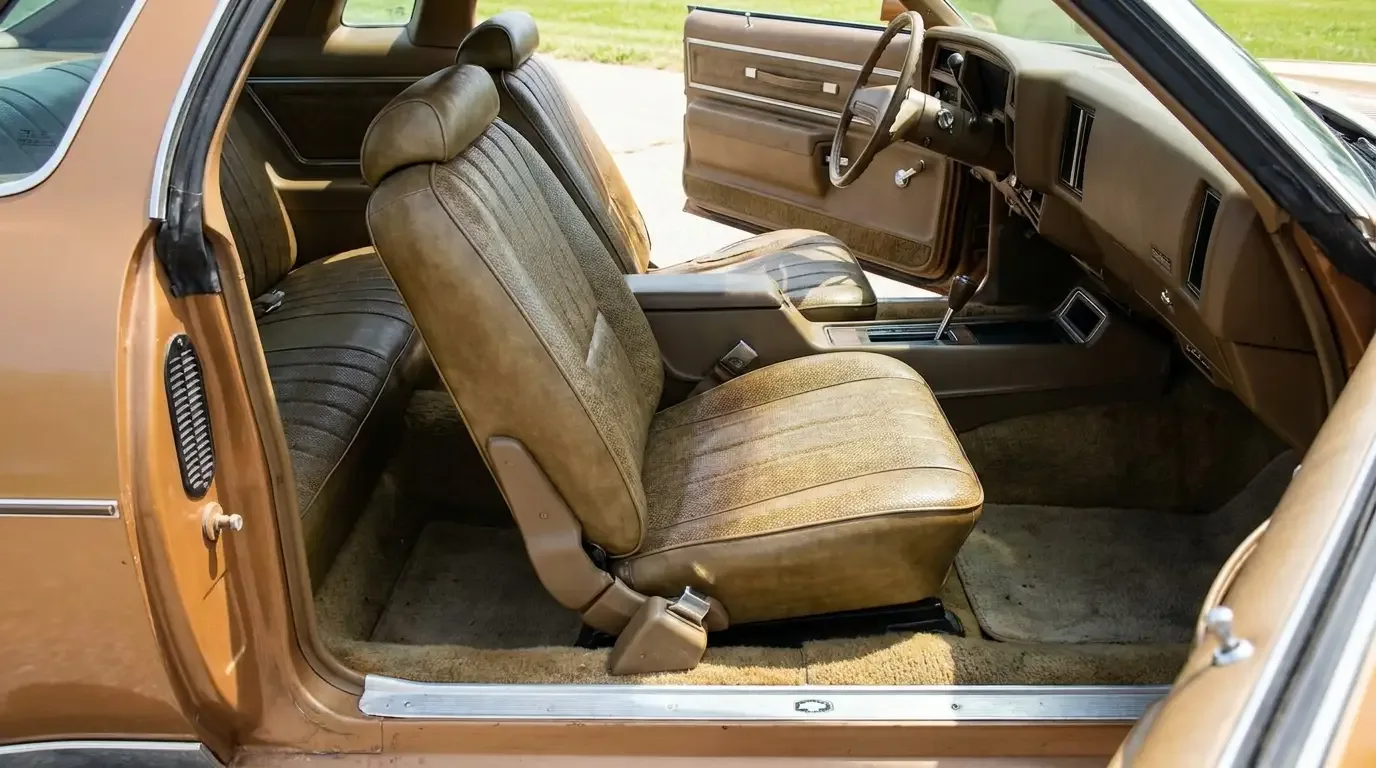
Look at the factory paperwork for a 1975 Laguna Type S-3 next to a base 1975 Laguna and the difference is more than a package code. By 1975, the S-3 wore a sharper, more sloped nose than the standard Laguna's rounded urethane cap, alongside sport bucket seats and console as standard equipment and styled wheels that set it apart at a glance. That sloped nose didn't arrive with the S-3 name in 1974, though. It showed up a year later, and the reason for it traces straight back to a superspeedway, not a design studio brainstorm.
History & Heritage
6 min read
Laguna Type S-3, 1974-1976
How the Chevelle Laguna Type S-3's sloped nose, bucket-seat interior, and NASCAR ties defined Chevrolet's sportiest Colonnade trim from 1974-1976.
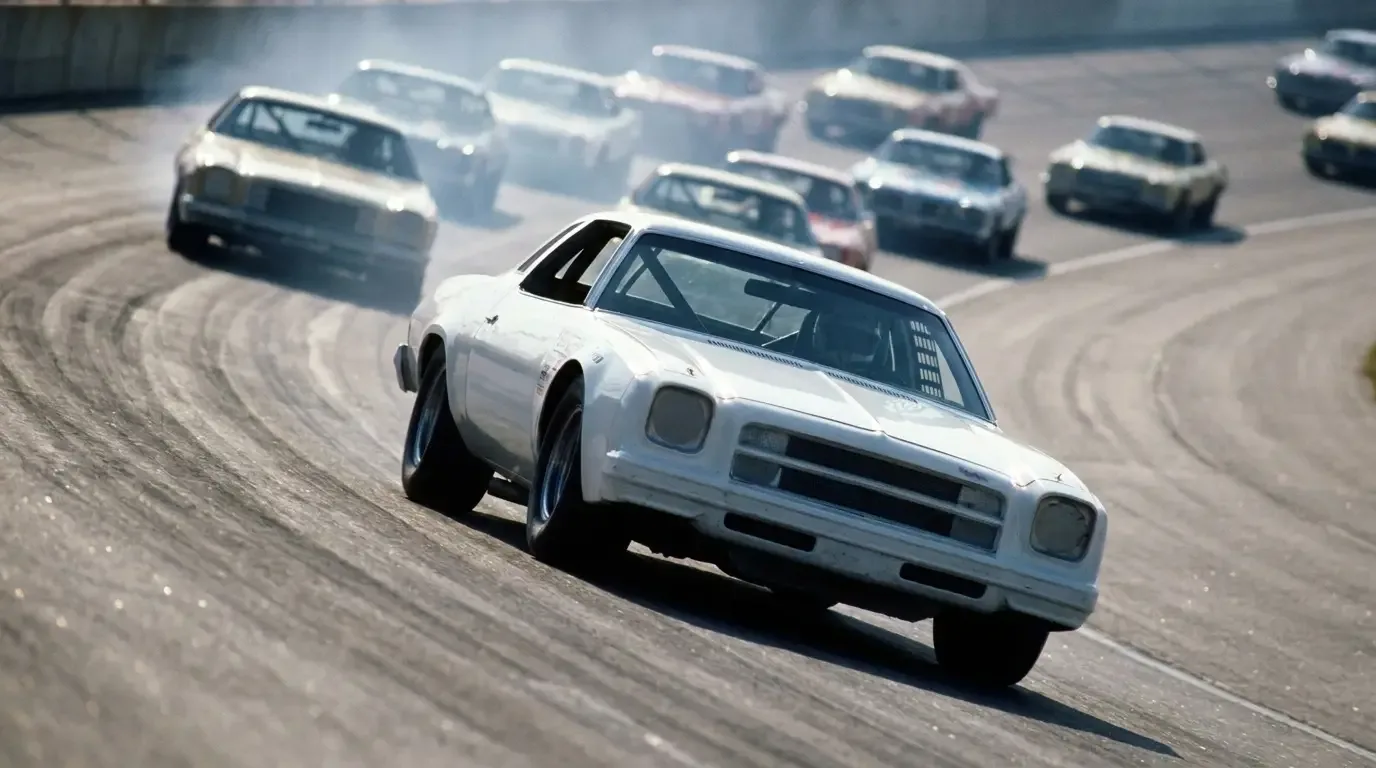
I've worked through enough of the documentation on this variant to say it's one of the more specific, purpose-built trims Chevrolet ever put on a Chevelle, and it gets far less attention than it earned.
What separated the s-3 from a standard laguna
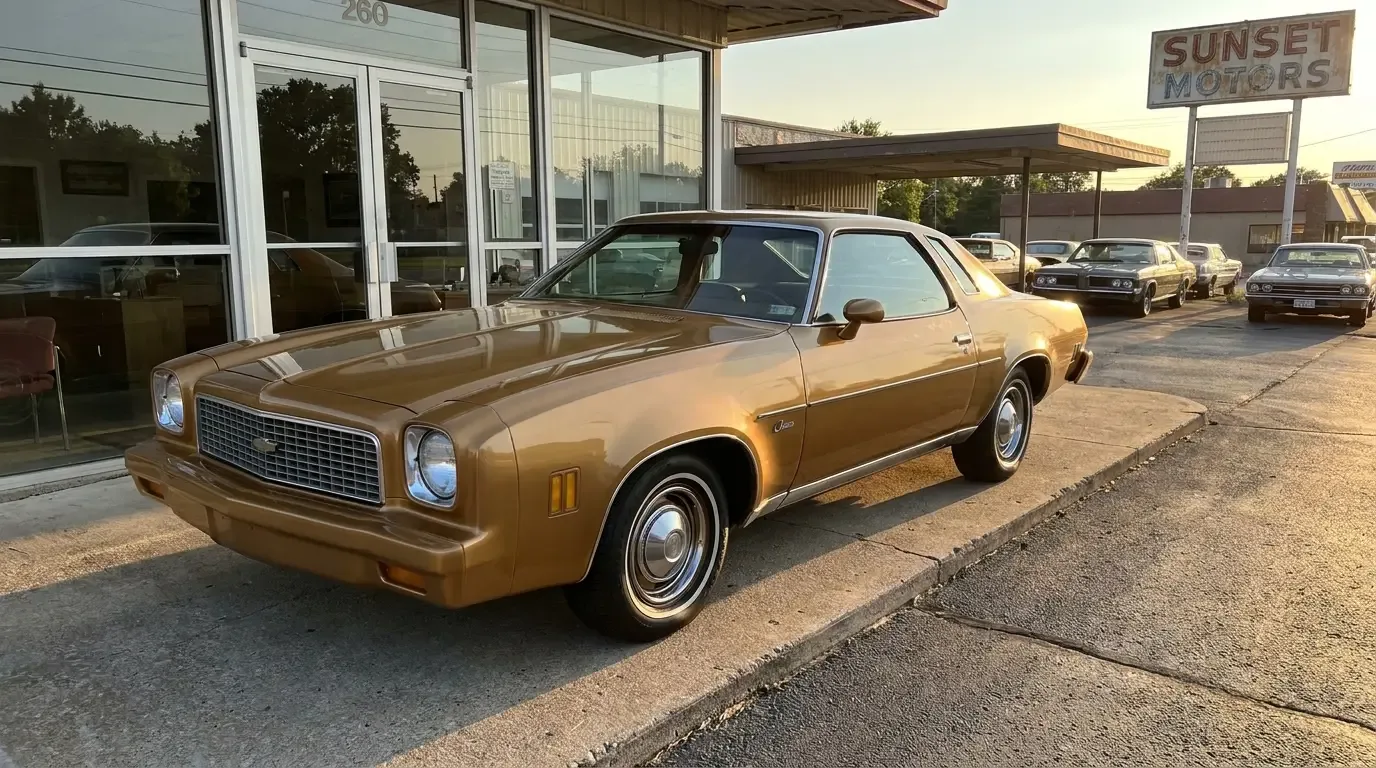
The Type S-3 package was introduced for the 1974 model year, and in its debut form it carried the same vertical urethane front end as the base Laguna, just with a revised grille and new parking lamp treatment, not yet the sloped aero nose people picture when they hear "S-3." Inside, though, the 1974 S-3 already added bucket seats with a center console as standard, where a base Laguna typically ran a bench seat, along with S-3-specific badging and available wheel trim upgrades. The sloped, more aggressively angled nose, the one actually driven by Chevrolet's NASCAR program, arrived with the 1975 update and carried into 1976. Mechanically, the S-3 shared its engine lineup with the rest of the 1974-1976 Chevelle line, no dedicated engine of its own, running from small-block V8s at the entry point up through the 400 small-block and the 454 big-block early in the run, though the 454 was phased out of the Chevelle lineup as emissions and fuel-economy pressure tightened through the mid-1970s.
| Year | Nose style | Standard S-3 interior |
|---|---|---|
| 1974 | Vertical urethane nose, shared with base Laguna, revised grille and parking lamps | Bucket seats, console |
| 1975-1976 | New sloped, aero-influenced urethane nose | Bucket seats, console, S-3 trim |
Why the nose got that sharp
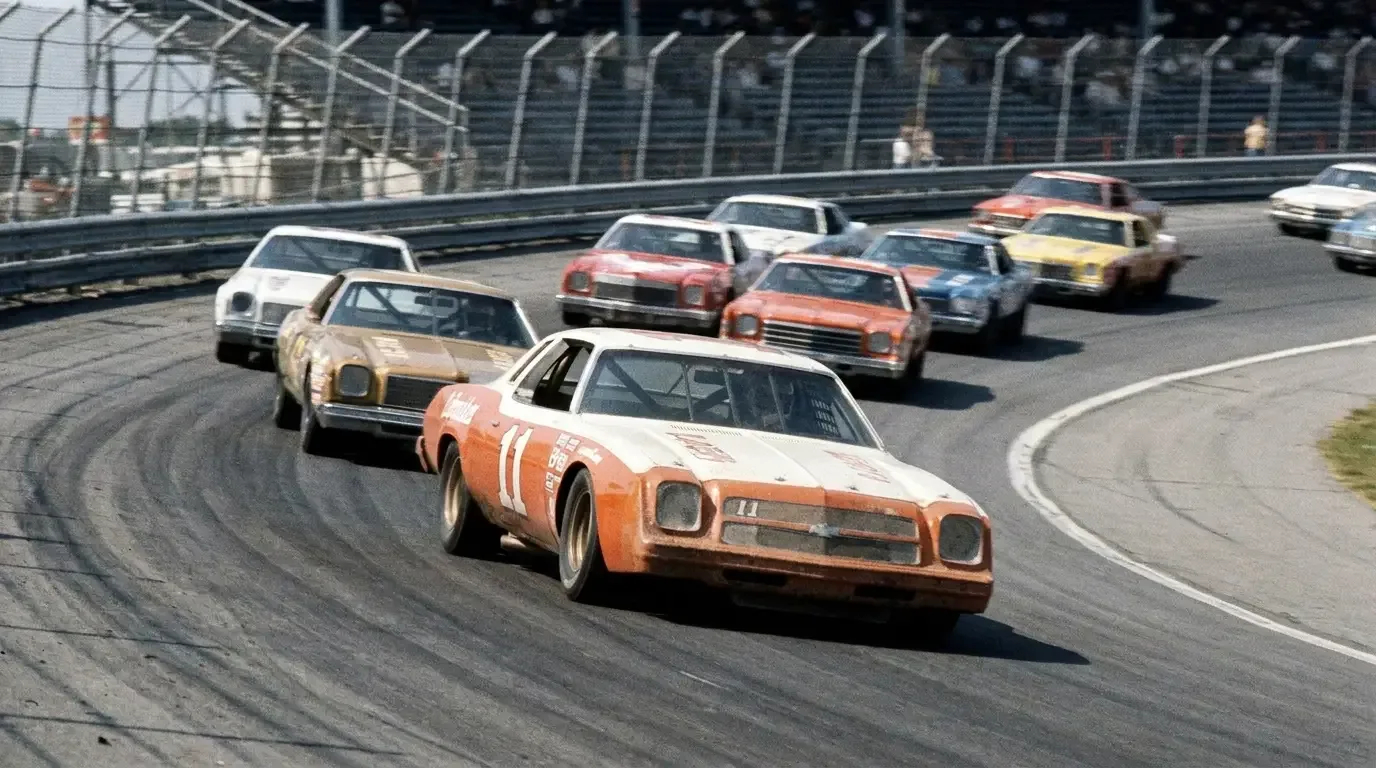
Chevrolet's NASCAR effort was running Colonnade-body Chevelles on the superspeedway circuit through the mid-1970s, and a blunter nose costs real lap time at 190 miles an hour in a way it never does on a street car. That's why the 1975 update brought the slanted, aero-influenced urethane fascia, along with small rear quarter windows and a fastback-style rear glass, giving the S-3 a real aerodynamic edge over other GM intermediate body styles at NASCAR's fastest tracks. Junior Johnson's team fielded the Laguna S-3 with driver Cale Yarborough, and that combination won 34 races and took the first two of Yarborough's three consecutive Winston Cup championships, in 1976 and 1977, before he moved to Oldsmobile for 1978. The production S-3's sharper nose wasn't identical to what ran on the track, homologation rules of the era didn't require that kind of one-for-one match the way earlier aero wars had, but the family resemblance between the street car's nose and what Chevrolet's racing partners were running is not a coincidence. Chevrolet wanted a nose shape it could point to as the same basic profile winning on Sunday, and it just took a year past the S-3's 1974 debut to get there.
Production reality versus reputation
The S-3 wasn't a limited or rare package in the way collectors sometimes assume. Chevrolet built it in real volume across 1974 through 1976 as one of several trim choices atop the Laguna line, and exact year-by-year S-3 production figures separate from base Laguna counts aren't reliably published in factory-sourced form, so treat any specific number you see quoted online with some skepticism until it's sourced back to an actual build sheet or RPO tally. What is clear from surviving cars and dealer literature is that the S-3 outsold niche performance packages from the same era by a wide margin, because it didn't ask buyers to give up daily usability, insurance rates, or fuel economy the way an SS-badged big-block would have just a few years earlier.
What to check if you're shopping one
The nose cap is the first thing to inspect on any S-3 today. Like the base Laguna's urethane front end, the S-3's sharper cap is prone to cracking and UV degradation over five decades, and a poorly repaired or ill-fitting reproduction panel will show up immediately to anyone who knows what the factory fit looked like. Beyond the nose, verify the interior trim tag matches an S-3 build rather than a base Laguna that's had bucket seats swapped in later, since the console and seat combination is easy to fake with parts-bin components from the same generation. A correctly documented S-3 with its original nose intact commands a real premium over an undocumented car wearing S-3 badging alone.
Wheels are worth a second look too. The S-3's available styled wheel options are frequently mismatched on cars that have changed hands several times over five decades, and a set of period-correct wheels that don't match the original RPO code on the build sheet, while not disqualifying on their own, should factor into what you're willing to pay. The same goes for the console. A base Laguna bench seat converted to bucket seats with an aftermarket or salvage-yard console will usually show mounting holes or wiring routing that doesn't quite match a factory S-3 installation, and that's the kind of detail a careful inspection under the console trim will reveal in a few minutes. None of these checks take long, but skipping them is how buyers end up overpaying for a car dressed to look like something it never was on the factory line.
"The S-3's nose looks like a styling flourish until you understand it came out of the same wind-tunnel and track-testing process that shaped the racing cars. Chevrolet didn't design that shape to look fast. They designed it because it was fast, and then they sold it."
Tom Ramirez
The S-3's interior package sets up naturally into one of the more overlooked comfort stories from this generation, and next: The Swivel Bucket Seats That Defined Colonnade Comfort picks up on the seating side of the Colonnade Chevelle in more depth. For the broader context of where the S-3 fits against the rest of the lineup, the Colonnade and Laguna years covers the full stretch of this generation year by year.
Sources and notes
- 1974-1976 Chevrolet Chevelle Laguna S-3: Specs & History: Moto Gallery1974 vertical nose vs. 1975-1976 sloped aero nose timeline.
- NASCAR Hero: 1974 Chevrolet Laguna S-3: MotoriousLaguna S-3 NASCAR development and racing record.
- Chevrolet Chevelle Laguna: WikipediaS-3 aero nose introduction and NASCAR aerodynamic advantage.
- Cale Yarborough: Wikipedia1976 and 1977 Winston Cup championships with Junior Johnson's Chevrolet.
- Cale Yarborough's Three-Peat: NASCAR Hall of Famechampionship years and manufacturer switch to Oldsmobile in 1978.
- CC TV: 1974 Chevrolet Laguna Type S-3: Curbside Classic1974 S-3 interior and trim package details.
Related Reading
Have a
Chevrolet Chevelle
for Sale?
Reach thousands of serious classic car collectors across the US.
Sell It Here →
Are You a Classic Car Dealer?
List your full inventory and connect with targeted classic car buyers.
Join as a Dealer →

About the author
Tom Ramirez
Corvette researcher and historian based in Bowling Green, Kentucky. Two decades documenting Corvette production history from original factory records.
Related Listings - Chevrolet Chevelle
More in History & Heritage
Comments
Be the first to comment on this article.