
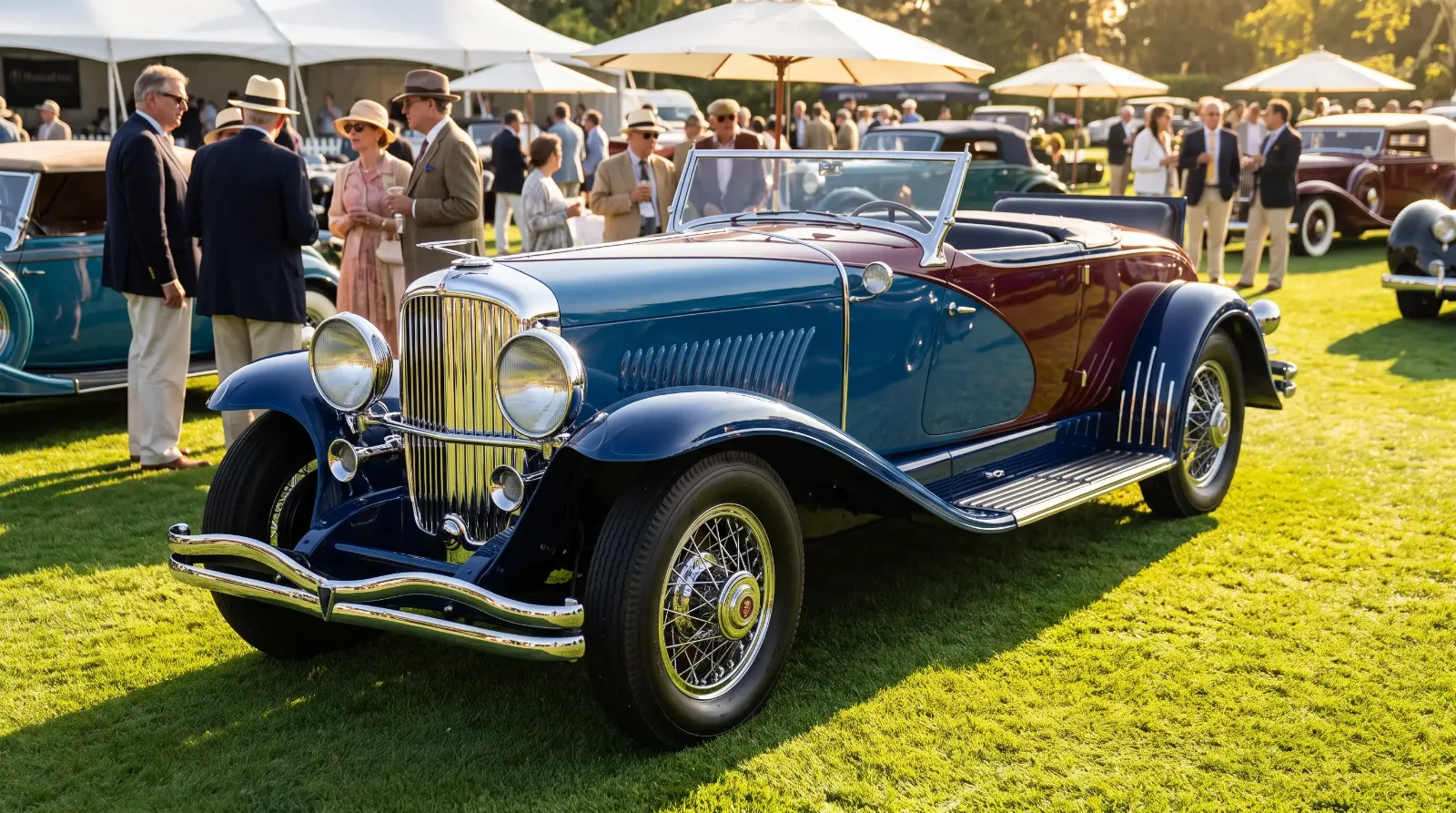
The American luxury car did not begin in a factory. It began in a carriage shop, in the decades before the automobile existed at all, when the families who would later commission a bespoke Duesenberg were still ordering broughams and phaetons from craftsmen who worked in ash, hickory, and hand-rubbed varnish. Understanding the great classic luxury car coachbuilders means starting there, in the Gilded Age workshops where the trade was learned. The cars came later. The skill came first.
History & Heritage
7 min read
The Gilded Age Origins of the American Coachbuilder
How Gilded Age carriage makers became the classic luxury car coachbuilders who shaped America's finest prewar automobiles.
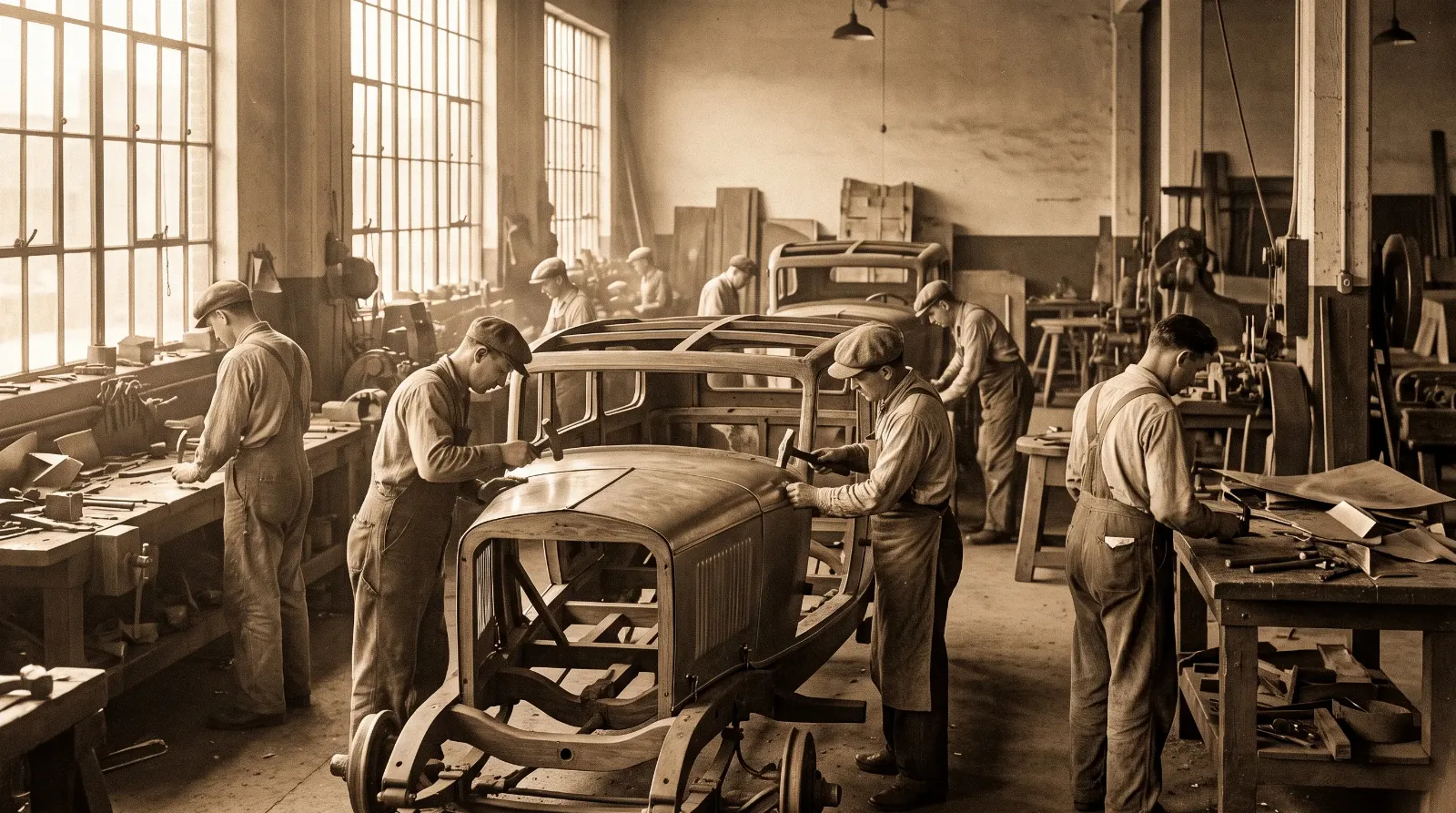
When you look at a coachbuilt body from the 1930s, you are looking at the end of a continuous line of craft that reaches back to the horse-drawn era. The word coachwork is not a marketing flourish. It is a literal description of where the people who built these bodies learned their trade.
The carriage trade that came before the car
By the late nineteenth century, the United States had a mature, competitive carriage industry. Firms like Brewster & Company, founded in 1810 and long established as the most prestigious name in American carriage building, served the same clientele that would later buy custom automobiles. Wealthy families did not shop for a carriage the way they bought furniture. They commissioned one. They chose the body style, the upholstery, the paint, the appointments, and they expected the finished vehicle to reflect their standing.
That relationship between a demanding patron and a skilled shop is the thing that mattered. The carriage builders understood proportion, line, and the way a body should sit on its running gear. They understood that a well-made vehicle was judged on the evenness of a painted surface and the fit of a door as much as on its comfort. When the automobile arrived, these were exactly the skills the new machines needed and the early manufacturers could not yet supply.
Why early cars needed the coachbuilder
The first automobile manufacturers sold a chassis. The engine, the frame, the running gear, and often little more left the works as a rolling platform. What went on top was frequently left to a separate body shop, and for an expensive car that shop was a coachbuilder. This division of labor was not unusual. It was the normal way a luxury automobile came into being through the 1910s and well into the 1920s.
A buyer of means would purchase a bare chassis from a maker such as Packard or Pierce-Arrow, then take it to a coachbuilder to have a body designed and fitted. The result was a car that existed in a single example, or in a small run, tailored to the owner. This is the practice that produced the finest work of the classic era, and it is the reason two cars on the same chassis could look, and cost, entirely different. If you want the full arc of how this trade shaped the segment, it runs through the complete history of the classic luxury car.
The American shops that made the transition
Not every carriage builder survived the shift to the automobile. The ones that did tended to be the shops with the deepest craft and the best client relationships. Several names carried directly from the horse-drawn era into the age of the motorcar.
| Coachbuilder | Base | Roots | Known for |
|---|---|---|---|
| Brewster & Co. | New York | Carriage maker from 1810 | Rolls-Royce America bodies, town cars |
| Derham | Rosemont, Pennsylvania | Founded 1887 | One of the longest-surviving custom shops |
| J.B. Judkins | Merrimac, Massachusetts | Carriage maker from the 1850s | Formal closed bodies, Lincoln coupes |
| Brunn & Co. | Buffalo, New York | Founded 1908 | Lincoln and Packard formal bodies |
Each of these shops brought the carriage tradition of individual commission into the automotive world. A Judkins body and a Brunn body were not interchangeable. They reflected different house styles, different ideas about proportion, and different clienteles. That variety is part of what makes surviving coachbuilt cars worth studying so closely today, and it is the subject that opens up in the complete classic luxury car story.
The craft behind the finish
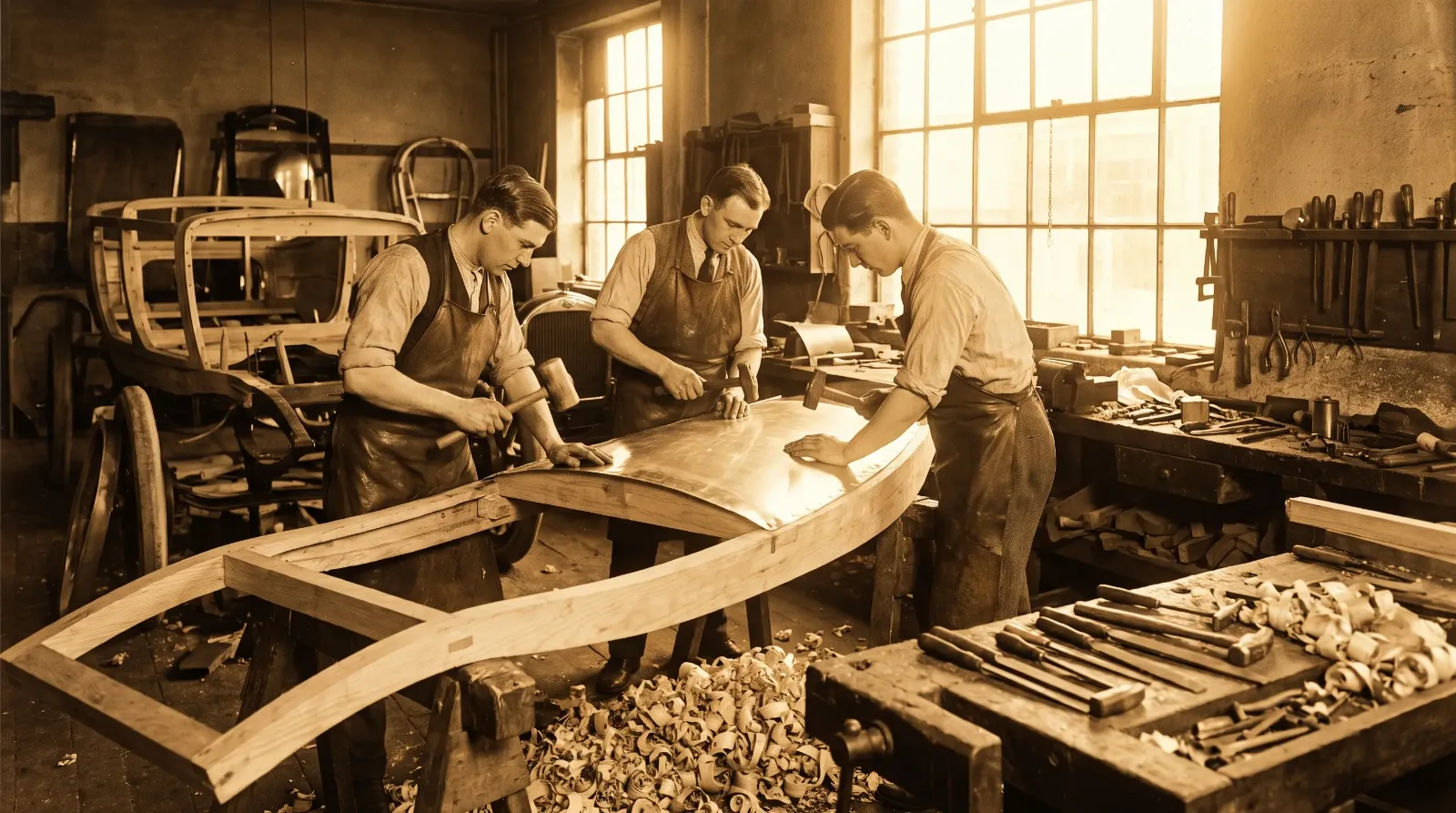
The work itself was slow and largely done by hand. A body was built up over a wooden frame, panels were formed and fitted, and the paint process alone could involve many coats applied and rubbed down over weeks. There was no shortcut. The evenness that a good coachbuilt car shows on close inspection, the way a fender flows into a running board without a break, came from labor that mass production could not replicate.
"The seam you cannot find is the one that took the longest to make. Coachbuilt quality lives in the details a photograph flattens and only the hand can feel."
Sarah Whitfield
This is why originality matters so much in these cars now. A coachbuilt body that retains its original construction, its original wood framing, and ideally its original upholstery is a document of a vanished way of working. Restoration can return the appearance. It cannot always return the evidence of how the thing was first made.
The materials themselves tell part of the story. Bodies were framed in seasoned hardwood, most often ash, chosen for the way it holds a curve and takes a fastening. Over that frame went hand-formed metal panels, and over the metal went a paint process that had more in common with fine furniture than with anything a modern spray booth does. Color, in the earliest years, was often achieved with tinted varnishes built up and rubbed back by hand. A single body could occupy a shop for weeks before it was ready to leave.
The clientele that sustained the craft
None of this would have existed without the buyers. The Gilded Age concentrated wealth in a small number of families to a degree the country had not seen before, and those families expected their possessions to signal status through quality rather than volume. A custom carriage, and later a custom automobile, was as much a statement as a townhouse or a yacht. The coachbuilder existed to serve that expectation, and the relationship was personal. A shop knew its clients, their tastes, and often their previous vehicles.
When the automobile displaced the carriage, that clientele carried straight over. The same families who had commissioned a Brewster carriage now commissioned a Brewster automobile body, and they brought the same standards and the same willingness to pay for them. The market for bespoke luxury did not have to be invented for the car. It was inherited from the carriage era intact.
From workshop to golden age
By the 1920s the groundwork laid in the Gilded Age was ready to produce its finest results. The shops had the skills, the wealthy market had matured, and the great American chassis makers were building platforms worthy of the best bodywork. What followed was the period most collectors think of first when they picture the classic luxury car, and it belongs to a smaller group of celebrated firms. That chapter continues in next: The Golden Age of American Coachbuilders.
The carriage makers who made the leap deserve more credit than they usually get. They were not just early suppliers. They were the reason the American luxury car had a standard to reach for in the first place.
Related Reading
Have a
Classic Car
for Sale?
Reach thousands of serious classic car collectors across the US.
Sell It Here →
Are You a Classic Car Dealer?
List your full inventory and connect with targeted classic car buyers.
Join as a Dealer →

About the author
Sarah Whitfield
Third-generation classic car collector specializing in pre-war American and European coachbuilt automobiles. Researcher and concours enthusiast.
More in History & Heritage
Comments
Be the first to comment on this article.