
A friend of mine keeps a 1977 Lincoln Continental Mark V in a barn outside Franklin, and every time I visit he opens the door with the same line: "Two doors, six seats of leather, and it still turns like a parade float." He loves it precisely because it makes no sense. That car was never about corners or lap times or hauling the family. It was about arriving. And for roughly a quarter century, that idea, arriving in style behind a long hood and a short roof, was one of the most profitable ideas in the American auto industry.
History & Heritage
6 min read
The Personal Luxury Coupe Era: Eldorado and Continental Mark
The personal luxury coupe era gave America the Eldorado, Riviera, and Continental Mark. How the long-hood two-door became a status symbol.
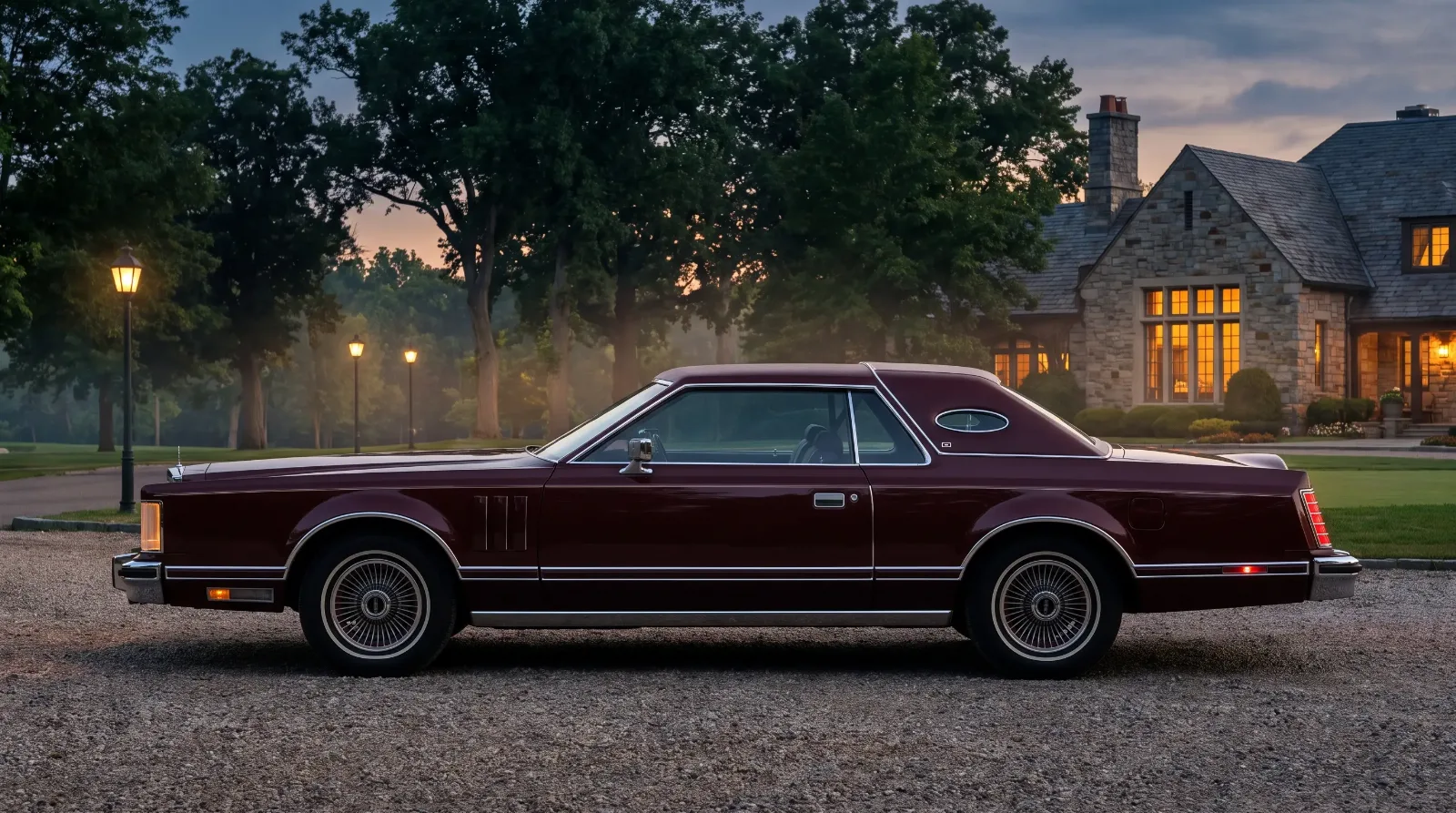
The personal luxury coupe was a specific American answer to a specific American want. Not a sports car, not a limousine, but a big, comfortable, expensive two-door meant for one or two people who wanted to be seen in it. To understand where it fits, it helps to know the story so far, because this segment grew straight out of the postwar luxury boom.
Where the idea started
You can argue about the first one, and people do. The 1953 Cadillac Eldorado gets a vote. So does the 1956 Continental Mark II, a hand-assembled coupe that Ford's revived Continental Division priced around ten thousand dollars, roughly the cost of a Rolls-Royce at the time. Only about three thousand were built across 1956 and 1957, and Ford is said to have lost money on every one. It was a halo car, meant to prove Ford could build something exquisite, and it did.
But the car that turned the idea into a business was the Ford Thunderbird. The two-seat 1955 through 1957 cars are the ones everybody photographs. The one that mattered commercially was the four-seat 1958 "Squarebird," which sold far better and showed Detroit there was real money in a stylish personal car with a back seat nobody actually needed.
The names that defined it
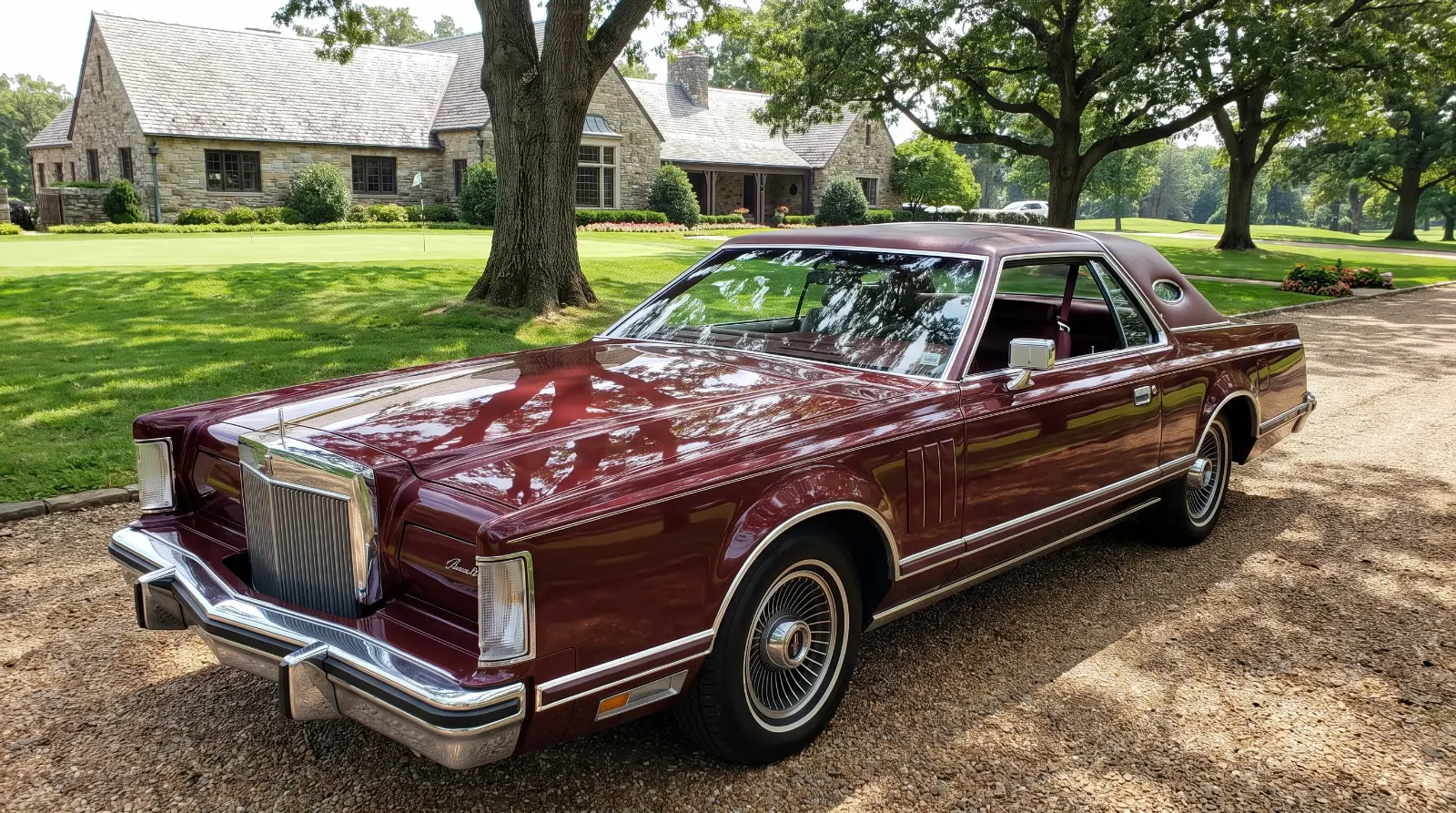
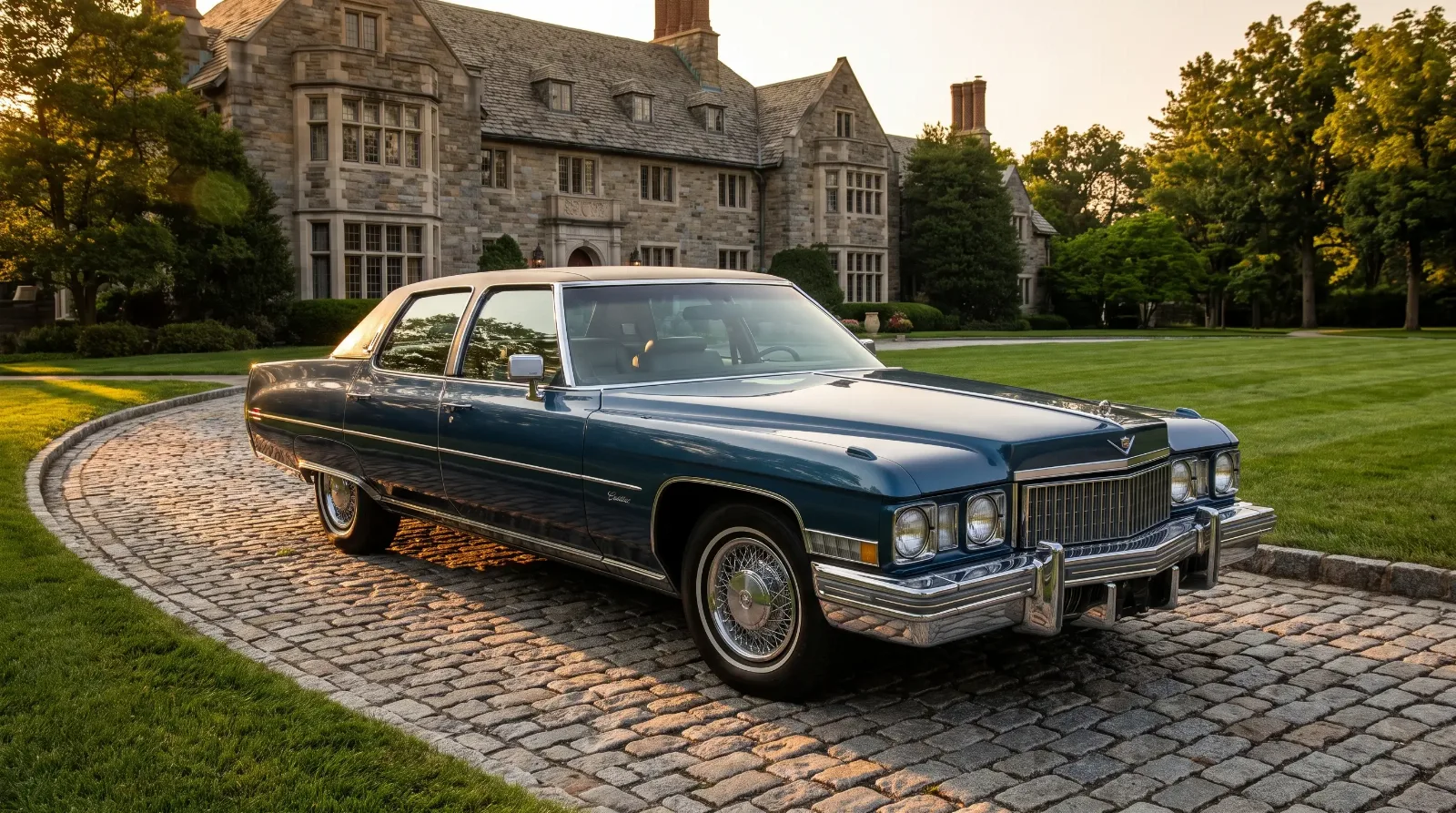
Once the template was proven, the big divisions poured into it. The 1963 Buick Riviera arrived as a clean, tailored coupe that still turns heads at any show field. The 1966 Oldsmobile Toronado brought front-wheel drive to the format, and the 1967 Cadillac Eldorado followed with front-drive of its own, sharing much under the skin with the Toronado while wearing an unmistakably Cadillac suit.
On the Lincoln side, the Continental Mark series became the standard-bearer. The Mark III of 1969 revived the personal-luxury idea on a shortened Thunderbird platform, the Mark IV followed in 1972, and the Mark V of 1977 pushed the long-hood proportions about as far as anyone dared. These were the cars that filled country club parking lots. If you want to see how the surviving examples trade today, browse the classic luxury cars for sale and watch how the clean Marks and Eldorados hold their own.
Why people actually bought them
Here is the thing the spec sheets never captured. Nobody bought a personal luxury coupe for practicality. A four-door sedan did everything better, from rear-seat room to trunk access. What the coupe offered was a feeling. You sat lower and farther back, the hood stretched out ahead of you like a runway, and the whole car said you had arrived somewhere in life without your having to say a word.
I talked to a retired dealer once who sold Cadillacs through the 1970s. He told me the Eldorado buyers were rarely young. They were people who had worked forty years and finally decided they had earned something impractical. That, more than any horsepower figure, is what the segment ran on. It sold self-image, and it sold it beautifully.
There was a design logic to all of it, too. The formula was remarkably consistent from one make to the next. A long hood implied a big engine and old-money restraint. A short, formal roof kept the cabin intimate, almost private. Hidden headlamps, a stand-up grille, and an upright rear window signaled money without shouting. Designers understood they were selling a silhouette you could recognize from a block away, and buyers understood they were buying that recognition. When Lincoln offered the Mark series in designer editions tied to fashion houses, it was simply making the status content explicit.
"I've stood in a lot of parking lots at a lot of shows, and nothing pulls a crowd like a clean Mark V or a triple-black Eldorado. People don't walk up to talk about the engine. They walk up to remember who owned one."
Patrick Walsh
The peak and the numbers
The format hit its high-water mark in the middle and late 1970s, when the coupes were at their longest and heaviest. A 1976 Cadillac Eldorado or a Continental Mark V was an enormous automobile, well over eighteen feet long, with a two-door body wrapped around a cabin sized for a much smaller car. That excess was the whole point. Buyers wanted maximum presence, and Detroit was happy to sell it to them by the yard.
| Car | Debut year | Notable trait |
|---|---|---|
| Continental Mark II | 1956 | Hand-built halo coupe, ~3,000 made |
| Ford Thunderbird (4-seat) | 1958 | Proved the market commercially |
| Buick Riviera | 1963 | Clean, tailored styling |
| Oldsmobile Toronado | 1966 | Front-wheel drive |
| Cadillac Eldorado (FWD) | 1967 | Front-drive personal Cadillac |
| Lincoln Continental Mark V | 1977 | Peak long-hood proportions |
What ended the party
The thing that killed the format was not taste. It was fuel. When gas prices spiked and the government began mandating economy, an eighteen-foot two-door built for presence became exactly the wrong car to be seen in. The coupes shrank, then faded, and the buyers who once wanted a Mark V drifted toward imported sedans that sold status a different way.
The personal luxury coupe left behind some of the most collectible American cars of the era, precisely because they are so unapologetically of their time. The next turn in the story is the one that forced them to change, and it starts with a shortage at the pump. That is next: The 1973 Oil Crisis and the Downsizing of American Luxury, where the whole idea of bigger-is-better ran headfirst into a fuel line.
Related Reading
Have a
Classic Car
for Sale?
Reach thousands of serious classic car collectors across the US.
Sell It Here →
Are You a Classic Car Dealer?
List your full inventory and connect with targeted classic car buyers.
Join as a Dealer →
#luxury car history
#personal luxury coupe
#Cadillac Eldorado
#Lincoln Continental Mark
#Buick Riviera
#1970s cars

About the author
Patrick Walsh
Automotive journalist covering classic car shows, events, and the enthusiast community across North America.
More in History & Heritage
Comments (1)
H
Hugo R.
3 days ago
hidden headlamp doors stuck on a '67 Eldorado, check the vacuum lines first. easy fix