
The American luxury car of the early 1950s was still sold on quietness, ride, and coachwork. Power was assumed, rarely advertised. Within a decade that had changed completely. By the late 1950s the men who ran Cadillac, Lincoln, and Chrysler's Imperial were watching each other's advertised horsepower figures the way they once watched wheelbase and interior fittings. The luxury car horsepower race of the 1950s and early 1960s was not a sideshow to the muscle car era that followed. It came first, and it set the terms.
History & Heritage
6 min read
The 1950s-60s Luxury Car Horsepower Race
How the luxury car horsepower race of the 1950s pushed Cadillac, Chrysler, and Lincoln into a cubic-inch war before the muscle era began.
What makes the period interesting is how quickly a genteel market turned competitive. The engineering that drove it, the overhead-valve V8, arrived at the top of the market before it reached the middle. If you want to understand where the American obsession with cubic inches began, this is the chapter, and it fits neatly into how the segment got here.
The overhead-valve V8 changes everything
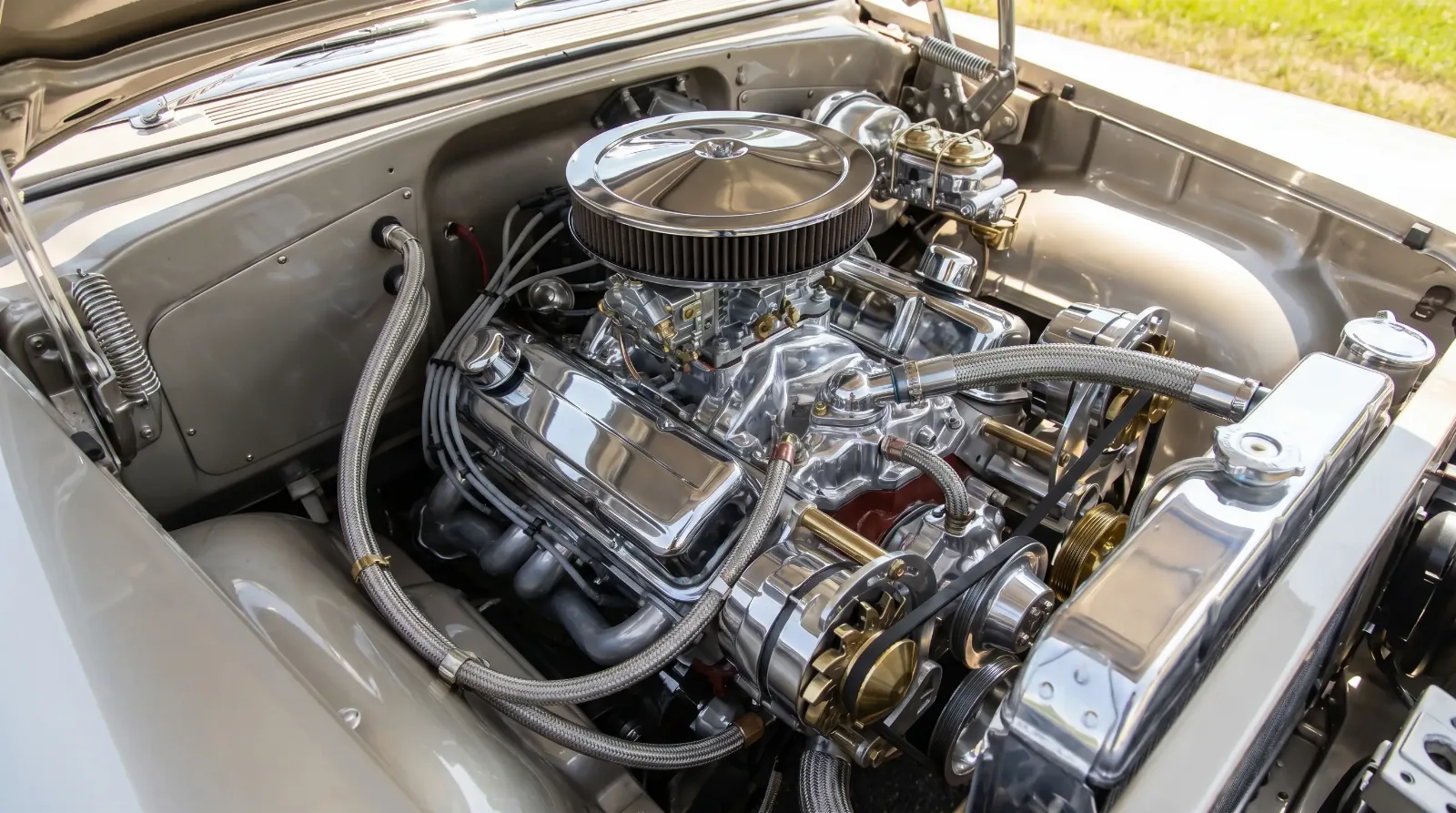
Cadillac and Oldsmobile introduced modern overhead-valve V8 engines for the 1949 model year. Cadillac's was a 331-cubic-inch unit rated at 160 horsepower. That number reads as modest now. At the time it was a genuine break, because the new short-stroke, high-compression design could be enlarged and tuned in ways the old flathead engines could not. The architecture had headroom, and every engineer in Detroit knew it.
The significance was not the 1949 figure. It was the trajectory it made possible. A 331 that made 160 horsepower could, with more displacement and better breathing, make a great deal more without a clean-sheet redesign. Cadillac spent the next fifteen years proving exactly that, and its rivals had no choice but to follow or look slow in the showroom.
Chrysler answers with the Hemi
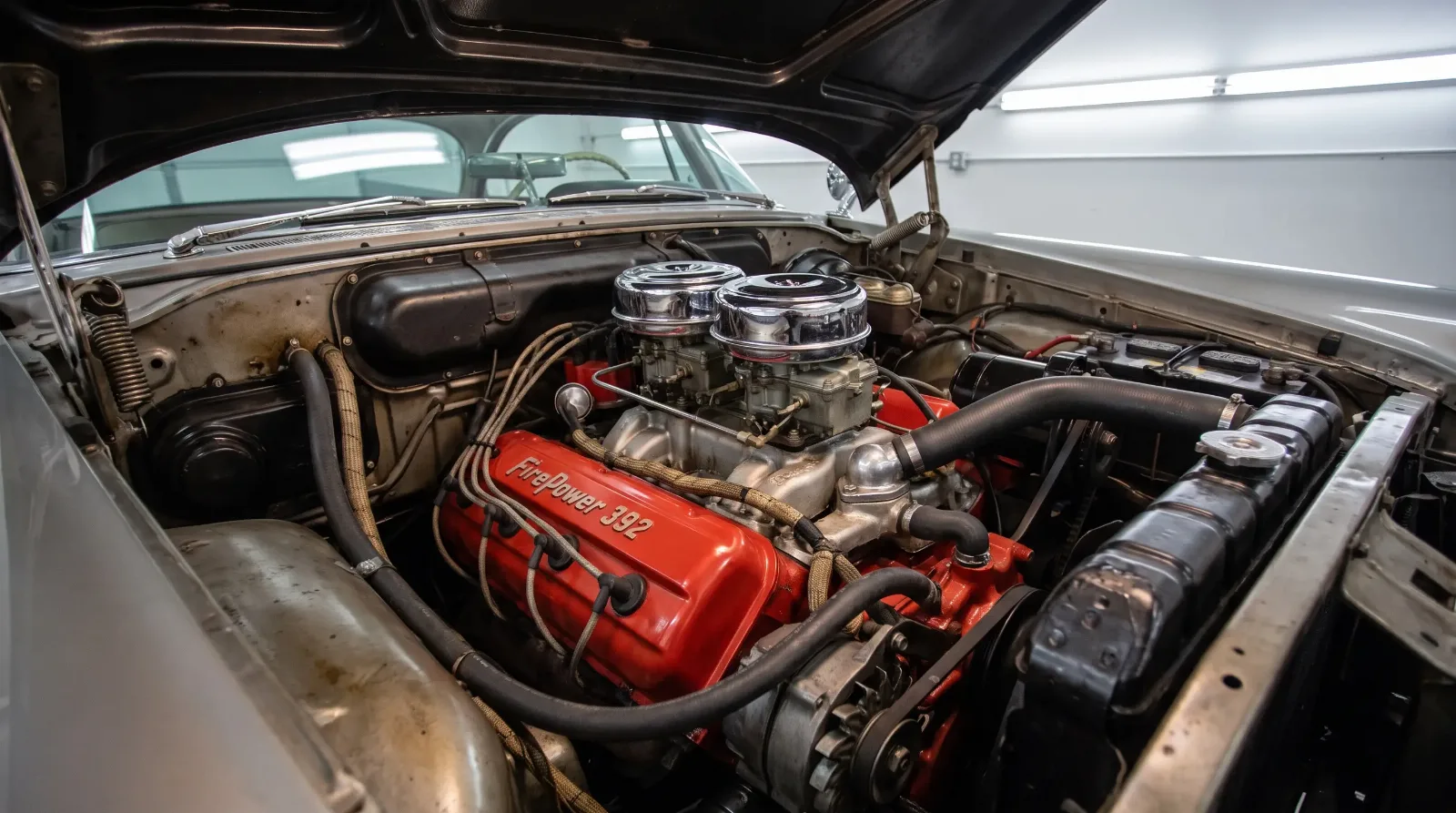
Chrysler's response arrived for 1951 in the form of the FirePower V8, the first of the hemispherical-head engines. Displacing 331 cubic inches like the Cadillac, it was rated at 180 horsepower thanks to the breathing advantage of its combustion chamber design. The Hemi was heavier and more expensive to build, which mattered to accountants, but it made power the way few production engines of the era could.
For a luxury division this was a statement. Chrysler had not historically out-muscled Cadillac. Now it had an engine that, on paper and on the road, could. The Hemi found its way into the Imperial and, more famously, into the letter-series Chrysler 300 later in the decade. The hemispherical head was not a marketing gimmick. It was a real, if costly, engineering advantage.
Packard and Lincoln join late
Not every luxury make kept pace. Packard, the most respected American luxury marque of the prewar years, was still building smooth inline-eight engines into the mid-1950s while Cadillac and Chrysler had gone to V8s. Packard finally introduced its own overhead-valve V8 for 1955, a 352-cubic-inch design, with the top Caribbean tune rated around 275 horsepower. It was a capable engine. It arrived too late to save the company, which had already lost its independent footing.
Lincoln moved earlier and more successfully. Its overhead-valve V8 appeared for 1952, and by 1958 Lincoln fielded a 430-cubic-inch V8 rated near 375 horsepower in a very large, very heavy car. Lincoln's approach was displacement over finesse, which suited the scale of the cars. The lesson of the decade was that a luxury division without a competitive V8 was a luxury division in trouble, and the market did not wait for stragglers.
"What strikes me looking back is how fast the vocabulary changed. In 1950 a luxury buyer asked about the ride and the upholstery. By 1958 he was reading horsepower ratings off the brochure like a stock quote."
Sarah Whitfield
The Chrysler 300 and the cubic-inch war
The letter-series Chrysler 300 was the clearest expression of the whole contest. The 1955 C-300 offered 300 horsepower. The 1956 300B raised the top figure into the mid-300s from a 354-cubic-inch Hemi, and the 300B is often cited as reaching the symbolic mark of one horsepower per cubic inch in its highest tune. The 1957 300C moved to a 392-cubic-inch Hemi rated as high as 390 horsepower in optional form.
Cadillac answered with displacement of its own, growing to 365 cubic inches in 1956 and to 390 by 1959, when the Eldorado's triple-two-barrel setup was rated around 345 horsepower. The exact ratings varied by year and option, and period gross figures should be read as gross, not the net numbers used later. Still, the direction was unmistakable. Each division pushed the other, and the numbers climbed year over year.
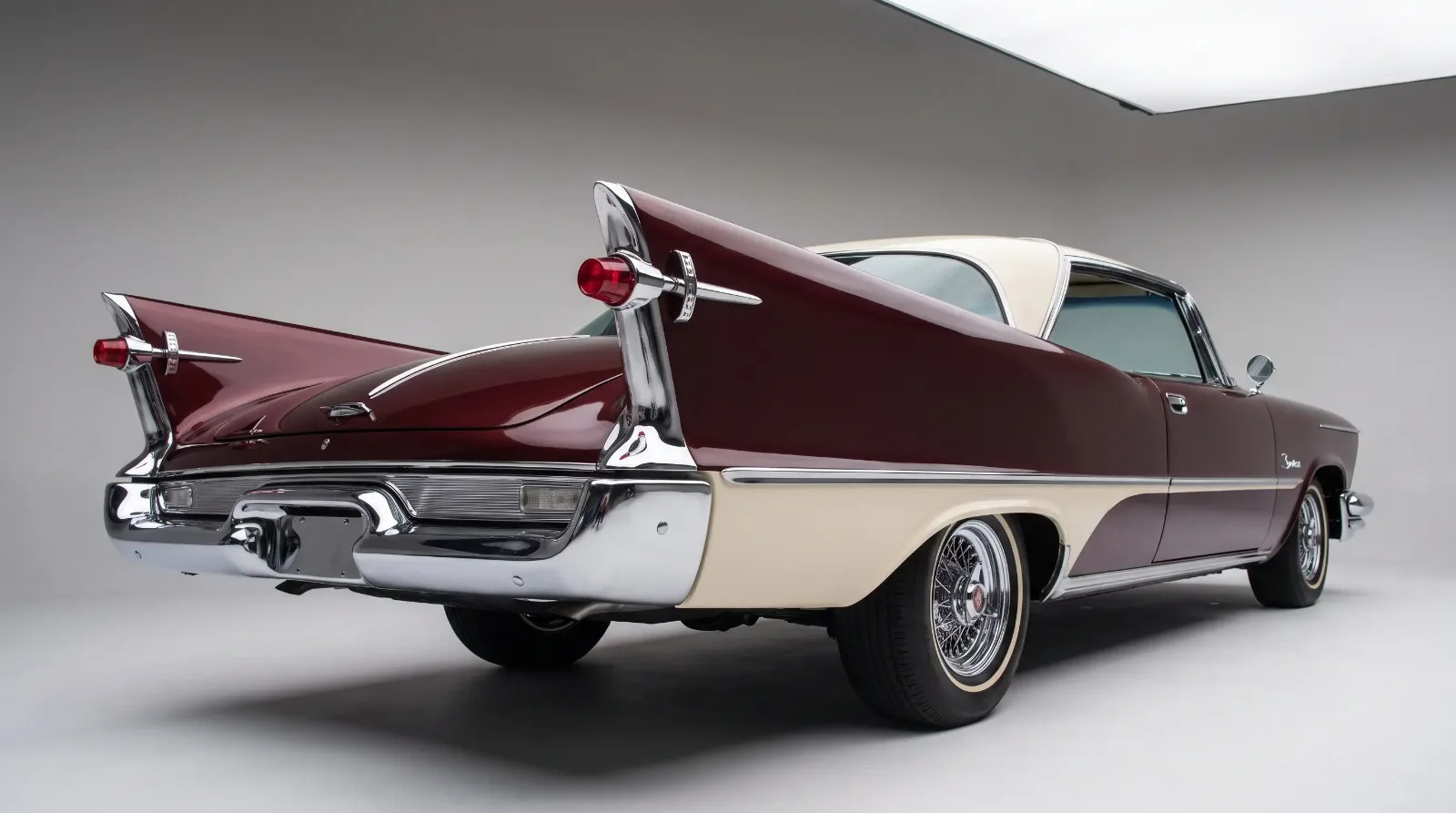
It is worth being precise about what these figures did and did not mean. Advertised gross horsepower was measured on a test stand without the accessories, exhaust restrictions, and belt drives a running car actually carried. A 1959 Cadillac rated at 345 gross made meaningfully less at the wheels. That caveat aside, the ratings served a real purpose in the showroom, where a salesman could point to a bigger number than the marque across the street. Imperial, Chrysler's separate luxury division after 1955, played the same game with Hemi power, so the fight was genuinely three-cornered at the top of the market rather than a simple Cadillac-versus-Chrysler duel.
| Engine / car | Approx. year | Displacement | Advertised hp (gross) |
|---|---|---|---|
| Cadillac OHV V8 | 1949 | 331 cu in | ~160 |
| Chrysler FirePower Hemi | 1951 | 331 cu in | ~180 |
| Chrysler C-300 | 1955 | 331 cu in Hemi | ~300 |
| Lincoln V8 | 1958 | 430 cu in | ~375 |
| Cadillac Eldorado | 1959 | 390 cu in | ~345 |
Where the numbers landed by the mid-1960s
By the early 1960s the pace of the advertised-horsepower fight cooled at the very top of the market, even as displacement kept creeping upward. Cadillac settled into a pattern of large, smooth, torque-rich V8s rather than headline peak-power figures, and the raw horsepower contest migrated downmarket into the intermediate and full-size performance cars that would define the muscle era. The luxury makes had, in a sense, made their point and moved on.
The legacy sits in the cars themselves. A late-1950s Cadillac or a letter-series Chrysler 300 carries the fingerprints of a specific competitive moment, when a quiet market briefly turned into a numbers contest. Collectors prize the letter cars in particular for exactly that reason. If you follow the thread forward, the next turn is the coupe, and it leads straight into next: The Personal Luxury Coupe Era, where style rather than horsepower became the selling point.
Related Reading
Have a
Classic Car
for Sale?
Reach thousands of serious classic car collectors across the US.
Sell It Here →
Are You a Classic Car Dealer?
List your full inventory and connect with targeted classic car buyers.
Join as a Dealer →

About the author
Sarah Whitfield
Third-generation classic car collector specializing in pre-war American and European coachbuilt automobiles. Researcher and concours enthusiast.
More in History & Heritage
Comments
Be the first to comment on this article.