
In October 1973, in response to the Yom Kippur War, the Arab members of OPEC declared an oil embargo against the United States and several other nations. Within months the price of crude roughly quadrupled, gas lines formed across the country, and the fundamental math of the American luxury car changed overnight. A segment built on displacement, weight, and sheer size suddenly looked like a liability. What followed was the most significant repackaging of American luxury in the postwar period, and you can trace its effects in collector values today.
History & Heritage
5 min read
The 1973 Oil Crisis and the Downsizing of American Luxury
How the 1973 oil crisis and CAFE rules forced the downsizing of American luxury cars, from the 1977 Cadillac to the bustleback Seville.
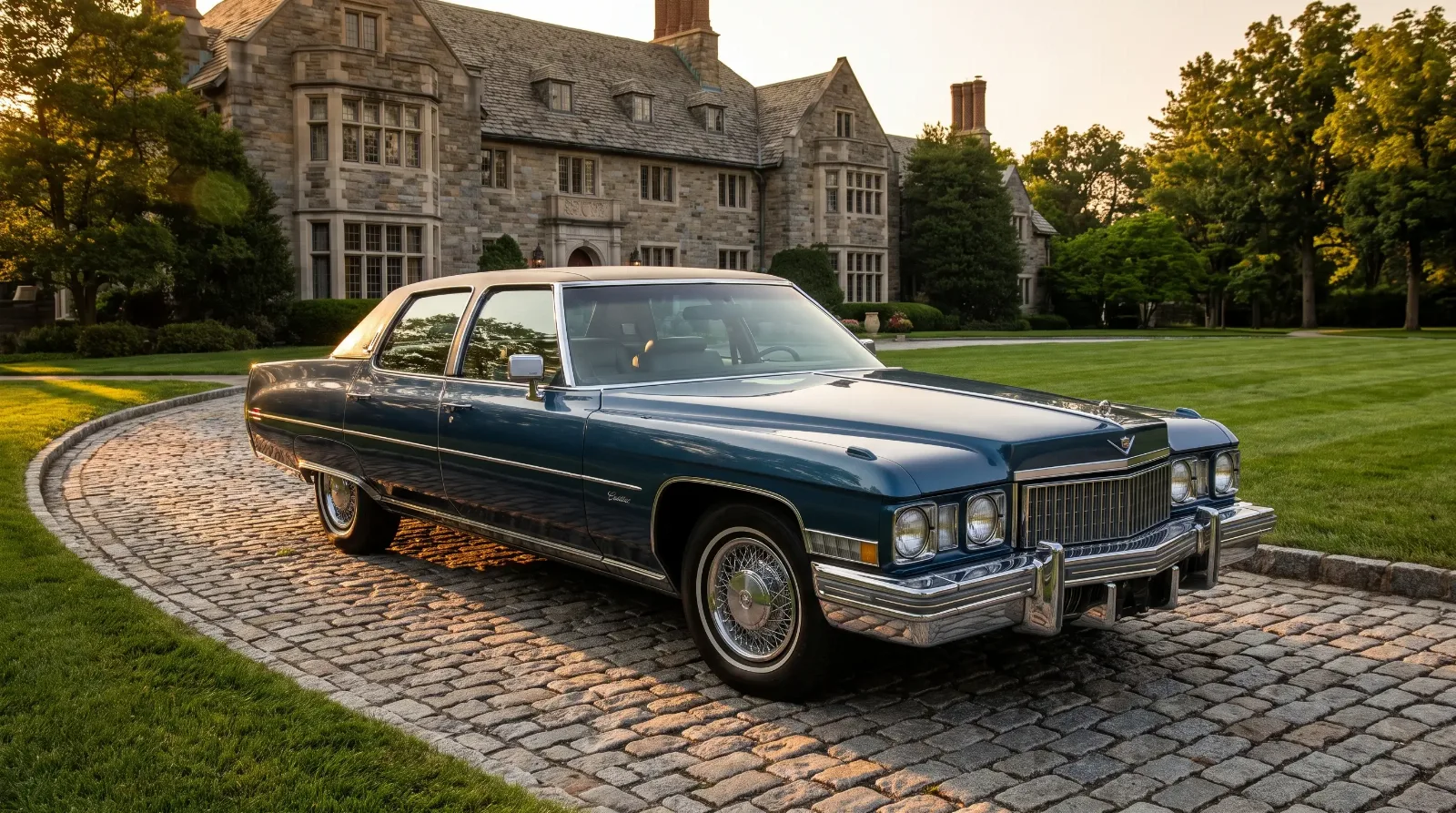
The downsizing that came out of the 1970s was not a styling fad. It was a forced response to fuel economics and, soon after, federal regulation. If you want the wider arc, this chapter connects directly to the complete history of the classic luxury car, but the short version is simple. The rules of the game were rewritten between 1973 and 1980.
The shock and its immediate math
Before the embargo, a Cadillac buyer thought about ride and prestige, not miles per gallon. A full-size 1973 Cadillac could weigh well over 5,000 pounds and carry a 472 or 500-cubic-inch V8 returning single-digit fuel economy in city driving. That was a feature, not a flaw, right up until fuel became scarce and expensive.
The embargo itself was lifted in March 1974, but the price shock stuck. Just as important, Congress passed the Energy Policy and Conservation Act in 1975, which created Corporate Average Fuel Economy standards that began phasing in for the 1978 model year. From that point forward, an automaker's product plan had to hit a fleet fuel-economy target. Large, thirsty luxury cars dragged that average down, and every one sold made the math harder.
There was a second regulatory pressure running alongside fuel economy. Federal emissions rules tightened through the same period, and the 1975 model year brought the catalytic converter and a shift to unleaded fuel across most of the industry. Early emissions tuning strangled power, so the same big-block V8s that had made 350 or more gross horsepower a few years earlier were now producing net figures that looked embarrassing on paper. A luxury buyer in 1975 was paying more at the pump for a car that was also slower than its predecessor. That combination did more to undermine the appeal of the traditional full-size luxury car than any single price spike.
General Motors moves first
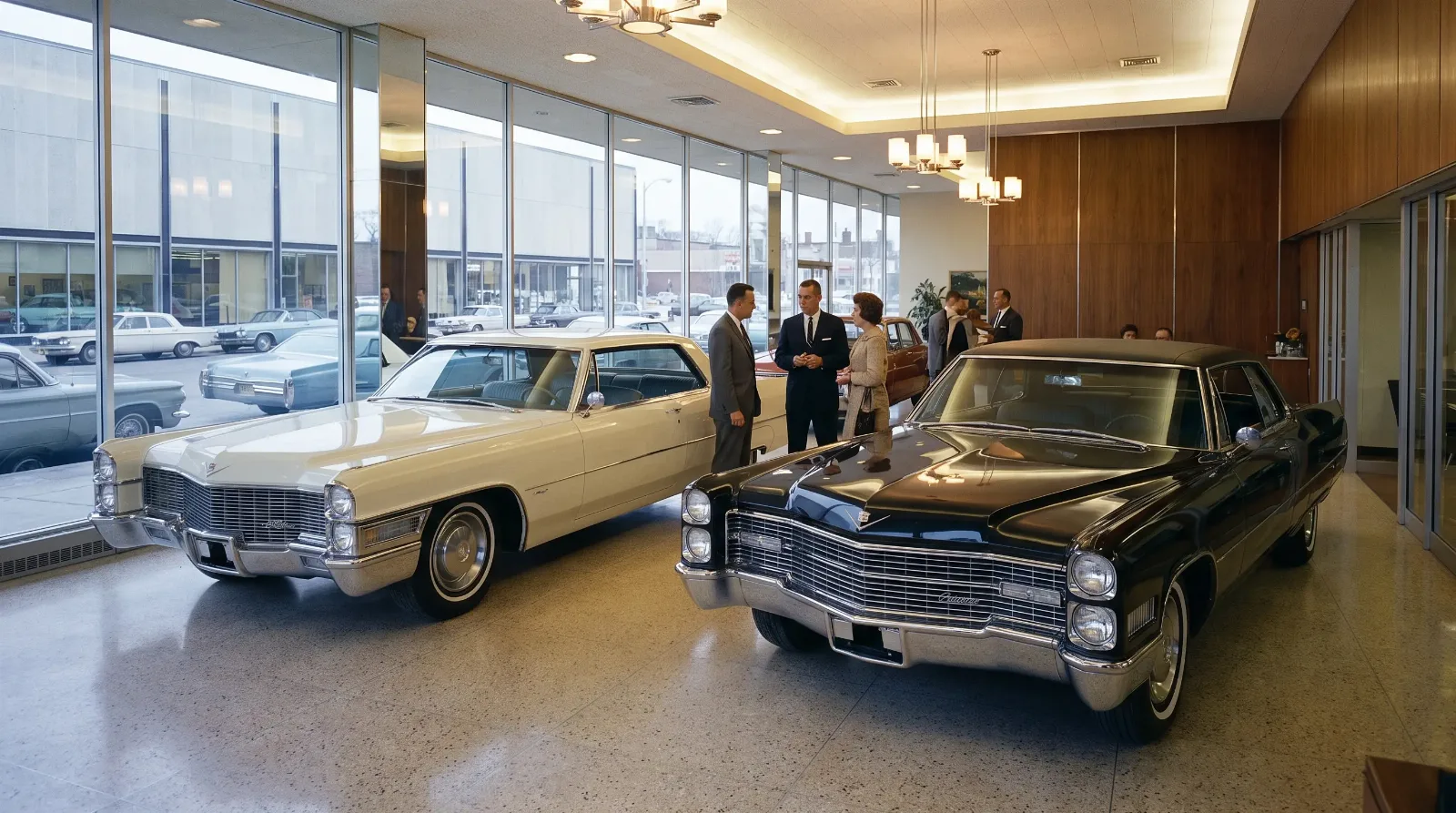
The most consequential response came for the 1977 model year, when General Motors downsized its full-size cars. The full-size Cadillac de Ville and Fleetwood shed roughly 900 pounds and close to a foot of length compared with the 1976 cars, while GM engineers preserved interior room through more efficient packaging. Displacement fell too, with Cadillac's big 500-cubic-inch V8 giving way to a 425 and then smaller units later.
From a market standpoint, the 1977 downsizing was a success that is easy to underrate. The cars were lighter, more efficient, and better to drive, and they sold well. GM had read the regulatory and fuel tea leaves correctly and moved while its rivals hesitated. Chrysler and Ford took longer to shrink their largest cars, and their balance sheets showed the cost of waiting.
Chrysler's Imperial and the biggest Lincolns soldiered on at their old dimensions into the late 1970s, which briefly made them the last of the truly enormous American luxury cars. For a short window that size read as defiance. Then it read as a liability, as the market moved decisively toward the tidier GM cars and the imports. Ford eventually downsized the Continental and the full-size Lincoln for 1980, and Chrysler retired its largest cars entirely. The lesson for the industry was blunt. In a fuel-constrained market, the automaker that moves first on efficiency sets the terms, and everyone else pays to catch up.
"The 1977 downsizing is the moment American luxury stopped bragging about size and started defending it. From an investment view, the well-kept survivors of that first downsized generation have aged better than most people expected."
David Mercer
The second shock and the bustleback Seville
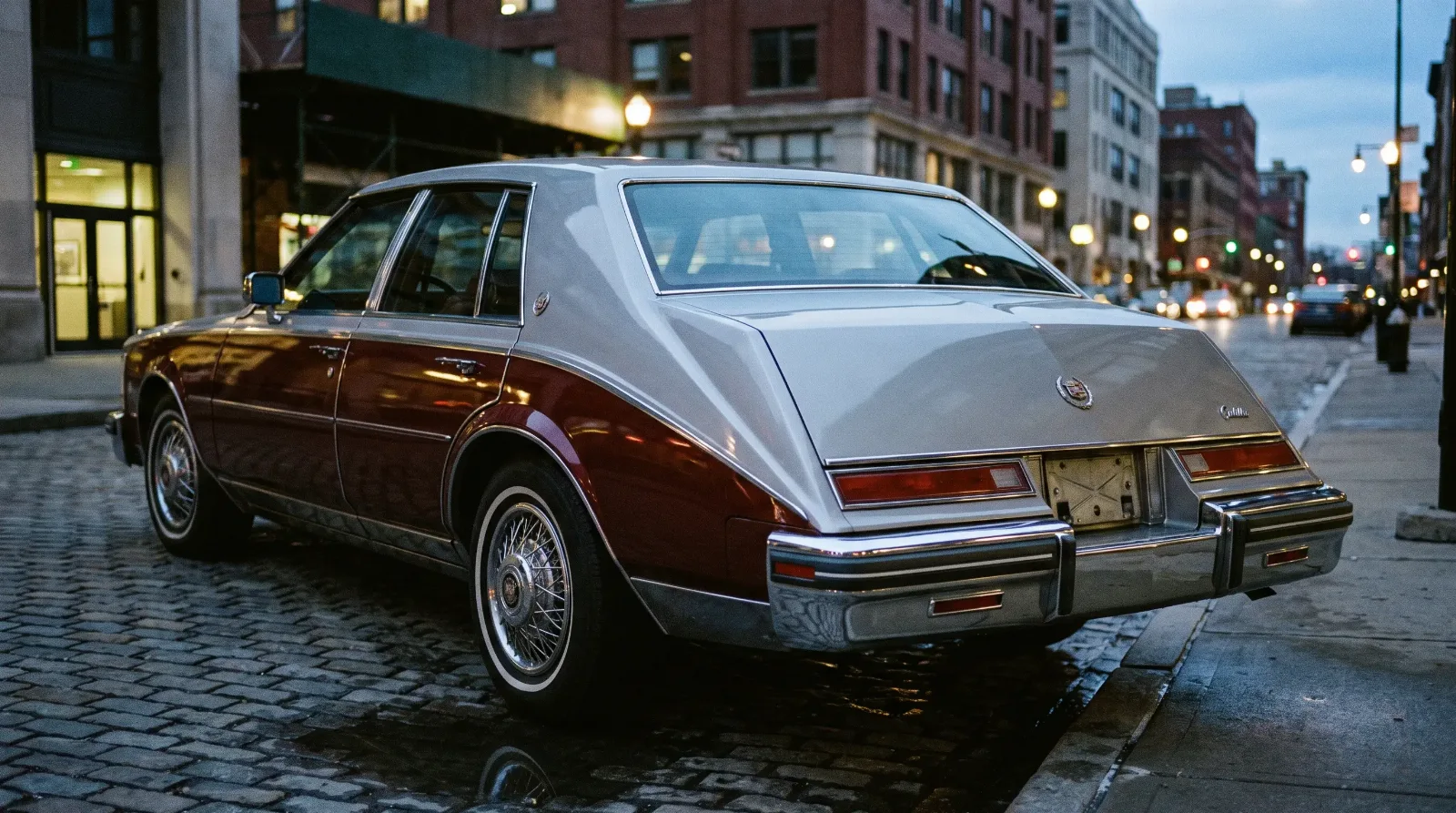
Just as the market absorbed the first round, the Iranian Revolution triggered a second oil shock in 1979, and prices spiked again. This time no one could pretend it was temporary. The response at Cadillac included the 1980 Seville, with its controversial "bustleback" razor-edge trunk styling, aimed squarely at buyers drifting toward smaller European sedans. It was polarizing then and remains so among collectors now.
The regulatory pressure also produced some genuine engineering missteps. Cadillac's flirtation with a diesel V8 and with cylinder-deactivation technology in this period, both aimed at fuel economy, damaged the brand's reputation for reliability. Those decisions belong to the story that comes next, but they started here, under the pressure the oil shocks created.
| Event | Year | Effect on luxury cars |
|---|---|---|
| OPEC oil embargo | 1973-74 | Fuel prices quadruple; big cars devalued |
| CAFE standards enacted | 1975 | Fleet economy targets, effective 1978 |
| GM full-size downsizing | 1977 | Cadillac sheds ~900 lb, smaller V8s |
| Second oil shock | 1979 | Renewed pressure; smaller Sevilles, Eldorados |
What it means for values now
For collectors, the 1973 dividing line matters. Pre-embargo full-size luxury cars, the last of the truly enormous Cadillacs, Lincolns, and Imperials, have a specific appeal precisely because they represent the end of an era. The 1976 Eldorado convertible trades on its "last convertible" story, though that premium is more sentiment than scarcity given the numbers built.
The first downsized cars of 1977 through the early 1980s are a more interesting value proposition. They were competent, they sold in volume, and clean low-mileage examples remain affordable relative to the big pre-1973 cars. My read is that the market still underrates the best of them. The story does not end well for Cadillac in the following decade, though, and that decline has its own hard lessons in next: Cadillac's Badge-Engineering Decline in the 1980s.
Related Reading
Have a
Classic Car
for Sale?
Reach thousands of serious classic car collectors across the US.
Sell It Here →
Are You a Classic Car Dealer?
List your full inventory and connect with targeted classic car buyers.
Join as a Dealer →

About the author
David Mercer
Classic car market analyst with two decades of experience tracking collector car valuations, auction results, and investment trends.
More in History & Heritage
Comments
Be the first to comment on this article.