
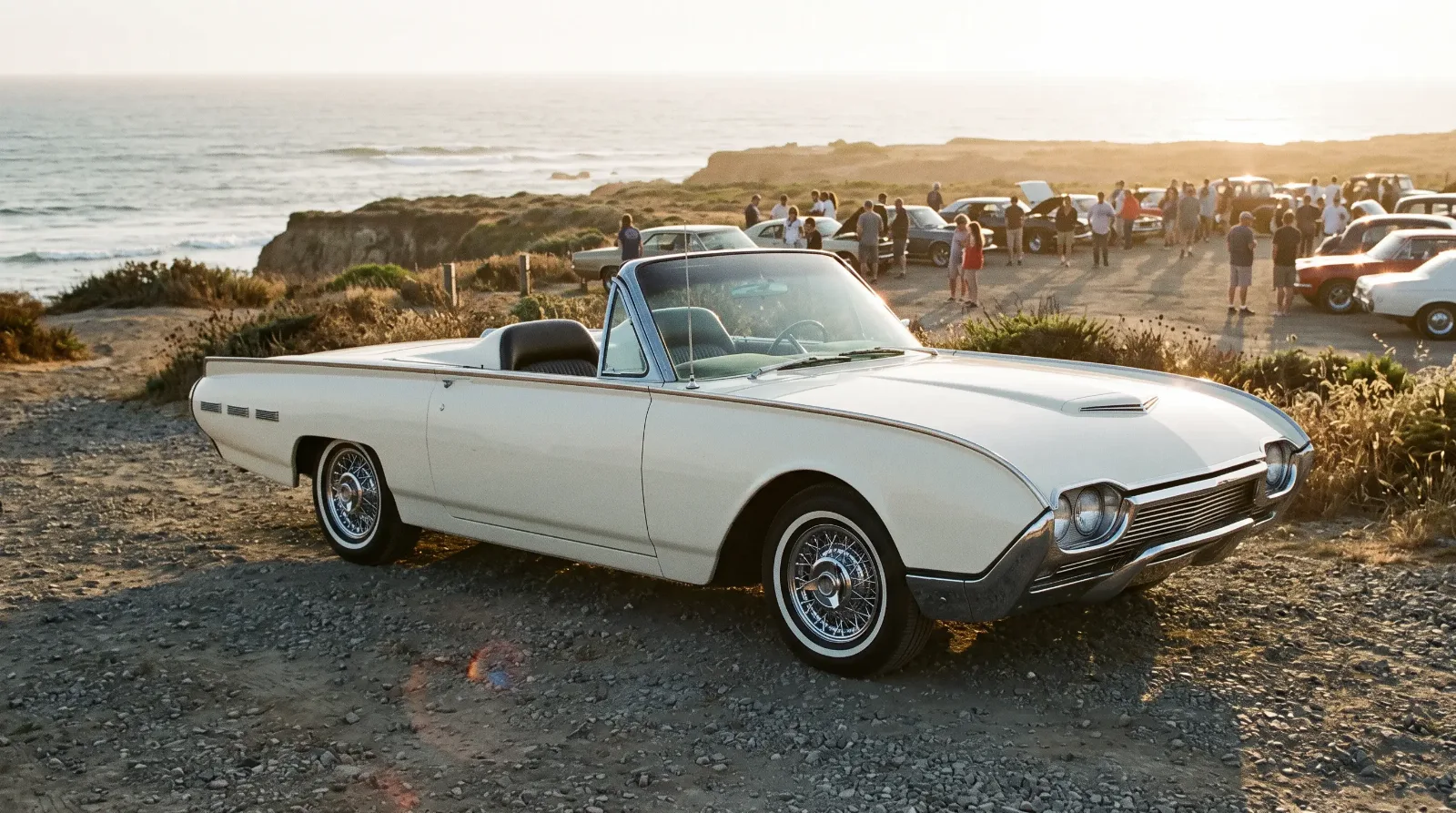
Walk any big cruise night in America and you can still hear the argument. A guy in a Chevelle shirt is telling a guy in a Mopar cap that a 454 would have eaten his Hemi for breakfast, and a Ford man three cars down is shaking his head at both of them. Nobody wins. Nobody ever wins. That argument is fifty years old and it is the most honest thing about the whole hobby, because the muscle car era was one long fight between three companies who genuinely could not stand to lose to each other.
Ownership & Lifestyle
6 min read
The Big Three Rivalry: Ford vs GM vs Mopar
Inside the muscle car war between GM, Ford and Chrysler. Chevelle, Mustang, Hemi, aero wars and the brand loyalty that still fills car shows.
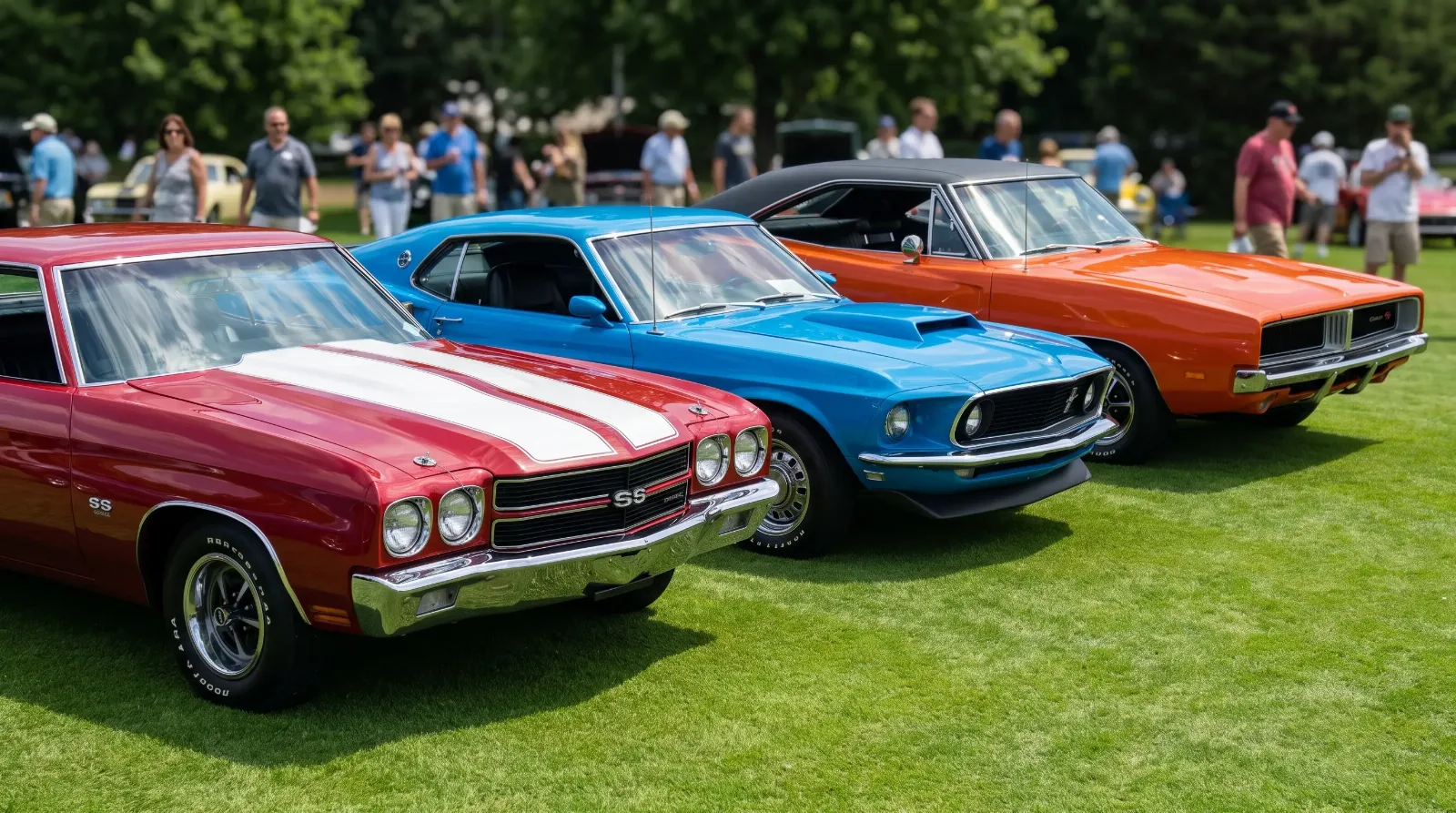
The big three muscle rivalry was not marketing invented after the fact. It was real, it was expensive, and it was fought in showrooms, on drag strips, and on the high banks of stock car ovals all at once. General Motors, Ford, and Chrysler each brought a different personality to the war, and those personalities are exactly what people still line up behind today. For the broader setting, there's more on muscle car culture and how these tribes formed.
General Motors had the money and the rules
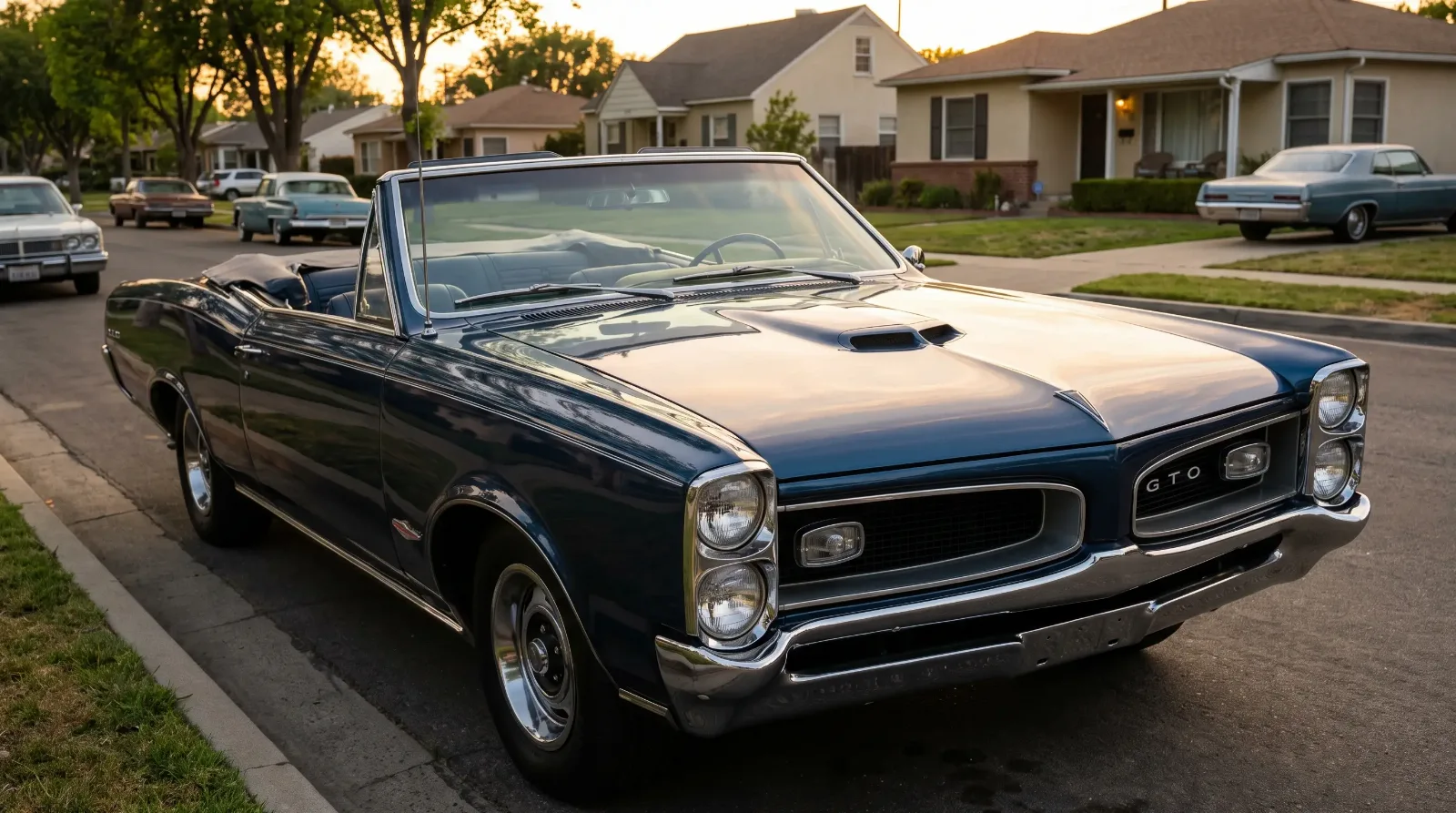
GM was the giant, and it acted like one. When Pontiac dropped a 389 into the mid-size Tempest and called it the GTO in 1964, it more or less started the whole segment. The problem was that GM's own corporate policy got in the way. The company had a rule capping engine size in its intermediate cars, which meant Chevelle, GTO, 442, and Buick GS engineers spent years working around their own boss.
They found ways. The Chevelle SS 396 became a legend, and by 1970 GM finally loosened the rule and the 454 LS6 arrived swinging. Oldsmobile built the refined 442, Buick quietly made the Stage 1 455 into one of the great torque monsters of the era, and Chevrolet turned the Camaro Z/28 into a corner-carver for the Trans-Am crowd. GM's strength was breadth. It fielded a muscle car for every kind of buyer, and if you want to trace where muscle cars came from, most roads run back through Pontiac's first GTO.
Ford fought on every front
Ford's answer was the Mustang, and the Mustang changed the math for everybody. It was a sales phenomenon before it was a muscle car, and once Ford started stuffing it with real engines the pony car war was on. The Boss 302 was built to beat the Camaro in Trans-Am racing. The Boss 429 existed mostly so Ford could homologate a big semi-hemi engine for NASCAR, and it ended up as one of the rarest and most valuable muscle cars of all.
Ford also ran the 428 Cobra Jet through the Mustang, the Torino, and the Mercury Cyclone, and it took the stock car fight seriously with aerodynamic specials like the Torino Talladega and the Mercury Cyclone Spoiler II. Ford's whole approach was Total Performance, a company slogan that meant it wanted to win everywhere at once. That ambition made it the constant middle party in the rivalry, always squeezed between GM's volume and Chrysler's brute force.
| Company | Signature engine | Icon cars |
|---|---|---|
| General Motors | 454 LS6 big-block | Chevelle SS, GTO, 442 |
| Ford | 428 Cobra Jet | Mustang, Boss 429, Torino |
| Chrysler (Mopar) | 426 Hemi | Charger, Road Runner, Challenger |
Chrysler brought the biggest hammer
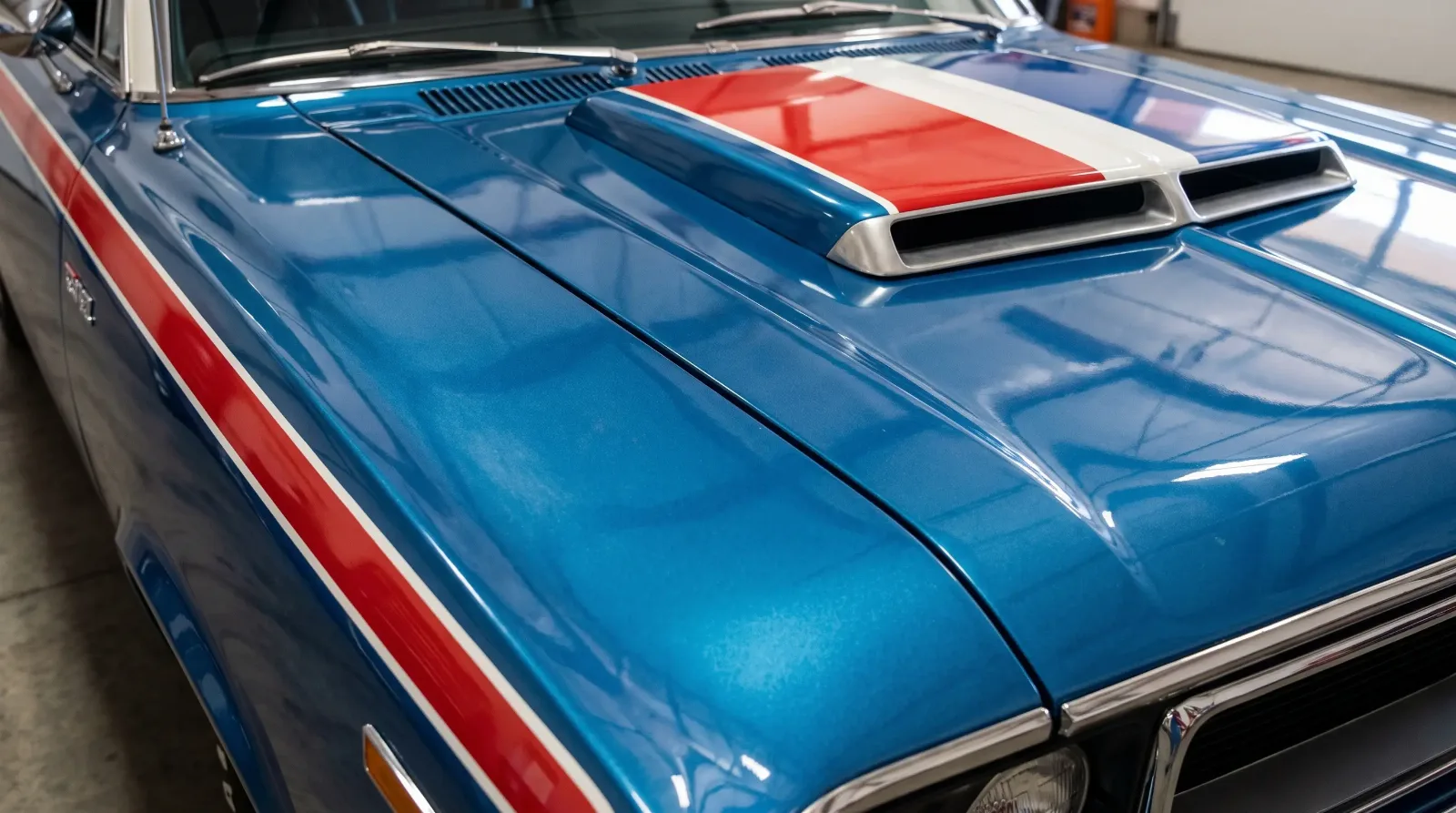
Mopar fought like the underdog even when it was winning, and it fought with horsepower. Chrysler's ace was the 426 Hemi, a race-bred engine that made it to the street in 1966 and never lost its aura. Around it the company built a lineup with real menace. The Road Runner sold cheap speed to the masses. The Charger and the Challenger and the Barracuda gave the Hemi and the 440 Six Pack a home, and the styling on the 1970 models still stops traffic.
Where GM had committees and Ford had a slogan, Chrysler had attitude. The Dodge Rebellion, the Scat Pack, the whole tone of it was defiant. Mopar buyers knew they were driving something a little wilder and a little rougher than the competition, and they liked it that way. That defiance is a big part of why Mopar cars command the money they do now. The rivalry even shaped the language of the era, and the wild names each company chose became a culture of their own, which you can read the full story of in the piece on muscle car nicknames.
Why the fight still matters
The three-way war ended with the era itself, killed off by insurance rates, emissions rules, and the fuel crisis by the mid 1970s. What it left behind is a loyalty structure that never went away. People do not just like muscle cars. They like their muscle car, the one their brand built, and they will defend it against the other two until the sun goes down and the cruise night ends.
That tribalism is the engine that keeps the hobby alive. It fills the show fields, it drives the auction prices, and it gives three generations of enthusiasts something to argue about that costs nobody anything. The companies were fighting for market share. The fans inherited the rivalry and turned it into a culture. Fifty years later the Chevelle guy and the Mopar guy are still going at it in the parking lot, and honestly, that is exactly how it should be.
"You can tell a person's whole automotive childhood by which of the three they defend at a car show. It is never really about the horsepower numbers. It is about the driveway they grew up in."
Patrick Walsh
I have judged enough shows to know the arguments never resolve, and that is the point. The big three built these cars to beat each other, and they succeeded so completely that we are still keeping score. Every one of those companies won, because the fight itself became the thing we love.
Related Reading
Have a
Classic Car
for Sale?
Reach thousands of serious classic car collectors across the US.
Sell It Here →
Are You a Classic Car Dealer?
List your full inventory and connect with targeted classic car buyers.
Join as a Dealer →

About the author
Patrick Walsh
Automotive journalist covering classic car shows, events, and the enthusiast community across North America.
More in Ownership & Lifestyle
Comments
Be the first to comment on this article.