
Somewhere in a Detroit ad agency in 1964, a man named Jim Wangers looked at a mid-size Pontiac with a big engine crammed into it and decided the problem was not the car. The problem was that nobody knew how to feel about it yet. So he gave them a feeling. He wrapped the GTO in tigers and swagger and a soundtrack of squealing tires, and he sold a whole generation on the idea that this car said something about who you were. The muscle car was not just built in a factory. It was built in the advertising, and the men who wrote those ads knew exactly what they were doing.
Ownership & Lifestyle
6 min read
Muscle Car Advertising of the 1960s
How Detroit sold horsepower in the 1960s. The GTO tiger, the Scat Pack bee, the Road Runner horn and the ad men who built the muscle car myth.
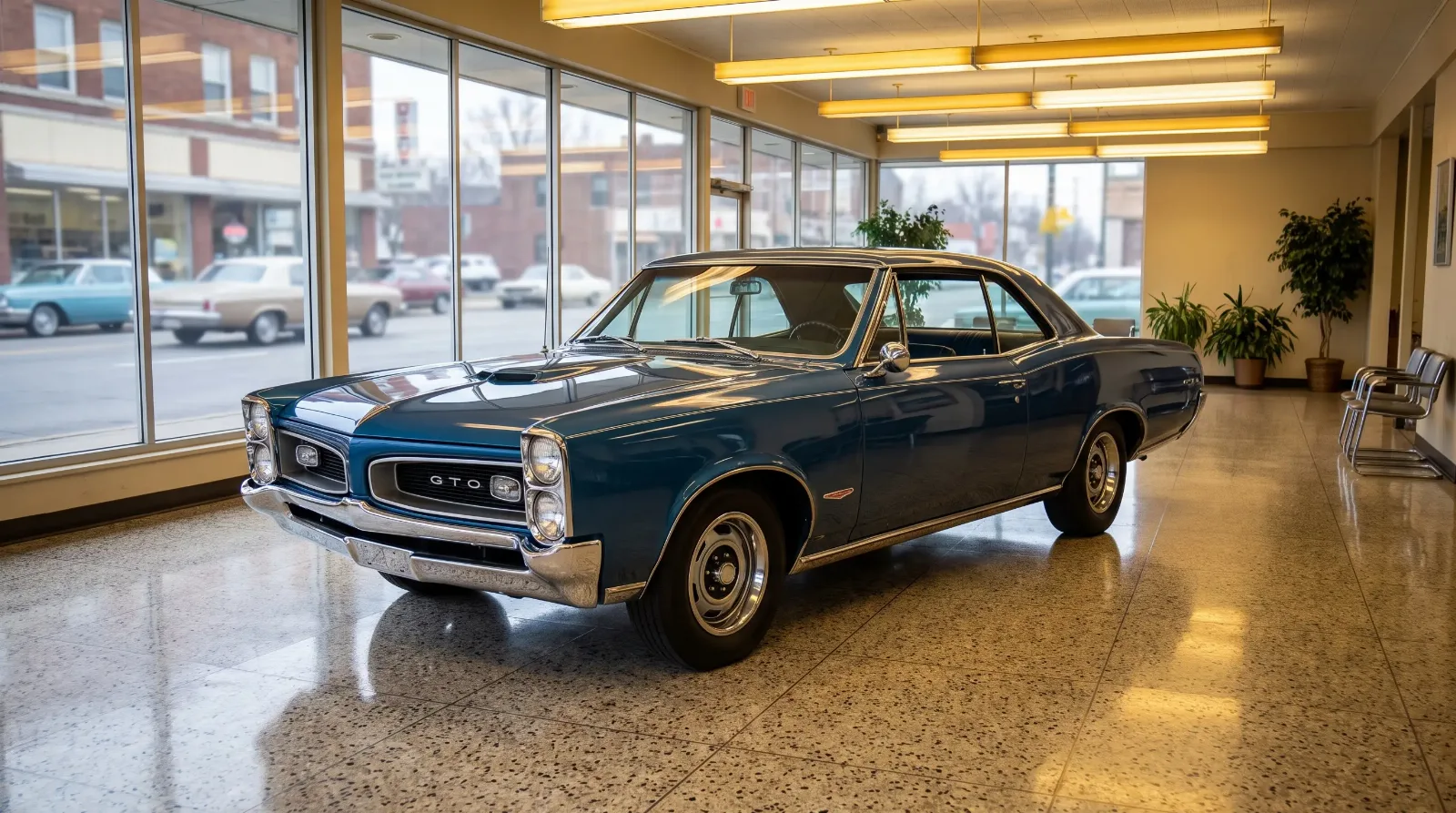
The 1960s were the golden age of the automotive pitch, and muscle car vintage advertising was the loudest, most confident work in the whole business. These ads were not selling transportation. They were selling attitude to young men with a little money and something to prove. For the wider view of how this all came together, the muscle car culture story lays out the scene these campaigns were feeding.
Pontiac wrote the playbook
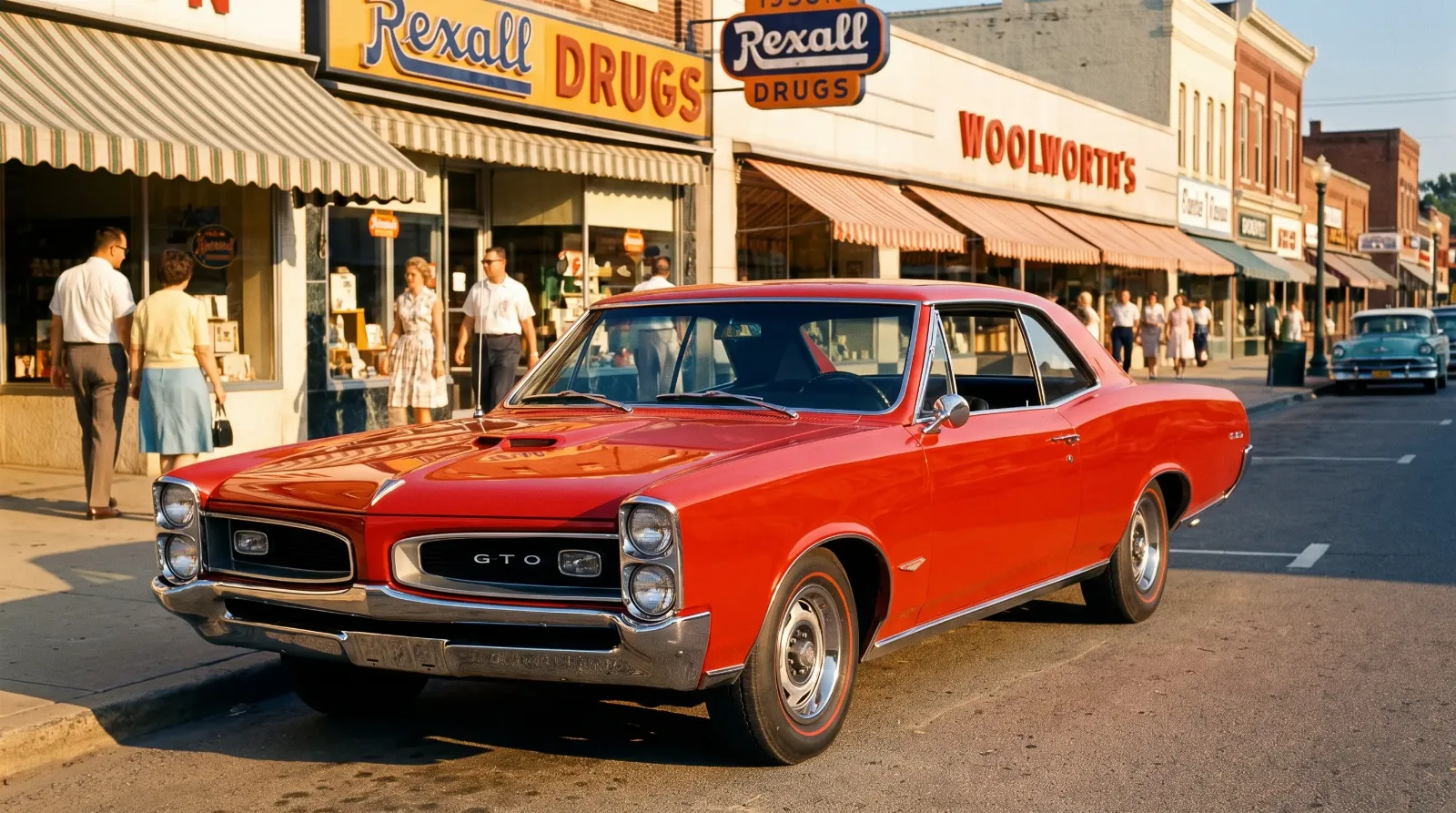
Pontiac got there first and got there hardest. When the GTO arrived in 1964, the division was already running the Wide-Track theme and positioning itself as the performance arm of General Motors. Wangers and the agency took the GTO and turned it into a character. There was the tiger, everywhere, a not-so-subtle promise about what the car would do to the competition. There were the GeeTO Tiger records handed out to buyers. There was even a promotional tie-in that put a GTO on the radio and in song.
What made it work was that the car mostly backed up the talk. The ads were brash, but a 389 with three two-barrel carburetors was a serious piece of hardware, and buyers who took the bait were rarely disappointed. That combination, a loud pitch and a car that delivered, set the template every other division would chase. If you want the mechanical backstory behind the swagger, the golden age of muscle covers how the engineering caught up to the marketing.
Dodge and Plymouth sold personality
Chrysler took a different route and leaned into character and humor. The Dodge Scat Pack came with its own emblem, a cartoon bumblebee, and the tagline about cars that ran with the bumblebee stripes. It was playful and a little tough at the same time, and it gave the whole Dodge performance line a club feeling. Buy in and you were part of something.
Plymouth pulled off the smartest trick of the era. For the 1968 Road Runner, the company licensed the Warner Bros cartoon character, put the bird on the fenders, and paid to develop a horn that actually went beep beep. It was a cheap muscle car aimed at a young buyer, and the advertising made a virtue of that. No pretension, just speed and a joke you were in on. The campaign was so effective that the Road Runner outsold every projection Plymouth had. Chrysler and its rivals were locked in a marketing war as fierce as anything on the drag strip, and to see how that fight played out across all three companies, read the full story of the Big Three rivalry.
What the ads actually promised
Read enough of these old ads and a pattern shows up. They almost never talked about comfort, or reliability, or resale value. They talked about being first away from the light, about the look on the other guy's face, about a car that would not apologize for itself. Oldsmobile invented a lab-coat mascot for the 4-4-2 and built campaigns around him as if performance were a science project with a wink. Ford ran the Total Performance banner across everything it made. Every division found a voice, and every voice was aimed at the same restless young customer.
There was gamesmanship in the numbers too. Horsepower ratings in the ads did not always match what the engine really made, sometimes understated to help a car in racing classes, as with the famously conservative 425 gross rating on the 426 Hemi, sometimes rounded up for bragging rights. The point was never precision. The point was the promise, and the promise was that this car would make you feel like the fastest thing on your street.
The legacy in every glossy page
Those ads did something that outlasted the cars themselves. They created the vocabulary we still use. Terms like muscle car, supercar, factory hot rod, all of it got sharpened in the pages of the buff books and the dealer brochures. The imagery became collectible in its own right, and original ad art now hangs framed in garages that will never see the car it advertised. The pitch became the product.
You can still feel it when you go shopping for one of these cars today. The reputation that a great ad campaign built decades ago is still baked into what a GTO or a Road Runner is worth. When enthusiasts find classic muscle car listings and start comparing, they are chasing a feeling that Jim Wangers and his rivals manufactured on purpose, one glossy magazine spread at a time. The engineering got the cars moving. The advertising is what made America want them.
"The best muscle car ads never sold a car. They sold you a version of yourself behind the wheel, and once a kid saw that picture in his head, the transaction was basically over."
Patrick Walsh
I met a collector once who framed the original GTO tiger ad and hung it over his workbench, above the actual car. When I asked him why the ad and not just the GTO, he shrugged and said the ad came first. He wanted the car because of the picture, and he had the honesty to admit it. That is the whole story of 1960s muscle car advertising in one sentence.
Related Reading
Have a
Classic Car
for Sale?
Reach thousands of serious classic car collectors across the US.
Sell It Here →
Are You a Classic Car Dealer?
List your full inventory and connect with targeted classic car buyers.
Join as a Dealer →

About the author
Patrick Walsh
Automotive journalist covering classic car shows, events, and the enthusiast community across North America.
More in Ownership & Lifestyle
Comments
Be the first to comment on this article.