
Hollywood does not pick a truck by accident. Somebody on a props crew sits down and decides what a character drives, and that decision says something about the character before he opens his mouth. For four decades now, a lot of those decisions have landed on the Chevrolet C10, and it is worth asking why a plain work truck kept getting cast instead of something flashier. The short answer is that the C10 looks like it belongs to somebody real. That is not an accident, and it is not new. Anyone who wants the full background on the truck itself should read the C10 story first, because knowing what the truck actually was built to do explains why filmmakers keep reaching for it.
Ownership & Lifestyle
6 min read
C10s in Movies and TV
Filmmakers keep casting the Chevrolet C10 in rural dramas and crime films because it reads as honest and unglamorous, exactly the character shorthand a plain work truck was built to provide.
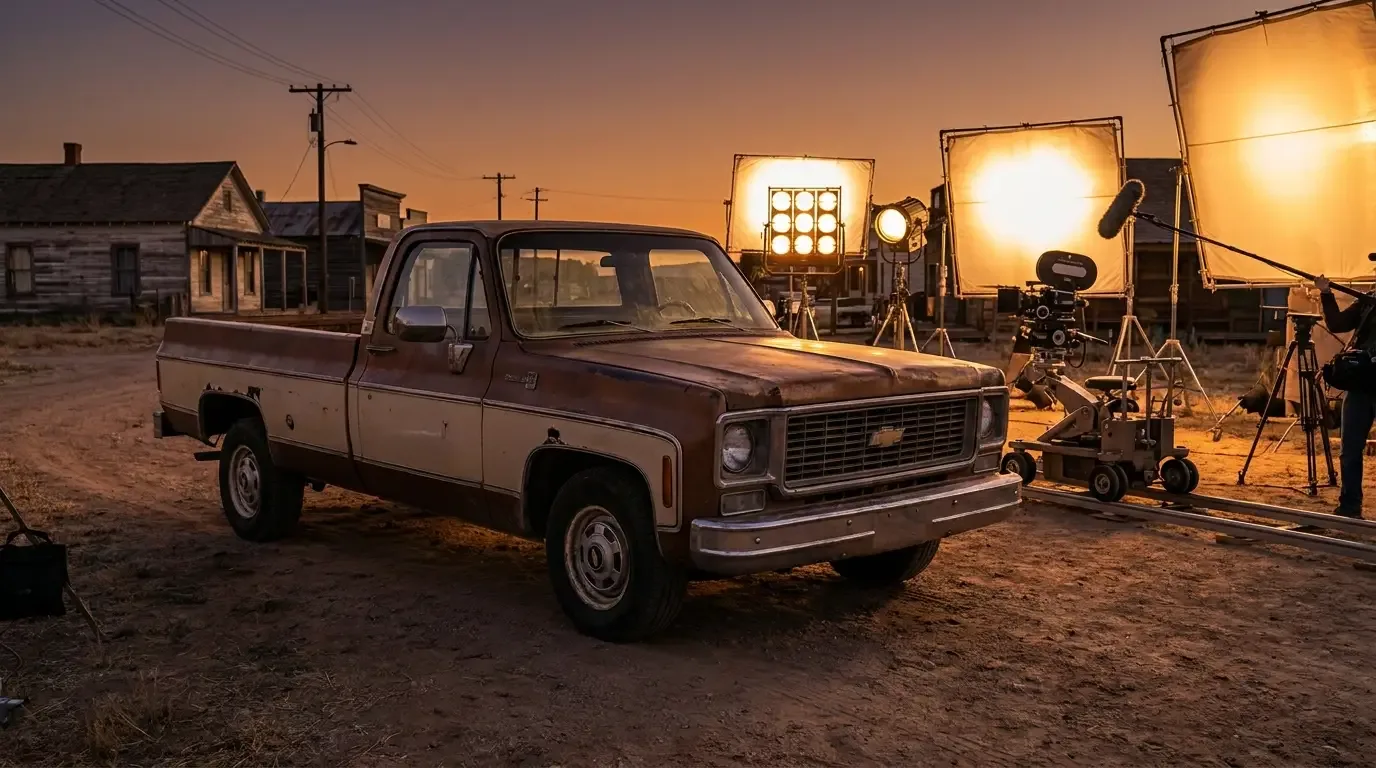
Why a work truck makes a better character prop than a muscle car
A Camaro tells an audience a character has money or wants people to think he does. A C10 tells them the character works for a living, or used to, or is pretending he still does. That is a useful shorthand for a director trying to establish a rancher, a mechanic, a small-town sheriff, or somebody who just does not want attention. The truck reads as unglamorous on purpose, and that unglamorous quality is exactly what makes it disappear into a scene the way a hero car never could. Nobody watching a movie stops to admire the truck. They just believe the guy standing next to it actually owns a ranch.
Some of the appearances that stuck
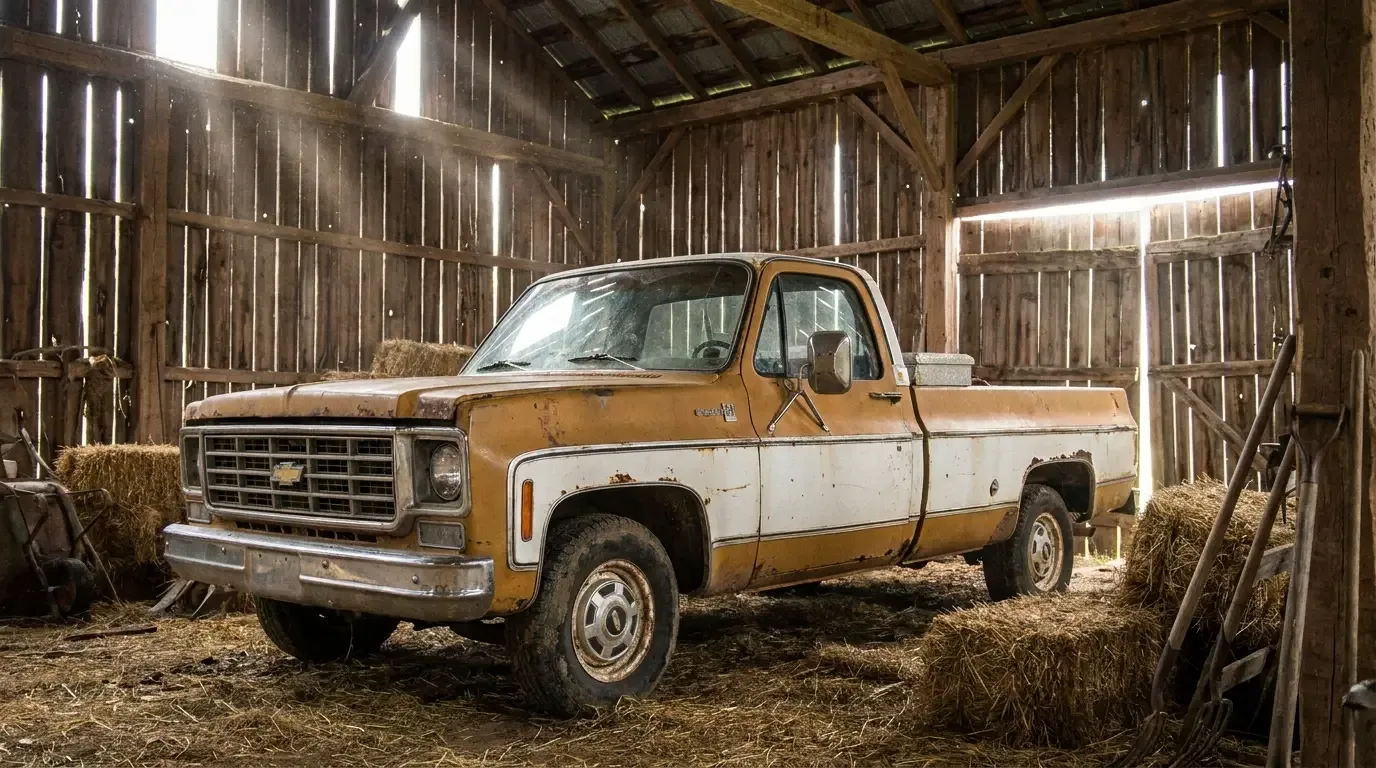
The C10 and its Square Body successor have turned up in enough films and television shows over the decades that no single article covers them all, and some of the specific years and trims used on set are genuinely hard to pin down without combing through production notes. What is consistent is the pattern: rural dramas, crime films, and shows set in working-class or small-town America reach for this truck more often than most comparable pickups, because the production designer needs a vehicle the audience will accept without a second thought. A truck that looks too clean or too new breaks that illusion immediately. A weathered C10 with a dent in the tailgate does the opposite. It tells the audience this character has had this truck a while, and that this world existed before the cameras showed up.
What the screen gets right, and what it skips over
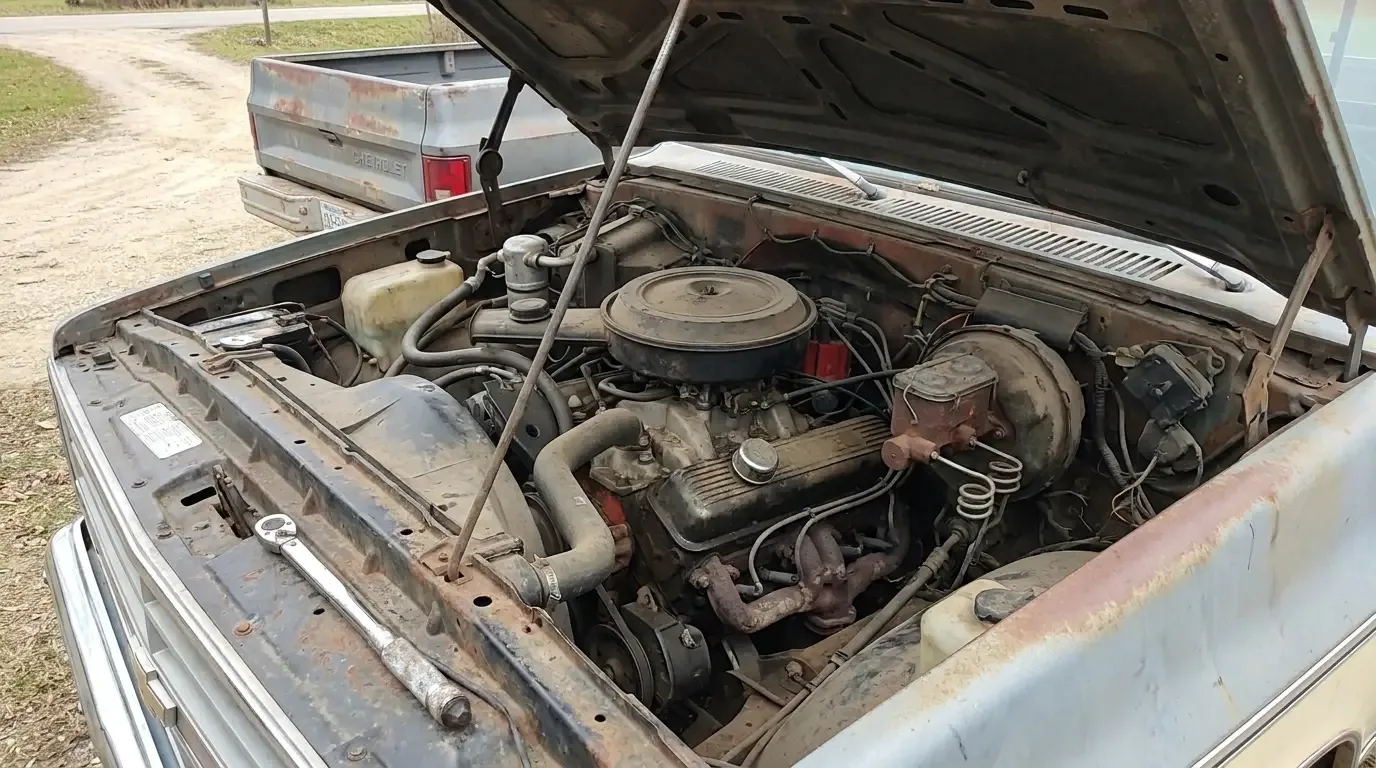
Where the movies do the truck justice is the look. Production designers generally understand that a C10 photographs best a little rough, and they are not wrong. Where they fall short is everything under the hood and behind the door panel, which is where the full culture piece picks up the story film and television leave out. A movie truck exists for maybe forty seconds of screen time per scene. It does not need to start reliably in February, and it does not need its brakes bled correctly. The people who actually own and drive these trucks every day are dealing with a completely different set of problems, and that gap between the prop and the daily driver is worth understanding before anyone buys a truck because they liked how one looked on screen.
What it takes to make a truck look like it belongs in a scene
People come to me after watching one of these movies wanting to know how to make their own truck look the part, and the honest answer is that most of what reads as character on screen is just honest wear that a truck earns on its own, not something you can buy at a parts counter overnight. Patina from actual sun and actual miles looks different from patina somebody sprayed on last weekend, and most people who have spent time around these trucks can tell the difference at ten feet.
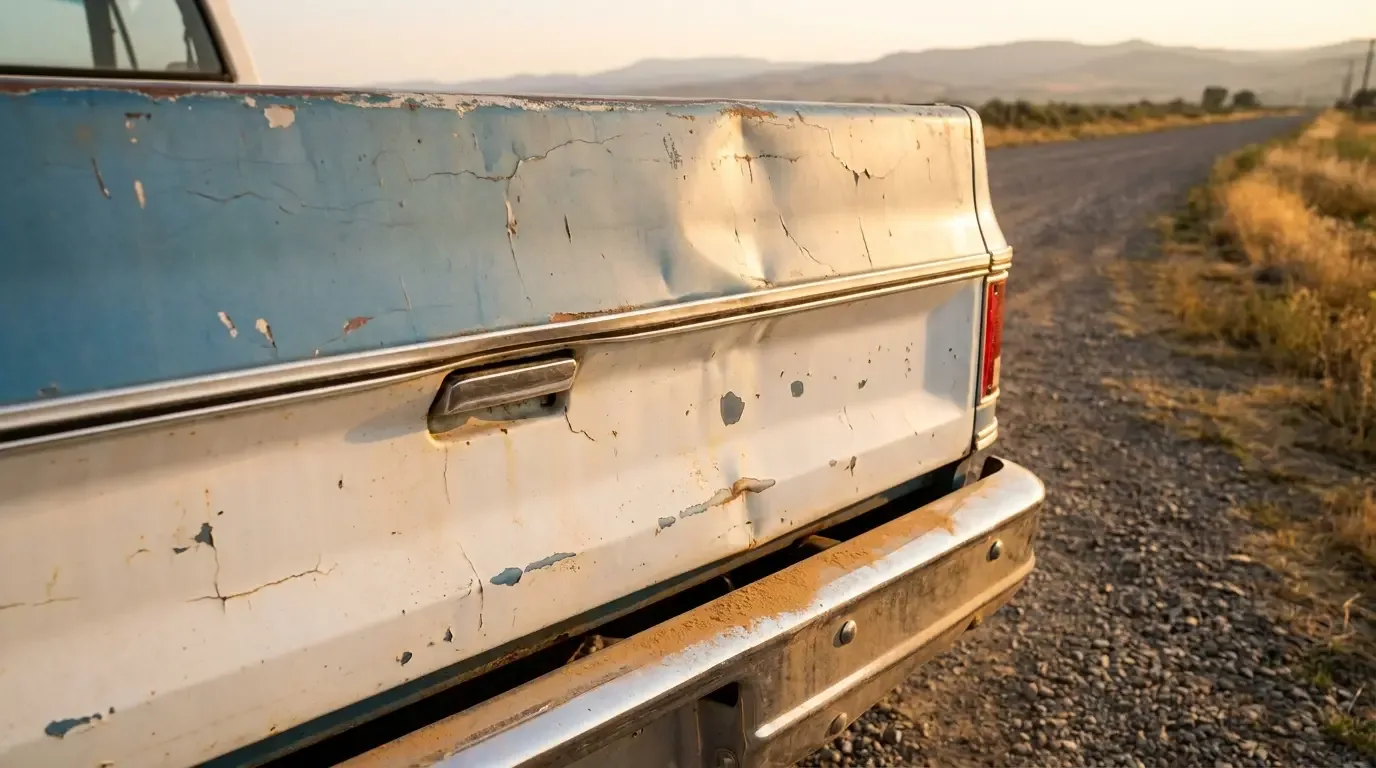
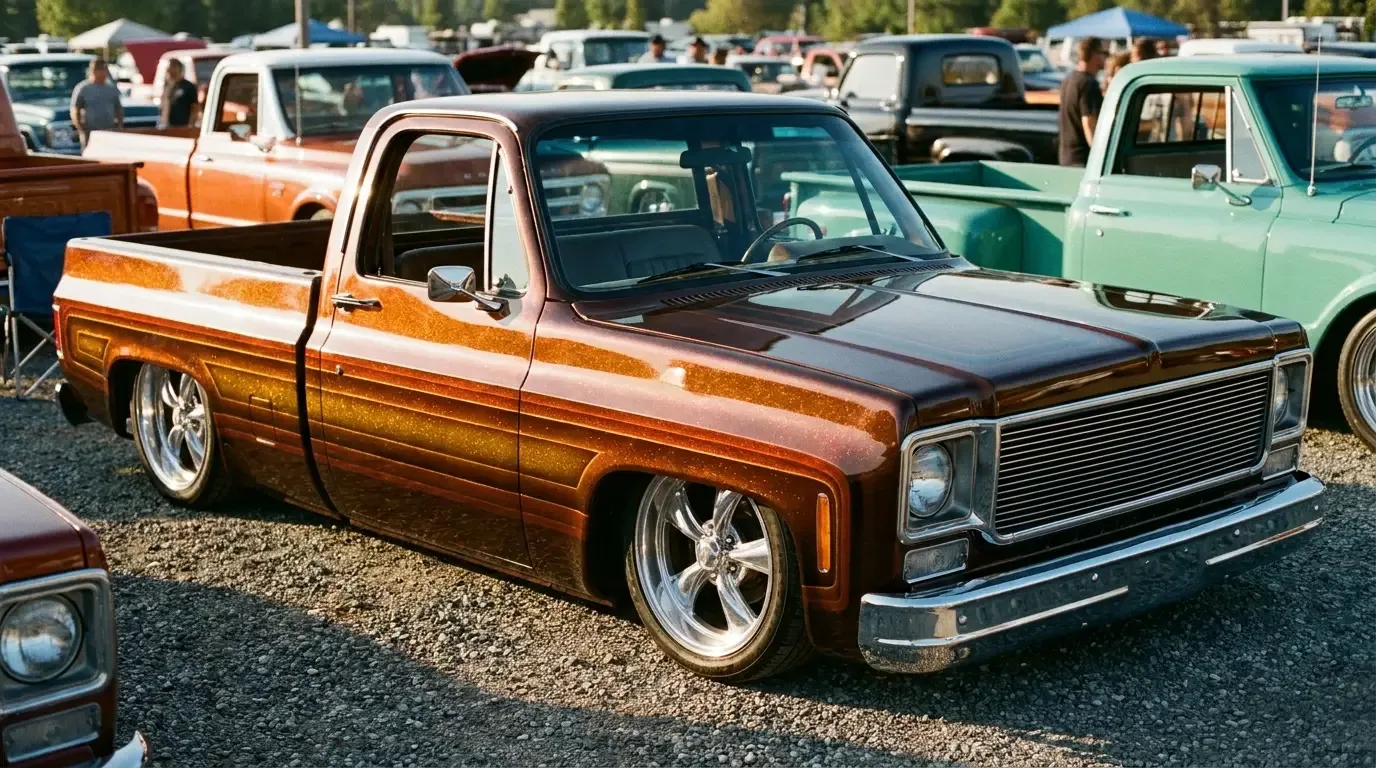
That same tension between a working truck and a truck people admire is not new, and it is not unique to the movies. A lot of the same trucks that end up on a film set started out doing actual labor before anybody thought to point a camera at one, and understanding how a work truck earned that spotlight off-screen tells you more about why this platform photographs so well than any set decorator will.
"A movie truck and a real truck are not the same animal. One of them has to look right for forty seconds. The other one has to start on a cold morning with a load in the bed, and that is the harder job by a long shot."
Robert Halloran
Why it keeps getting cast
The C10 keeps showing up on screen for the same reason it keeps showing up in driveways. It looks like exactly what it is, nothing more, and that plainness has become rare enough in a world of styled-to-impress trucks that it stands out precisely by not trying to. Directors know it. Production designers know it. And the people who actually own these trucks, watching from their living rooms, mostly just notice whether the truck looks right for the part, the same way they would size up any truck parked at a job site.
Sources and notes
Related Reading
Have a
Chevrolet C10
for Sale?
Reach thousands of serious classic car collectors across the US.
Sell It Here →
Are You a Classic Car Dealer?
List your full inventory and connect with targeted classic car buyers.
Join as a Dealer →

About the author
Robert Halloran
Texas-based classic truck enthusiast with decades of experience buying, restoring, and writing about American pickups from the 1940s through the 1980s.
Related Listings - Chevrolet C10
More in Ownership & Lifestyle
Comments
Be the first to comment on this article.