
If you want to know how to start a car transport business that hauls classic cars, start with the boring part: paperwork, insurance and a trailer that matches the cars you plan to carry. The truck is the easy decision. The filings take weeks, the insurance takes most of your first-year budget, and the customers who own old cars ask harder questions than a dealer moving a late-model sedan. None of it is complicated. It just has to be done in the right order.
Ownership & Lifestyle
10 min read
How to Start a Car Transport Business for Classic Cars
USDOT and MC filings, insurance limits, trailer choices and where classic car loads come from, for a one-truck hauler starting out in 2026.

This piece sticks to the hauler's side of the trade. For the wider picture of how shops, clubs and creators earn from the hobby, see our affiliate programs guide.
Pick the rig before you pick a name
There are three common ways into car hauling, and each one sets your rules, your costs and your customers.
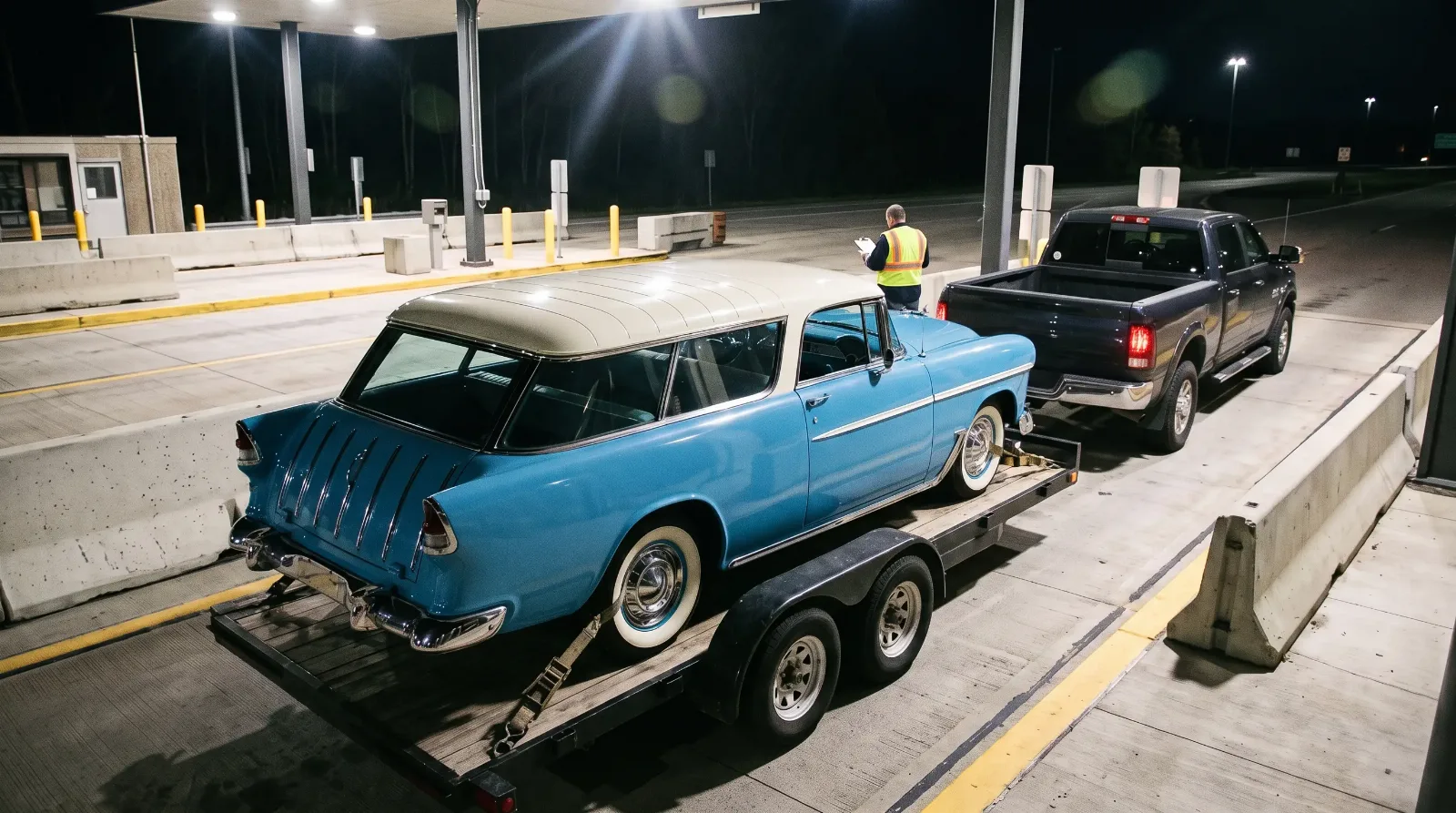
A hotshot setup is a one-ton pickup pulling a wedge or tilt-deck trailer, usually carrying one or two cars. An enclosed trailer typically carries two to six vehicles, according to one broker's capacity guide. A full open carrier, the kind you see on the interstate, carries seven to ten cars. Classic owners lean toward enclosed, and they pay for it: published 2026 shipping guides put enclosed at roughly a third to a half more than open for the same trip.
Weight decides the license. Under 49 CFR 383.91, you need a Class A CDL when the combination's gross combination weight rating is 26,001 pounds or more and the towed unit is rated over 10,000 pounds. Keep the combined rating under 26,001 pounds and a pickup plus trailer can stay non-CDL. That does not make you exempt from the carrier rules, though. A vehicle used in interstate commerce counts as a commercial motor vehicle at a rating of 10,001 pounds or more, and a pickup with a loaded car trailer clears that easily on paper.
So the practical first job is arithmetic. Read the rating plates on the truck and the trailer, add them, and know which side of 10,001 and 26,001 pounds you sit on before you buy anything.
How to start a car transport business: the federal filings
If you haul other people's cars for pay across state lines, you are a for-hire motor carrier. You need a USDOT number and, because cars are not an exempt commodity, operating authority (an MC number) before you operate. The steps, as of October 2026:
| Item | What it is | Cost |
|---|---|---|
| MCSA-1 application | USDOT number and operating authority, filed together | $300 per authority type, non-refundable (FMCSA's fee, as reported by three practitioner sources) |
| Proof of insurance | Liability filing sent by your insurer | Part of your premium |
| BOC-3 | Process agents named for all 48 contiguous states and DC (49 CFR 366.4) | About $30 to $75 through a filing service |
| UCR registration | Annual Unified Carrier Registration fee, by power units | 0 to 2 vehicles: $46 for 2026, $55 for 2027 |
| New entrant period | Monitoring for 18 months; safety audit usually no sooner than 3 months in | No fee listed |
The order matters. You file the MCSA-1 and get an inactive USDOT number. Your insurer files proof of coverage, you file the BOC-3, and the authority is granted once FMCSA finds fees and filings in order. Practitioner sources put the wait at anywhere from about 21 days to over a month. You may not operate under that number, or mark your truck with it, until it is active.
Larger fleets pay more UCR: $138 for 3 to 5 vehicles in 2026 and $167 in 2027. The new fee schedule took effect October 1, 2026, so check which registration year you are filing for.
One trap for new haulers. If you take a load and pass it to another truck for a cut, you are acting as a broker, and broker authority is a different filing. A property broker needs a $75,000 surety bond or trust fund in force before FMCSA registers it (49 CFR 387.307). If you only plan to haul, haul.
These are the federal rules. Intrastate work, state registration and whether your exact rig needs every filing can differ, and fees change. Confirm your setup with FMCSA and your state's motor carrier office before you take a paid load. This is not legal advice.
Insurance is where the real money goes
The federal minimum is public liability, not cargo. For a for-hire carrier of non-hazardous property in a vehicle rated 10,001 pounds or more, 49 CFR 387.9 sets that minimum at $750,000. In practice, brokers, shippers and dealer contracts often ask for $1,000,000 and up, so price both before you sign anything.
Cargo cover, the policy that pays when a customer's car gets damaged on your trailer, is not set by that federal minimum. Your limit comes from what shippers and brokers demand. One broker's 2026 guide says open carriers generally carry $100,000 to $250,000 per load, shared across every car on the trailer, while enclosed carriers carry roughly $250,000 to $1,000,000 or more. The same page lists the usual exclusions: pre-existing damage, mechanical failure, acts of God and diminished value.
Read that line about "shared across every car" twice. If you haul three cars on a $250,000 cargo policy and one of them is worth $200,000, a bad day can leave the other two owners short. Classic customers will ask what your limit is per vehicle. Have the certificate ready to send before they ask.
Premiums vary too much to quote with any confidence, and the published estimates prove it. One insurance publisher's page, updated July 2026, puts a one-truck owner-operator buying close to the minimums at about $3,000 to $7,000 a year, and says new ventures pay a surcharge in their first year or two. A trucking blog puts a single car-hauling truck at $10,000 to $30,000 a year. The spread comes from the driver, the rig, the lanes and, above all, the cargo limit. Premiums and requirements vary by state and by carrier; get written quotes from an insurer who writes car haulers.
"Nobody calls a hauler because the truck is pretty. They call because the last guy dinged a fender and then argued about it. Show them the cargo certificate, take your photos at pickup, and you'll get the next car from the same family."
Robert Halloran
Equipment, startup cost and the classic-car difference
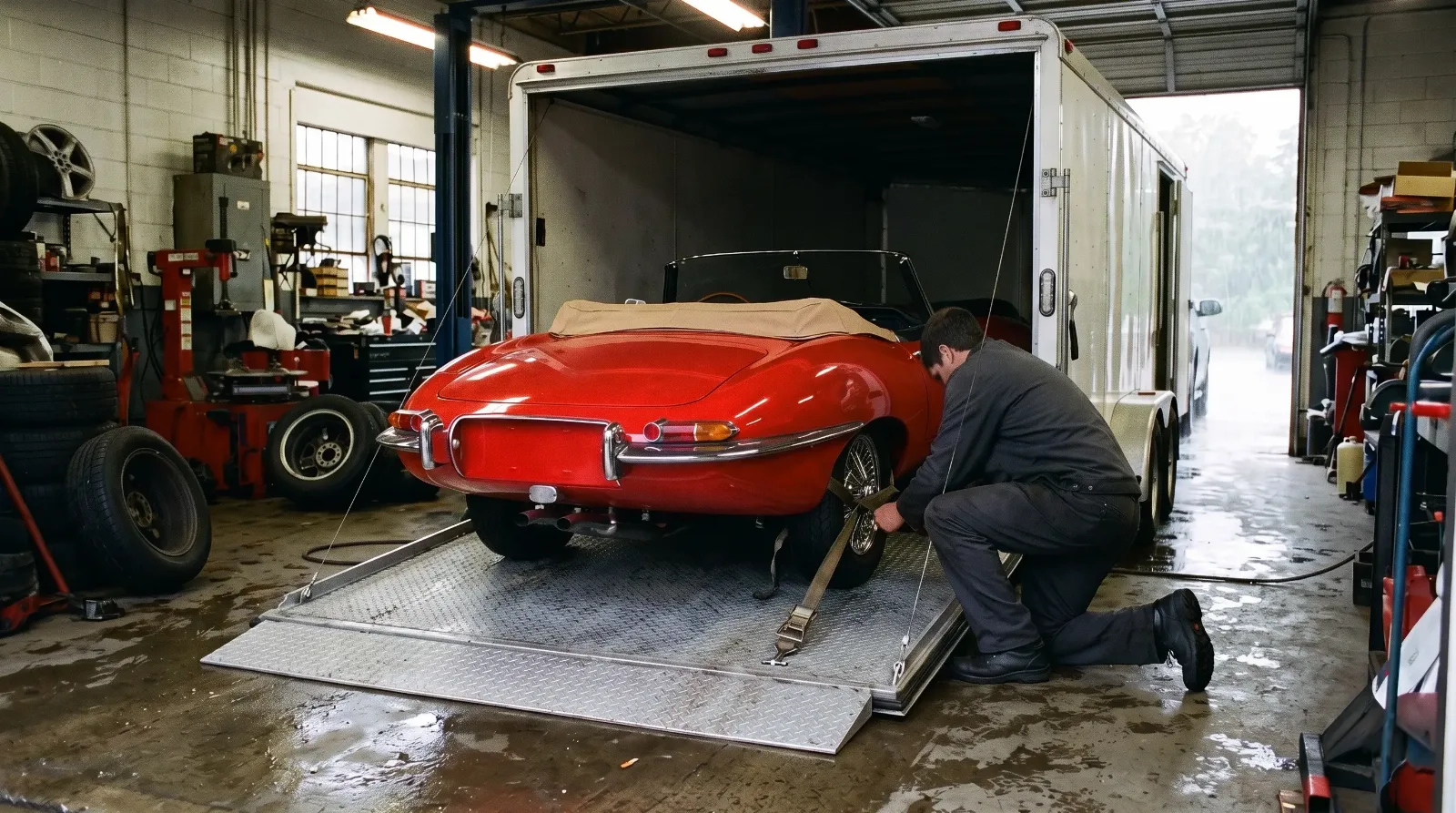
ZenBusiness, in a guide updated October 2026, puts a hotshot setup (a heavy-duty pickup with a three- or four-car wedge trailer) at $15,000 to $40,000, and a Class 8 semi with a stinger trailer at $80,000 to $150,000 or more. Its truck line, $10,000 to $50,000, is labelled a down payment or purchase, so the low end is not the full price of a truck. Those are one vendor's ranges without a method behind them. Your real number depends on whether you already own the truck.
For classic work, the trailer matters more than the truck. A dealer's guidance is plain: the trailer has to be wide and long enough for the widest and longest car you will carry, its capacity has to match the car's weight, and the tow vehicle has to handle the trailer's full rating. Electric brakes give more control than surge brakes under heavy loads. Aluminum resists rust. A lift or winch helps with a car that does not run.
Old cars bring their own habits. Many sit low, so ramp angle matters. Some do not run, and an inoperable car adds about $150 to $300 to a typical shipping price, according to FreightWaves. Tie-down points on a 60-year-old frame are not always where a modern car's are, and the federal rule requires structural tiedowns to attach to mounting points built for that purpose. Wheel nets or straps over the tires keep you off a frame you cannot vouch for.
Paperwork at pickup is the cheapest insurance you will ever buy. Walk the car with the owner, photograph every panel, note every chip on a written condition report, and get a signature. Do it again at delivery.
Pricing and where the loads come from
Start with what the customer sees. Shipper-side prices published in 2026 run like this for an operable car: about $600 to $700 open or $850 to $1,000 enclosed for 500 miles, and $1,200 to $1,400 open or $1,700 to $2,000 enclosed for 2,000 miles (FreightWaves, May 2026). Per-mile rates fall as the trip gets longer, and spring and summer are typically the most expensive months. Owners compare those numbers before they call you, so read what they read in what owners pay to ship a classic.
Those are retail quotes, often through a broker. A carrier's net is lower once the broker's share, fuel, insurance and empty miles come out. We found no reliable published carrier-side rate for enclosed classic work, so build your own cost per mile from your fuel, insurance and payments before you quote.
Loads come from three places:
- Load boards. Central Dispatch is the best-known one, with a Core plan listed from $139.95 a month on a comparison site as of 2026.
- Platforms that send buyers to transporters. Classic.com's shipping page names RunBuggy, InterCity Lines, Passport Transport and Reliable Carriers as featured partners and says it may be compensated through those links.
- Direct calls from sellers, buyers, dealers, restorers and inspectors. These are the best loads, because nobody takes a cut and the customer already trusts whoever sent them.
The third channel is the one worth building. Every inspector, appraiser and restoration shop who gives your number to a client is a salesman you do not pay. Return the favor by keeping their names handy when your customers ask.
A referral line in the quote you already send
A transporter sees a car at the moment it changes hands, which is why our partner program names transport, inspection and appraisal as a partner type: the people sellers already call before a sale. A link in your quote or follow-up email is enough.
The terms, as published in October 2026: 25% of every listing package and upgrade a referred customer buys, and 20% of a dealer's subscription payments for the dealer's first 12 months. The attribution cookie runs 60 days, commissions are confirmed after 30 days, and payouts go out by PayPal once your confirmed balance reaches $50. For example, a seller who buys a $99 Featured package through your link earns you $24.75 at October 2026 prices. That is arithmetic on the published table, not a forecast.
The obvious spot is a referral link in your quote for a customer who is about to sell, or in the delivery email to a buyer who just bought a project and will one day sell the car they already have. The FTC requires you to disclose, clearly and close to the link, that you earn a commission if they buy through it. A short line such as "I earn a commission on purchases through this link" does the job.
Haulers who work with dealers should also know how dealer referral programs work, and where they stop. Taking a fee for arranging the sale of a car is a different thing from a listing referral. In Texas, for example, arranging or offering to arrange a used-vehicle sale for a fee counts as acting as a dealer and needs a dealer license. Rules on referral fees vary by state, so check with your state's motor vehicle agency before you take a finder's fee on a car you haul.
Run the business the way the cars deserve: filings current, insurance certificate on file, photos at both ends. The referral money is a small extra on top. The reputation is the business.
Sources and notes
- 49 CFR 387.9: minimum levels of financial responsibility for motor carriers
- 49 CFR 383.91: commercial motor vehicle groups (CDL classes)
- Unified Carrier Registration Plan: fee brackets (2026 and 2027 registration years)
- FreightWaves: what it costs to ship a car (May 2026)
- ZenBusiness: starting a car hauling business (updated October 2026)
- Insuranceopedia: car hauler insurance cost (updated July 2026)
Fees, prices and program terms are as of October 2026. The $300 authority fee and activation times come from practitioner sources because FMCSA's own pages did not load for us; check them on FMCSA's site before you file.
Related Reading
Article
Automotive Affiliate Programs: How the Classic Car Crowd Gets Paid in 2026
Article
How to Become a Classic Car Appraiser or Inspector

Article
Car Dealer Referral Programs: What They Pay and Who Qualifies
Article
Starting a Car Hauling Business With One Truck and Trailer
Article
USDOT Number, MC Authority and Insurance for Car Haulers
External
/affiliate-program
Have a
Classic Car
for Sale?
Reach thousands of serious classic car collectors across the US.
Sell It Here →
Are You a Classic Car Dealer?
List your full inventory and connect with targeted classic car buyers.
Join as a Dealer →
#enclosed transport
#partner program
#car transport business
#car hauling
#FMCSA
#MC number
#cargo insurance

About the author
Robert Halloran
Texas-based classic truck enthusiast with decades of experience buying, restoring, and writing about American pickups from the 1940s through the 1980s.
More in Ownership & Lifestyle
Comments
Be the first to comment on this article.