
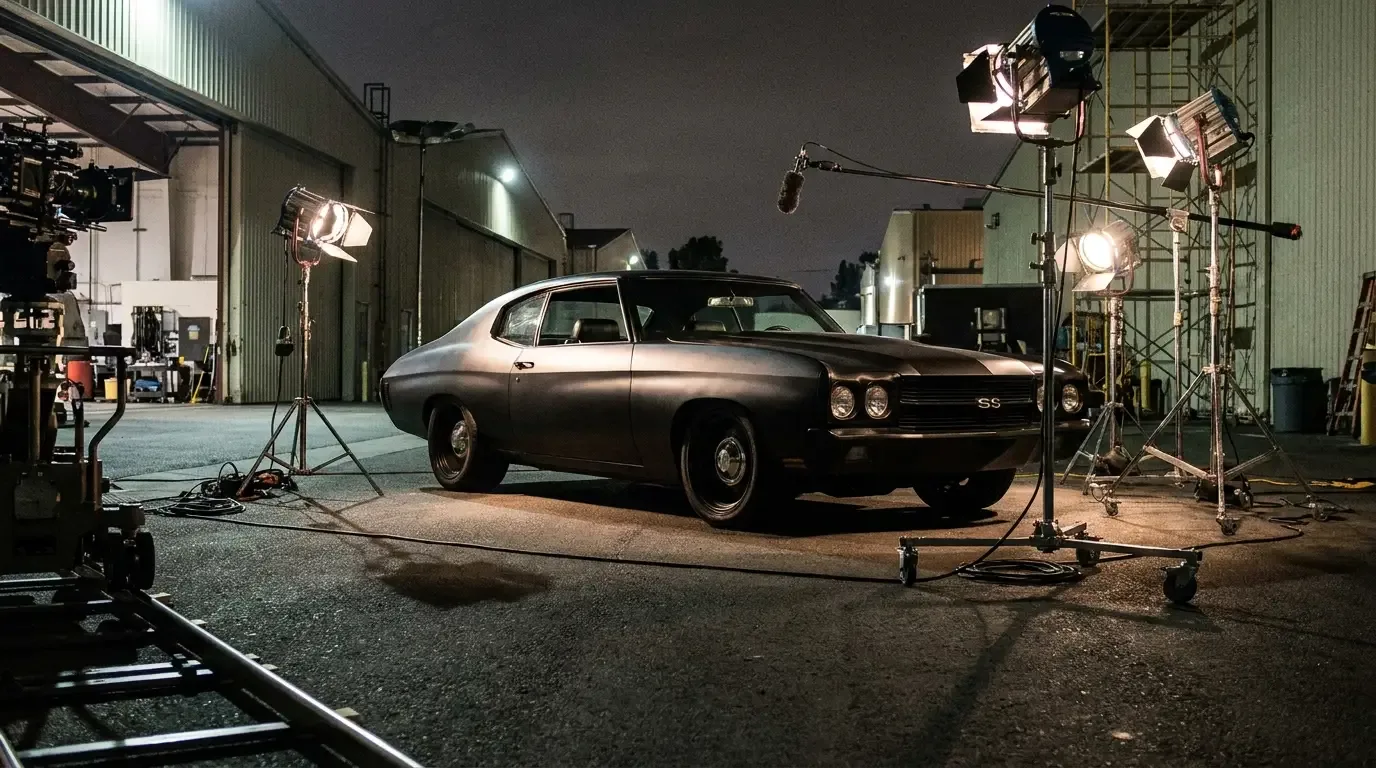
Somewhere in a Los Angeles parking lot, before the cameras rolled, a black-primered 1970 Chevelle SS sat under work lights while a stunt coordinator walked around it twice, checking the roll cage welds one more time. Nobody in that lot was thinking about box office numbers. They were thinking about whether the car would survive the take. That's the version of the story that doesn't make the trailer, but it's the one that explains why this particular Chevelle became one of the most recognized muscle cars in modern film.
Ownership & Lifestyle
7 min read
The 1970 Chevelle SS in Fast and Furious
How Dominic Toretto's red 1970 Chevelle SS became one of the most recognized muscle cars in the Fast and Furious franchise, and why it fit the story.
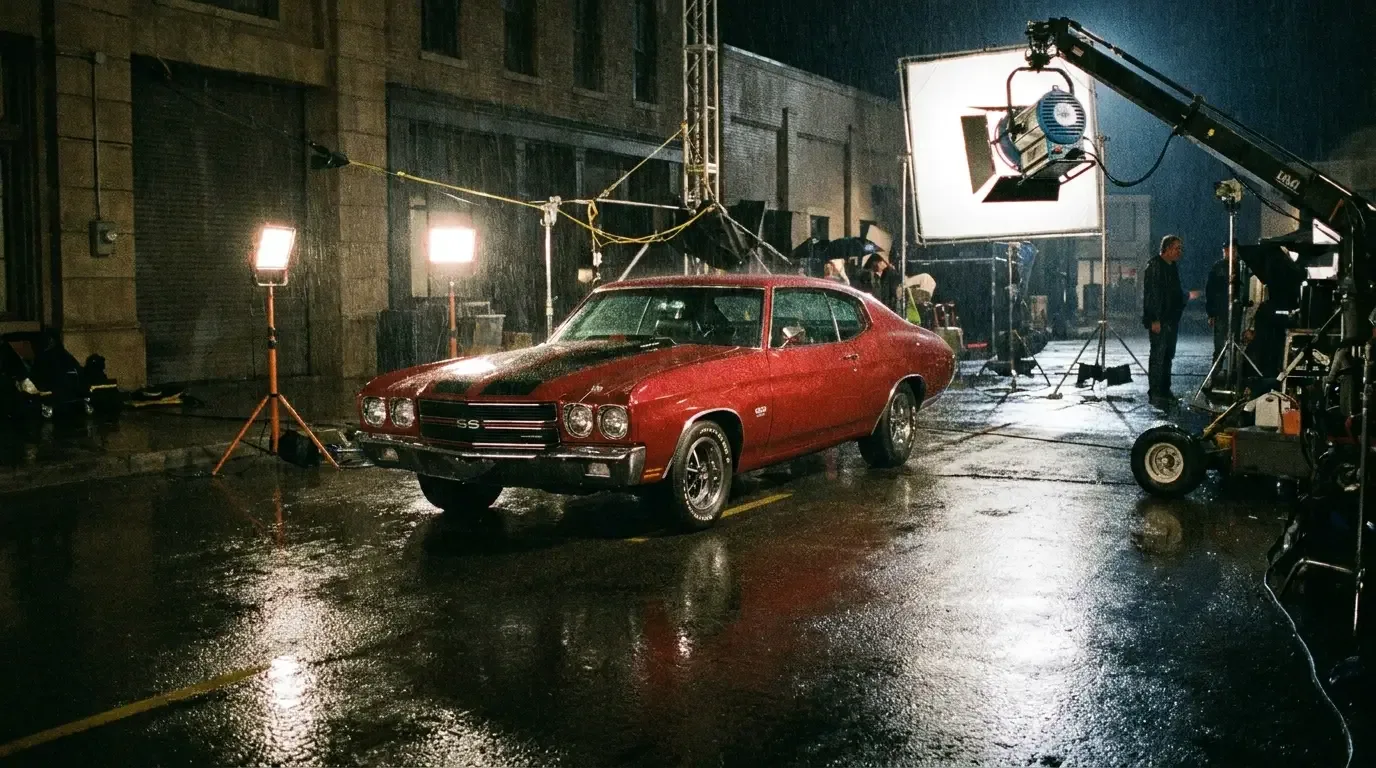
The car belongs to Dominic Toretto, played by Vin Diesel, and it has bookended the Fast & Furious franchise since the closing scene of the original 2001 film, where Dom drives off in a pristine red 1970 Chevelle SS454 with black stripes. For a saga built mostly on tuner imports and, later, exotic supercars, a red-and-black big-block Chevelle stands out precisely because it doesn't try to. It's not a spaceship. It's a big, heavy piece of Detroit iron with a reputation for being driven hard, and that fits Dom's character better than a Lamborghini ever could.
How the Chevelle became Dom's car
The Chevelle first appears in the closing moments of The Fast and the Furious (2001), a wordless coda that told you Dom was starting over. When the character returned to street racing in 2009's Fast & Furious, the same car came back with him, sanded down to bare metal and repainted gray-primer for the film's street-racing storyline, with Dom modifying it under the hood to run in an underground race set up against rival Arturo Braga. It's an outlaw car in a franchise about outlaws who eventually become a family, and it reads as personal rather than borrowed, the way a lot of the tuner cars in the series can feel interchangeable between characters.
Production sourced more than one Chevelle for that 2009 film, a mix of drivable hero cars and reinforced stunt doubles built to survive jumps, drifts, and the occasional rollover. The picture-car department built six primered Chevelles specifically for the street-racing sequences, including one engine-less filming buck used for close shots and one radical wheelstand car fitted with a 502-cubic-inch big-block, an automatic transmission, a spooled rear end with 4.88 gears, and a hidden 700-pound weight tray to make it stand on its rear wheels on cue. One of the six was destroyed performing a jump; three others were damaged during filming. That's standard practice for any franchise built around real cars getting really abused.
The scenes that mattered
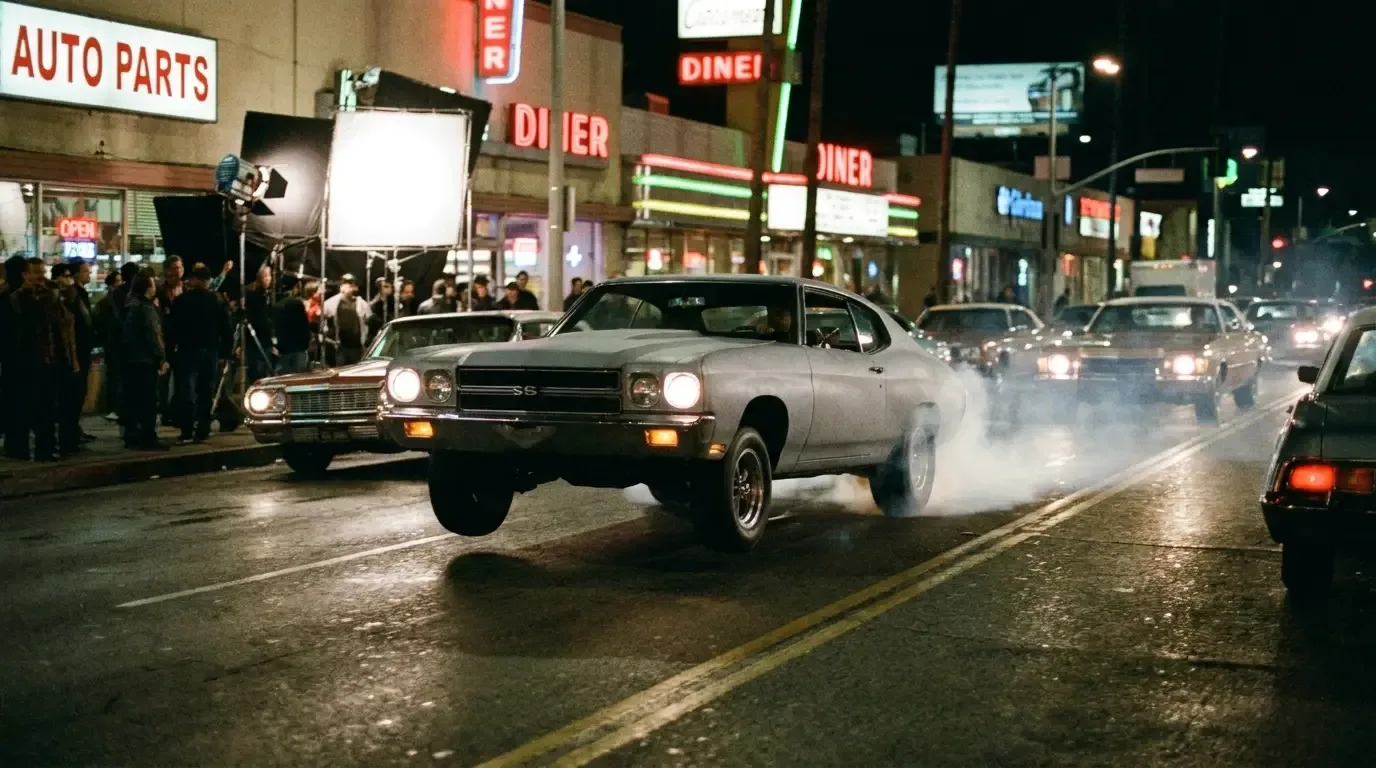
The Chevelle's most memorable moments aren't the biggest explosions in the series. In 2009's Fast & Furious, Dom's gray-primer Chevelle carries the film's street-race storyline before a pivotal scene in which Dom triggers the car's own destruction to prevent a worse outcome, an explosion staged with the primer car rather than the pristine hero. Chevelle in pop culture covers a wider sweep of the model's screen history, but Dom's car earns its own chapter because it kept coming back across multiple films rather than appearing once and disappearing. After the events of Furious 7, Dom is shown with a restored red-and-black 1970 Chevelle SS454, visually identical to the one from the first film, which resurfaces in The Fate of the Furious and again in Fast X, including a quiet garage scene in which Han Seoul-Oh admires the car and Dom mentions he's rebuilding it with his son.
Part of what sells those scenes is sound design layered over a chassis that genuinely can put power down hard when it's set up right. A period-correct big-block Chevelle with a 454 under the hood doesn't need much embellishment to sound like trouble. The franchise's sound team leaned into that rather than fighting it.
Why a 1970 Chevelle instead of something rarer
There were rarer, faster, and objectively more collectible muscle cars the production could have chosen. The Chevelle got picked anyway, and the reason likely has less to do with horsepower on paper and more to do with silhouette. The 1970 SS has a wide stance, a low roofline, and a front end that reads as aggressive without looking cartoonish, which matters when a car needs to hold its own in a wide shot next to modern supercars without looking like a museum piece that wandered onto set.
There's also the matter of availability. Chevelles from this era exist in real numbers, which meant production could source and modify several without depleting a nearly extinct pool of survivors the way a rarer car might have required. Practical filmmaking logic ends up shaping automotive pop culture just as much as any script decision does.
| Detail | Notes |
|---|---|
| Model year used onscreen | 1970 Chevrolet Chevelle SS454 |
| Character association | Dominic Toretto, played by Vin Diesel |
| First appearance | Closing scene of The Fast and the Furious (2001) |
| Key later appearances | Fast & Furious (2009, gray primer), The Fate of the Furious, Fast X (restored red/black) |
| Color | Red with black stripes originally; gray primer for the 2009 street-race storyline; restored to red/black afterward |
| Production approach | Multiple hero and stunt cars built for different scenes, including six primered Chevelles for the 2009 shoot |
What the car has done for the real market
Screen time doesn't rewrite a car's mechanical specs, but it absolutely rewrites how a new generation of buyers finds their way to a model. Plenty of people who now own or want a real 1970 Chevelle SS can trace their first real interest back to a theater seat rather than a car show. That's not a knock on their credibility as enthusiasts. It's just an honest description of how the hobby keeps recruiting new people, and it's a big part of why interest in the model has stayed durable rather than fading the way some less-loved A-bodies have. Anyone wanting the full arc of how this car went from Chevrolet showroom staple to household name should read the Chevrolet Chevelle story, which traces the mechanical and cultural history the movies only borrow from.
If the franchise put you on this page, the good news is that real 1970 SS Chevelles are out there and buyable, not locked away in a studio prop warehouse. You can browse 1970 Chevelle SS listings and see what condition and pricing actually look like away from the sound stage.
"People ask me all the time if the movie car is 'real,' like there's a single correct answer. There isn't. There were several cars, built for different jobs, and every one of them was real steel taking real abuse. That's more honest than most of what Hollywood does with old iron."
Nora Beckett
The bigger picture
What makes the Chevelle's run in this franchise interesting isn't any single stunt. It's the consistency. A lot of movie cars get one great scene and vanish from the story. Dom's Chevelle kept returning across more than two decades of films, aging in continuity the way a real owner's car might, occasionally rebuilt, occasionally reappearing after the story took a detour. That kind of persistence is rare in franchise filmmaking, and it's part of why this particular Chevelle sits differently in people's memory than most movie muscle cars. For where this fits against the rest of the model's screen history, next: Why Hollywood Always Reaches for a Chevelle looks at why directors keep circling back to this exact silhouette decade after decade.
Sources and notes
- IMCDb, 1970 Chevrolet Chevelle SS in "Fast & Furious" (2009)
- Fast & Furious Wiki, 1970 Chevrolet Chevelle SS
- ScreenRant: Every Car Dominic Toretto Has Driven In The Movies
- GM Authority: Fast & Furious 1970 Chevelle Headed To Auction
- Hagerty, 11 Best Movie Muscle Cars
- TopSpeed, 10 Legends That Prove 1970 Was GM's Muscle Car Magnum Opus
Related Reading
Have a
Chevrolet Chevelle
for Sale?
Reach thousands of serious classic car collectors across the US.
Sell It Here →
Are You a Classic Car Dealer?
List your full inventory and connect with targeted classic car buyers.
Join as a Dealer →

About the author
Nora Beckett
Automotive features writer and photographer who tells the human stories behind the cars, from show fields to cross-country road trips.
Related Listings - Chevrolet Chevelle
More in Ownership & Lifestyle
Comments
Be the first to comment on this article.