
Financing a classic luxury car is not the same transaction as financing a daily driver, and the buyers who treat it that way tend to find out the hard way. A bank that will happily write a five-year note on a new SUV looks at a 40-year-old Mercedes or Bentley and sees a depreciating oddity it has no idea how to value. That is why a whole niche of collector-car lenders exists, and why the appraisal that supports the loan matters as much as the loan itself. Get the valuation wrong and every number downstream, from your down payment to your insurance, is built on sand.
Ownership & Lifestyle
6 min read
Financing and Appraising an Expensive Classic
Financing a classic luxury car needs specialty lenders and a real appraisal. How agreed-value loans, condition tiers, and diligence protect your money.
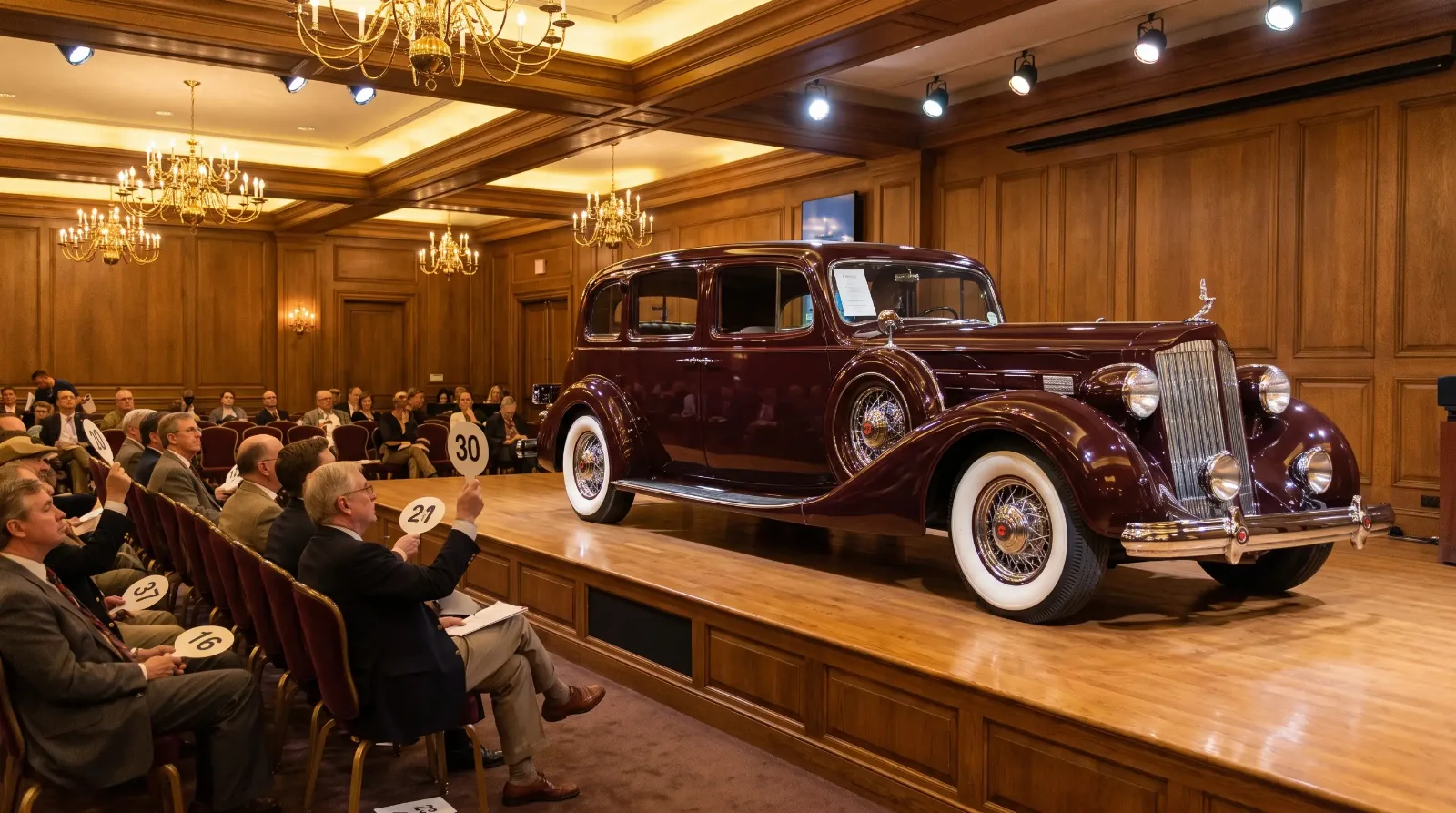
The money side of this hobby rewards preparation. A properly appraised, correctly financed car costs you less over its life than a cash purchase made on a hunch, because the discipline of the process forces you to confront the real numbers before you fall in love. This is where a cool head earns its keep. The buyer who works out the valuation, the loan structure, and the running costs before the auction paddle goes up is the one who sleeps well afterward. The buyer who does the math after the sale is the one who lists the car again a year later at a loss.
Why standard auto loans do not fit
Conventional lenders price a car loan against a depreciation curve. The car is worth less every year, so the loan is structured to stay ahead of that decline. A collector car breaks the model. It may hold value or appreciate, its worth is set by condition and provenance rather than a factory invoice, and most loan officers have no reference point for it. Ask a regular bank to finance a $120,000 coachbuilt classic and you will usually get a flat no or a personal loan at a punishing rate.
Specialty collector-car lenders exist precisely to fill that gap. They understand the asset class, they lend against agreed values, and they offer longer terms because they expect the car to hold worth. The tradeoff is that they want documentation, a supporting appraisal, and often a larger down payment than a bank would. The rates run higher than a prime new-car loan but far below a credit card or unsecured personal loan.
| Financing route | Typical use | Rough terms |
|---|---|---|
| Specialty collector-car lender | Cars from roughly $25,000 up | Longer terms, agreed-value based, larger down payment |
| Home equity line | Owners with property equity | Lower rate, but the house is the collateral |
| Standard bank auto loan | Rarely offered on older classics | Short term, valuation problems, frequent declines |
| Cash | Any purchase | No interest, but ties up capital and skips the appraisal discipline |
What a real appraisal covers
An appraisal on an expensive classic is not a quick glance and a round number. A competent appraiser assesses condition against a defined scale, verifies documentation and identity, checks the car against recent comparable sales, and weighs how easily it could actually be sold. That last factor, liquidity, is the one amateurs ignore. A car is only worth what a buyer will pay when you need to sell, and a thinly traded model with three buyers in the country carries more risk than a widely wanted one, whatever the price guide says.
The document you get should state the valuation method, the comparables used, and the condition tier assigned, typically on a one-to-four scale where a number-one car is concours and a number-four is a rough driver. That tier drives the money. The jump from a solid number-three driver to a number-two example can be tens of thousands of dollars on a six-figure car, so an honest, specific condition assessment protects you from paying a higher tier's price for a lower tier's car. For what an appraisal costs and which type fits your purpose, see our breakdown of classic car appraisal options.
"A number-two car with a thin paper trail is not a number-two car when the check clears. It is a number-three with a good story, and the appraisal has to say so out loud, before you borrow against it, not after."
David Mercer
Protecting yourself before you sign
The appraisal and the loan are only as good as the diligence behind them. This is the point where a buyer who is emotionally committed to the car most needs a process to slow them down. A few checks separate a sound purchase from an expensive lesson.
🔧 Inspection Priorities
- Get an independent appraisal, not the seller's. An appraisal commissioned by the seller has an obvious incentive. Pay for your own, from someone with no stake in the sale. It is cheap insurance against overpaying.
- Confirm the loan is agreed-value, not actual-cash-value. On an appreciating asset the difference is real money. Agreed value protects the number you and the lender settled on.
- Read the total cost of the loan, not just the rate. Longer terms lower the payment and raise the interest paid. On a large balance that difference is significant. Do the arithmetic before you sign.
- Budget beyond the payment. Insurance, storage, and maintenance on an expensive classic add thousands a year. A loan that ignores those costs sets you up to be short exactly when the car needs work.
Putting the numbers together
The sequence that keeps buyers out of trouble is simple and rarely followed. Get an independent appraisal, take that valuation to a specialty lender, structure the loan around the agreed value, and only then decide what down payment leaves you comfortable once the running costs are added in. Do it in that order and the car's price stops being a guess and becomes a documented figure you can defend to a lender, an insurer, and yourself.
None of this replaces knowing the market you are buying into, which is where the wider view helps. Pair the money mechanics here with our buyer's guide to the segment, spend time studying real asking prices among the classic luxury cars for sale, and if the deal is happening at a distance, read next: Questions to Ask Before Buying a Classic Luxury Car Sight Unseen before you commit a dollar.
Related Reading
Have a
Classic Car
for Sale?
Reach thousands of serious classic car collectors across the US.
Sell It Here →
Are You a Classic Car Dealer?
List your full inventory and connect with targeted classic car buyers.
Join as a Dealer →

About the author
David Mercer
Classic car market analyst with two decades of experience tracking collector car valuations, auction results, and investment trends.
More in Ownership & Lifestyle
Comments
Be the first to comment on this article.