
When you buy a classic luxury car, the purchase price is only the opening bid on a much longer relationship, and the biggest variable in that relationship is who turns the wrenches. A marque specialist who has spent twenty years inside Jaguar XJ engine bays or Mercedes W116 hydraulics is a very different resource than the well-regarded general classic shop across town. Both have their place. The mistake buyers make is assuming the two are interchangeable, then learning the difference through a repair bill that runs four figures higher than it needed to.
Ownership & Lifestyle
6 min read
Marque Specialists vs General Classic Mechanics
When a classic luxury car needs a marque specialist and when a general classic mechanic is the smarter, cheaper call, plus how to vet a shop first.
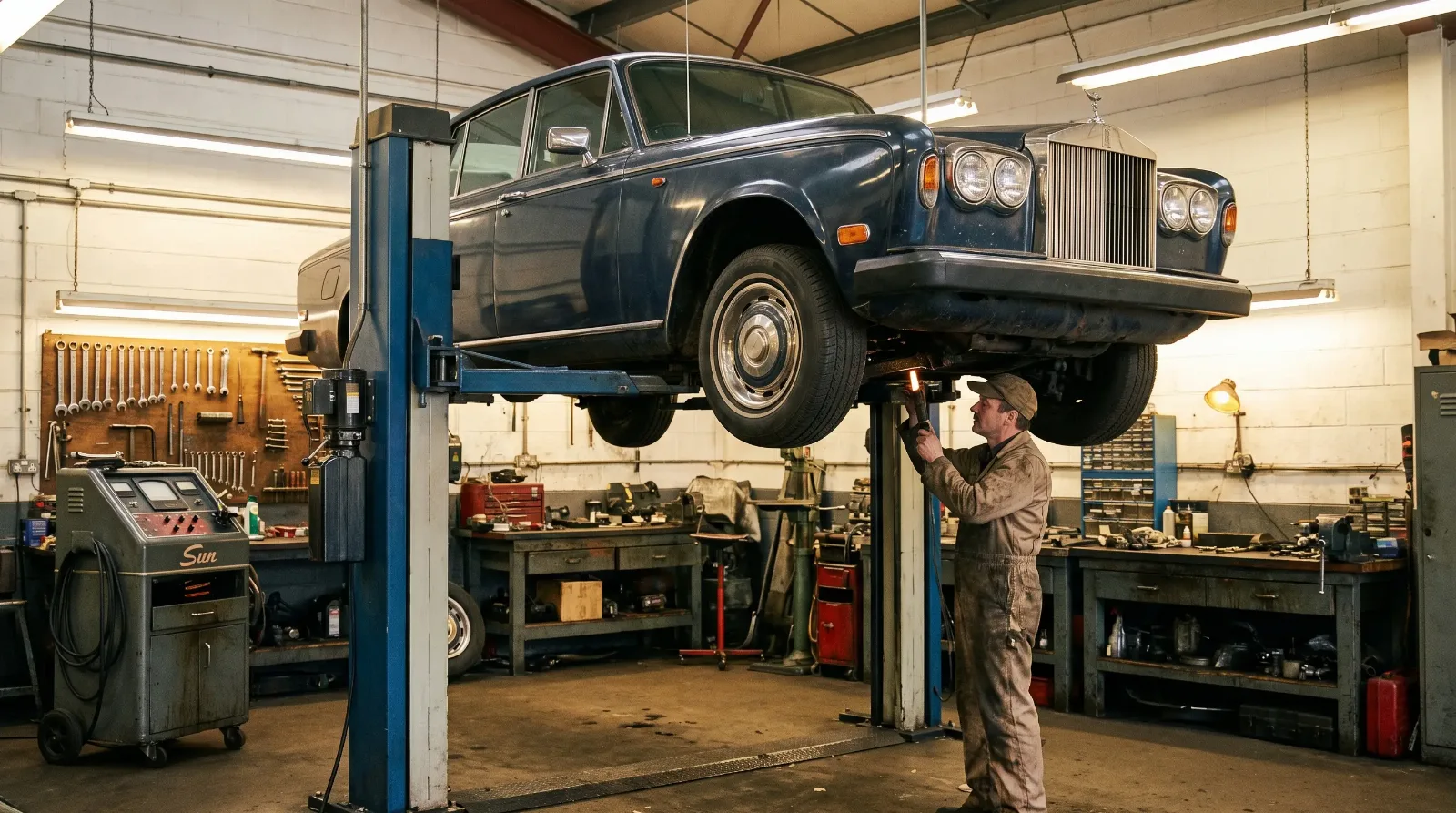
The gap shows up most on the cars where labor, not parts, drives the cost. A general mechanic diagnosing an unfamiliar Citroen hydropneumatic system by trial and error can burn ten billable hours reaching a conclusion a specialist would have named in twenty minutes. At a shop charging roughly $120 to $180 an hour, that guesswork is not a rounding error. It is the difference between a fair repair and a bad one.
Where a specialist earns the premium
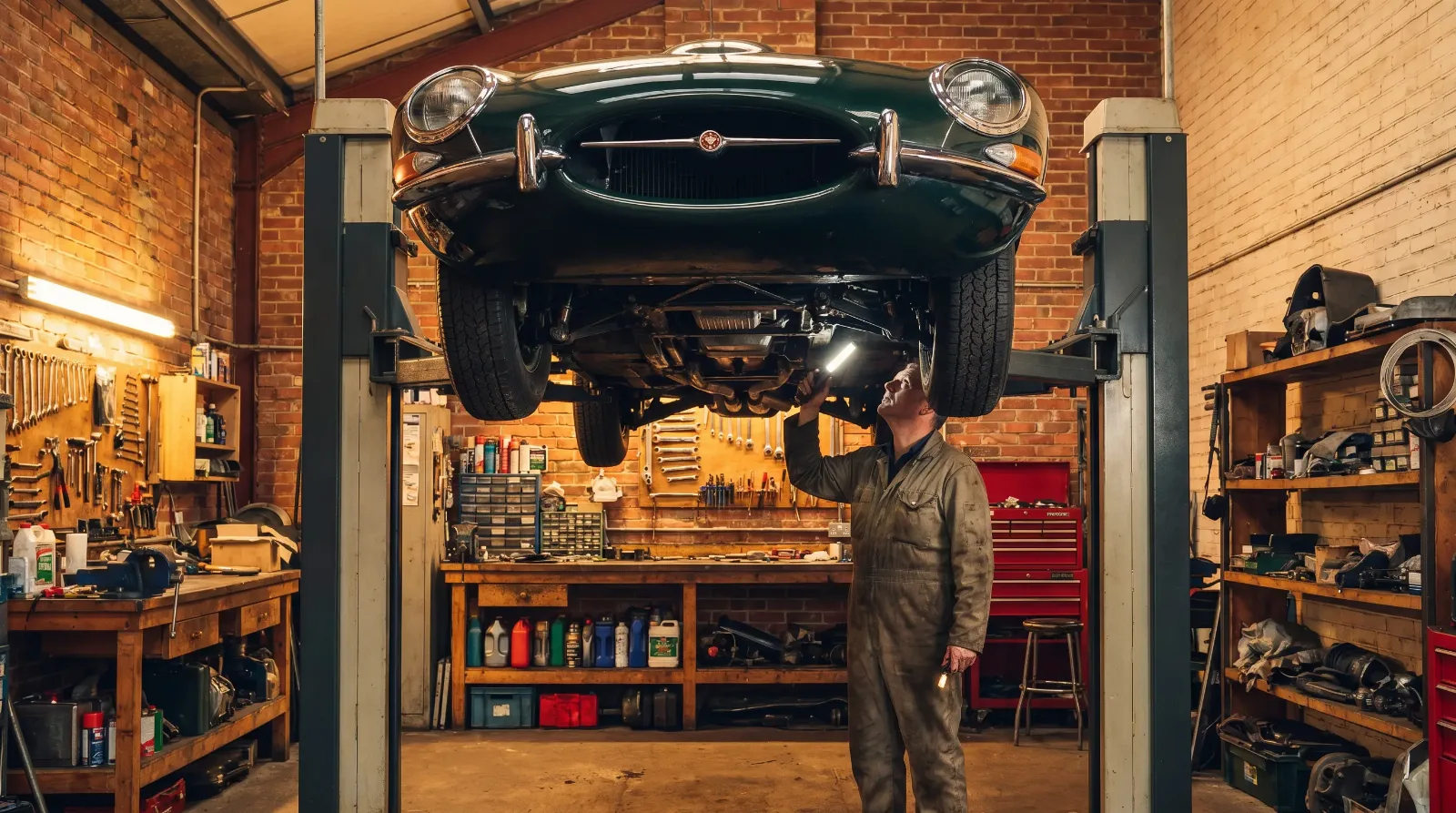
Marque specialists charge more per hour, often in the $150 to $250 range against a general shop's rough $90 to $150, and on the right car they are still the cheaper option. The reason is diagnostic speed and parts knowledge. A Rolls-Royce specialist knows the Silver Shadow brake system is a high-pressure hydraulic setup shared with the suspension, that its mineral oil is not interchangeable with anything you buy at a parts counter, and where the accumulator spheres fail. A generalist can learn all of that on your dime, or hospitalize the car while he waits on a part he ordered wrong twice.
The value concentrates in a few areas. Complex proprietary systems reward specialist familiarity most: fuel injection like Bosch D-Jetronic and K-Jetronic, self-leveling suspension, and factory climate control that predates any generic scan tool. Specialists also carry or can source the correct parts, which matters when a wrong caliper seal kit means bleeding the whole system twice. And they understand what "correct" means for value, which a shop used to modern cars will not.
"I have watched two buyers pay the same $9,000 for engine work on the same model. One used a specialist who fixed the root cause in a week. The other used a good general shop that chased symptoms for two months. Same money, very different outcome, and only one of those cars still runs right."
David Mercer
Where a general classic mechanic is the smarter call
Not every job needs a marque specialist, and paying specialist rates for routine work is its own way to lose money. Brakes, exhaust, cooling system flushes, suspension bushings, and general fabrication are bread-and-butter tasks any competent classic shop handles at a lower hourly rate. A good generalist who works on old cars all day understands the things modern-only mechanics miss, such as points ignition, carburetors, and the patience an old engine demands during a cold start.
The economics favor a generalist when the car uses widely shared mechanicals. A classic that runs a common drivetrain, or a domestic luxury car built on shared corporate components, does not need a boutique rate for a water pump. The realistic move for most owners is a working relationship with a trusted general shop for maintenance, plus a specialist on call for the systems that genuinely require one. That split keeps your annual maintenance budget, which for many of these cars runs $2,500 to $6,000 before anything breaks, from ballooning.
How to vet a shop before you hand over the keys
The questions you ask before the first repair tell you more than any five-star rating. A specialist should be able to talk fluently about the failure points of your specific model without you prompting. A generalist should be honest about the limits of what they take on, and the good ones will tell you when a job belongs with someone else. That honesty is worth more than a confident quote.
🔧 Inspection Priorities
- Ask what they will not touch. A shop that claims it can do everything on every marque is the one to worry about. Knowing your limits is expertise. Guessing on a $15,000 hydraulic system is how cars get destroyed.
- Confirm parts sourcing before work starts. For rare marques, ask who supplies their parts and what the lead time is. A car sitting three months waiting on a back-ordered part is accruing storage cost and doing nothing for its value.
- Get the diagnostic approach in writing. Specialists diagnose from experience. If a shop's plan is to replace parts until the problem stops, you are funding an education, and the bill has no ceiling.
- Check for model-specific tooling. Some systems need proprietary pressure gauges or alignment fixtures. A shop without the right tools improvises, and improvised repairs on complex systems tend to fail again.
Matching the shop to the car you actually own
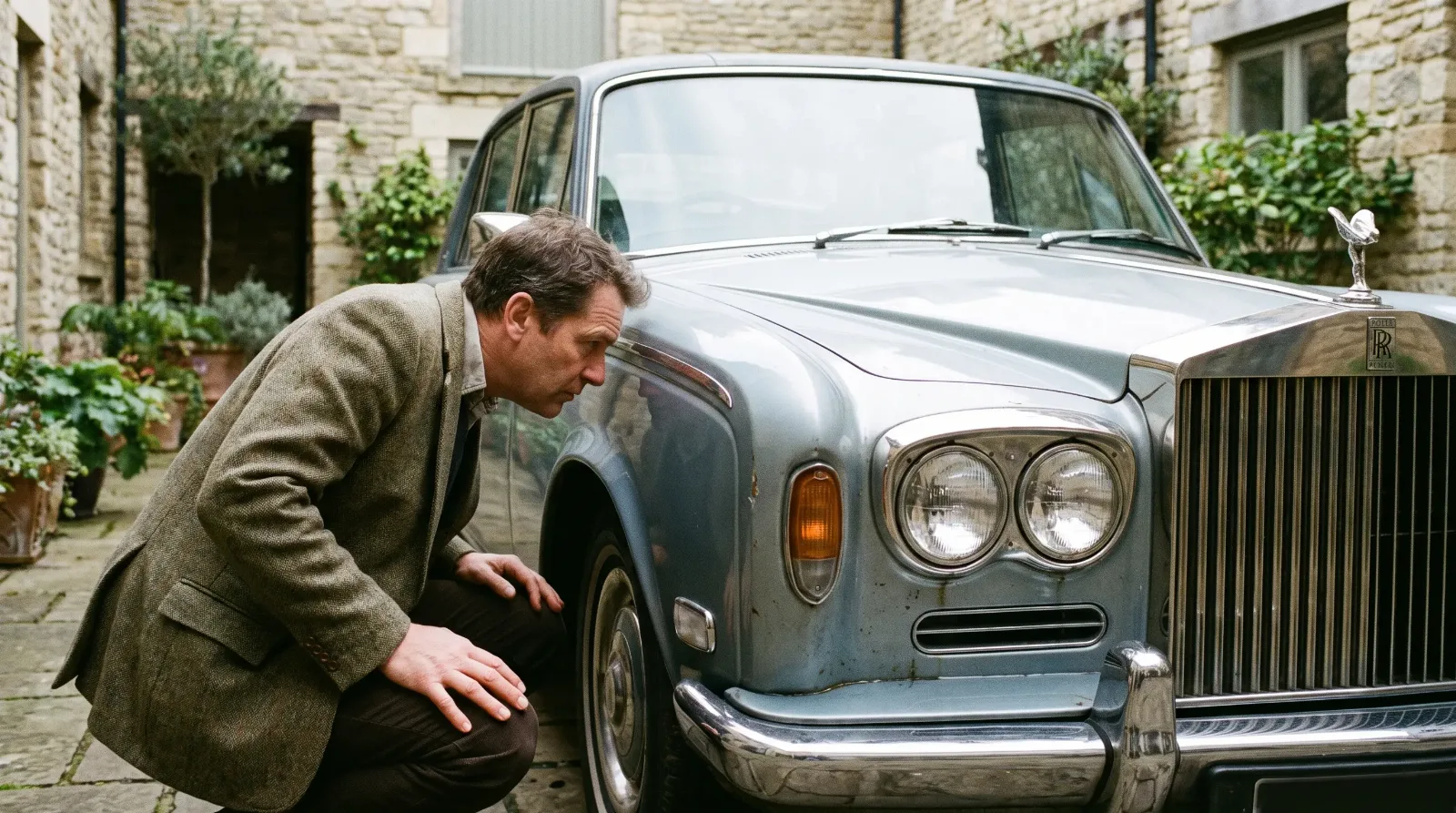
The right answer depends on what sits in your garage. A buyer weighing a European coachbuilt car with exotic hydraulics should factor a specialist relationship into the purchase decision, and if none exists within a reasonable distance, that absence is a real cost. Somebody buying a more mainstream classic luxury car has more flexibility and can lean on a general shop for most of the calendar. This is one of the practical realities worth thinking through before you commit, and it pairs well with the wider view in the buying guide.
My advice is to solve for the mechanic before you fall for the car. Find out where the nearest competent shop is, what it charges, and whether it will take your marque, then price the drive time and the annual budget into your decision. A cheaper car two hundred miles from anyone who can service it is not the bargain it looks like. Once you have the support figured out, the emotional side of the purchase gets easier to think through clearly, which is a good moment to consider next: Buying for Status vs Buying for Enjoyment.
Related Reading
Have a
Classic Car
for Sale?
Reach thousands of serious classic car collectors across the US.
Sell It Here →
Are You a Classic Car Dealer?
List your full inventory and connect with targeted classic car buyers.
Join as a Dealer →

About the author
David Mercer
Classic car market analyst with two decades of experience tracking collector car valuations, auction results, and investment trends.
More in Ownership & Lifestyle
Comments
Be the first to comment on this article.