
There is a moment in Bullitt, about halfway through, when the sound drops away and all you hear is a big-block Mustang loading up on the streets of San Francisco. Steve McQueen is behind the wheel, a Dodge Charger is trying to lose him over the hills, and no dialogue happens for almost eleven minutes. That scene did more for the muscle car than a thousand magazine covers. It taught a generation that these cars were not just fast. They were cool, and the camera loved them.
Ownership & Lifestyle
6 min read
Muscle Cars in the Movies
How Hollywood made the muscle car a legend. Bullitt, Vanishing Point, Two-Lane Blacktop and the chases that turned Detroit iron into myth.
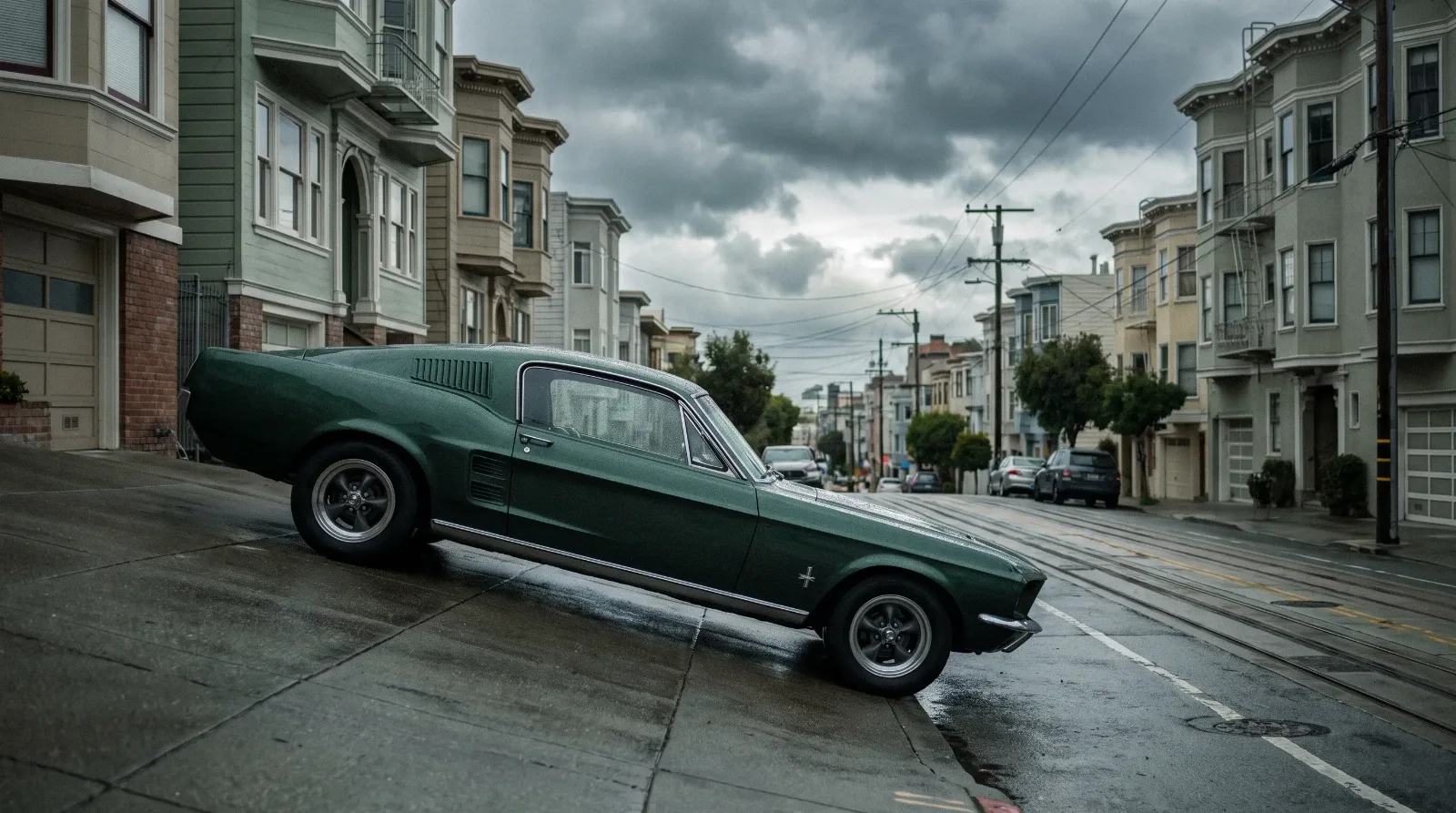
Hollywood and Detroit found each other at exactly the right time. The late 1960s gave filmmakers a new kind of American hero, restless and a little outside the law, and the muscle car was the perfect co-star. It was loud, it was cheap enough for a young man to own, and it looked dangerous sitting still. If you want the wider picture of how these cars soaked into American life, here's the full breakdown of the culture that grew up around them.
The chase that changed everything
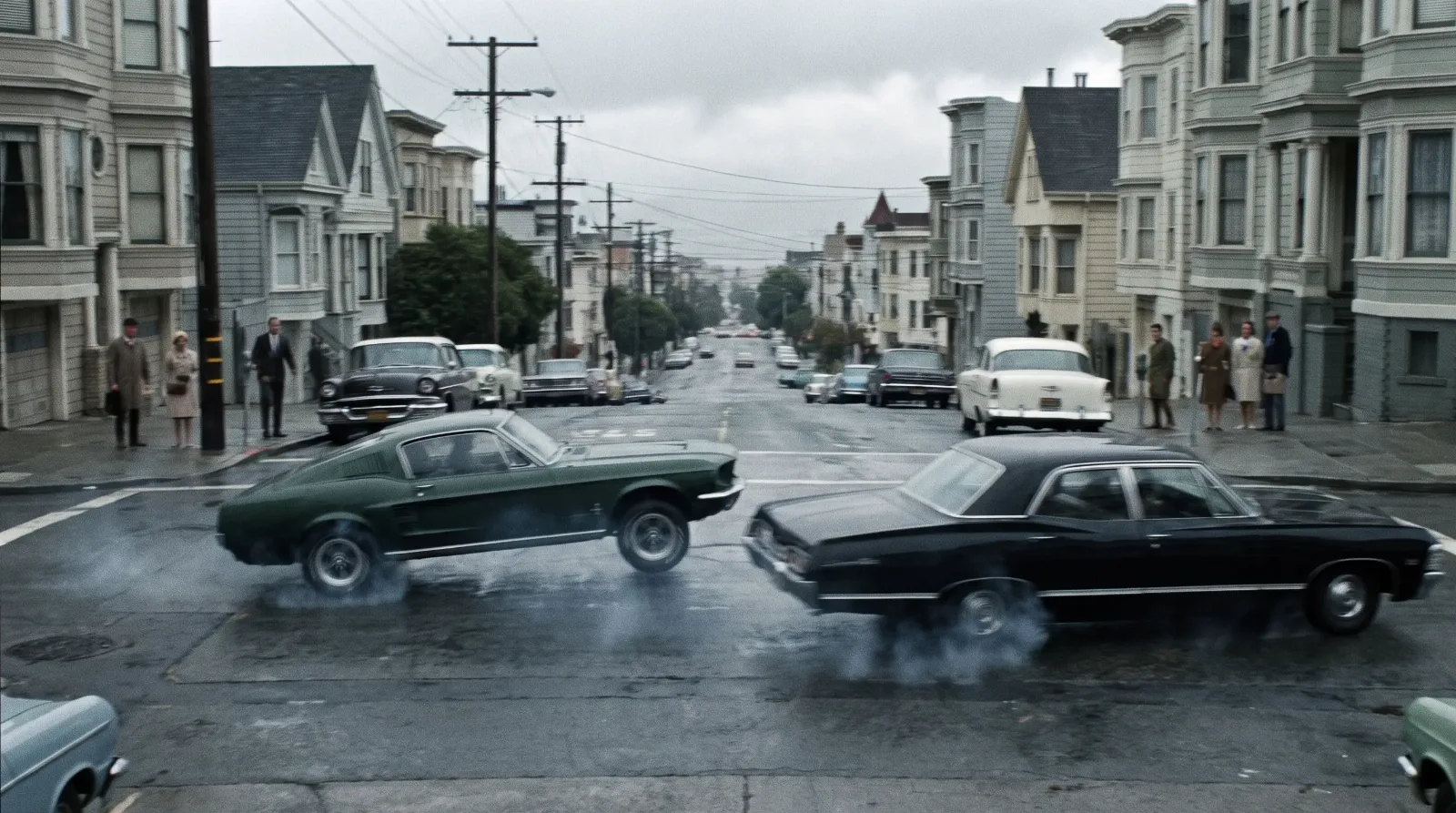
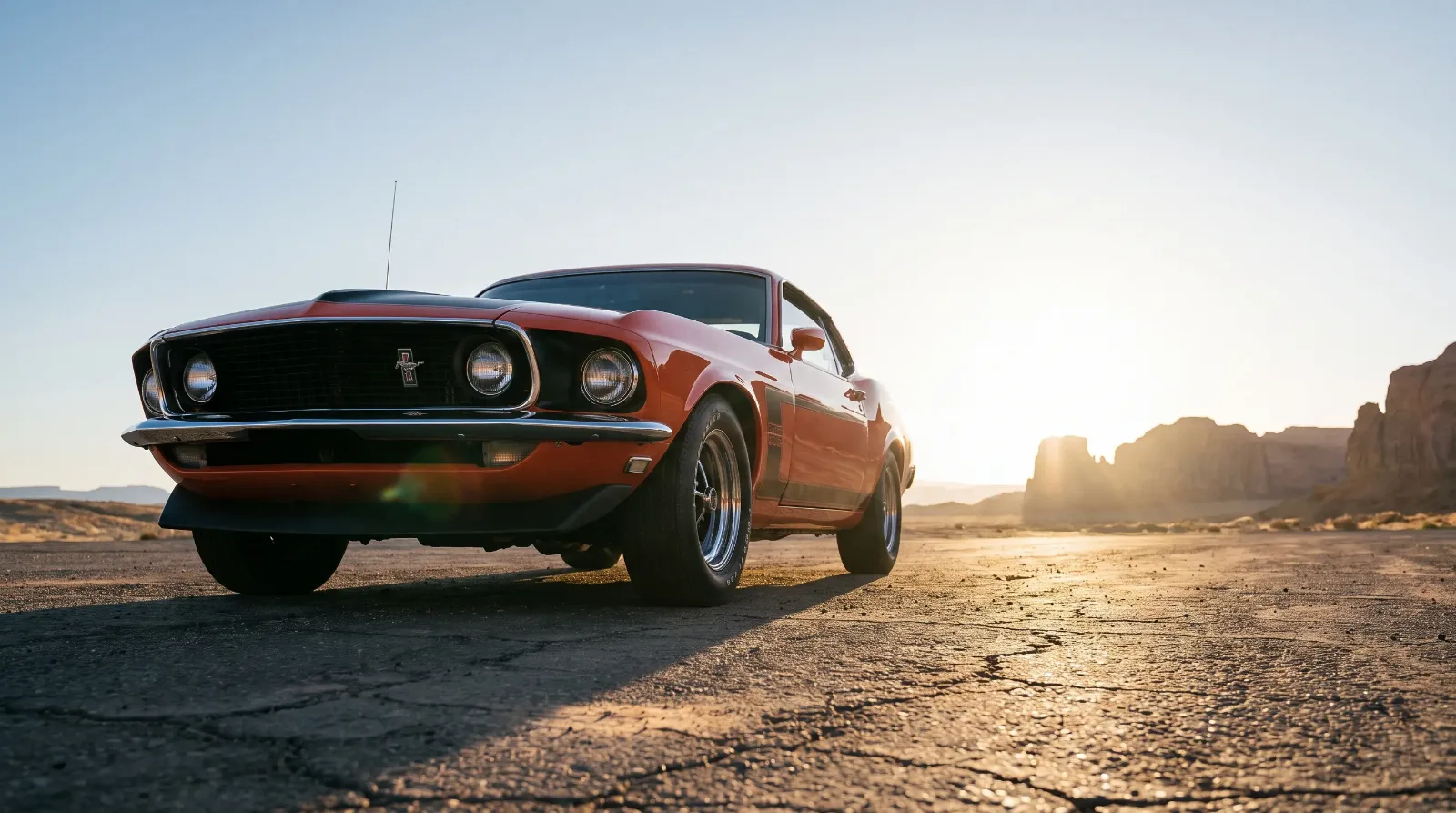
Bullitt landed in 1968 and it set a standard nobody has really beaten. McQueen drove a Highland Green 1968 Mustang GT fastback with the 390 big-block, chasing a black Dodge Charger R/T through the city with no music and no cutaways to a hero grimacing at the wheel. Just two cars, real speed, and the sound of American V8s bouncing off the buildings. The film understood something the studios had missed. You did not need to explain why the car mattered. You just needed to point the lens at it and let it work.
What made the sequence land was the honesty of it. The tires howled, the suspension bottomed out over the hills, hubcaps came off, and both cars looked like they were being driven hard by people who meant it. Audiences had never seen anything like it. Overnight the fastback Mustang stopped being a secretary's coupe and became a serious machine. That is the strange power of film. A car can spend years as an ordinary product on a dealer lot, and one good chase turns it into a legend.
The road movies of the early 1970s
By the early 1970s the muscle car had drifted into a darker, dustier kind of story. These were the road pictures, films about men running from something across the empty American West, and the car was usually the only thing they had left. Vanishing Point came out in 1971 and built its whole existence around a white 1970 Dodge Challenger R/T being driven coast to coast by a man who has stopped caring whether he arrives. The car is the plot. Everything else is scenery going past the windows.
That same year Two-Lane Blacktop paired a primer-gray 1955 Chevy against a new Pontiac GTO driven by Warren Oates, a quiet meditation on speed and emptiness that barely bothers with a story at all. Then Dirty Mary Crazy Larry arrived in 1974 with a 1969 Dodge Charger tearing through California farm country ahead of a police helicopter. These films shared a mood. The muscle car was freedom and doom in the same steel body, and the men who drove them were always headed somewhere they would not come back from.
Why the cars outlived the films
Here is what fascinates me about all of this. The movies gave these cars a second life that had nothing to do with quarter-mile times or horsepower ratings. A kid who never read a spec sheet knew what a Bullitt Mustang was. He knew the Challenger from Vanishing Point was white, and that mattered to him in a way no brochure ever could. Film turned engineering into mythology, and mythology is what people actually collect, and the muscle car overview shows how the machinery earned its reputation, but the screen is what carried that reputation into living rooms across the country.
You see it at auctions now. A car with a genuine film history, or even a faithful tribute to one, pulls money that a plain example never would. The story is worth more than the sheet metal. That is not new. The buff magazines understood the same thing, picking heroes and villains and turning road tests into drama. If you want to see how print played that game, read the full story of the magazine wars that shaped what buyers believed.
The look that filmmakers still borrow
Directors kept coming back to the muscle car long after the original era ended, and they keep coming back today. The reason is simple. Nothing else on four wheels reads the same on camera. A modern sports car looks expensive and careful. A 1970 Challenger looks like trouble. Cinematographers love the flat hoods, the wide stance, the way sunlight breaks across a long fastback roofline. These shapes were drawn by men who wanted them to look fast in a showroom, and it turns out they look even better at speed on film.
The muscle car also carries a whole decade with it the moment it rolls into frame. Put one in a shot and you have said 1970, working class, restless, American, without a word of dialogue. That kind of shorthand is priceless to a storyteller. The advertising men of the era understood this shorthand too, and they built it into the way these cars were sold. You can read the full story of how the ad campaigns turned raw horsepower into an identity.
"A great car chase is really a love scene. The director is telling you exactly how he feels about that machine, and for two generations of Americans, the way they felt about muscle cars started in a movie theater."
Patrick Walsh
The guy I know who restored a Highland Green fastback did not do it for the 390. He did it because he was twelve years old when he saw Bullitt, and he never got over it. That is the real legacy of muscle cars on screen. They stopped being transportation and became memory, and memory is the one thing that never depreciates.
Related Reading
Have a
Classic Car
for Sale?
Reach thousands of serious classic car collectors across the US.
Sell It Here →
Are You a Classic Car Dealer?
List your full inventory and connect with targeted classic car buyers.
Join as a Dealer →

About the author
Patrick Walsh
Automotive journalist covering classic car shows, events, and the enthusiast community across North America.
More in Ownership & Lifestyle
Comments
Be the first to comment on this article.