
Ask ten owners what their restomod cost and you will get ten answers, most of them low. People quote the parts and forget the labor, or they quote the drivetrain and forget the six months of bodywork that came before it. I appraise finished builds against invoices for a living, and the pattern holds: a restomod costs more than the donor car and the engine combined, usually by a wide margin. The money hides in the middle, in fabrication and finish work that never shows up in a photo. Before you set a budget, it helps to see where it actually goes, tier by tier.
Ownership & Lifestyle
6 min read
What a Restomod Costs to Build
The real cost of a restomod, from the donor body to the $100k-plus pro build, and where the money actually hides.
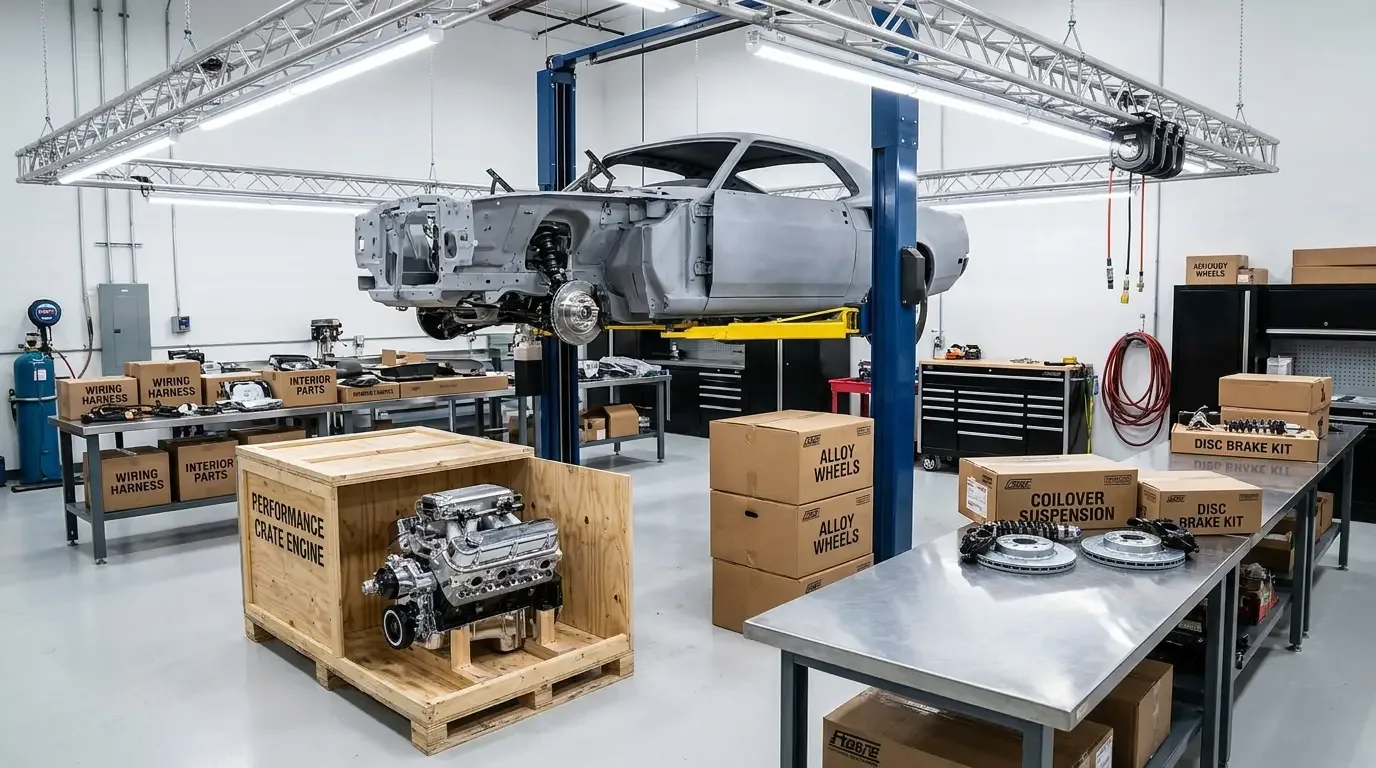
None of this makes sense without a clear picture of what a restomod is and why people build them, so if the concept is new to you, start with the story of the restomod. My concern here is narrower: the invoice.
The donor car is the smallest number on the sheet
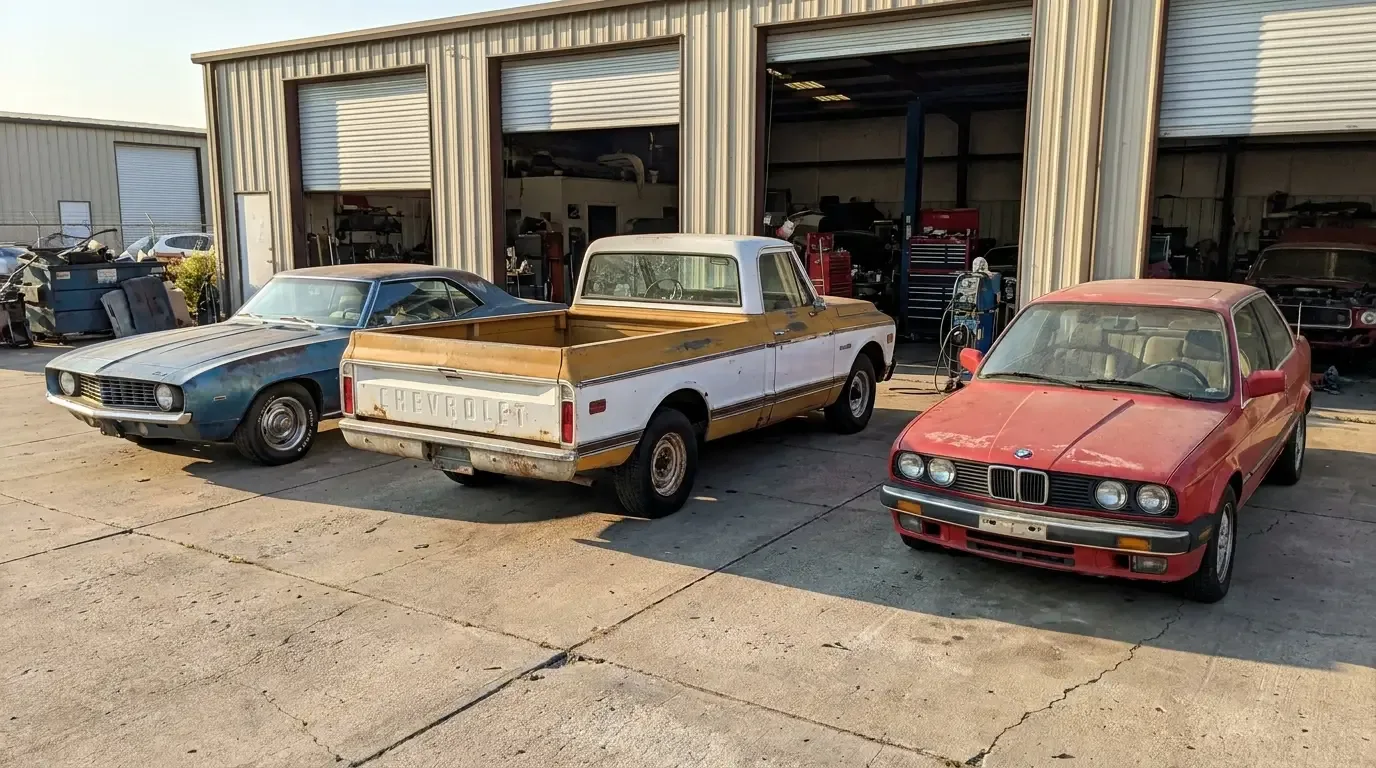
Builders fixate on finding a cheap starting car, and it matters, but it is rarely the line item that breaks a budget. A solid, rust-free project body for a common American classic runs roughly $8,000 to $25,000 depending on model and how much is missing. A desirable muscle car shell can be far more, which is one reason people argue about whether cutting one up destroys restomod value. The trap is buying a rough car to save money. Every dollar saved on a rusty floor gets spent three times over in metalwork later. A clean donor is cheaper than a cheap one.
Where the money actually goes
The drivetrain gets the attention, but it is one of four or five big buckets, and not always the largest. A modern crate engine and transmission package, installed with the wiring, cooling, and fuel system to support it, typically lands between $15,000 and $35,000 depending on the platform and how much of the work you farm out. Bodywork and paint are the sleeper cost. A show-quality finish, blocked straight with all the gaps set right, can run $15,000 to $40,000 on its own, because it is almost pure labor. Chassis, suspension, and brakes add several thousand more, and a fully trimmed interior with modern seats, climate control, and sound deadening is rarely under $10,000 done well.
| Area | Typical range (shop rates) | What drives it |
|---|---|---|
| Donor body | $8,000 - $25,000 | Model demand, rust, completeness |
| Drivetrain (engine, trans, install) | $15,000 - $35,000 | Crate vs junkyard, wiring, cooling |
| Bodywork and paint | $15,000 - $40,000 | Panel straightness, labor hours |
| Chassis, suspension, brakes | $6,000 - $20,000 | Bolt-on vs full custom chassis |
| Interior and comfort | $10,000 - $30,000 | Upholstery, A/C, audio, gauges |
DIY versus a shop build
The single biggest variable is not parts, it is labor. Shop rates in the United States commonly run $75 to $150 an hour, and a ground-up build absorbs hundreds of hours. That is why the same parts list can produce a $50,000 car in a home garage and a $150,000 car in a professional shop. Doing your own work does not make the parts cheaper, it removes the labor multiplier.
The honest catch is that DIY trades money for time and skill. A home builder can save tens of thousands, but only on the tasks they can actually do well. Paint and upholstery are where most amateurs give up and pay a pro anyway, and there is no shame in it. The people who finish DIY builds tend to be selective: they do the assembly, the wiring, and the mechanical work themselves, then send the body and the interior out.
"The cheapest build I ever appraised and the most expensive one used nearly identical parts. The difference was 900 hours of labor and who paid for it. When someone tells me their restomod cost thirty grand, I ask whose time they forgot to count."
Marcus Feld
Three realistic budget tiers
Owners tend to slot into three bands, and knowing which one you are aiming at keeps the project honest. Picking a good starting platform helps at every tier, which is worth reading up on separately in The Best Cars to Restomod.
- Budget, roughly $30,000 to $60,000. A home-built car on a common platform, often with a used LS drivetrain instead of a crate engine, driver-quality paint, and a functional rather than show interior. Most of the savings come from the owner's own labor.
- Mid, roughly $70,000 to $130,000. A mix of DIY and farmed-out work, a proper crate drivetrain, quality paint, and a fully modernized interior with air conditioning and audio. This is where most serious private builds land.
- High, $150,000 and up. A full professional build, custom chassis, hand-fit bodywork, bespoke interior, and the kind of finish that wins at shows. The "$100k-plus pro build" people talk about is really the entry point to this tier, not the ceiling.
What you get back at the end
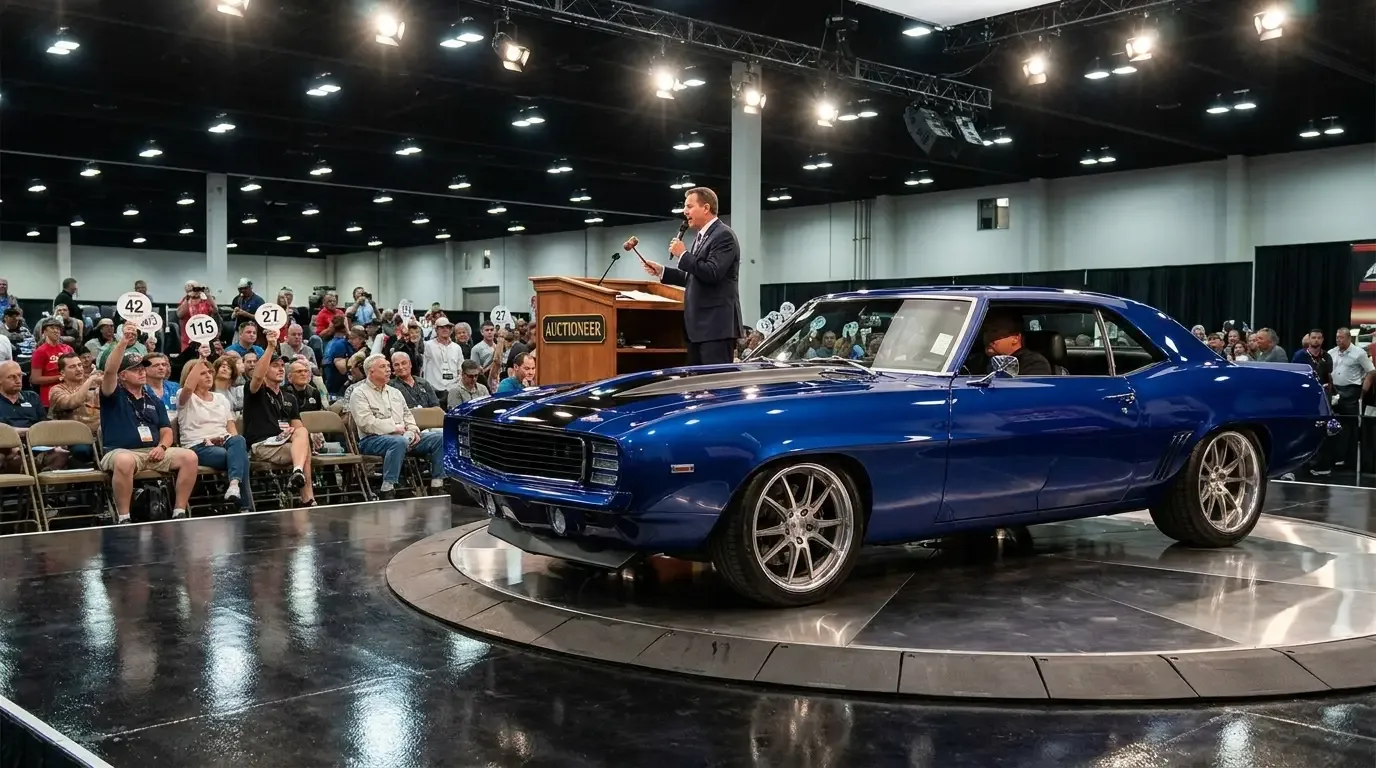
Cost and resale are different questions, and confusing them is how people talk themselves into and out of builds. Very few restomods sell for what they cost to build, the same way very few home renovations return every dollar. The ones that do are usually name-shop cars or desirable platforms executed to a high standard. For most owners the math is simpler: you pay to own and drive the car you wanted, and you accept that some of the money is spent, not invested. If resale is your main concern, buying a finished car almost always costs less than building an equivalent one, because you skip the labor premium and the surprises.
Sources and notes
- Collector-car auction records for finished restomod sale prices and build-cost context.
- Builder and restoration-shop interviews on labor rates and typical time budgets.
- Crate-engine and aftermarket-chassis supplier pricing references.
- Owner build logs and forum cost breakdowns used for range validation.
Related Reading
Have a
Classic Car
for Sale?
Reach thousands of serious classic car collectors across the US.
Sell It Here →
Are You a Classic Car Dealer?
List your full inventory and connect with targeted classic car buyers.
Join as a Dealer →

About the author
Marcus Feld
Accredited collector-car appraiser who reads the market through hammer prices, condition tiers and risk.
More in Ownership & Lifestyle
Comments (1)
N
Norm Delgado
1 month ago
Color combinations matter more than most buyers think. Original paint codes add real value; wrong-era repaints subtract from it.