
Every restomod carries two price tags. One is what a builder spent turning a tired classic into something that looks vintage and drives like a modern car. The other is what the market will actually pay for that decision, and the gap between those two numbers is where most owners get hurt. I track auction results for a living, and the pattern is consistent: a restomod either adds a clear premium over the stock car, or it erases a premium the original body was already carrying. There is very little middle ground, and which side you land on has almost nothing to do with how good the build is.
Ownership & Lifestyle
11 min read
Restomod Value and the Originality Debate
A data-first look at restomod value: the market premium, the numbers-matching penalty, and which cars gain or lose when you modify them.
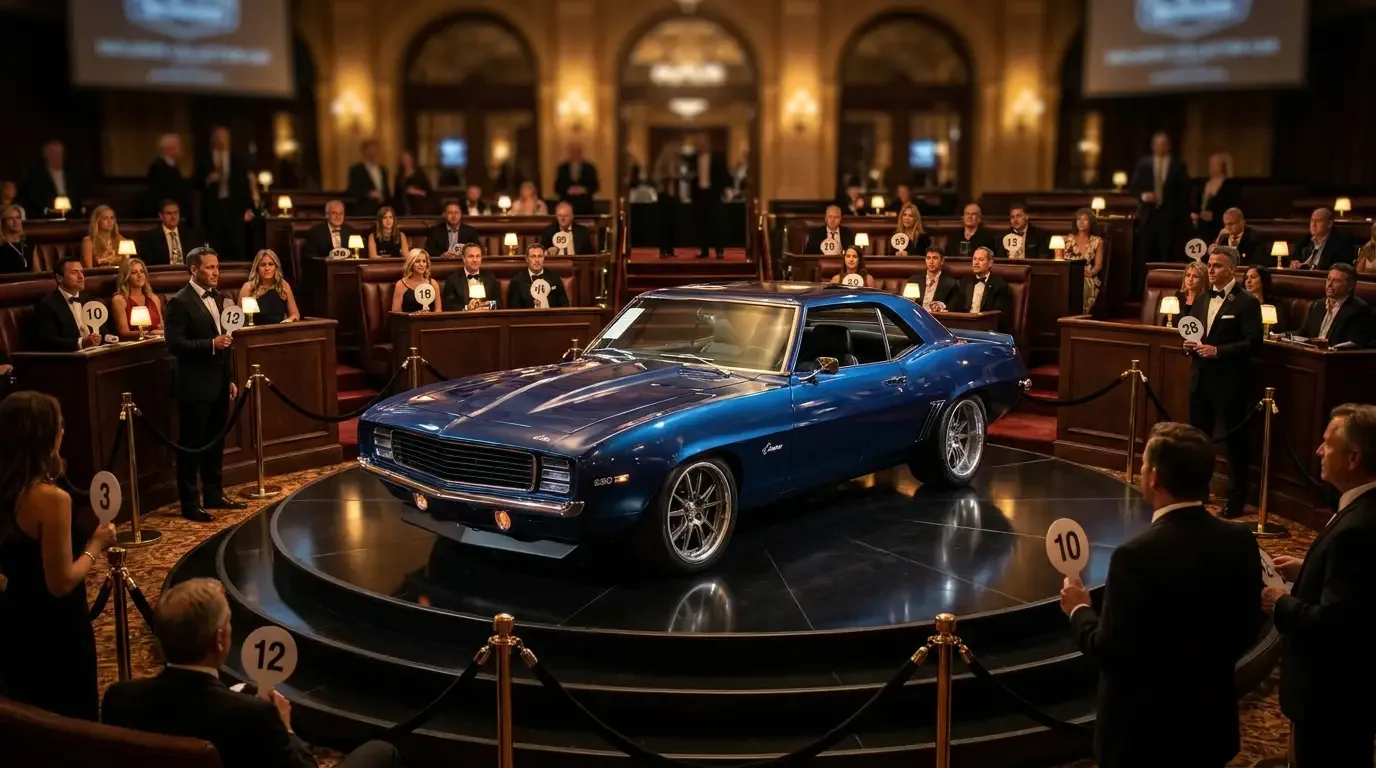
The originality debate sits underneath all of it. Ask a concours judge and a pro-touring builder the same question about the same car and you get two opposite answers, both defensible. Before you spend a dollar, it helps to understand which cars the market rewards for modification and which ones it punishes. If you want the full background on how this category came to be, start with the restomod story, then come back for the money side.
The two markets that never talk to each other
There are two separate buyer pools bidding on old cars, and they value opposite things. The originality pool wants numbers-matching cars: the engine, transmission, and major components carrying their original factory stampings and date codes, documented and unmolested. For this buyer, a matching-numbers Hemi Cuda or a real COPO Camaro is a financial instrument, and any deviation from factory spec is a defect that lowers the price. Documentation is the asset.
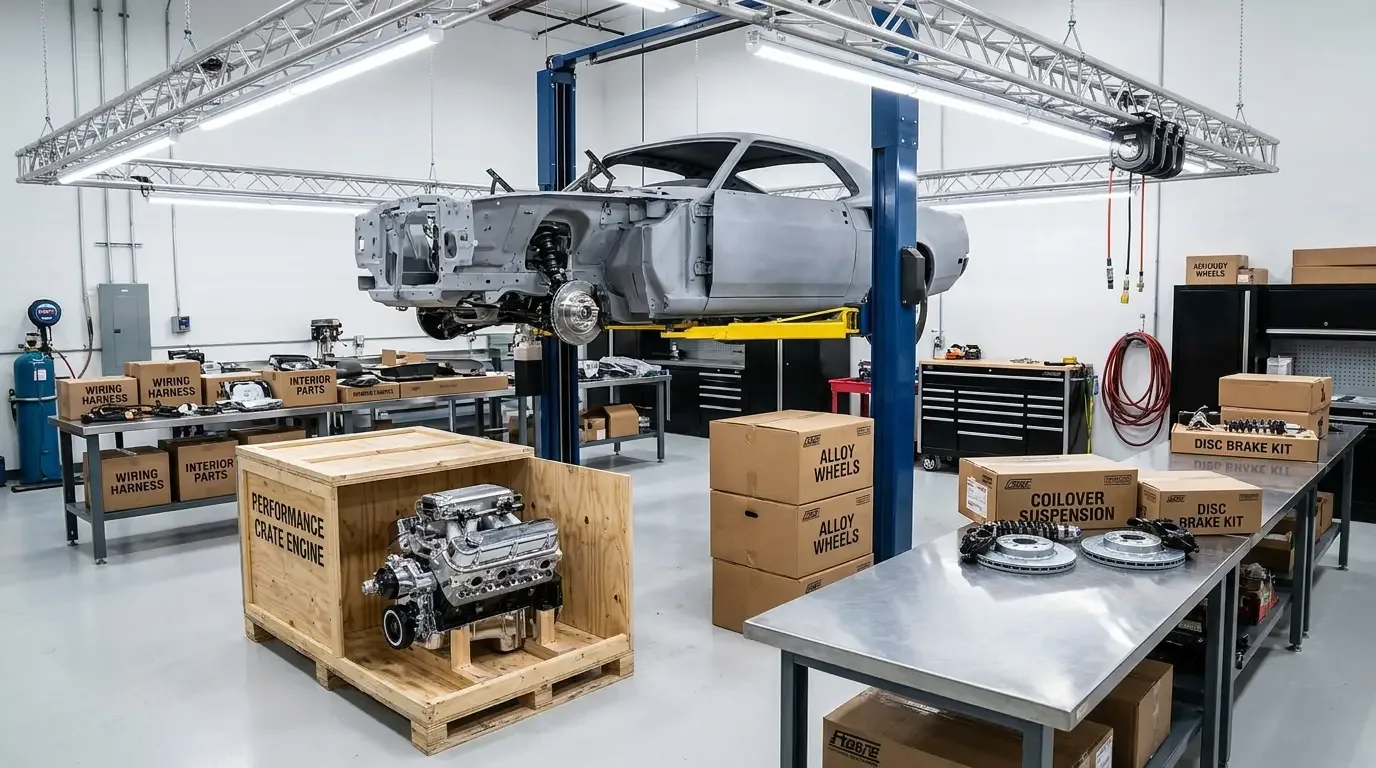
The restomod pool wants the opposite. They want a car that starts on the first turn, stops from 70 without drama, and holds highway speed without cooking the cabin. They will pay for a modern engine swap, coilovers, and disc brakes precisely because they intend to drive the thing. To this buyer, a stack of original build sheets is nice history but not something they will pay extra for. If you are still deciding which camp your project belongs in, it is worth being clear on what is a restomod versus a factory-correct restoration, because the two are priced by completely different rules.
The trouble starts when a car belongs to both pools at once. Modify a car the originality pool wanted, and you have removed it from the expensive market and dropped it into the cheaper one. That is the penalty in one sentence.
Which cars gain value as restomods
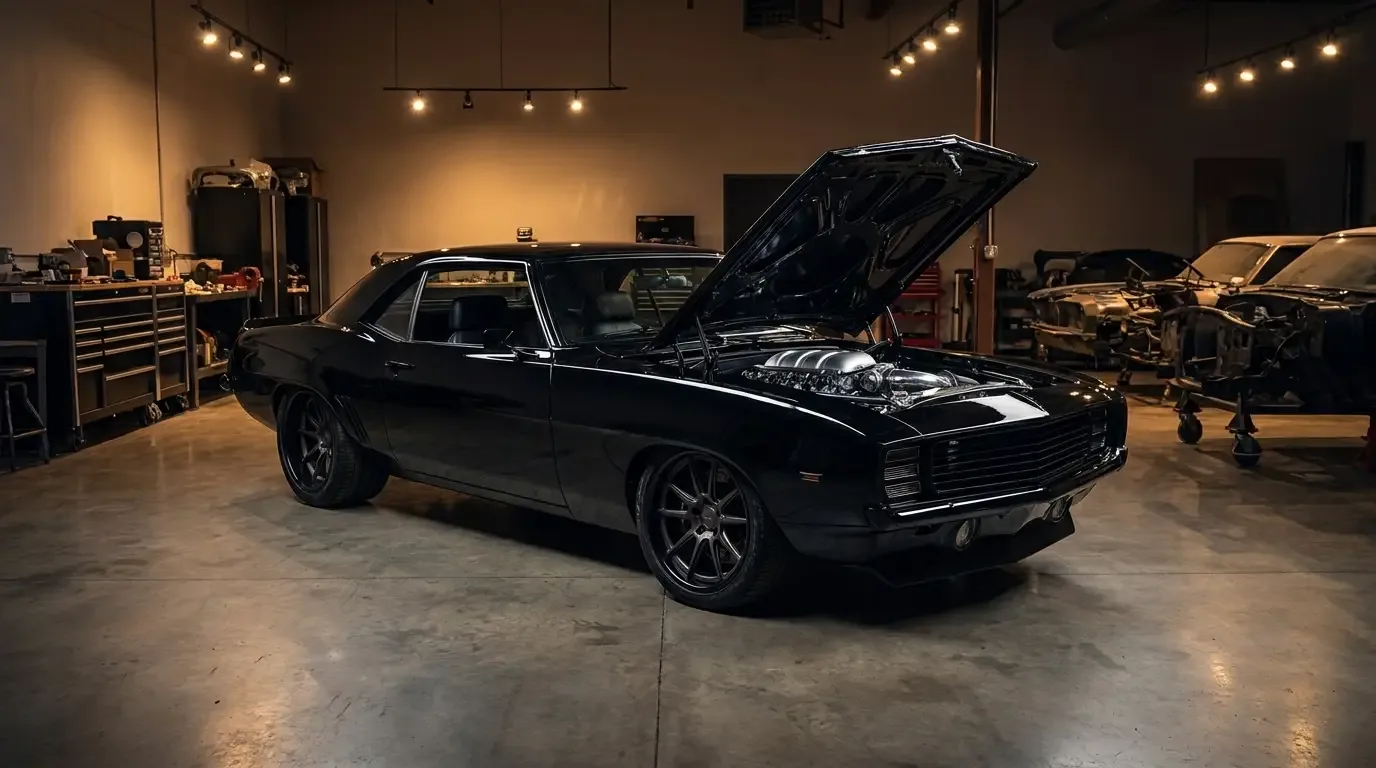
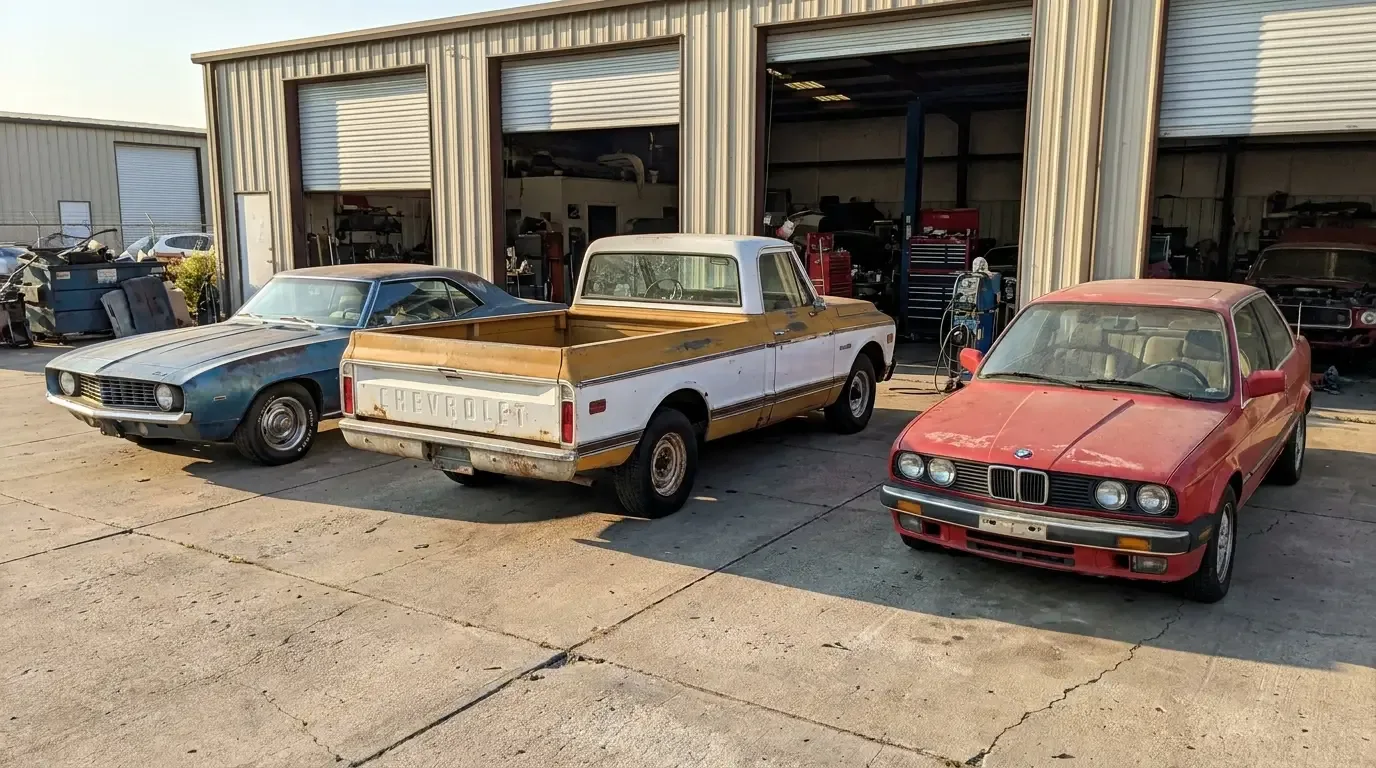
The winners are almost always common cars. Take a model that was built in large numbers, has no scarcity value in stock form, and has a strong aftermarket, and a well-executed restomod routinely sells for more than an ordinary original example. First-generation Broncos, small-block Mustangs, C10 pickups, second-gen Camaros, and Datsun Zs all follow this rule. There were enough of them that no single stock car is precious, so nobody is offended when you upgrade one.
The numbers on the professional end are public. Velocity Restorations' pre-built Broncos generally list from around $220,000 to $250,000, with heavily optioned commissions running higher. ICON's Bronco builds have averaged around $235,000, with the BR series starting near $292,000. Compare that to a clean stock first-gen Bronco in the $85,000 to $120,000 band and the math is obvious: the modern drivetrain, chassis, and interior are worth six figures of premium to this buyer, because the donor car was never rare to begin with.
- High donor supply. Enough cars exist that modifying one does not destroy a scarce original.
- Weak stock desirability. The base car is pleasant but not investment-grade, so there is no premium to protect.
- Deep parts catalog. Bolt-in suspension, brake, and swap kits keep build cost predictable and quality high.
- Broad driver appeal. The finished car suits weekend use, which is exactly what the restomod pool is buying.
Which cars lose value the moment you cut them
The penalty lands hardest on the rare, the documented, and the historically significant. Cars where originality is the entire value proposition. A matching-numbers muscle car with real provenance, a low-production homologation special, a documented one-owner survivor: modify any of these and you have converted a car the collector market fought over into a nice driver the collector market ignores.
Builders love to point at outlier auction results to argue the penalty is a myth. A Ringbrothers 1967 Mustang fastback reportedly sold for around $265,000, and a Ringbrothers De Tomaso Pantera crossed a Barrett-Jackson block for roughly $300,000, a record for the model. Those are real numbers, but they prove a narrow point, not a general one. Those donor cars were not rare matching-numbers cars whose value depended on being untouched. They were reasonably common bodies transformed by a shop with a national reputation. The result reflects the builder's brand and the show quality of the work, not a rule you can apply to your garage. Take the same money and the same craftsmanship to a genuine numbers-matching rarity and the market will still dock you for the missing originality.
"I have watched two identical-looking cars cross the block an hour apart, one original and one beautifully modified, and the original brought more. The build was better. The market did not care. It was paying for the paperwork, not the paint."
David Mercer
The auction reality: builder brand and documentation
Two variables move a restomod's hammer price more than anything else, and neither is horsepower. The first is who built it. A car from a recognized shop with a track record sells for a premium a garage build cannot touch, because the buyer is paying for reputation, warranty of quality, and the ability to resell later on the same name. The second is documentation, but a different kind than the originality pool cares about. The restomod buyer wants a full receipt trail: what was spent, what parts went in, who did the work. A build binder that proves $180,000 went into the car protects value the way a numbers-matching stamp protects an original.
Where restomod owners get hurt is the amateur build with no paper. Money went in, but there is no name and no proof, so the market prices the car on appearance alone and ignores the invoices in a shoebox. This is the single most common way owners lose money on a restomod, and it has nothing to do with the originality debate at all.
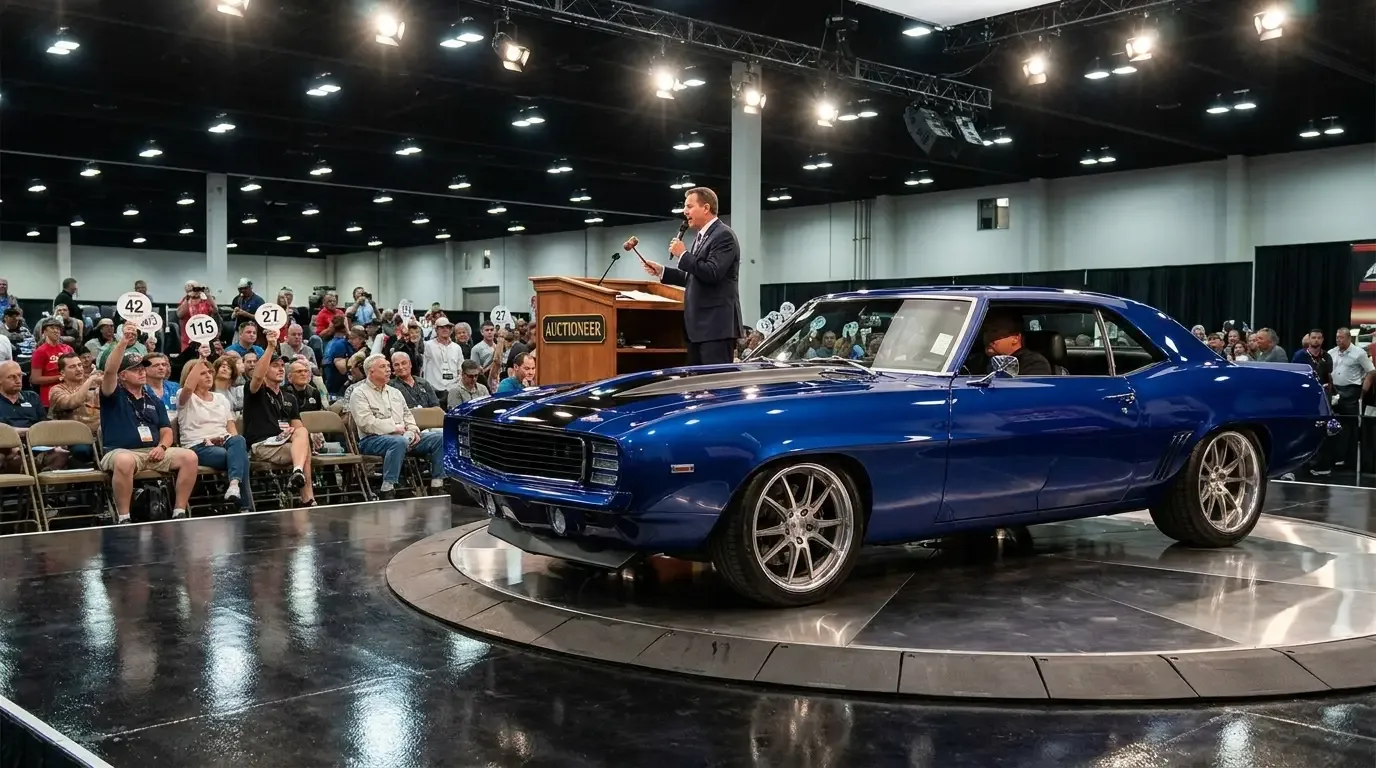
Watch a live auction for an afternoon and you can see both variables doing their work in real time. When a car from a name shop rolls across, the auctioneer says the name before he says the model, and the bidding opens where a private build would already be finished. The buyers in that room are not only paying for what they can see on stage. They are paying for the shop's phone number if something goes wrong, and for the fact that the next owner will recognize the badge too, which keeps the car liquid. A private build with equal craftsmanship gets none of that. The room has no name to trust, so it bids the metal and the paint and stops. Two cars that cost the same to build can land twenty or thirty percent apart on the hammer for no reason other than whose logo is on the valve covers.
Documentation moves the number the same way, just more quietly. A thick build binder does not excite a crowd the way a famous name does, but it steadies the floor under the car. When a bidder can flip through dated invoices, a spec list, and photos of the chassis before the body went back on, the guesswork drops out of the price. He is no longer wondering whether the shiny paint is hiding rust or a hasty swap. He knows what went in and what it cost, so he bids closer to the real figure and further from his fear. The cars that stall on the block are almost always the ones where the seller says a lot of money went in but cannot show a single receipt. The room hears that and prices the doubt, not the dollars.
| Donor car profile | Stock value trend | Restomod verdict | Typical direction |
|---|---|---|---|
| Common classic, high supply | Flat to modest | Market rewards modification | Premium gained |
| Rare, numbers-matching, documented | Strong and rising | Market punishes modification | Premium erased |
| Named pro-shop build, full receipts | N/A | Brand carries the price | Highest returns |
| Amateur build, no documentation | N/A | Priced on looks only | Steepest losses |
The premium math, one car two ways
The clearest way to feel the originality penalty is to run the same car down both roads and watch where the money goes. Take a documented numbers-matching muscle car, the kind the collector pool actively fights over. Call the stock car worth $160,000 in its original, unmolested state, with the date-coded engine and the paperwork to prove it. That number is not the cost of the parts. It is the price of scarcity and proof, and it is rising because cars like it are not being made anymore.
Now build the same car the other way. Pull the original drivetrain, drop in a crate motor and a modern transmission, add coilovers, big brakes, air conditioning, and a clean interior. Say the build is excellent and costs $90,000 done right. On paper the owner has spent $160,000 plus $90,000, so $250,000 sits in the car. The restomod pool, though, does not price it against that total. It prices it against other quality restomods of that model, which might trade around $130,000 to $170,000 depending on the builder's name. Call it $150,000 on a good day for a private build with a proper binder. The owner put in a quarter million and the market hands back roughly $150,000.
The loss is worse than the $100,000 gap it looks like, because the original car it started as would have sold for $160,000 untouched and appreciating. The modification did not just fail to add value. It erased the scarcity premium the body was already carrying and swapped a rising asset for a flat one. Run the identical build on a common donor and the ledger flips. Start with a $30,000 body nobody protects, spend the same $90,000, and a well-documented result can land at $130,000 or more. Same craftsmanship, same invoices, opposite outcome, and the only thing that changed was whether the starting car had a premium worth protecting.
How to think about it before you spend
The honest framing is that a restomod is rarely an investment and usually a purchase. On common donors from a good shop with full paper, it can hold value well and occasionally appreciate. On rare originals, or as an undocumented amateur project, it is a consumption decision: you are buying enjoyment, not building equity. Both are legitimate. The mistake is confusing one for the other and expecting the market to reward a choice it was never going to pay for.
Run the test before you commit. Ask what the stock car is worth untouched, and whether that number is rising because the car is rare. If yes, the originality pool already owns that car and modifying it means giving up their premium. If the stock car is common and merely pleasant, the restomod pool is your buyer and a quality build is likely to add value. When you are ready to see what finished cars actually trade for, browse the restomods for sale and compare asking prices against stock equivalents. The spread tells you exactly which side of this debate each model sits on.
Sources and notes
- Auction records and results archives from major collector-car sales and online marketplaces.
- Published price-guide indexes and classic-car market value trend reporting.
- Professional restomod builder pricing pages and pre-built inventory listings.
- Period and current motoring press coverage of notable restomod sales.
- Collector-market commentary on originality, numbers-matching documentation, and resale value.
Related Reading
Have a
Classic Car
for Sale?
Reach thousands of serious classic car collectors across the US.
Sell It Here →
Are You a Classic Car Dealer?
List your full inventory and connect with targeted classic car buyers.
Join as a Dealer →

About the author
David Mercer
Classic car market analyst with two decades of experience tracking collector car valuations, auction results, and investment trends.
More in Ownership & Lifestyle
Comments
Be the first to comment on this article.