
Pull up next to a 1969 Camaro at a red light and you expect a certain soundtrack. A lumpy idle, a whiff of unburned fuel, a driver riding the clutch and blipping the throttle to keep it from stalling. Then the light goes green, the car pulls away smooth and quiet with cold air blowing on the driver's face, and you realize the badge is the only original thing left. That is a restomod, and once you learn to spot one you see them everywhere.
Car Features
17 min read
The Restomod Story
Vintage on the outside, modern underneath. What a restomod really is, from engine swaps and chassis to comfort and the value debate.
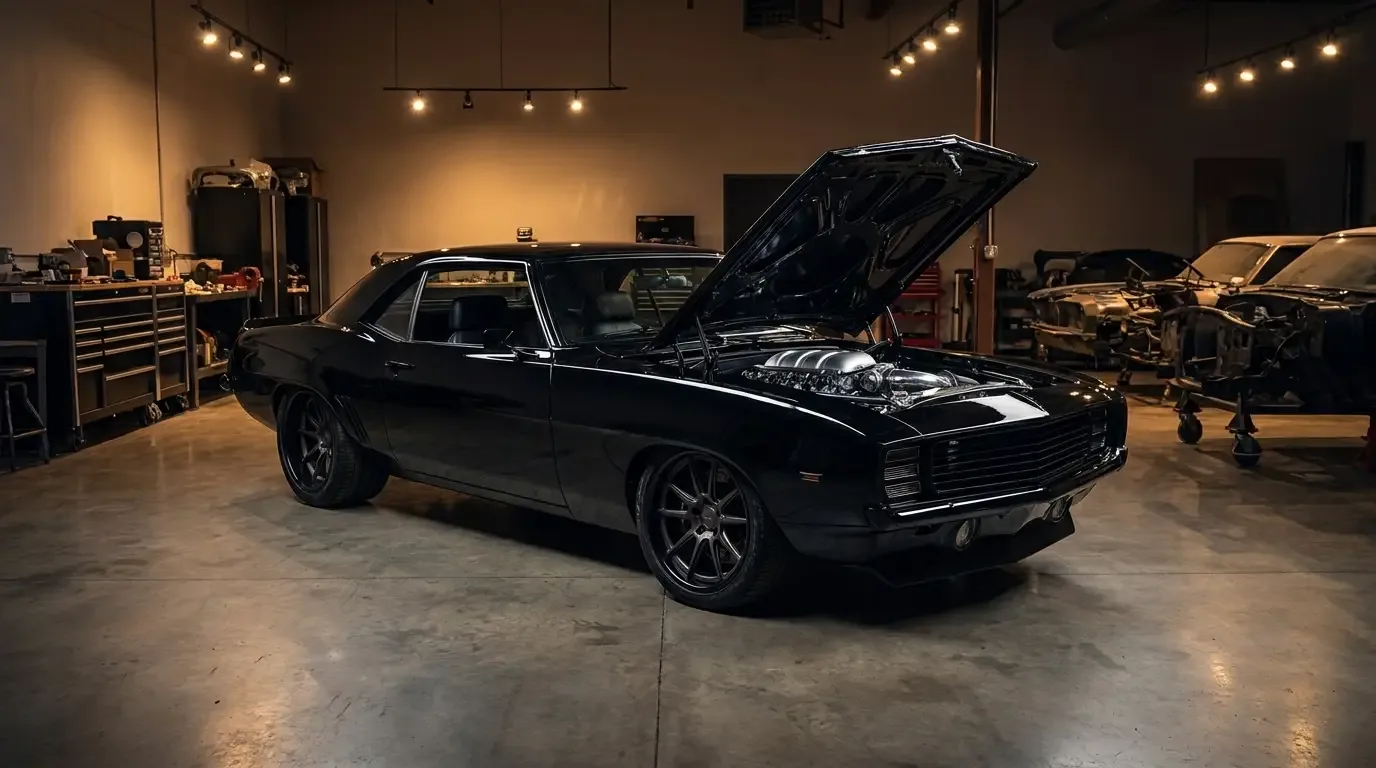
The word gets thrown at anything with new wheels, which drives me a little crazy. A restomod is a classic that keeps its factory shape and character but gets rebuilt underneath with a modern drivetrain, a modern chassis, real brakes, and creature comforts you would find in a current car. Restoration keeps a car correct. A restomod keeps it looking correct and makes it drive like something built this decade. That gap, between what your eyes see and what your hands feel, is the whole point.
What a restomod actually is
Strip away the marketing and a restomod is a simple deal. You take a body and a shape people love, usually from the 1950s through the 1970s, and you keep the parts that make it recognizable. The roofline, the grille, the stance, the trim. Then you replace almost everything you cannot see with parts that work better. A fuel-injected crate engine instead of a carbureted original. An overdrive automatic or a modern manual instead of a three-speed. Disc brakes at all four corners. Rack-and-pinion steering. Air conditioning that actually blows cold in July.
The people who build these cars are chasing a feeling more than a spec sheet. They want to drive four hours to a show without their arms falling off, sit in traffic without overheating, and still hand the keys to a friend who has never driven anything without power steering. A good restomod hides all of that engineering. You lift the hood and there is an obvious modern engine, sure, but the cabin looks period and the exterior reads as the car it was born as.
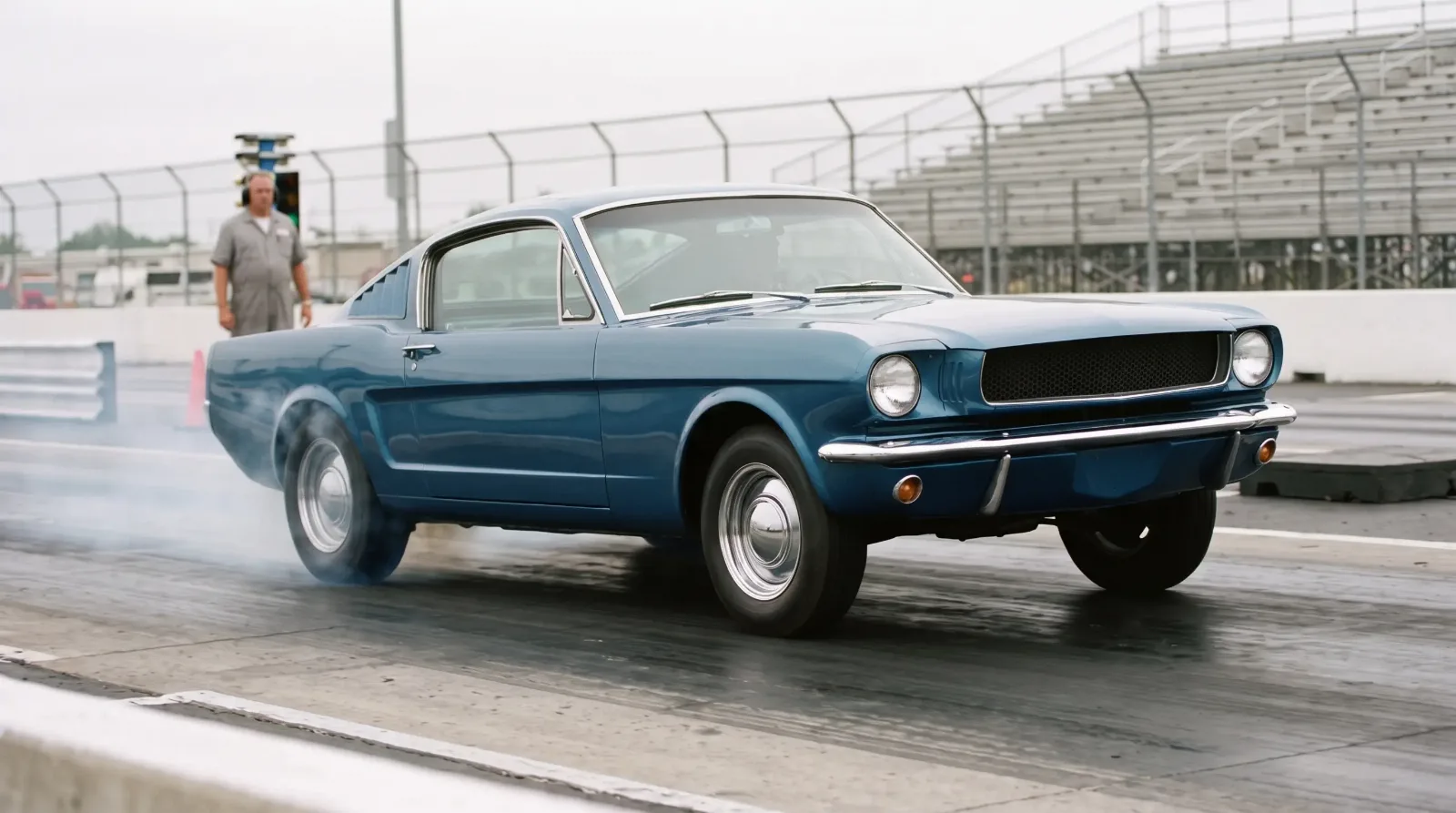
It helps to know what a restomod is not, because the categories blur at the edges. A numbers-matching restoration is factory-correct down to the paint codes and hose clamps, and its value lives in that originality. A traditional hot rod or rat rod is usually a pre-1948 body built in a period style, sometimes raw and unfinished on purpose. A pro-street car is built around a drag stance and a huge rear tire. Restomod sits in the middle of all that, vintage on the outside, modern and streetable underneath.
How the idea grew up
People have been improving old cars since old cars existed. What changed is the parts supply and the mindset. For a long time modernizing a classic meant fabricating brackets, adapting mismatched components, and accepting a lot of compromise. If you wanted disc brakes on a 1965 sedan you were cobbling parts from three donor cars and hoping the pedal felt right.
Two things turned that trickle into a movement. First, the aftermarket caught up. Companies started building bolt-in front suspension crossmembers, complete brake kits, wiring harnesses with fuse blocks and relays, and engine mount adapters engineered for specific chassis. Second, the crate engine arrived. Once you could buy a complete, warrantied, fuel-injected V8 on a pallet and drop it in with a matching harness, the hard part of a swap went from fabrication to assembly. The barrier to entry dropped, and the quality of the average build went up.
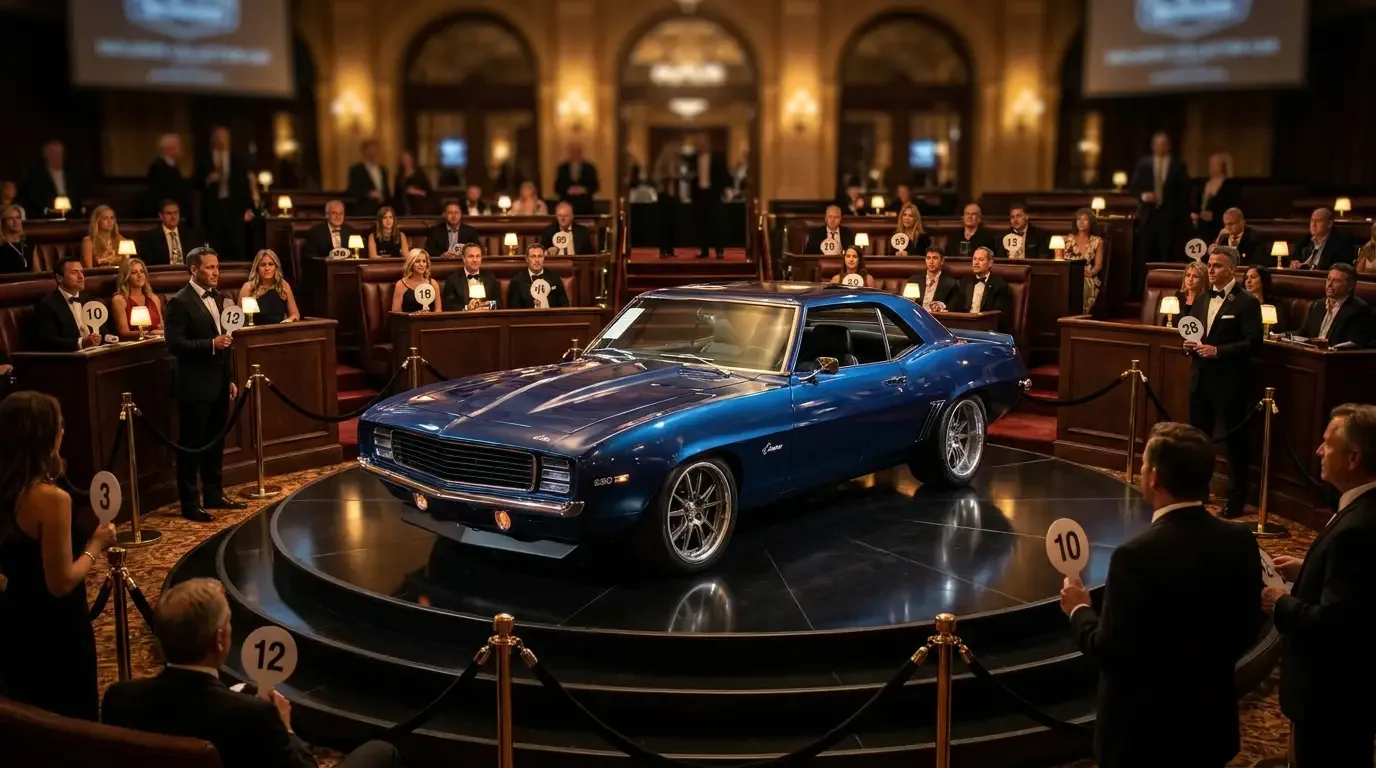
By the 2000s the restomod had its own aesthetic and its own audience. Auction houses gave these cars their own catalog descriptions. Builders became names people followed. What had been a garage compromise became a legitimate way to own a classic, and for a lot of buyers the preferred way.
"I tell people a restomod is a classic you can actually use. If it lives on a trailer and only comes out for concours, that is a different hobby. I build cars to be driven, and driven cars need brakes that stop and a heater that works."
Jim Vasquez
The heart of it: engine swaps
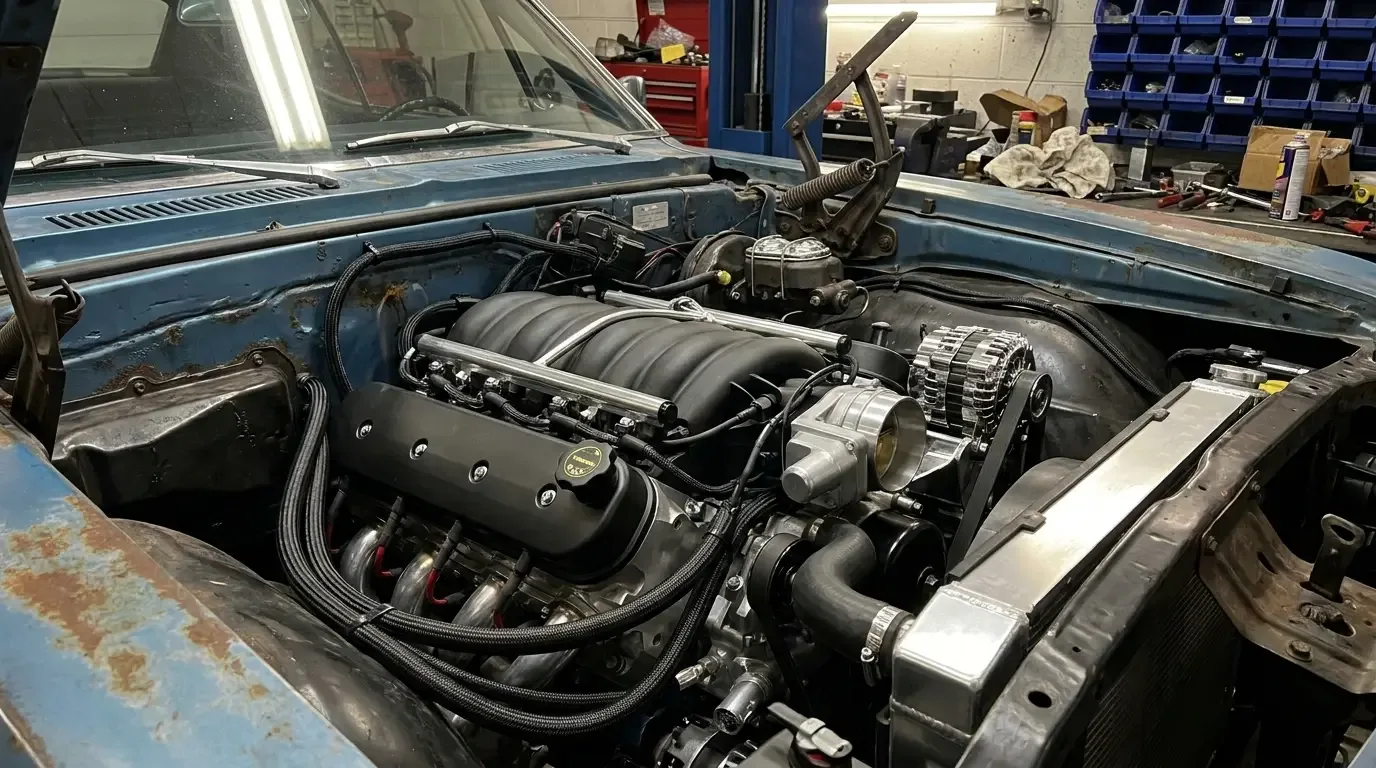
Nothing defines a restomod faster than what sits under the hood, and the modern engine swap is where most builds start. The goal is simple, more power that is also easier to live with. Modern fuel injection means the car starts on the first turn of the key on a cold morning, idles without fuss, and does not flood or vapor-lock. You get the vintage look and a drivetrain that behaves.
A few families of engines dominate the scene. The GM LS is the default choice for a reason. It is compact, light for its output, cheap and plentiful, and the aftermarket support is enormous. Ford builds fans reach for the Coyote, a modern dual-overhead-cam V8 that revs hard and sounds fantastic. Mopar people chase Hemi and supercharged Hellcat power when they want big numbers and want to keep the family badge honest. And a growing group is skipping combustion entirely and going electric, fitting battery packs and motors into classic bodies for instant torque and silent running.
| Swap family | Typical output range | Why builders choose it | Watch-outs |
|---|---|---|---|
| GM LS V8 | Roughly 400 to 700+ hp | Cheap, light, compact, huge parts support | Everyone has one; less distinctive |
| Ford Coyote V8 | Roughly 460 to 700+ hp | High-revving, modern sound, DOHC tech | Physically wide; tight in narrow engine bays |
| Mopar Hemi / Hellcat | Roughly 370 to 700+ hp | Big power, keeps the Mopar identity | Cost and packaging; supercharger height |
| Electric (EV) | Varies widely by build | Instant torque, quiet, no tuning drama | Cost, weight distribution, range, charging |
Whichever route you take, the swap is never just the engine. You need a transmission that matches your driving, a cooling system sized for the new heat load, a fuel system that can feed injection pressure, and wiring that plays nicely with the rest of the car. A swap done right disappears into the build. A swap done cheap announces itself with hot-running temps, a rough idle, and gremlins that never quite go away.
Take the transmission first, because it decides the character of the whole car. A modern overdrive automatic like GM's 4L60E or the stouter 4L80E gives you smooth around-town manners and a tall top gear for the highway. If you want to row your own, a Tremec five or six-speed manual is the popular answer, and it drops right behind most of the common swap engines with the right bellhousing. Whatever you pick, the rear axle ratio has to match. A steep 4.11 gear that felt quick off the line with a three-speed will have the engine screaming at 70 mph, so builders usually pair a modern overdrive with a milder ratio around 3.31 to 3.73 and let the overdrive gear do the cruising.
Then there is the heat. A modern high-output engine makes more power and more waste heat than the original, and the factory radiator was never sized for it. That means an aluminum radiator with more rows, an electric fan or two on a thermostatic switch instead of the old belt-driven fan, and often a transmission cooler on top of that. Fuel is the same story. A carbureted original ran happily on four to six pounds of fuel pressure from a mechanical pump, while port fuel injection typically wants something in the range of 45 to 60 psi from an electric pump, plus a return line and often an in-tank setup to keep it quiet and cool. Skip any one of these systems and the engine that looked great on the dyno turns into a car that overheats in a parade and stumbles in the heat. The engine is the headline, but the supporting systems are what make the swap livable.
Chassis, suspension, and the pro-touring branch
A period-correct classic often rides on a live rear axle, leaf or coil springs tuned for comfort over control, and steering that feels vague by any modern standard. It floats, it leans, and it takes real muscle to place on the road. The chassis side of a restomod fixes all of that, and it is where the biggest driving improvement usually hides.
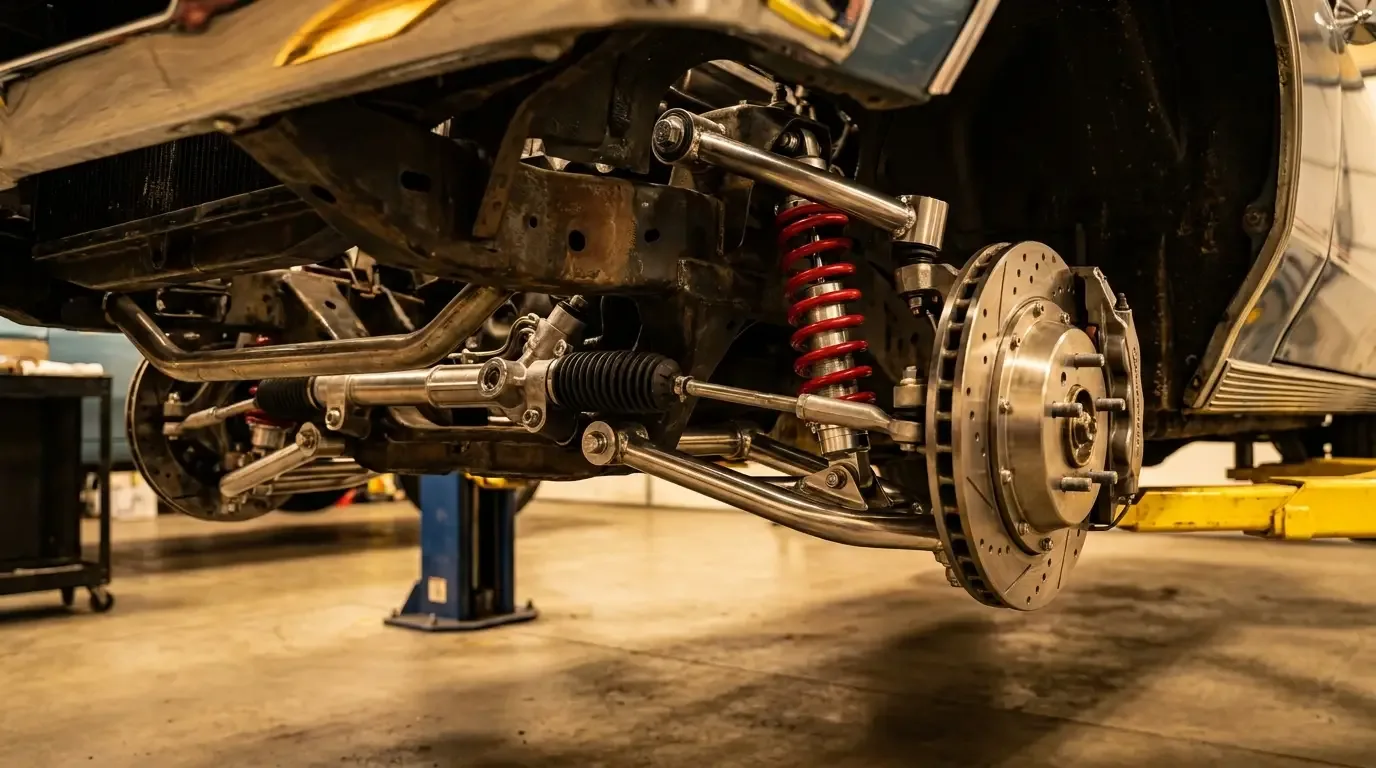
The common upgrades are an independent front suspension conversion for better geometry and ride, upgraded or fully replaced rear suspension, rack-and-pinion steering, and stiffer, better-located everything. Do this well and a car that used to wander on the highway now tracks straight and turns in like it means it. This is the branch of the hobby known as pro-touring, restomods built with handling as the priority. A pro-touring car is meant to corner, brake, and cruise at speed with confidence, not just look good and go fast in a straight line.
It helps to know what the common upgrade paths actually cost you in effort. The simplest is a bolt-in package that keeps the factory suspension geometry but adds tubular control arms, better shocks, a front sway bar, and drop springs to lower the stance an inch or two. That alone wakes up a floaty classic. One step up is a full front clip or crossmember swap, where a bolt-in independent front suspension subframe replaces the original stamped-steel setup and brings rack-and-pinion steering and coilovers with it. The most involved route is a complete chassis replacement, a modern frame built to accept the original body, which is expensive and slow but gives you a car that drives like it left the factory in this decade. Out back, builders either upgrade the live axle with better locating links and coilovers or convert to a full independent rear, which rides better and puts power down harder but costs a lot more.
Brakes deserve their own mention because they are the upgrade you feel every single time you drive. Original four-wheel drum brakes on a heavy classic fade fast and take a long pedal to haul the car down, because a drum traps its own heat and loses bite as it gets hot. A disc brake conversion, discs up front at minimum and often at all four corners, transforms how safe the car feels. A disc sheds heat in the open air, so it holds up to repeated hard stops that would have a drum smoking. The typical package is a vented rotor with a two or four-piston caliper, a modern master cylinder, and a booster or hydroboost unit sized to the new hardware, plus a proportioning valve to balance front-to-rear bite. Pair modern brakes with a modern engine and you have a car that stops as well as it goes, which is the whole idea. Building four hundred horsepower and leaving the drums in place is how people end up in the back of somebody's pickup.
"Everybody obsesses over horsepower and nobody wants to pay for brakes. Backwards. I would rather have four hundred horsepower and brakes that stop the car twice than seven hundred and drums that catch fire on the second hard stop."
Jim Vasquez
Comfort and technology inside
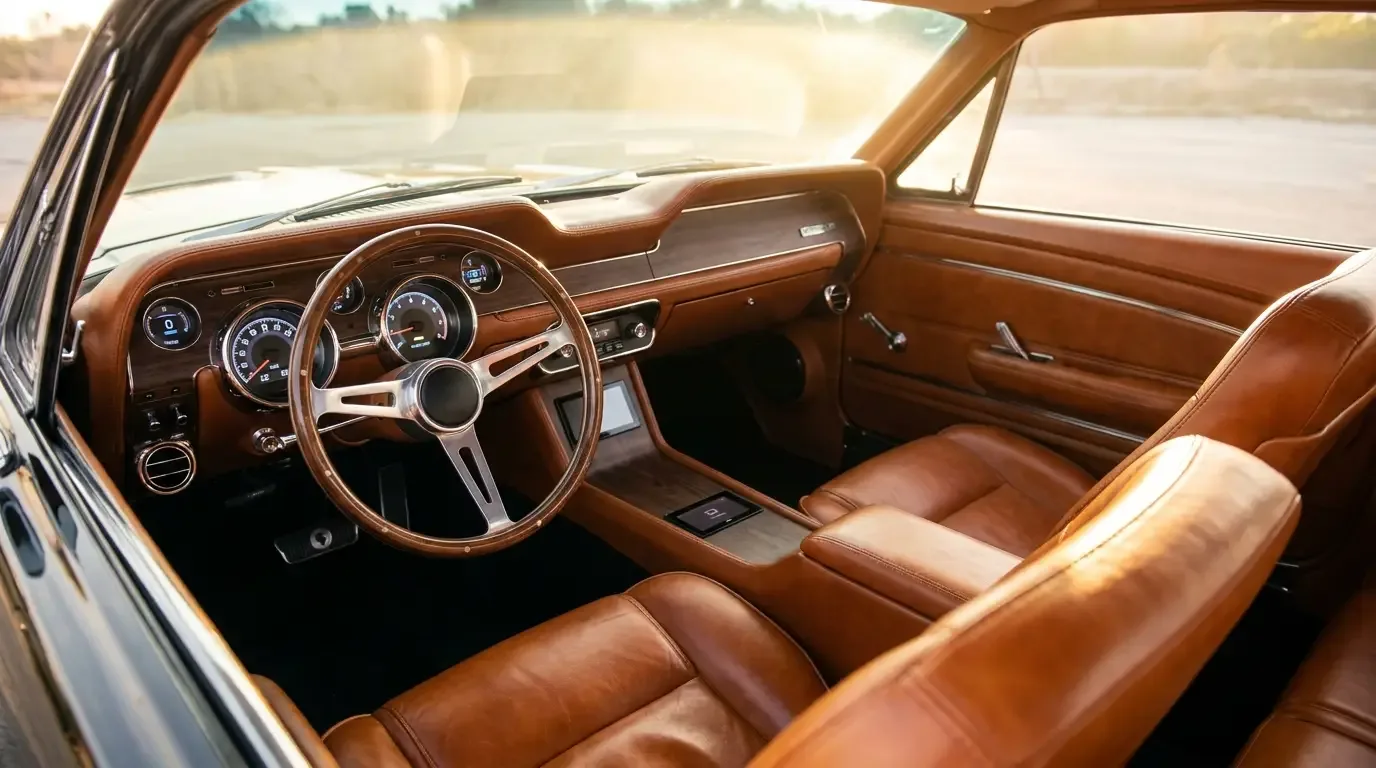
The drivetrain and chassis get the attention, but the interior is where a restomod earns its keep on a long drive. This is the part that separates a car you show from a car you use. The classic look stays. The bench or buckets, the dash shape, the general feel of the era. What changes is everything that makes hours behind the wheel bearable.
Air conditioning is usually first on the list. A modern under-dash or in-dash system with a proper compressor and condenser turns a summer cruise from an endurance test into a pleasure, and a good installation hides most of its hardware. From there builders add insulation and sound deadening to quiet the cabin, better seats with real support and often modern foam under vintage-style covers, and a heater that actually works in the cold.
Then there is the electronics side. Digital gauge clusters that look analog but read accurately and can log data. Modern audio hidden behind period grilles or run through concealed speakers. Bluetooth, backup cameras, keyless entry, and remote start on the more ambitious builds. The trick, and the thing that separates a tasteful car from a gadget pile, is restraint. The best interiors add comfort you notice and technology you do not, so the cabin still reads as the classic it is supposed to be.
- Climate: Air conditioning, an effective heater, and real insulation to keep the cabin usable year-round.
- Seating: Modern foam and support under period-correct upholstery for comfort on long drives.
- Instruments: Digital gauges styled to look vintage, with accurate readings and optional data logging.
- Convenience: Hidden audio, Bluetooth, cameras, and keyless entry, added with a light touch.
The value and originality debate
Here is where the hobby argues, sometimes loudly. Cutting into an original car to modernize it is, to a purist, close to sacrilege. To a restomod builder it is common sense, because a car that gets driven and enjoyed beats a trailer queen that never leaves the garage. Both sides have a point, and the right answer depends entirely on the specific car in front of you.
The economics are worth understanding before you pick up a saw. A rare, desirable, documented original is worth more untouched, and modifying it usually destroys value you cannot get back. But most classics are not rare. They are common bodies produced in large numbers, and for those cars a well-executed restomod often sells for more than a stock example would, because it appeals to buyers who want to drive. The market rewards quality and taste, and it punishes half-finished projects and cheap shortcuts.
Cost is the other half of the honesty. A quality restomod is expensive to build, and the money you spend rarely comes back dollar for dollar unless the build is exceptional and the car is desirable. Think about where the money actually goes and the math gets clear fast. A running project car is only the entry fee. On top of it you stack a crate engine and transmission, a suspension and brake package, a full rewiring, paint and bodywork, an interior, and the labor to make all of it work together. Any one of those is a serious line item, and paint and bodywork done to a high standard is often the single biggest surprise on the bill. It is easy to have more invested in a finished car than a comparable turnkey build sells for, which is exactly why so many projects stall out half-done and get sold at a loss.
Build one to enjoy, not as an investment, and you will be happier. If you would rather skip the multi-year build and buy something already sorted, there is a healthy market of finished cars, and you can browse classic restomods for sale to see what completed builds actually trade for. That price sheet is the fastest education in what the market values. Look closely and a pattern shows up. Clean, tasteful builds with quality components and documented work bring strong money, while cars with mismatched parts, amateur wiring, or a color nobody wanted sit and get discounted. Buying finished lets somebody else eat that first hit of depreciation, and it is almost always the cheaper path to the same car.
Restomod vs pro-touring vs original
People mix these three terms up constantly, and sorting them out tells you a lot about what kind of car you actually want. An original, or a numbers-matching restoration, is built to be correct. Everything is period, from the engine casting numbers to the hose clamps, and the goal is to preserve a car exactly as the factory sent it out. That car wins concours classes and holds its value on its documented originality, but it drives like what it is, a machine engineered fifty or sixty years ago, with the vague steering and long brake pedal that came with the era.
A restomod keeps the original look and rebuilds the mechanicals for comfort and reliability. The priority is usability. Modern engine, overdrive gearbox, disc brakes, air conditioning, a car you can drive across the state on a Sunday and enjoy the whole way. Pro-touring is a focused branch of the restomod world where the priority shifts from comfort to handling. A pro-touring build chases grip and body control. Big wheels and low-profile performance tires, a stiff suspension tuned for the corners, oversized brakes, and often a stripped, purposeful feel inside. Think of it as a restomod built to attack a road course as much as cruise to one.
The clean way to keep them straight is by what each one optimizes for. An original optimizes for correctness and history. A restomod optimizes for everyday enjoyment. A pro-touring car optimizes for performance and handling. None of them is the right answer for everyone, and the wrong move is buying one when you wanted another. A buyer who wants weekend comfort will be miserable in a stiff pro-touring build, and a track-day enthusiast will find a soft cruiser boring. Know which of the three you are before you spend the money.
Is a restomod right for you?
The honest test is how you plan to use the car. If your dream is winning originality classes at concours events and preserving history, a restomod is the wrong tool and you should restore. If your dream is turning the key on a Saturday morning, driving anywhere you want in comfort, and not worrying about vapor lock or fading brakes, a restomod is exactly right.
Most people who go this route never look back. They get the shape they fell in love with and the reliability they actually need, and the car becomes something they drive instead of something they store. That combination is why the segment keeps growing and why a whole industry now exists to support it. The classic you love, built to work the way modern cars do, is a genuinely good deal if you go in with clear eyes and a realistic budget.
Sources and notes
- Period American hobby and enthusiast press covering the growth of the restomod and pro-touring movement.
- Marque and crate-engine reference material for typical output ranges and swap packaging notes.
- Auction house catalog descriptions and public sale records for value and market context.
- Builder and shop interviews on drivetrain, chassis, brake, and interior practice.
- General aftermarket component documentation for suspension, brake, and climate conversions.
Related Reading
Have a
Classic Car
for Sale?
Reach thousands of serious classic car collectors across the US.
Sell It Here →
Are You a Classic Car Dealer?
List your full inventory and connect with targeted classic car buyers.
Join as a Dealer →

About the author
Jim Vasquez
Southern California hot rod and custom car builder with roots in the traditional kustom kulture scene.
Comments
Be the first to comment on this article.