
A project classic luxury car looks like the smart entry into the segment. The asking price is a fraction of a finished car, the seller calls it "all there," and the math in your head says you will save money doing the work over time. I have watched that math fall apart more times than I can count. On a luxury car the gap between a rolling project and a sorted example is wider than on almost anything else, and it is the buyer who closes that gap out of his own pocket.
Ownership & Lifestyle
6 min read
Why a Project Luxury Car Is a Bigger Gamble
A project classic luxury car looks cheap until the parts and labor add up. Why the finished car is usually the smarter, cheaper buy in this segment.
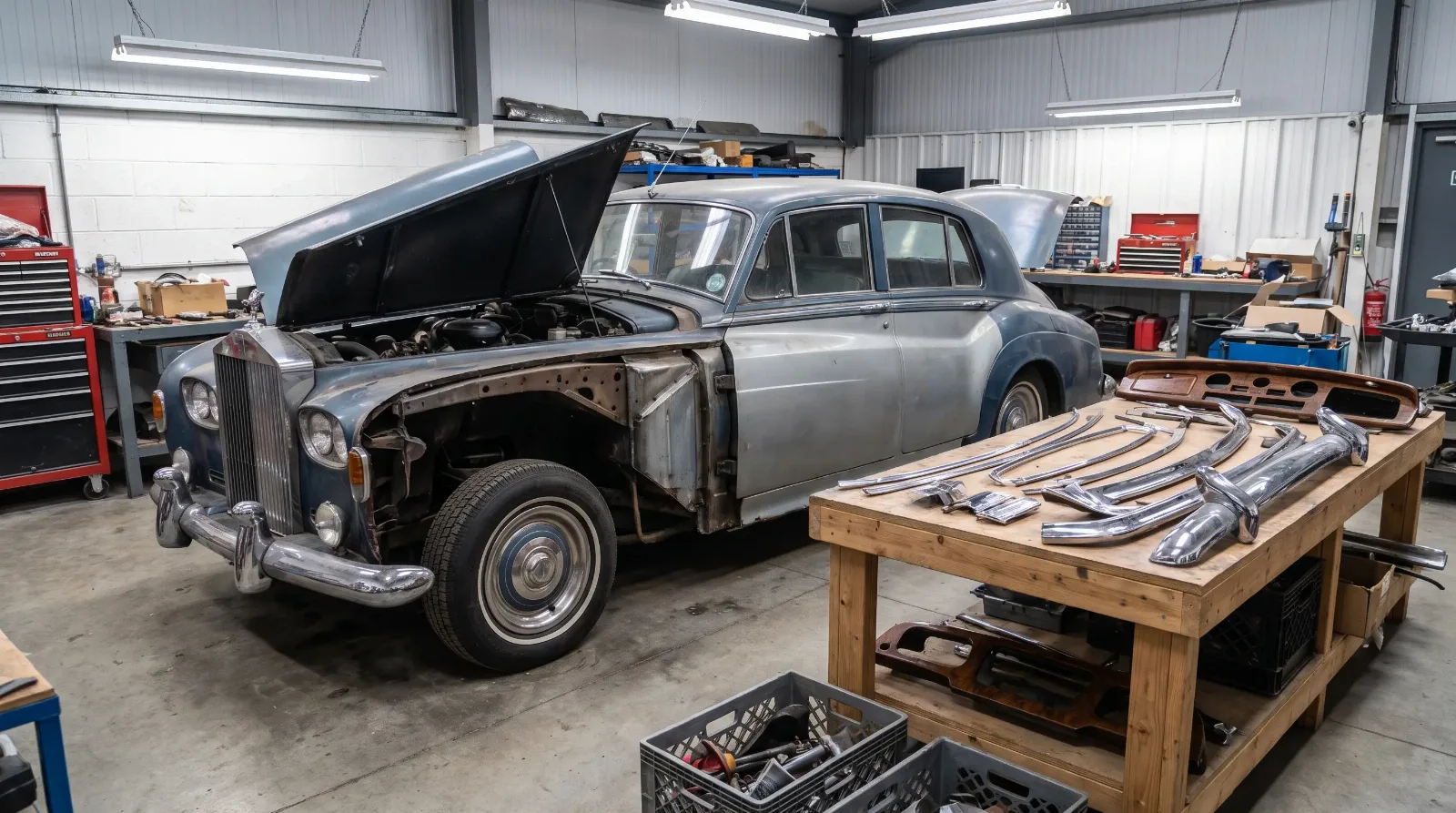
The reason is simple. These cars were expensive to build, and every system that made them special is expensive to fix. A project muscle car and a project Rolls-Royce are not the same bet, even if the purchase price looks similar. One has a parts catalog a mile deep and a driveline any competent shop can rebuild. The other has marque-specific components, hand-fitted trim, and hydraulics that scare off half the mechanics you would call. Before you buy the cheap car, understand what you are actually signing up for. The complete buying guide lays out the segment, and this is the trap inside it.
The parts problem is worse than you think
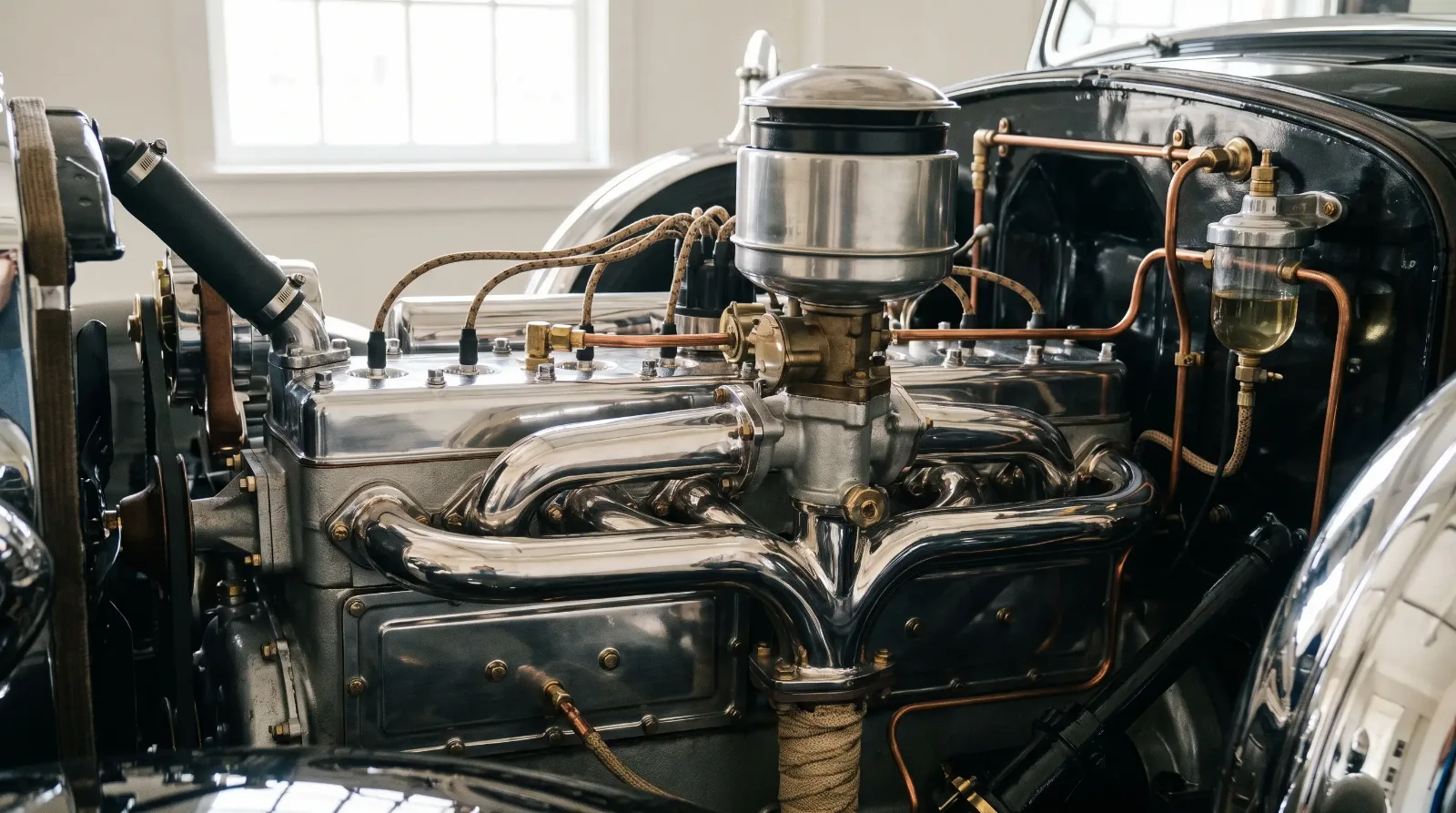
On an American muscle car you can rebuild almost anything from a catalog. Reproduction sheet metal, trim, interiors, and driveline parts are made in volume, and the prices are known. That whole safety net gets thin on a luxury classic. Many components are marque-specific, low-production, and either sourced from a handful of specialists or fabricated when no reproduction exists.
That changes the whole equation. A rechromed bumper on a common car is a known number. The correct hand-finished brightwork on a luxury classic can cost several times that, if the piece can be found or restored at all. Interior wood is not a set you order, it is skilled veneer work. Trim, switches, and instruments that a volume car shares with a dozen models are, on these cars, often unique and getting rarer. When a project is "missing a few pieces," those few pieces can be the ones that stop the build cold.
🔧 Inspection Priorities
- Completeness. Missing marque-specific trim, instruments, or brightwork can cost thousands each to source or fabricate. A car that is not "all there" is the most dangerous project of all.
- Structural rust. Rot in sills, floors, and subframe mounts turns a mechanical project into a bodywork project, the single most expensive path.
- Hydraulics and complex systems. A dead self-leveling or high-pressure brake system on a luxury car is specialist labor, not a bolt-on part.
- Interior condition. Cracked wood and split leather are full-restoration line items that routinely exceed the value of a driver-grade car.
Labor is where the real money goes
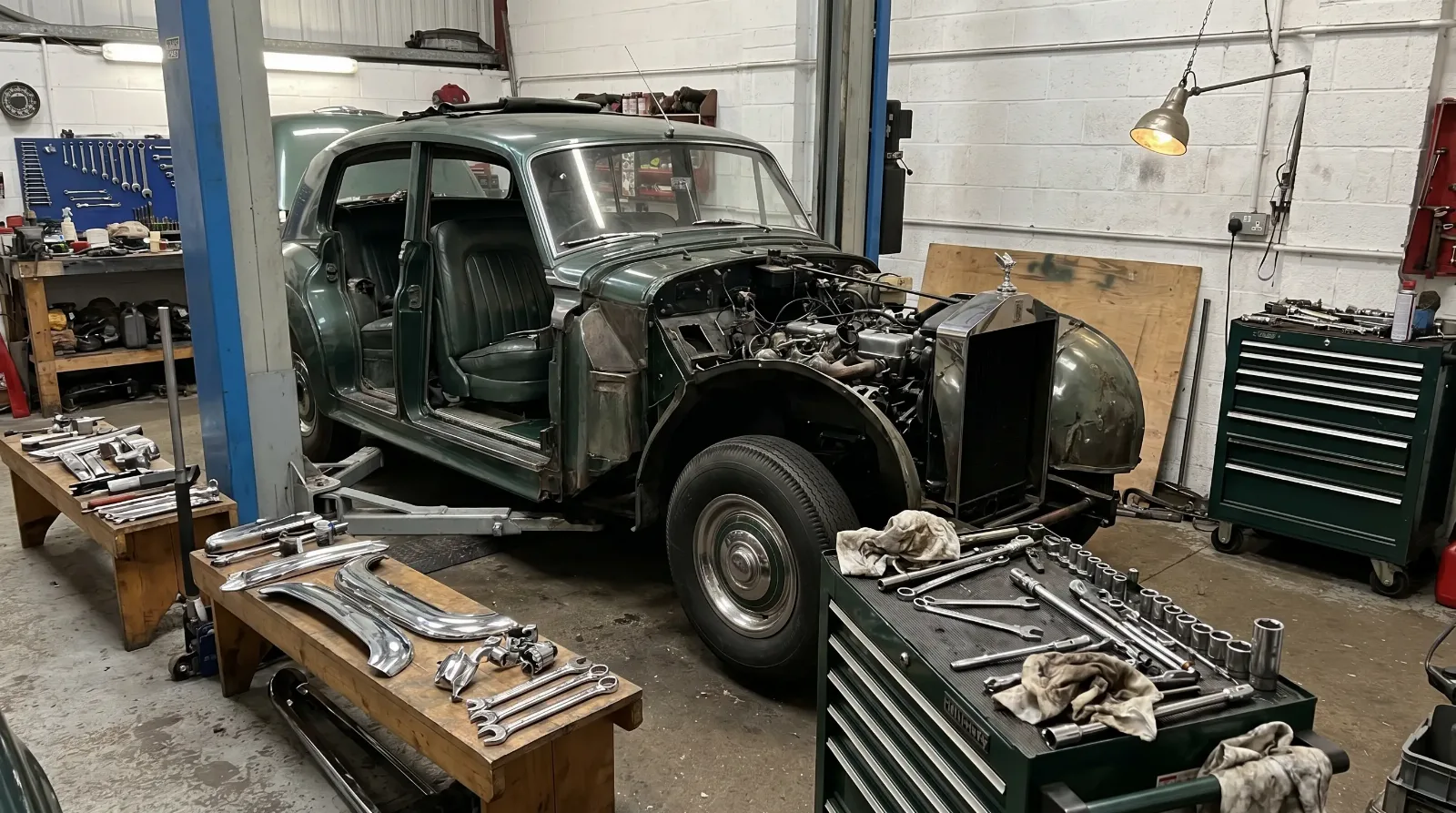
People fixate on parts prices and forget that on old luxury cars the labor is the bigger number. These cars were assembled with hand-fitting that machines never touched, and putting them back together right takes hours that add up fast at a specialist's rate. A shop that knows the marque is not cheap, and a shop that does not know the marque will cost you twice, once to do it wrong and once to redo it.
Chasing an electrical fault through period wiring, sorting a hydraulic system, or making a hand-built body fit and close the way it left the factory are all time-heavy jobs. The invoice is measured in labor hours far more than in the price of the parts hanging off the car. That is the number that buries a project budget, because it does not show up until the car is apart and the clock is running.
The finished car is usually the cheaper buy
Here is the part that trips up first-time buyers. In this segment the sorted car is frequently the cheaper way in, not the more expensive one. Somebody already spent the parts and the labor to bring it up, and the market rarely pays them back in full. You get to buy their money at a discount instead of spending your own at retail.
Run the honest numbers before you commit to a project. Purchase price, plus the parts you can actually find, plus a realistic labor estimate from a shop that knows the car, plus the pieces you have not discovered yet. Add it up and compare it to what a good driver-grade example sells for. On a luxury classic that total almost always lands north of the finished car, and you carry all the risk in between. The project makes sense only when you can do the work yourself, you know the marque, and you are honest that you are buying a hobby, not saving money.
"The cheapest luxury classic on the lot is almost never the cheapest one to own. I have seen guys buy a project to save twenty grand and spend fifty getting it right, and the finished car down the street was for sale the whole time for less than they had in it. Buy the done car. Let somebody else eat the restoration."
Mike Sullivan
When a project is still worth it
None of this means never buy a project. It means buy one with your eyes open. If you have the skills, the space, and the marque knowledge to do the work yourself, a project can be genuinely rewarding and the labor bill disappears because the labor is you. The gamble is real only when you are paying someone else to do everything and hoping the total stays under a finished car.
The smart play in this segment is patience and a finished car, most of the time. If you go the project route, do it because you want the work, not because the sticker looks cheap. And if you are chasing a documented example, the next thing to understand is how originality is judged, so continue with next: Matching Numbers and Why It Matters Less for Luxury Classics.
Related Reading
Have a
Classic Car
for Sale?
Reach thousands of serious classic car collectors across the US.
Sell It Here →
Are You a Classic Car Dealer?
List your full inventory and connect with targeted classic car buyers.
Join as a Dealer →

About the author
Mike Sullivan
Detroit-area muscle car enthusiast and restoration specialist with three decades of hands-on experience working on American iron.
More in Ownership & Lifestyle
Comments
Be the first to comment on this article.