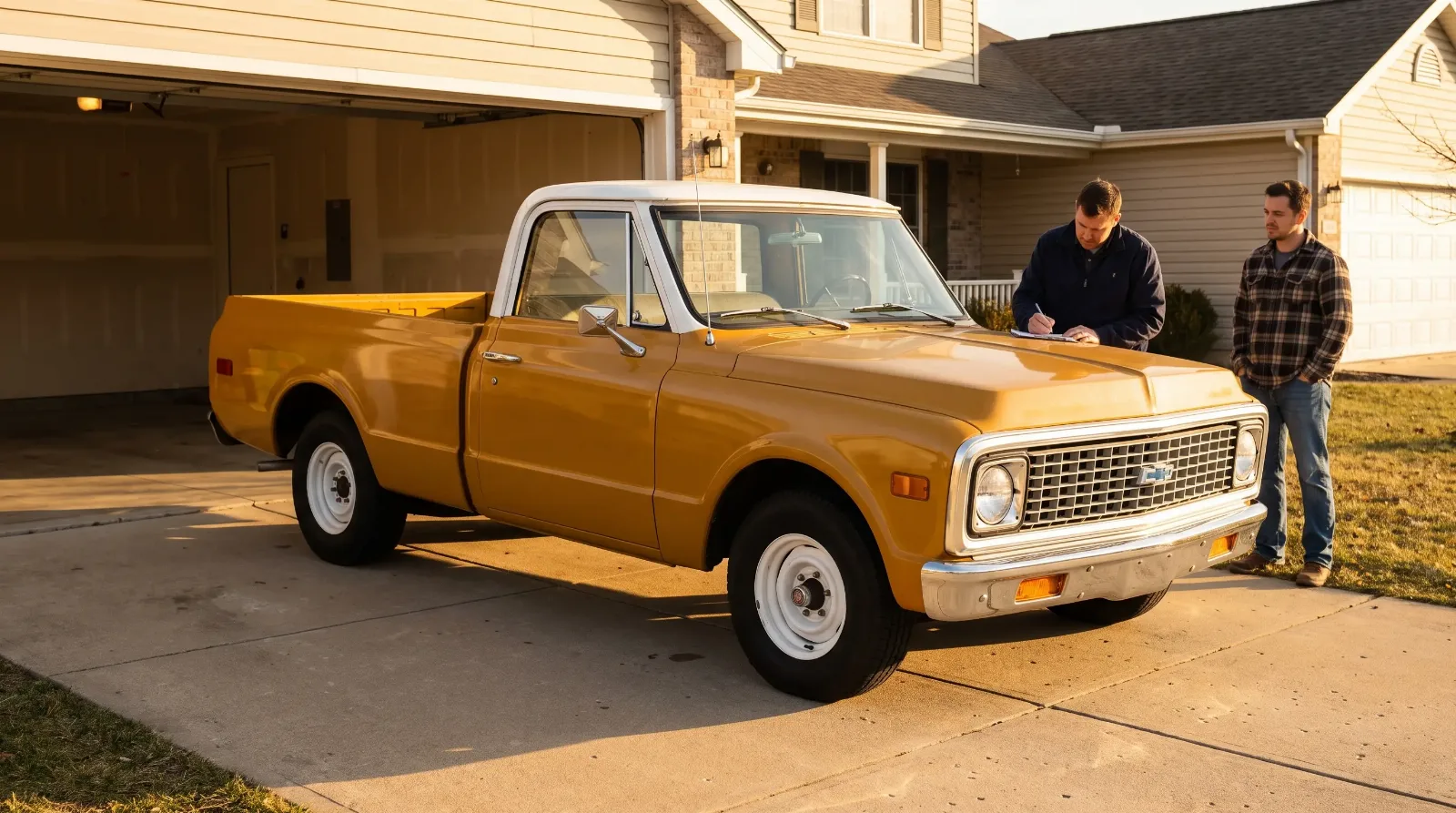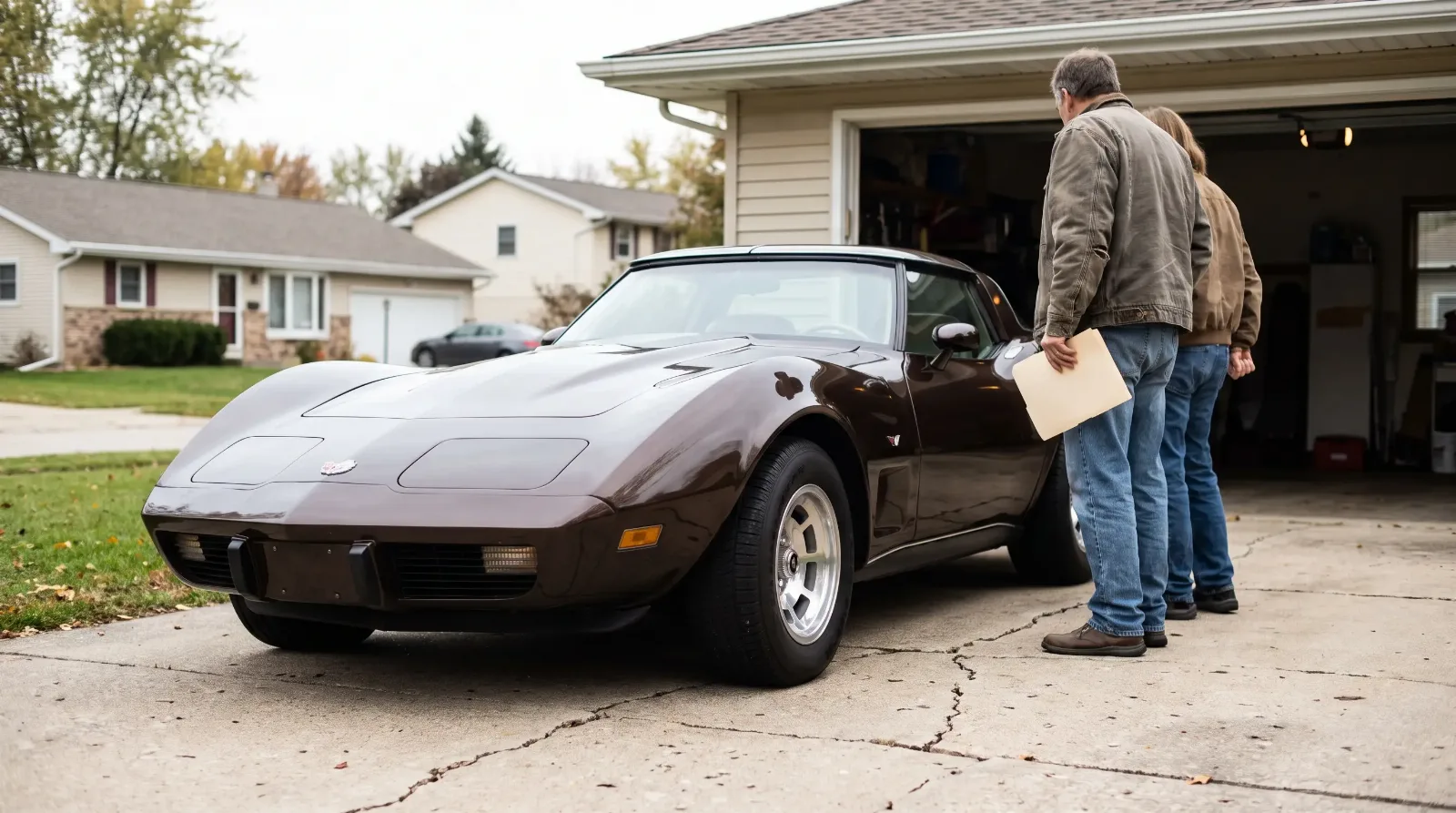
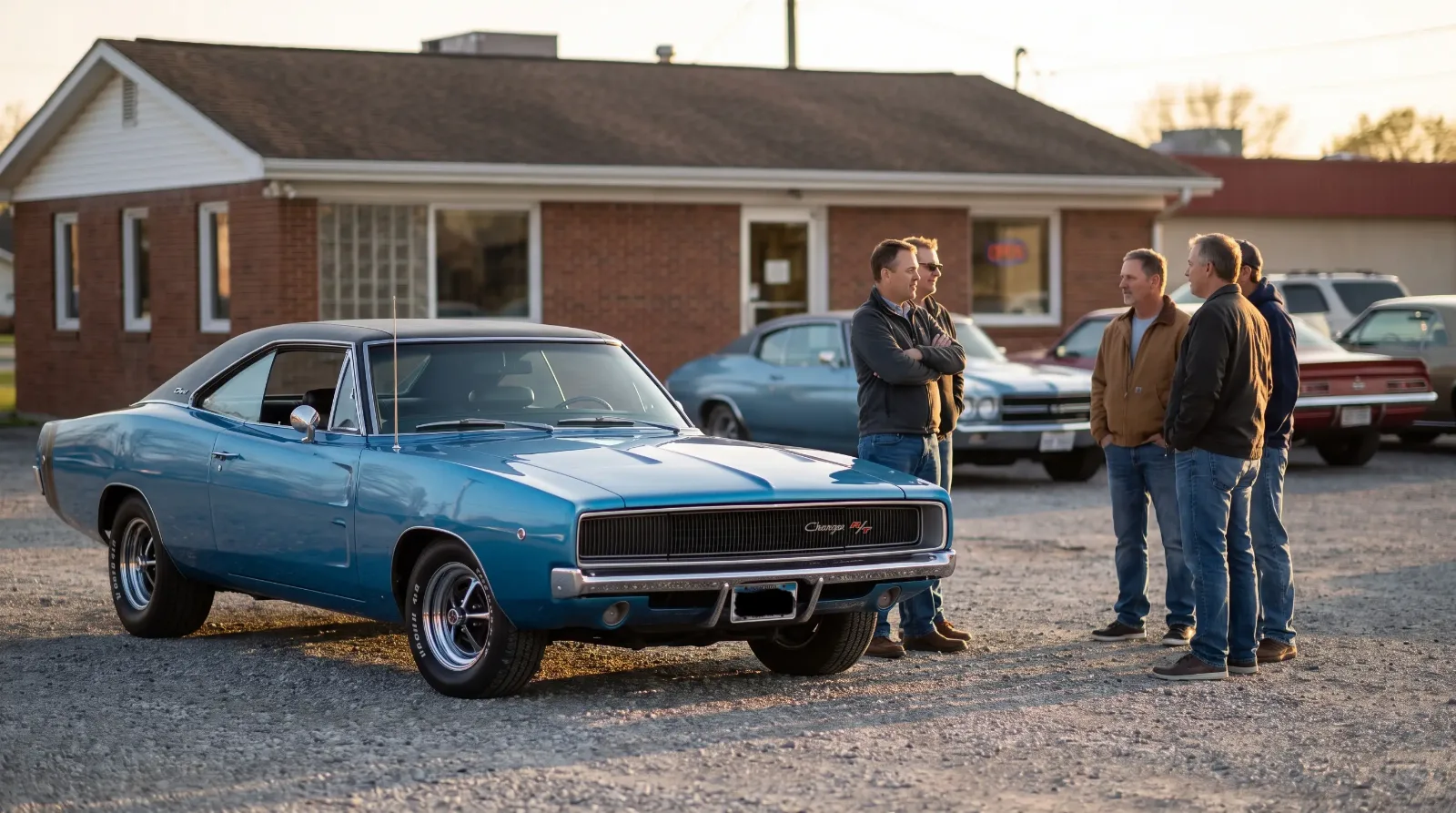
Picture a conversation that turns up, in one form or another, at almost any car club meeting. A member mentions he drove his car to a dealer, heard a number and sold it that afternoon. Somebody down the table asks what the other dealers offered. There were no other dealers. Nobody says much after that, because everyone at the table understands the problem. One offer is not a price. It is an opening bid that nobody contested.
Collecting several dealer offers on a classic car is not hard, but it does take a little structure, and the structure is what keeps the numbers honest. This piece covers the process from start to finish: one packet of information for every dealer, the right dealers to ask, a short deadline, a line-by-line comparison and a sensible way to use the results. If you have not yet settled whether a dealer is the right buyer at all, read dealer cash offer or private buyer first. It explains how a dealer builds his number and why it usually lands below a private sale.
Build one offer packet and send it to everyone
The quickest way to get offers you cannot compare is to describe the car differently to each dealer. Tell one about the soft spot in the trunk floor, forget to mention it to the next, and the two numbers are no longer about the same car. So before you call anyone, put together a single packet and send the identical packet to every buyer.
A good packet holds the following:
- Clear photos of the VIN plate and any data tag or trim tag, plus the odometer.
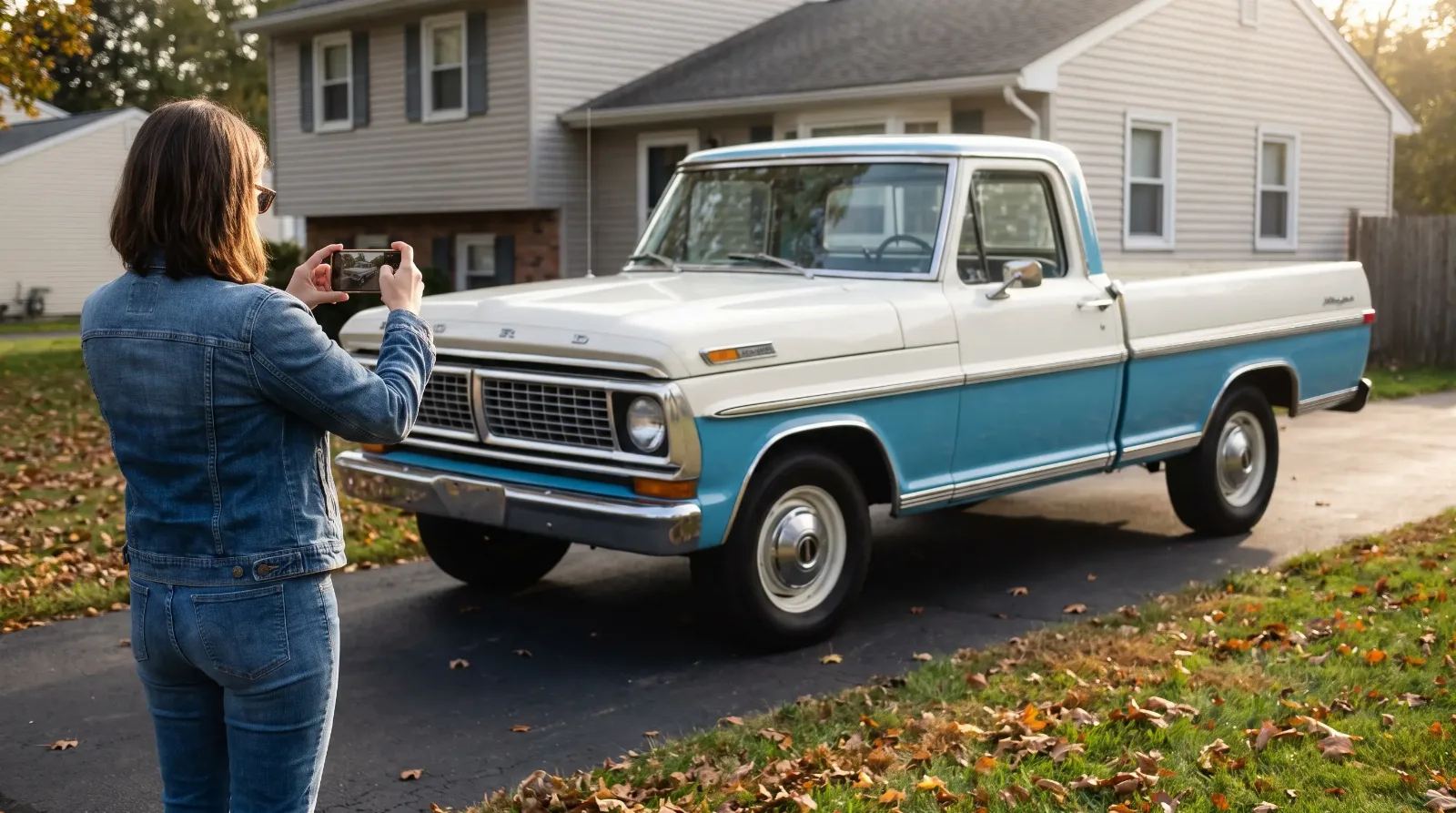
- Thirty to forty photos in daylight: all four sides, the engine bay, the interior, the trunk, the underside, the frame rails and the floors.
- Close photos of every flaw you know about. Dealers find them anyway, and finding them later costs you more than disclosing them now.
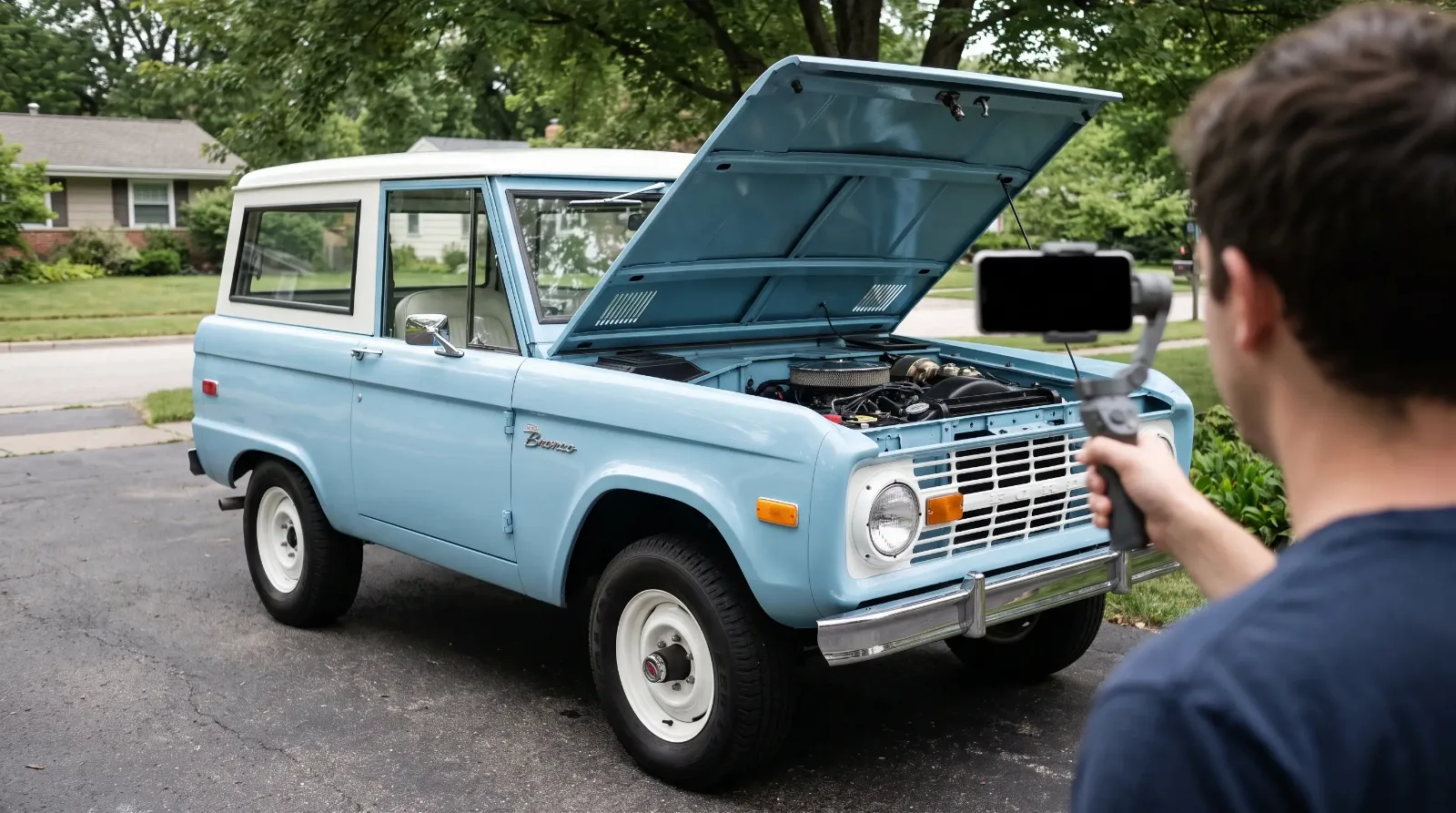
- A short video of a cold start and the car idling, then pulling away.
- Title status in one line: clear title in your name, or a lien and the payoff amount.
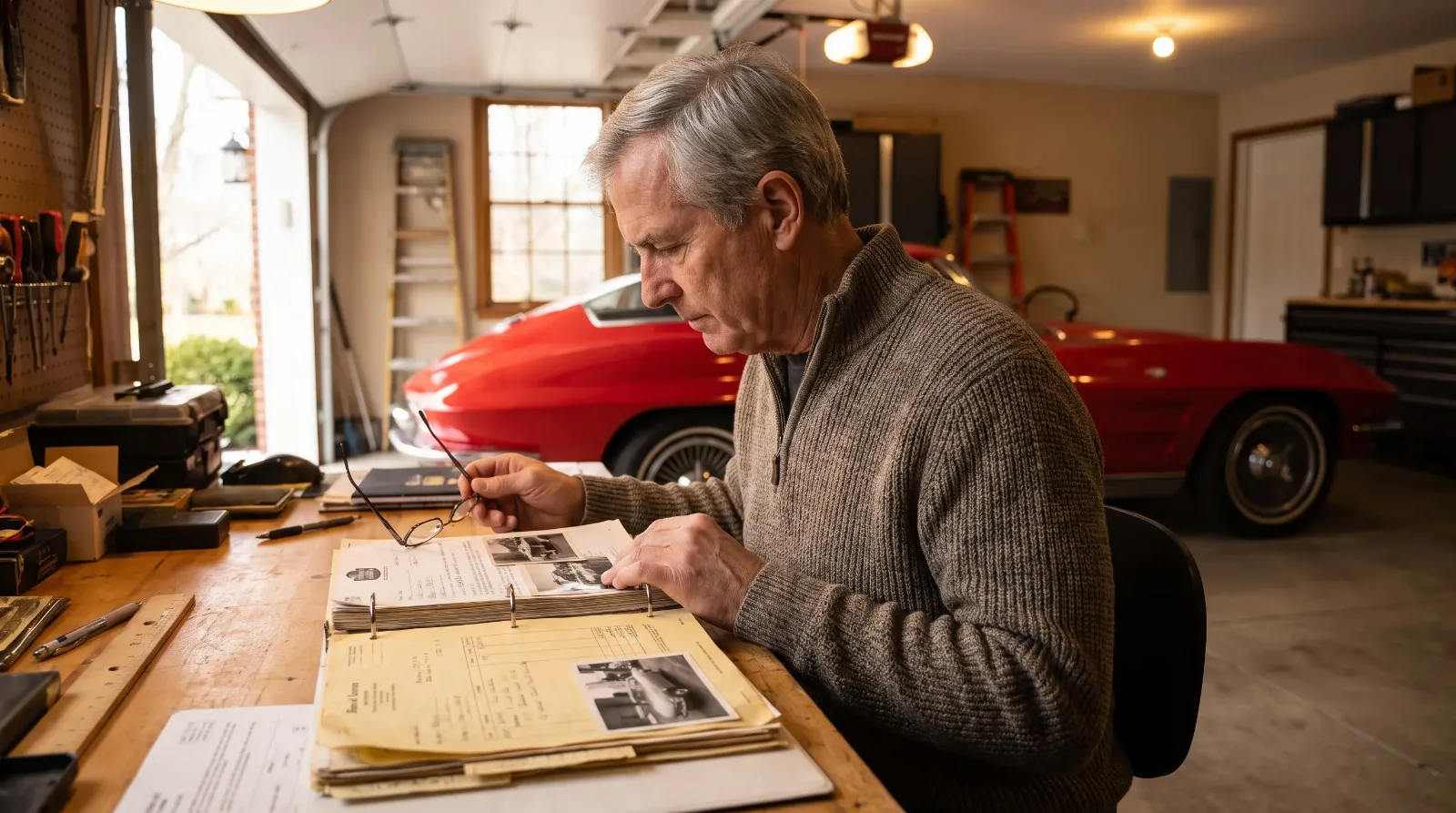
- A list of the paperwork you hold, such as receipts, build sheet, window sticker, restoration photos and previous owner names.
Then grade the car honestly. Valuation guides use a condition scale where #1 is a concours car and #4 is a driver with visible flaws, and Hagerty says the vast majority of collector cars sit at #3. A dealer will assume the lower grade until he sees evidence otherwise. The evidence is your packet. Every receipt you can show is a guess the dealer no longer has to make, and dealers price their guesses against you.
Which dealers to ask
Not every dealer wants your car, and the ones who do not want it will still give you a number. It will just be a low one. Aim the packet at buyers who have a reason to pay up.
A specialist in your make or model is usually the strongest first call. He knows what the car is, he may already have a customer asking for one, and he can sell it faster than a generalist, which lets him pay closer to retail.
A general classic car dealer with a large inventory sees more buyers and more types of cars. His offer tends to be steady and middle of the road. He is a good check on the specialist.
A local used-car dealer who handles a few older cars will rarely be your top number, but he gives you a floor. If his offer and the specialist's are close, the car may be simpler to value than you thought.
Do not limit yourself to driving distance. Plenty of classic dealers buy from photos and arrange transport, and an out-of-state specialist can beat every local offer if your car is what his customers want. Ask for a consignment quote from at least one shop as well, since it shows you what the dealer expects the car to retail for. Online cash-offer companies work differently again, with offers built from your photos and adjusted at inspection, so if you plan to include them, see this next.
Set a deadline and keep the timing tight
Offers age. A dealer who wants your car this week may have filled that slot by the end of the month, and the market for a convertible in April is not the market in November. Send every packet within a day or two of each other, and tell each dealer plainly that you are collecting written offers until a specific date, usually about a week out.
That one sentence changes the conversation. It tells the dealer he is not the only call, without any bluffing. It also gives him a reason to put his real number forward the first time, because a dealer who lowballs a seller with a deadline knows he may not get a second round.
Ask every dealer for the offer in writing, by email is fine, with three things spelled out: the price, what would change it after inspection and how long the offer stands. A phone number you jotted on a napkin is a memory, and memories do not hold up when you go back to negotiate.
Compare offers line by line, not by the headline number
The biggest number on the page is not always the best offer. A dealer who quotes high but takes a week to pay, deducts transport and reserves the right to re-inspect can easily net you less than a lower offer that is firm, paid on the spot and picked up at his expense. Put the offers side by side using the same questions for each.
| Term | What to ask | Why it changes the real number |
|---|---|---|
| Price | Is this the amount paid to me, or before deductions? | Some offers quietly subtract fees at closing |
| Inspection | What findings would lower the offer, and by how much? | An open-ended contingency invites a lower number at pickup |
| Transport | Who picks up the car, and who pays for it? | An out-of-state offer that bills you for shipping can shrink fast |
| Payment | How do you pay, and when do I have usable funds? | A wire that has cleared is different from a check that is still pending |
| Title and payoff | Will you pay off a lien directly, and who handles the transfer? | Errors here delay payment or leave you as the recorded owner |
| Expiration | How long does this offer stand? | A high offer that expires tomorrow may not survive your comparison |
Once the table is filled in, rank the offers by what lands in your account and how certain it is to stay the same. Often the order changes from the one you started with.
"Every dealer offer is a story about your car. Some of those stories are generous and some are not. The paperwork is how you find out which story holds up when the trailer backs into the driveway."
— Wayne Coburn
Using the offers without burning bridges
With written offers in hand, go back to the top two. Tell each one the best written number you have and ask whether he can do better. Be prepared to show it, because a serious dealer may ask, and a seller who invents a competing offer gets found out sooner than he expects. Dealers talk to one another more than sellers realize.
Expect some to pass. A dealer who says his number is his number is not insulting you; he is telling you where his margin ends. Thank him and keep his offer as your fallback. The dealer you turn down this month may be the one you call next spring.
Two things to avoid. Do not change the description of the car between rounds. If something new turns up, tell everyone, not just the dealer you are leaning toward. And do not accept a reduced figure at pickup just because the car is half on the trailer. If the inspection terms you agreed to do not cover what the buyer is now pointing at, you can still say no.
Finally, step back and look at the whole spread. If the best dealer offer sits well below what recent completed private sales say the car is worth, the gap is the price of speed and convenience, and only you can decide whether it is worth paying. If you can give the car a few months, a private buyer may close most of that gap. Before you go that way, read our piece on selling to a collector to see what that buyer will expect from you in return.
Sources and notes
- Hagerty: what does a car's condition really look like (the #1 to #4 scale; most collector cars are #3)
- 12 CFR 229.10: next-day availability for cashier's, certified and teller's checks
- 12 CFR 229.13: exceptions, including large deposits over $6,725
- FTC: how to spot, avoid and report fake check scams
- Escrow.com: fee schedule by transaction amount
Dealer buying practices vary. The comparison questions above are general guidance, not legal or financial advice.