
Remote classic car consignment strips the arrangement down to the parts a seller usually pays for and does not see: the marketing, the buyer screening and the handling of the money. The car itself never leaves your garage. There is no transport bill to a showroom, no monthly storage charge and, in the published programs, a commission that sits well below the typical showroom rate. What you give up is distance. You become the person who opens the door, starts the car and stands beside it while a buyer's inspector works underneath.
Market & Values
8 min read
Remote Consignment: Selling a Classic That Stays in Your Garage
How remote consignment works when the car never leaves your garage: listing, showings, deposits, the money flow and the real trade-offs.
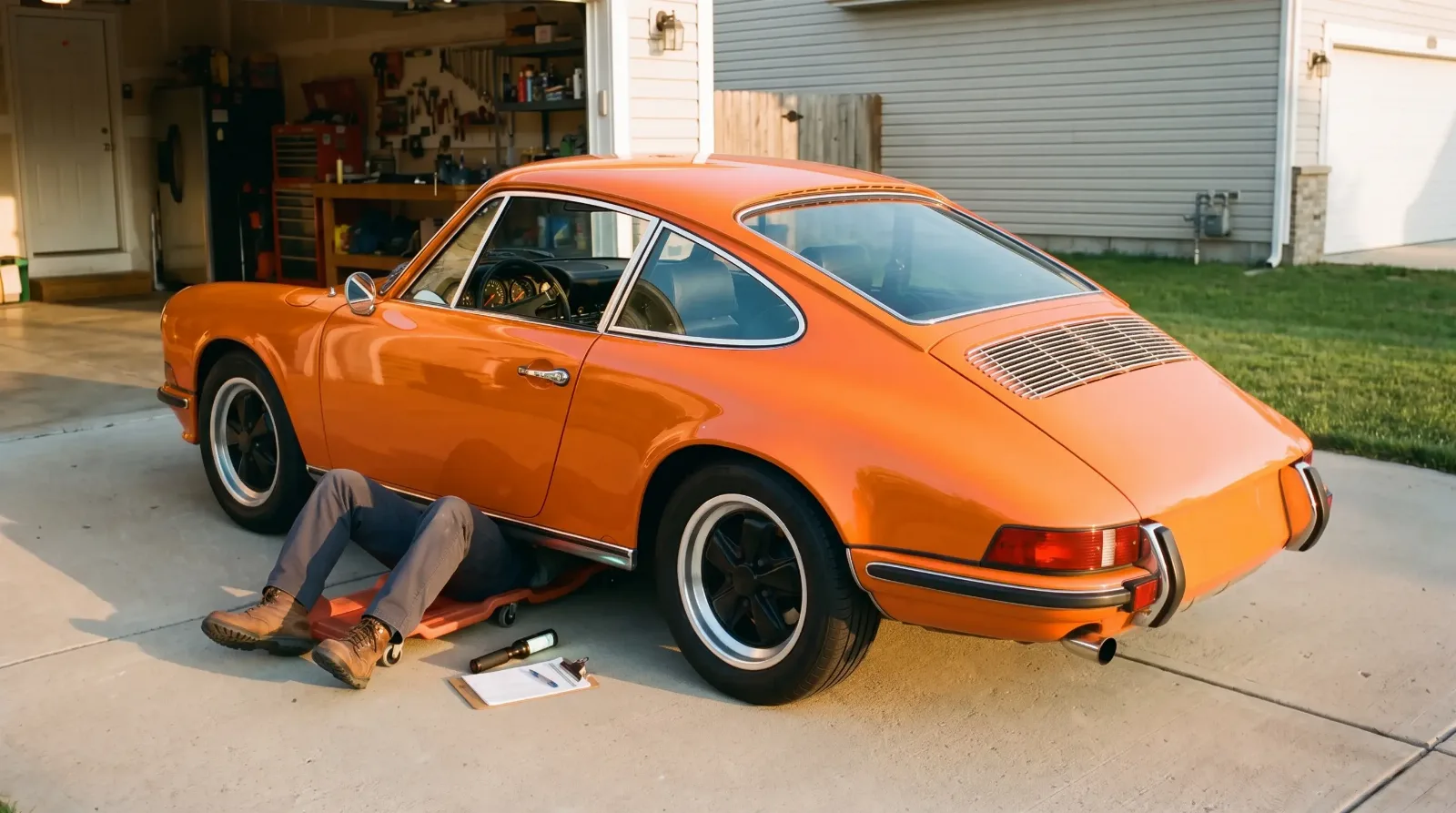
The numbers make the case quickly. Put a 1973 Porsche 911T coupe in good #3 driver condition at around $75,000, close to the $73,000 that Hagerty's price guide showed for a #3 911T coupe in 2023. A showroom consignment at 10% costs $7,500, before an open-carrier trip that can run $1,400 to $2,500 coast to coast and any storage once the first months pass. A remote program at 5% costs $3,750, and the car stays put. That is a large gap on one car, and it explains why the model has spread. If you need the classic car consignment basics first, start there. This piece covers how the remote version actually runs, step by step.
How remote classic car consignment works
The structure follows a fixed order. You sign an agreement that names the asking price, the reserve and the fee. The business builds a listing from your photos or its own, places it across its site and the outlets it uses, and fields every inquiry. It qualifies buyers before it hands any of them to you. When a buyer wants to see the car, you host the showing or the inspection. When a buyer commits, the business collects a deposit and then the balance, and pays you.
Classic Car Deals in Cadillac, Michigan, is a working example of the model at national scale. The company says the car stays with the seller until it sells and the seller sets the price. A buyer deposit holds the car while the buyer inspects it, and the funds pass through Classic Car Deals, which then pays the seller. Its consignment page describes the program as free to the seller, with the company earning its commission when the car sells above the seller's price.
That last structure deserves a careful read. A net-price arrangement means the asking price buyers see includes the dealer's margin on top of your number. If your number already sits at the top of the comps, the listing price lands above them, and the car takes longer to sell. Set your net figure with that in mind.
Photos, video and the listing
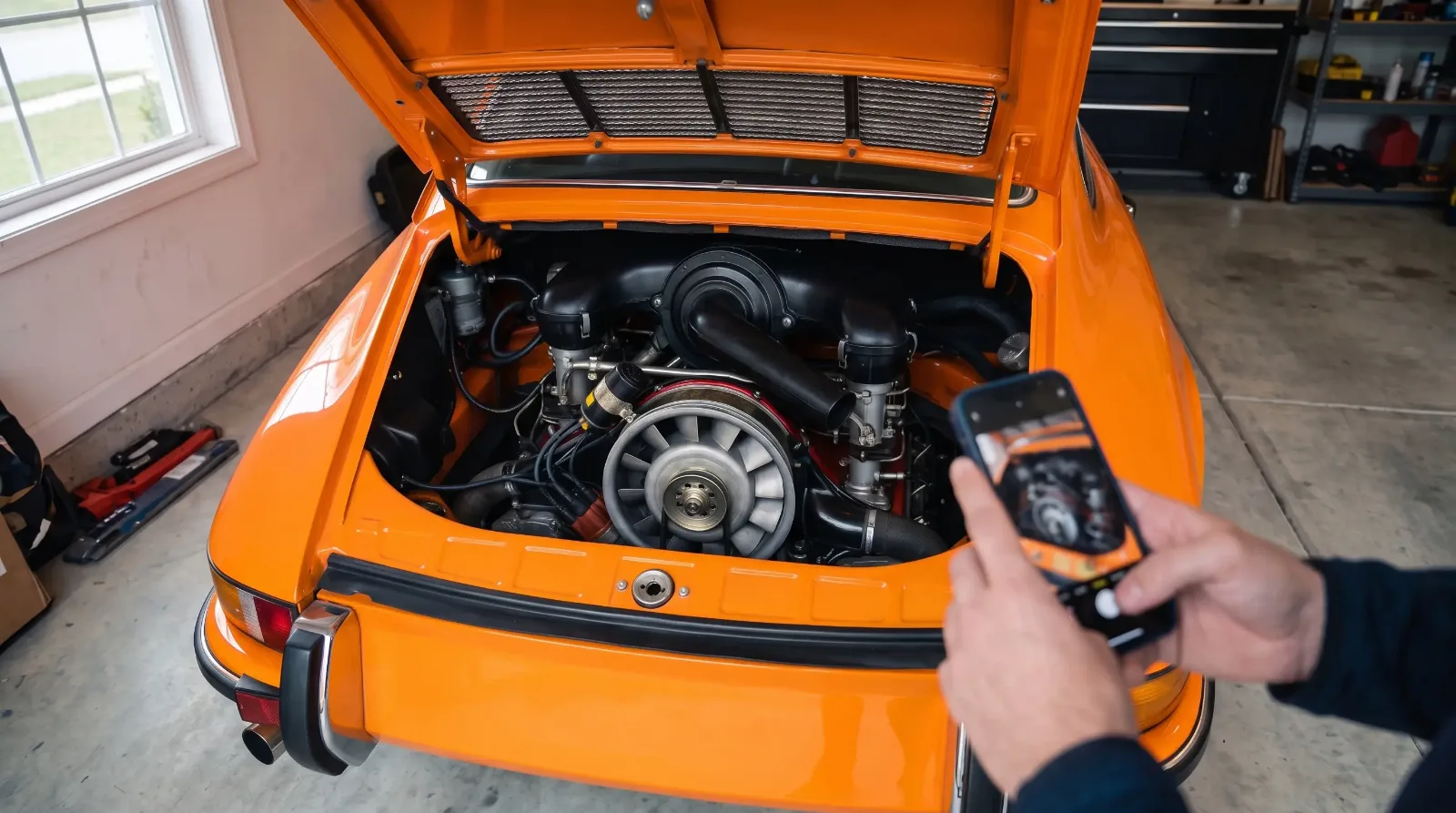
In a remote sale the listing does the work a showroom floor does, so its quality decides most of the outcome. There are two routes. You supply the material, or the business sends a photographer. Some programs charge for the second; WeBe Autos, for example, lists $150 for a shoot if you bring the car in, $200 if its photographer travels, and no charge if you supply 30 to 100 photos yourself.
If you shoot it yourself, think like a buyer who is 1,500 miles away and deciding whether to buy a plane ticket. For the 911T that means the obvious exterior angles plus the things a remote buyer cannot otherwise check: the underside, the jacking points and floor pans, the engine bay with the valve covers in clear view, the gauges with the engine running, and any flaw shown honestly at close range. A cold-start video and a short drive clip with the windows down answer more questions than a paragraph of description. Gather the documents as clean scans: title, service records, receipts for major work, any certificate of authenticity.
Showings, inspections and the deposit
This is the work that shifts back to you. A serious buyer, or the buyer's inspector, will want to see the car in person. Expect to host one to three visits for a car in the 911T's range, more for a car priced above its comps. Prepare the car as a dealer would: clean, charged battery, fluids topped, tire pressures set, and the document file on the passenger seat. A car that photographs as a solid #2 and shows up dusty with a slow crank will be negotiated as something less.
Agree the test-drive rules in writing before the first visit. Who may drive, whether you ride along, how far, and under whose policy any damage is paid. In remote consignment the answer to the last one is usually your own, because the car never enters a dealer's custody. Call your collector car insurer and confirm that a prospective buyer driving with you aboard is covered.
The deposit is what keeps the car off the market while an inspection happens. Classic Car Deals lists a 7-day hold with a tiered deposit: $1,000 refundable if the buyer inspects in person, $500 refundable for a third-party inspection, and $500 non-refundable if the buyer waives inspection. The pattern is worth copying in any remote deal. A buyer who pays to hold the car and then inspects is far less likely to walk away a week later over something the photos already showed.
How the money moves
In the stronger remote programs, the buyer never pays you directly. The deposit and the balance go to the consignment business, which confirms the funds have cleared, takes its fee and pays you the remainder. That arrangement protects you from the classic private-sale frauds: overpayment checks, fake escrow sites and payments that reverse after the car is gone. It also means you are trusting the business with the purchase price for a period of days, so ask two questions before you sign: whether buyer funds go into a separate trust or escrow account, and how many business days pass between the funds clearing and your payout.
Release the title only when your own money has arrived. The buyer's transport is usually arranged by the buyer, and the car should not be loaded until the sale has closed. The mechanics of selling to a buyer who never sees the car in person, including shipping and paperwork across state lines, apply here in full.
What you save and what you take on
| Factor | Remote consignment | What it means on a $75,000 car |
|---|---|---|
| Commission | Published programs cluster around 5%, or a net-price markup | About $3,750, against roughly $7,500 at a 10% showroom |
| Transport | None to the dealer; buyer usually pays shipping out | Saves an open-carrier trip that runs roughly $1,400 to $2,500 coast to coast |
| Storage | None; the car stays in your garage | No monthly fee if the sale runs past 90 days |
| Showings | You host every visit and inspection | Several weekends of your time |
| Insurance | Stays on your own policy throughout | Test-drive coverage must be confirmed with your insurer |
| Speed | Can be slower for cars that sell on first impression | No walk-in buyers; every sale starts with a listing |
The model fits cars like the 911T well: a national buyer pool, buyers who expect to inspect remotely, and a value high enough that a 5-point commission gap is real money. It fits less well for a car that sells on impulse, the bright convertible a buyer sees under showroom lights and decides on that afternoon. It also fits poorly for an owner who travels, lives far from an airport or simply does not want strangers in the garage. For that comparison laid out in full, read our piece on online versus showroom consignment.
"Remote consignment is a straight trade: you swap a few weekends of hosting for half the commission and no shipping bill. On a car like the 911T that pays well. On a car that needs a showroom to sell, the savings are just a slower way to keep it."
David Mercer
Sign with a program that can show you recent sales in your price range, put the funds route in writing and settle the insurance question before the first buyer arrives. Then prepare the car as if a dealer were going to stand behind it, because in a remote sale that dealer is you.
Sources and notes
Related Reading
#selling a classic car
#consignment fees
#remote classic car consignment
#online consignment
#classic car deposit
#Classic Car Deals

About the author
David Mercer
Classic car market analyst with two decades of experience tracking collector car valuations, auction results, and investment trends.
More in Market & Values

Comments
Be the first to comment on this article.