
Trucks get bought differently than cars. A dealer who will pay close to the money for a clean coupe will walk around a pickup with the same miles and start talking about the bed floor. That is not him being difficult. It is how the old-truck business works. Most folks who type "sell classic truck to dealer" into a search bar want one thing, a fair check without the hassle, and they are more likely to get it if they know what the dealer is doing before he does it.
Market & Values
8 min read
Selling a Classic Truck: Dealer or Private Buyer?
How a dealer sizes up an old pickup, which trucks he pays well for, and when a private buyer will pay more for patina, swaps or projects.
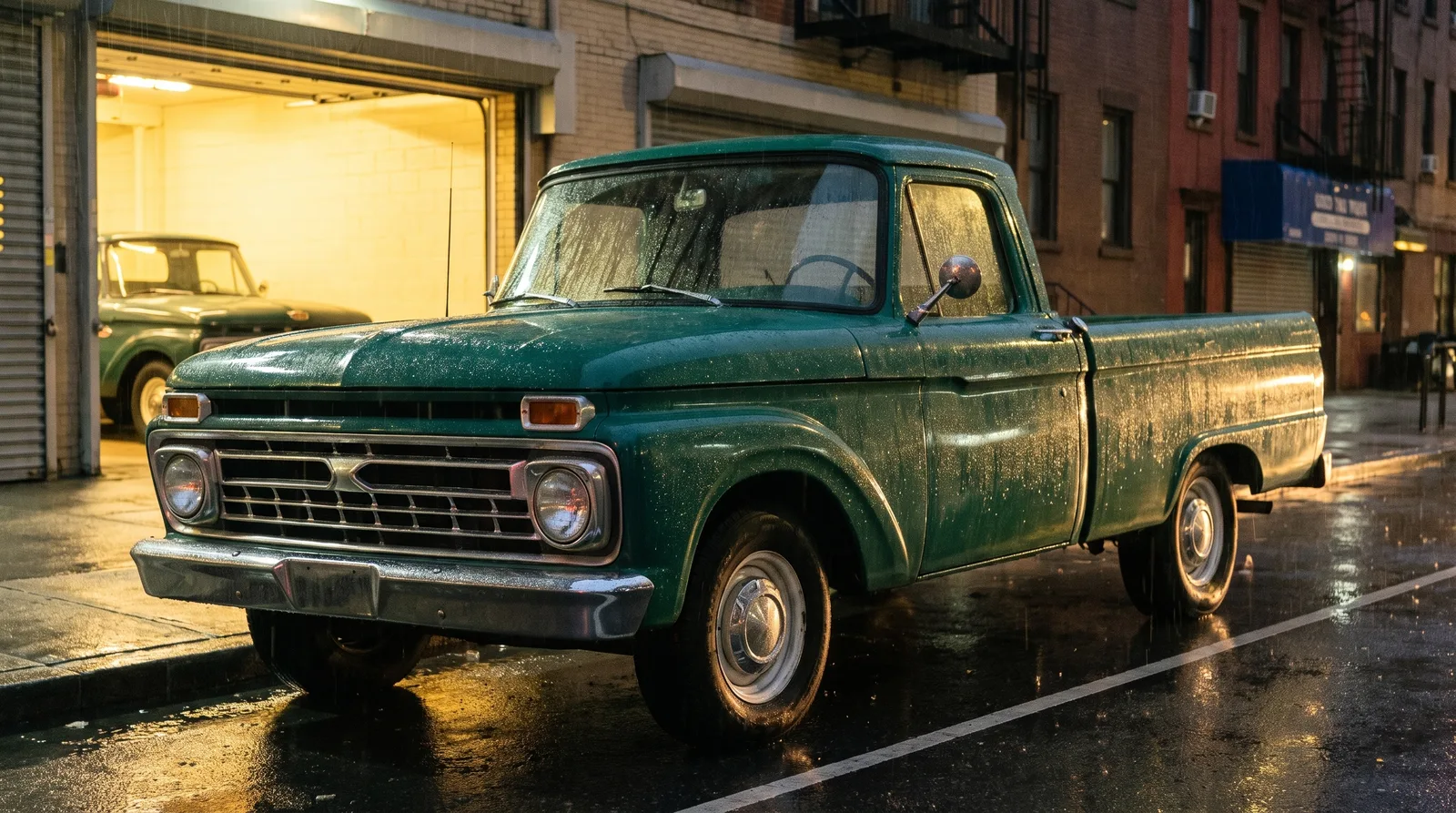
The general math on a dealer cash offer or private buyer applies to trucks too: the dealer pays wholesale so he can sell at retail, and the private buyer pays closer to the full number because he is the last stop. This piece is about where trucks break from that pattern, which trucks a dealer wants, which ones he does not, and how to tell which buyer your truck belongs to.
How a dealer sizes up an old pickup
He starts the same way he would with any car. He decides what the truck will bring once it is cleaned up and sold, then he takes out what it costs him to get there. Our breakdown of the dealer cash offer classic car worksheet walks through it line by line, so I won't repeat it here. What changes with a truck is where he looks and what scares him.
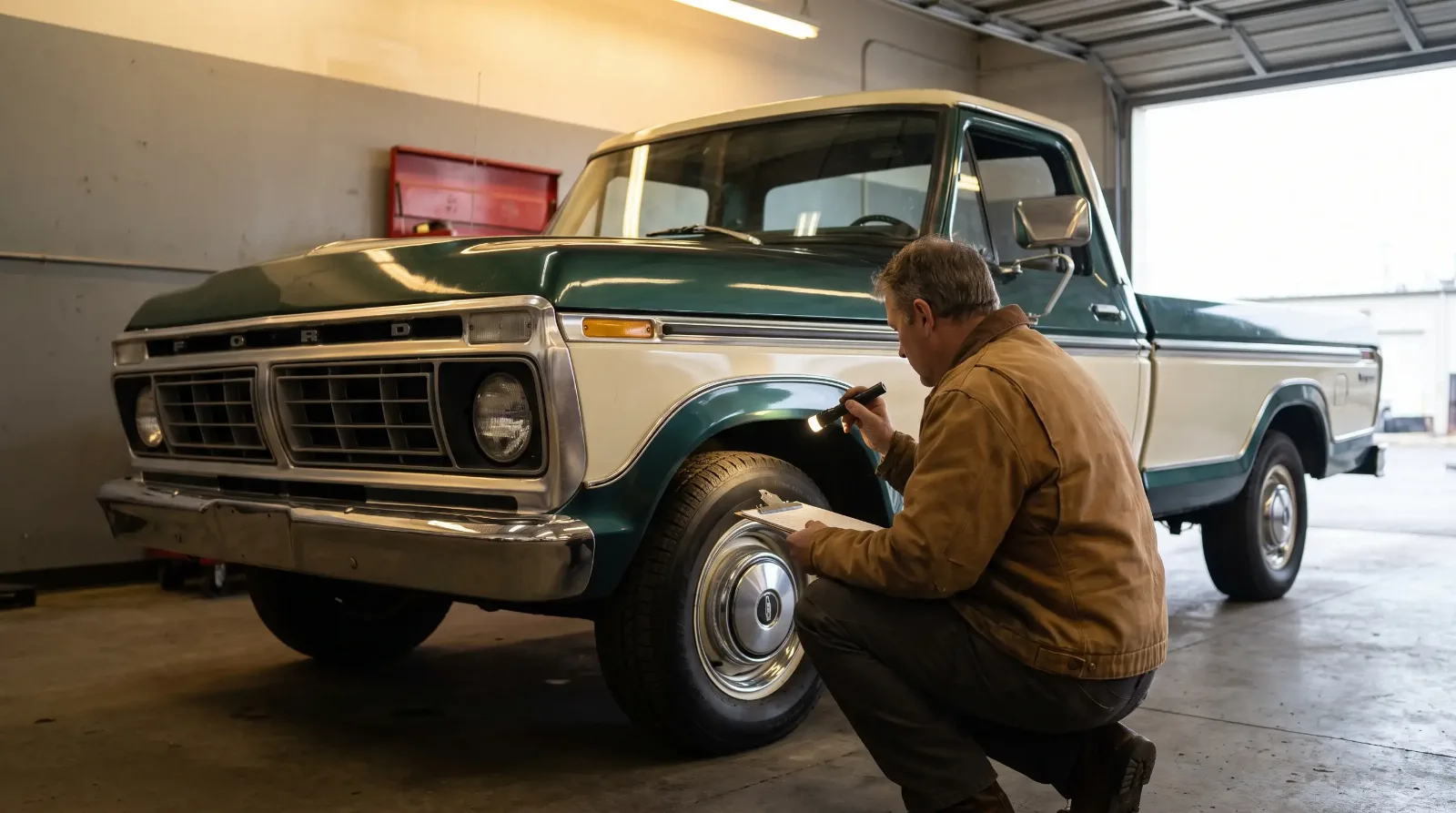
He looks underneath first, because a truck worked for a living. Frames got loaded past what the factory had in mind, hitches got welded on, and a lot of beds hauled feed, rock or firewood for thirty years. He checks the frame rails for cracks and patches, the cab corners and rocker panels, the floors under the mats, and the bed floor. A wood bed that is rotted or a steel bed that has rusted through is money out of his pocket, and he will price it like he is paying a shop to fix it.
Then he looks at the drivetrain. Plenty of old trucks are on their second or third engine, because the first one wore out in service and the cheapest replacement went in. A dealer is not usually bothered by a non-original engine in a work truck the way he would be in a muscle car, but he will price a tired swap as a tired swap. He checks gearing too. A truck geared for pulling a trailer at forty miles an hour is a harder sell to a retail buyer who wants to drive it on the highway.
Last, he thinks about who will buy it from him. A general classic dealer with a showroom full of convertibles may not have truck buyers walking in, and he knows it. That costs you money. A dealer who specializes in trucks has those buyers on his phone already, and he can often pay more for the same truck because he can turn it faster.
Trucks a dealer pays well for, and trucks he doesn't
A dealer pays his best numbers for trucks he can sell quickly to a wide audience. In my experience that means the popular models with good parts support, like Chevrolet C10s, Ford F-100s and square-bodies, in clean, sorted condition. Short beds generally do better than long beds, V8s better than sixes, and a truck that drives right better than one that needs work. A nicely restored truck in a color people like is the easiest thing in the world for a dealer to resell, and that is the one place his offer can come closer to what a private buyer would pay.
He pays poorly, or passes, on everything that takes the right buyer to appreciate. That covers a long-bed six-cylinder with a column shift, an oddball one-ton, an off-brand model where parts are hard to find, a half-done project, or a truck with a lot of personal modifications. None of those are bad trucks. They just are not easy inventory, and a dealer prices difficulty like it was rust.
The private truck buyer is a different animal
The man who buys an old truck privately is usually buying a memory or a plan. He had one like it when he was young. His father had one. He wants a weekend hauler that turns heads at the feed store, or a platform to build the truck he has been sketching for ten years. Either way he is buying for himself, and he will pay for things a dealer discounts.
He will pay for honest history. A truck with its original paint, the dealer's name on the tailgate and a story about the ranch it worked on means something to him that a dealer can't put on a price sticker. He will pay for the right configuration, even an unpopular one, if it is the one he wants. And he will often overlook cosmetic wear a dealer would charge you to fix, because he was planning to do it his way anyway.
The cost is your time. Truck buyers kick a lot of tires. You will get the lowball text, the fellow who wants to trade a boat, and the guy who drives two hours to look and then tells you about his cousin's truck for forty-five minutes. If you are not sure which way to go, it helps to see all the selling routes side by side before you put an ad up anywhere.
Patina, swaps and half-done projects
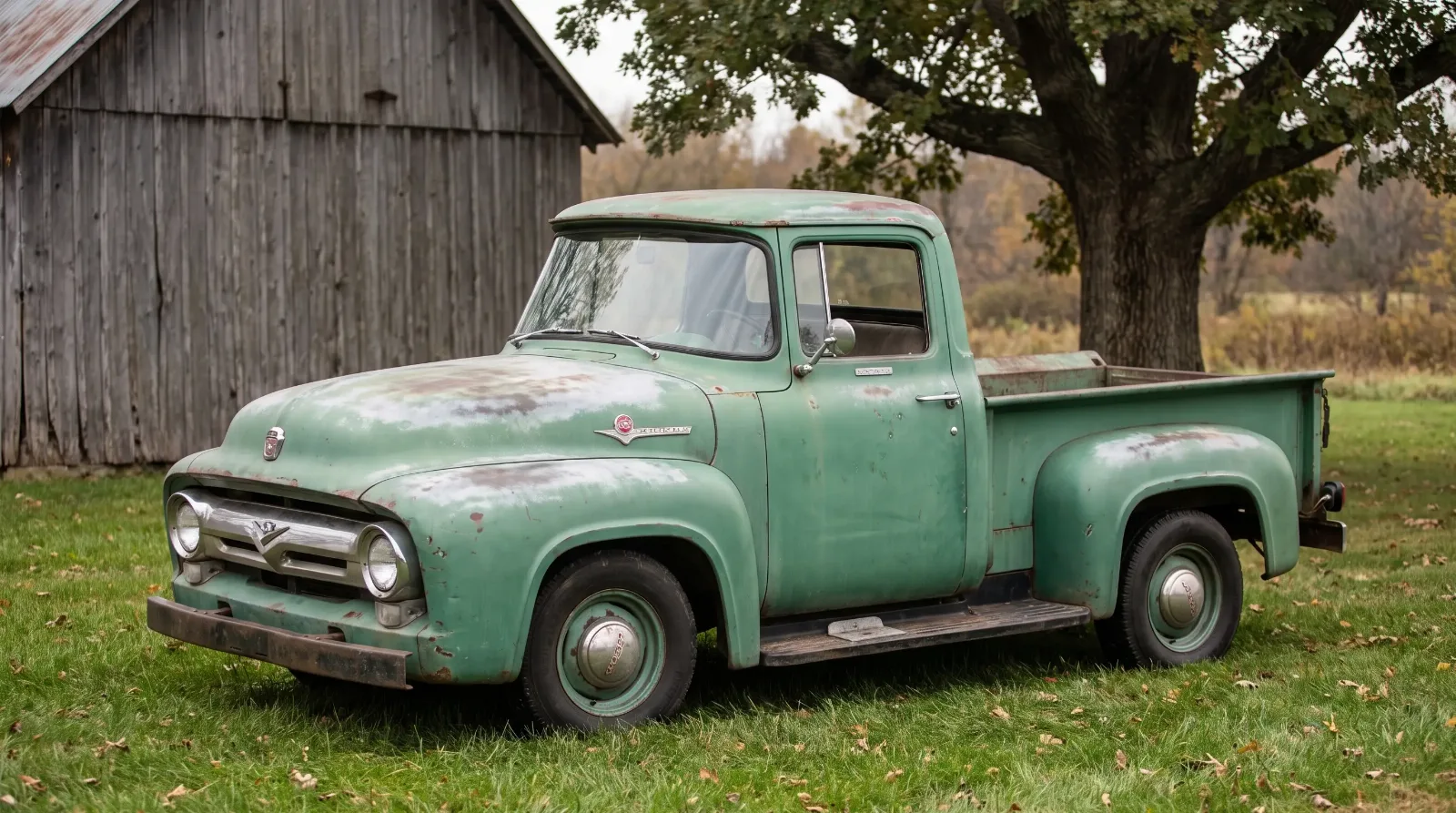
Three kinds of trucks show the gap between the two buyers better than anything else.
Patina trucks. A dealer looks at faded original paint and sees a truck that still needs a paint job. A private buyer who likes patina sees the one thing that can't be bought back once it is gone. Do not paint a patina truck to sell it. You will spend the money and shrink your buyer pool at the same time.
Engine swaps and restomods. A modern V8 swap with an overdrive transmission and upgraded brakes can make an old truck a pleasure to drive. A dealer will pay you a fraction of what the parts and labor cost, because he has to find a buyer who wants that exact build. A private buyer who wanted that exact build will pay a good deal more. If you own one, a private sale is almost always the better road.
Unfinished projects. A dealer prices a project as parts, then subtracts for the trouble. A builder looking for a head start prices it on the work already done and the parts already bought. Inventory every box before you show it. A typed list of new parts with receipts is worth real money to the second buyer and very little to the first.
Making the call
Here is how I would sort it. These are general rules of thumb from how the two buyers think, not price quotes.
| Your truck | Who usually pays more | Why |
|---|---|---|
| Restored, popular model, nice color | Private buyer, with a truck-specialist dealer closer than usual | Easy inventory, so the dealer can pay more |
| Clean original driver | Private buyer | Originality is worth more to an enthusiast than to a reseller |
| Patina work truck | Private buyer | The dealer sees reconditioning, the buyer sees character |
| Engine swap or restomod | Private buyer who wants that build | A dealer prices custom work at a deep discount |
| Rough project or non-runner | Close call: a dealer, cash buyer or builder | Low value either way, so convenience counts more |
| Truck that has to be gone this week | Dealer | Speed is the product you are paying for |
"A dealer buys a truck for what it will be when he's done with it. A private buyer buys it for what it already is. Figure out which kind of truck you've got and you'll know who to call."
Robert Halloran
If your truck lands in the private-buyer rows, the job is getting it in front of people who want that particular truck, not just anybody with a trailer. Here you pay a flat one-time fee, $49 for Starter, $99 for Featured or $179 for Premium, with no commission. The listing stays up until the truck sells, the buyer pays you directly, and Featured and Premium also go out to more than 15,000 newsletter subscribers who signed up to hear about new listings. When you're ready, list it here.
Sources and notes
- Hagerty: What does a car's condition really look like (#1 to #6 scale)
- ClassicCars.com Journal: Pickups strong at the Arizona auctions
- Ford F-Series, fourth generation (1961 to 1966): engines and configurations
- Chevrolet C/K, second generation (1967 to 1972): bed lengths and engines
- Chevrolet C/K, third generation (1973 to 1991): the square-body trucks
Related Reading
#restomod
#classic pickup
#private sale
#patina trucks
#sell classic truck
#dealer cash offer
#sell classic truck to dealer

About the author
Robert Halloran
Texas-based classic truck enthusiast with decades of experience buying, restoring, and writing about American pickups from the 1940s through the 1980s.
More in Market & Values

Comments
Be the first to comment on this article.